So after commencing 390, it seems that the same commencement of Cava 301 has happened, that being that my concept has changed. The change is not due to COVID 19 more so on the reaction of feedback from my work and processes for Cava 301. I was under the impression before the feedback that the work was not responding to anyone, however on further research and as mentioned via feedback it has been received well. Although I am three weeks into the subject the cover 390 I have decided and sought permission to change my proposal and extend on the work previously for this subject. What does this mean this means that I will be leaving my work that is relating to the body, and I will be continuing where I left off on plastic waste.
Mind map
I did a very quick mind map and found that I had to unpack the image to get to a point that I had a proposal that was attainable in the timeframe allowed. In order to understand what pace that I’m going to need to be working at, what outlines I need to prepare, I said about questions that will hopefully hopefully keep me in check and on the right path. One important thing I did learn during CAVA 301 is that this is a huge subject, and has many many paths go down. A couple of other important things that I learnt was to allow myself editing time, and to make sure that the work has a reason behind it, e.g. when I ended up deciding to use water and freeze was because it was important for me to not to add to the contexts of the work being an environmental issue on waste.
Questions
Grow
How does growing on plastic objects connect to my work?
This idea came to mind After looking at eco-brutalism architecture from abandoned buildings all over the world, I liked the juxtaposition of the cement and man-made in comparison to nature. My biggest concerns around this are that it may look like nature is responding to the plastic and that it actually does no harm to the environment. From another perspective it could be about my thoughts around archaeological digs and that our futures children are going to be digging up plastic rather than bones and pottery, so maybe plants growing out of the plastic being absorbed into the environment may not look as aesthetically as desired for the future, will it help reflection to the situation.
Theme Legacy
Why is the term legacy as a theme so important to you?
For me the term legacy is really important because I am addressing the future, I am trying to point out that we are teaching our children that shiny new things are okay to throw out. I feel we are creating a society that throws everything out and after it’s chucked out there is no regard however the plastic and waste that is being discarded…once the thrill has gone, is creating a legacy that is detrimental to the environment.

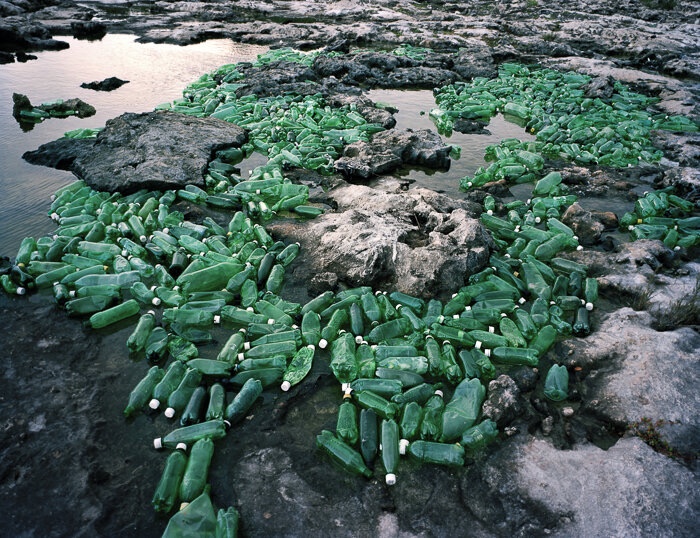
Artists Influence:https://alejandroduran.com/photoseries
Stack
What will result in stacking found objects do to your work?
The idea of stacking found objects is because of already tackling this subject, and it’s very very easy to consume a lot of stuff in a short while. The stacking relates to the term more, we continue to fill our lives with rubbish and it just gets stacked onto other rubbish that we don’t need or really want either. I also think that the stacking will be a good visual representation of my idea, I think it will look good aesthetically, especially if the stacking goes above people’s head and into the sky lines, on looking up the objects will be framed by nothing blue sky so the objects will be accentuated. Depending on the time of the day you may see them in detail of with a casted shadow.
Artist Influence: https://driftersproject.net/drifters-project-works/#jp-carousel-1718
The image below was one of two influences toward to idea towards Toytumpole.

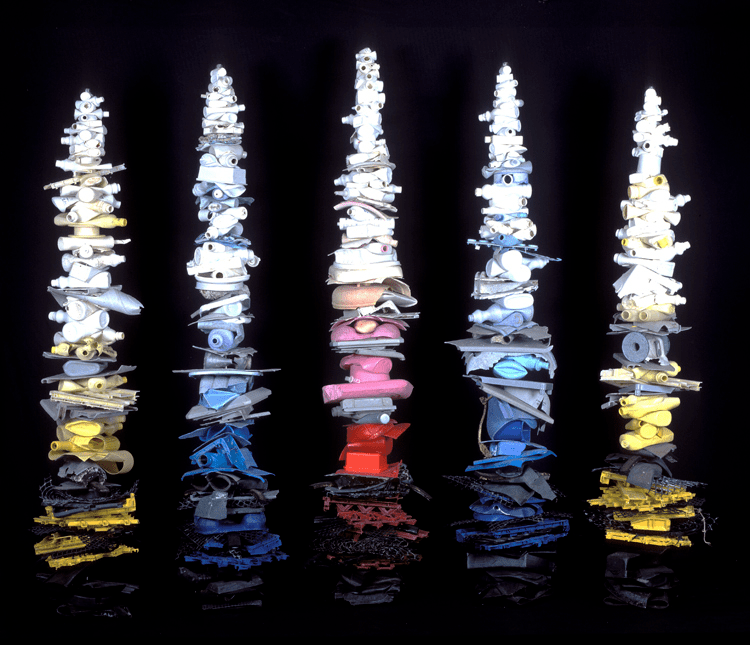
Above is an example of thinking I had an original Idea, but found this in November 2020.
Grind
Call grinding plastic accomplish with your work?
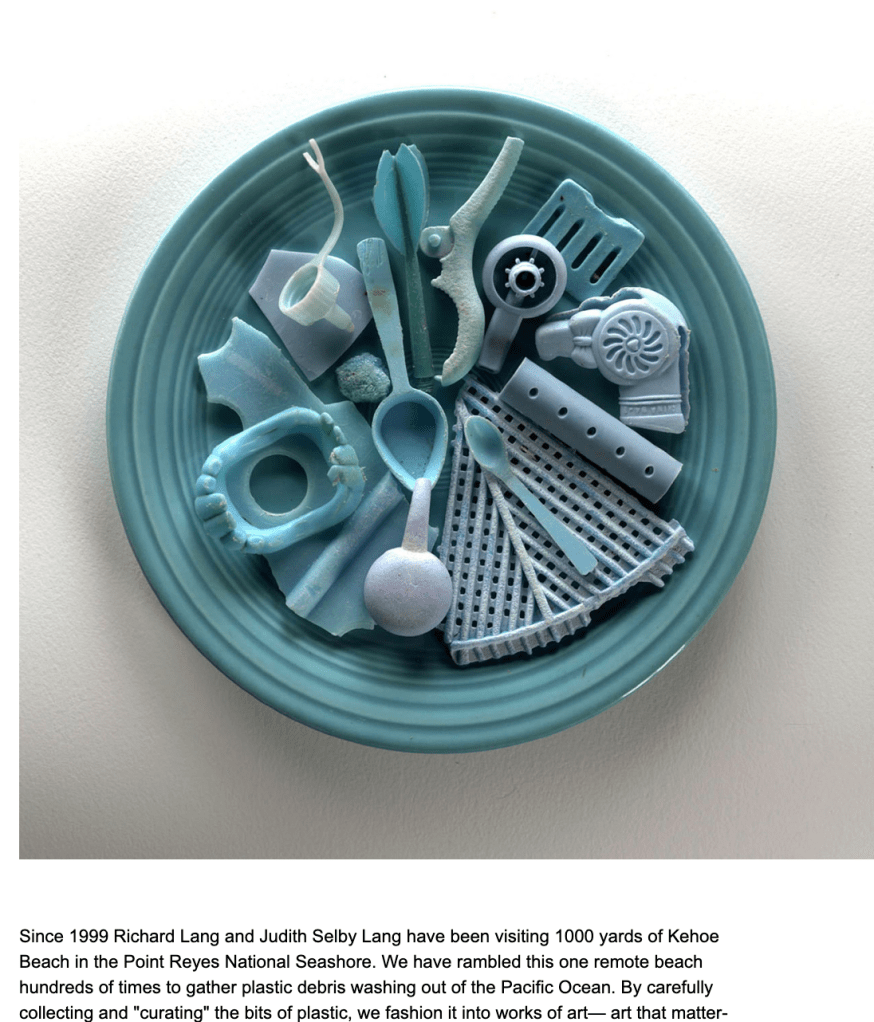
Last semester after working on the items I had collected, the last part of the work the plastic went under a roller, then I was able to freeze them and photograph a huge amount of shapes and colours. This brings me back to being stuck on how to remove the waste after the work was done, the flattening created quite a lot of very small pieces, much like micro plastic that you see on the beach and inside autopsied animals. On reflection I was at the end of my work at the time and definitely thought there was more to investigate in regards to small pieces and what to do with them. So this time grinding down the collected assortment of things could be displayed on dinner plates, And find China to point out that there is no such thing as a non-toxic fish in the ocean any more. Another idea could be filling the churned up plastic and placing it in fish tanks, filling them 80 to 90 % full, then adding water and with the remaining space, I could place some live fish, photographing from the side and above hopefully capturing the contrast of plastic to fish.
Research :(Julian Cribb Blog https://juliancribb.blog/2017/02/06/earth-is-now-a-toxic-planet/).
Influence:https://www.beachplastic.com/
Freeze/Submerge/Photograph
Have you gone as far as you can go with this process?
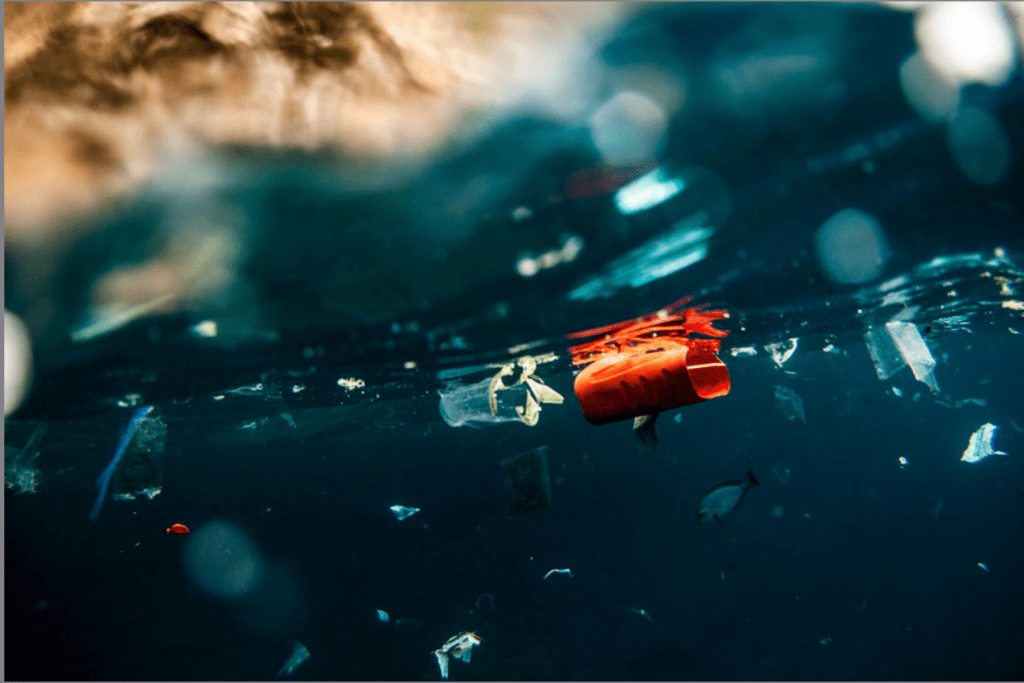
Last semester the main body of my work did end up being found objects underwater, and frozen. In order to carry this out I ended up purchasing a freezer, and learned some Perspex containers from a secondhand shop, it was great difficulty in photographing the works a lot of the photos were ruined due to reflection and lack of studio supplies. If I could create a better studio space I would really like to continue to explore this method as some of the images were striking. I also found that after many many photo shoots some of the better works were when the ice blocks were in the outside environment and the daylight light created a bright and colourful composition.
Artist research/ influence:
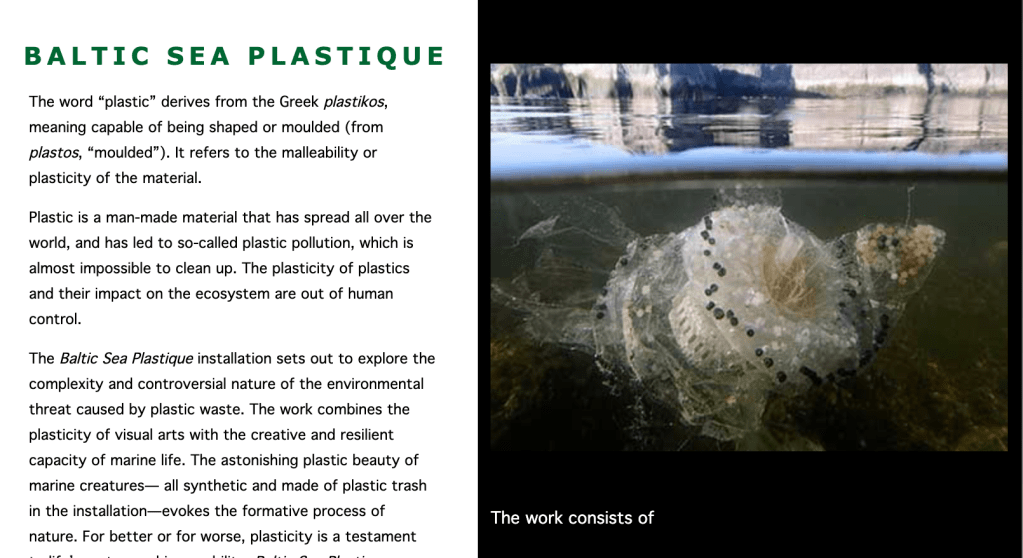
Collecting/refining
Collecting collections again, why should you refine this time?
Over the months of collecting quite a lot of materials, which unfortunately have now been given to op shop’s and thrown in the recycling bin. I did find that certain items were much more photo genic than others, such as balloons and children’s toys. During artist research I found that cigarette lighters are popular, and there are a lot of those I pick up at least two a day. So for these reasons I will direct my collecting towards things like children’s toys, plastic lids, plastic straws, cigarette lighters, and children’s dummies. In saying this I find when I’m walking on the beach is that things will present themselves to me, it will be a strange shape or it will be a prominent colour against the stand and I have no choice but to pick it up and put it in my pocket.
Artist Research/Influence:
https://evelynrydz.com/artwork/4123334-Floating-Artifacts-38.html

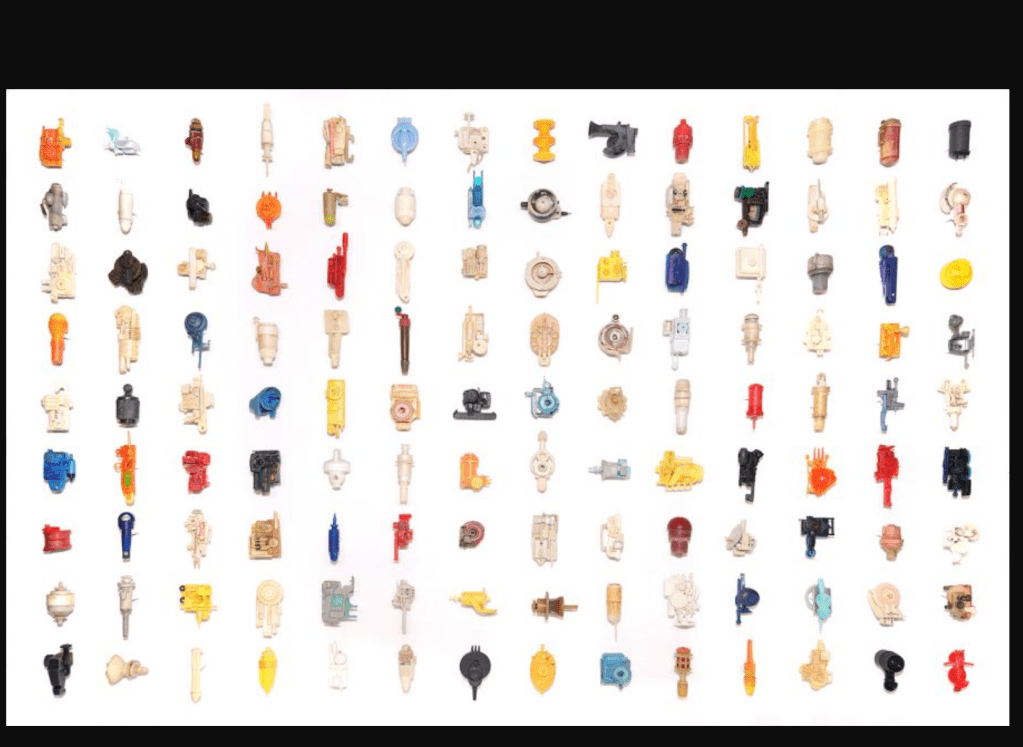
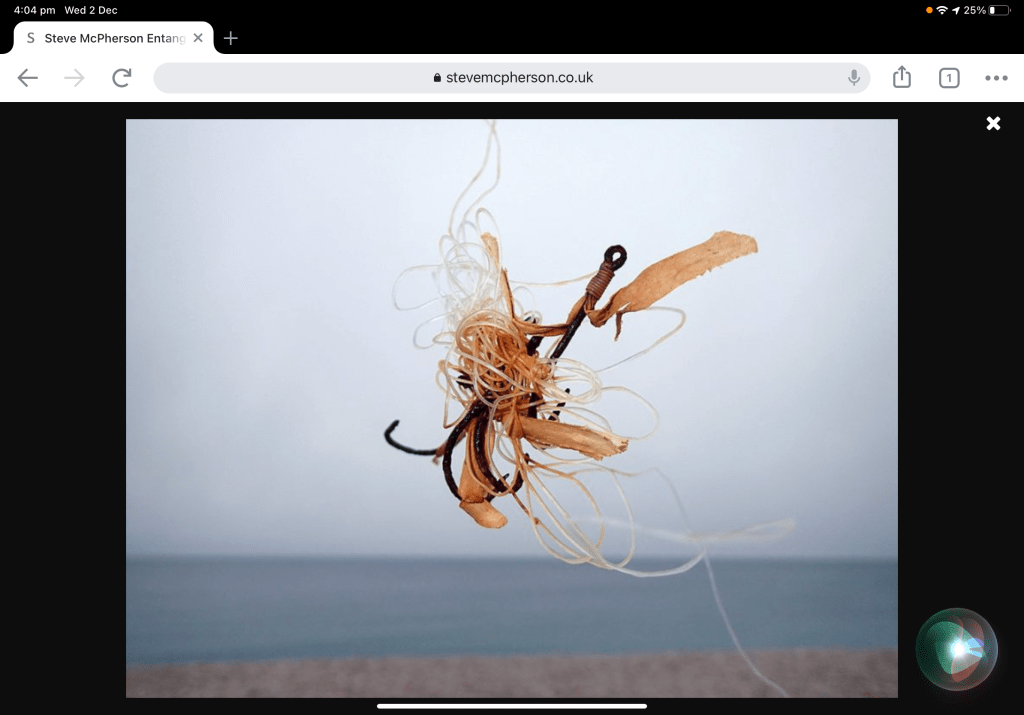
Above is another example, looking back at my research seeing influences I have unconsciously gathered, this looks very similar to one of my Tangled Series, I like that common concerns create similar works.
Melt
Why am I melting the work?
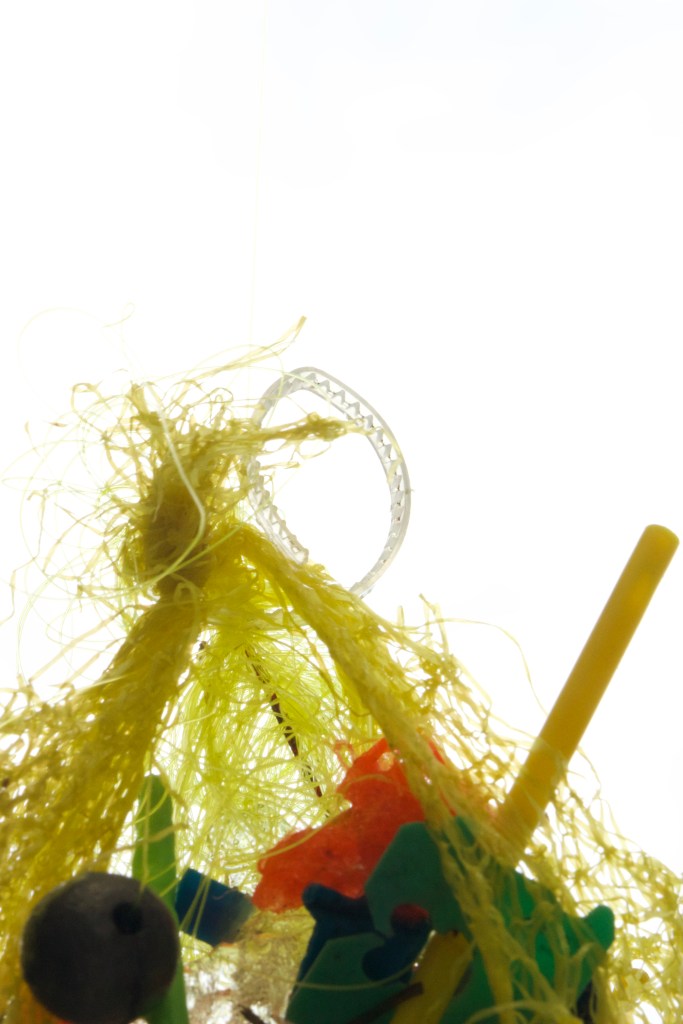
The reason why I am interested in melting the work is because of the fact that due to the subject matter, the bright shiny colours combining this work, to try to capture a perspective of this one’s love item is actually a major problem. Because I wanted to try and capture the ugliness. By melting the products together I was able to try to disassociate the work with pretty and playful, instead trying to creating disaster and waste which is what it becomes.
Shape
Shape relates to everyone?
The idea of being able to manipulate the plastic objects into a shape, such as a hand made mould, I am not sure what sort of shape I would conjure up that wold be relatable to all. However ones that come to mind that may not be identifiable straight away is a throat…choking the planet with plastic. Extending on this could be a series of dolls heads, creating mouths and melting the plastic objects onto and down the face of the dolls, the melted works would show contorted faces like while the plastic suffocates the doll. This could be a relatable message…should I start collecting dolls…
Laser cut
What will I gain out of laser cutting the found objects?
The idea around laser cutting objects would be because I am well aware that I will be collecting a lot of items again, the amount I collected last time ended up being so much that I didn’t use all of it and as mentioned I handed it on to op shop’s and the recycling bin. By locating a laser cutting company I could slice the toys and found objects in half and this may be interesting photographing only a piece of the item, and also the installation itself could turn into a typology as each part will be flat. As an artist I think that there may be a lot of potential with this experiment because of some of the abstract forms that will come out of it, such as how much can you cut away from the product until it stops being the fantasy. The point is, how much disaster and destruction of the planet do we need to see before we don’t see it for what it was anymore.
Crush
How much time and effort will result towards the major work if you go down this path again?
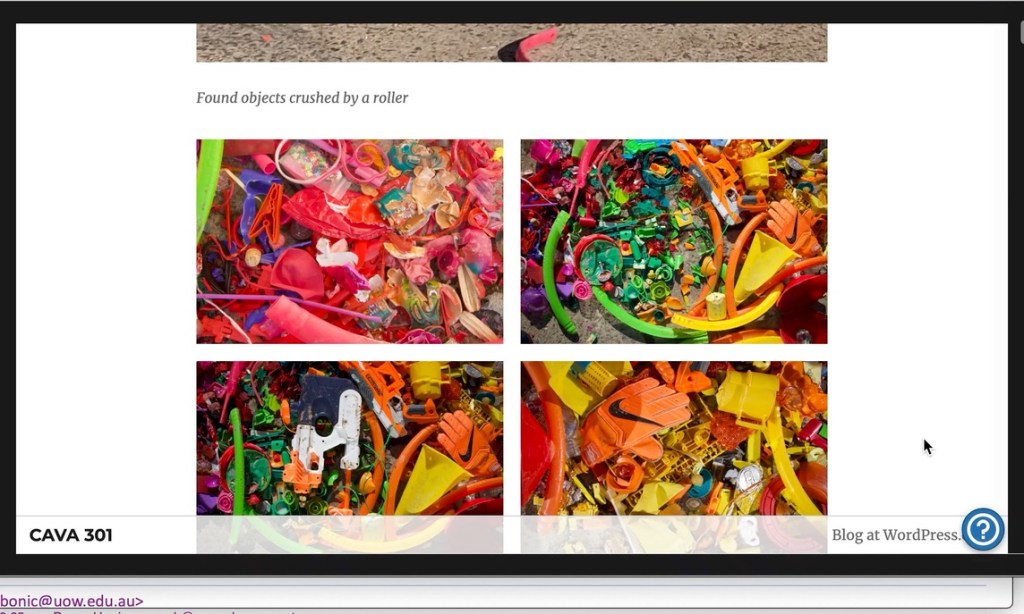
My idea around crossing last semester was to get a roller very large take it to a local area or/walking track and crush the plastic once it’s crossed place large pieces of Perspex over them so people can walk over the rubbish and see how much is consumed. I feel that unless it’s right under consumers’ noses once the waste is waste it is no tends to no longer be a person’s problem. This idea is doable, but time-consuming as I will need to seek permission and permits. I will need the weather to be right, I will need to fundraise for the glass or perspex sheets, and I will need to do a risk assessment. I will need to pay for the roller and the person driving it. I think because I have lost a month, this needs to be for another day/time in my life.
Research/ Influence:
https://www.theatlantic.com/video/index/591640/recycling-plastics/
Final presentation
How will the work finally be presented, and why?
The work will depend on which I choose, which ones I work on, it could be that that is actually the found products themselves, or it could be just photographed. If I do the melting it could be one massive form.
 CAVA 390