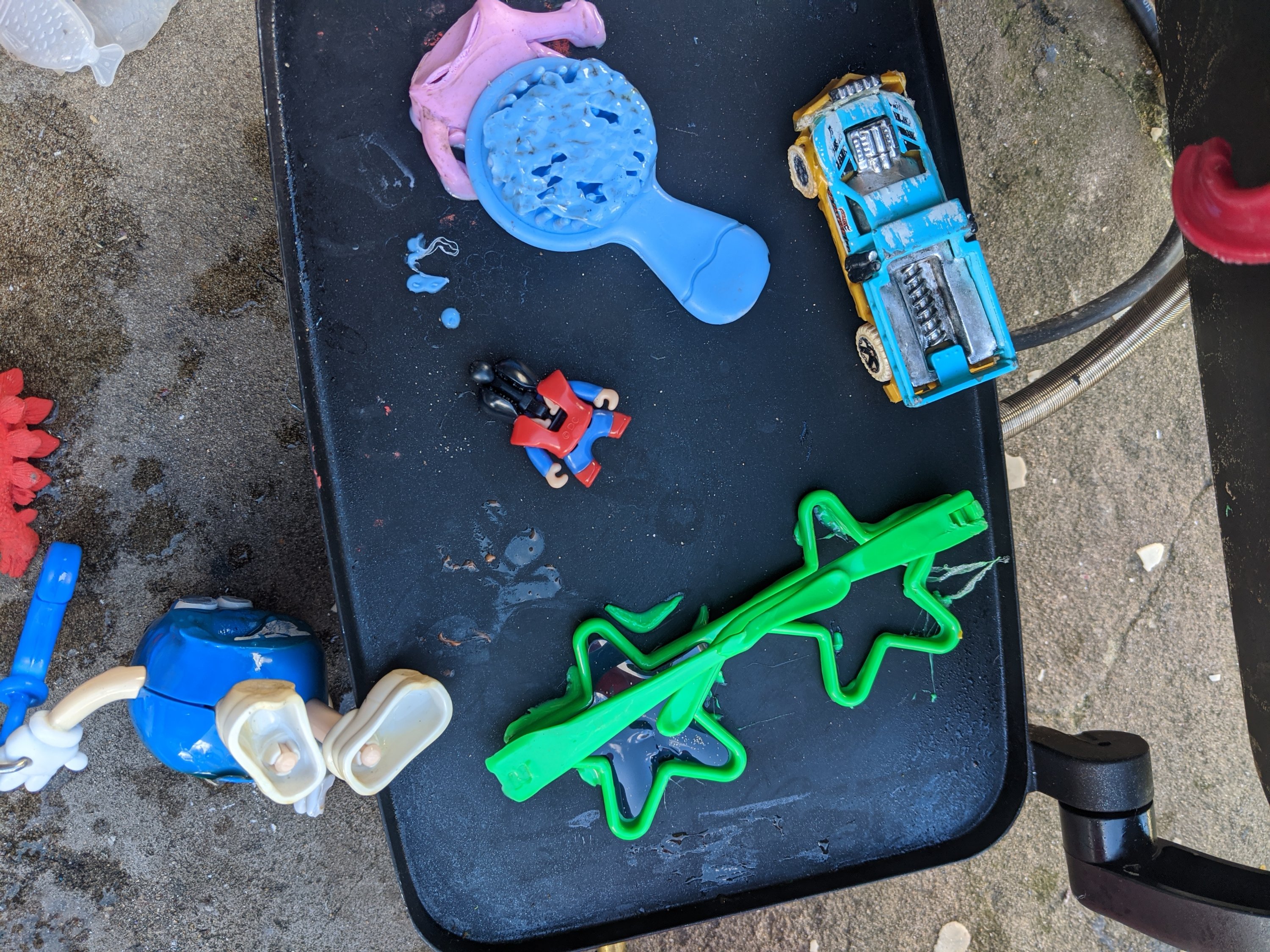
Week 18th September 2020: I have been making calls and emailing companies to find places to melt on a larger scale, to use the location for a flag pole and shred the larger peices. Still waiting to hear back from all. Called: Salvation Army, Coates hire, Inner West Council, Callan Park, Plastic Manufacturing FIX plastic and Laser cutting.
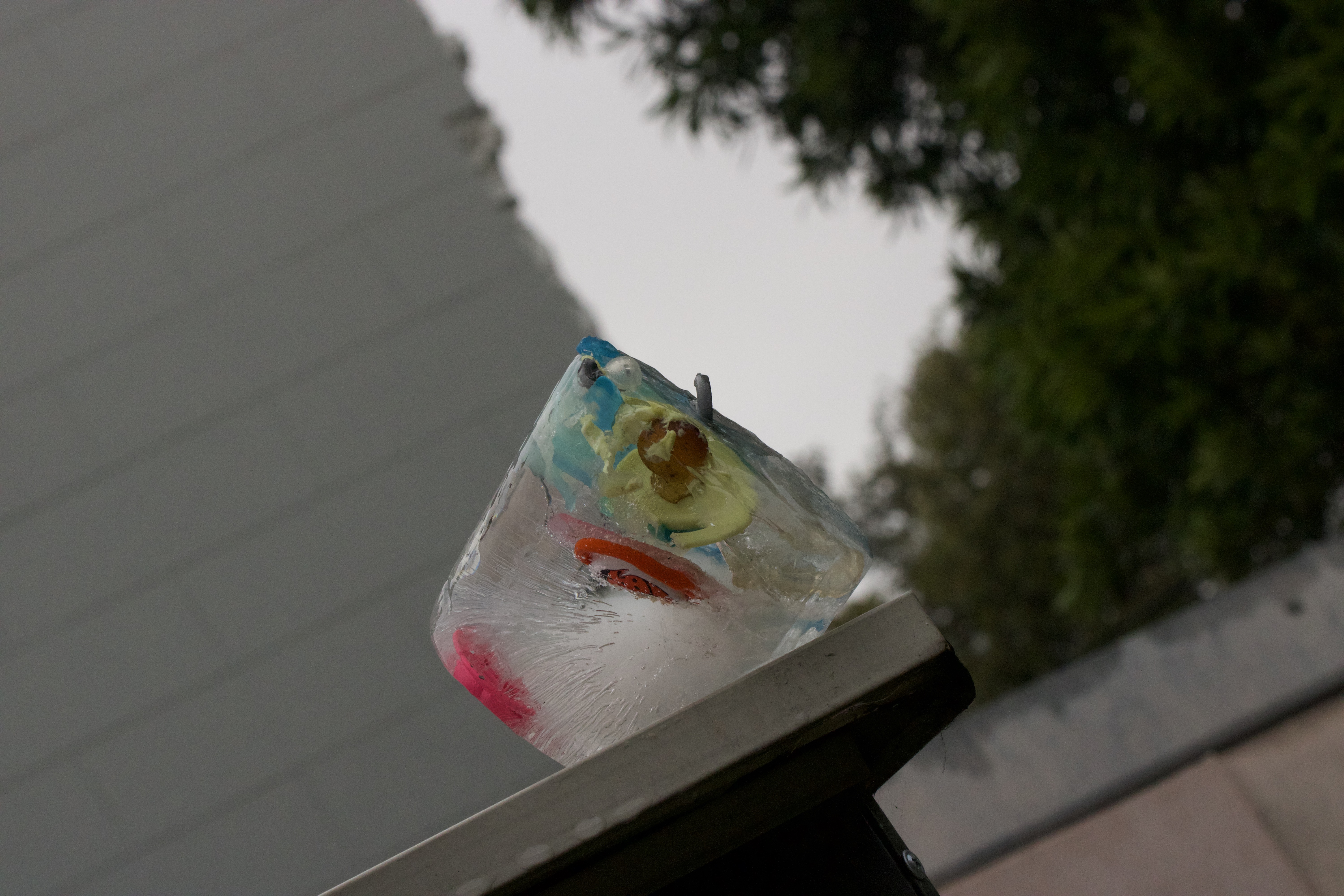
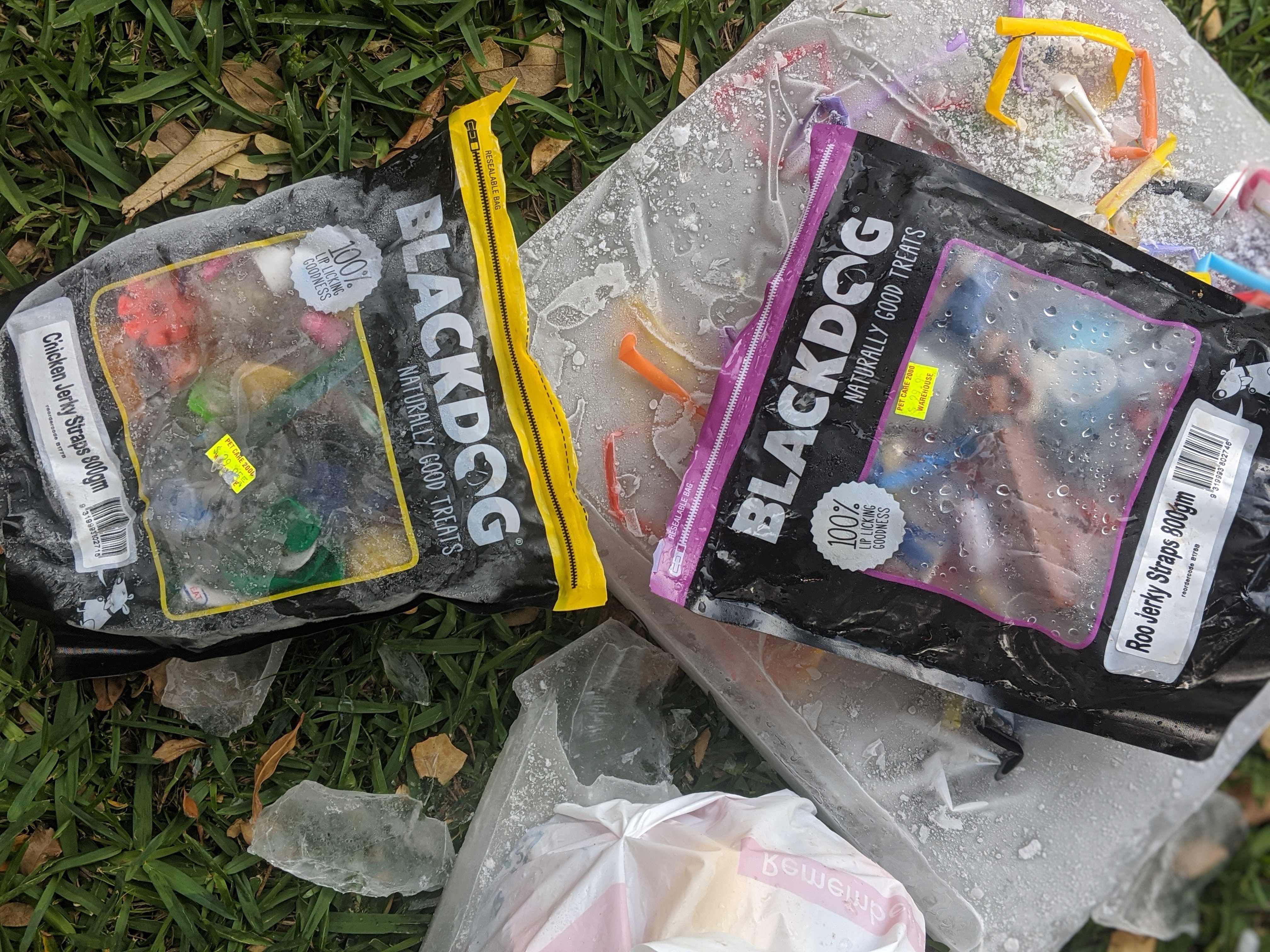
All of the photo series have been photographed in two locations, the first in Petersham where I had some major safety concerns with my place of residence. The images were taken with two lenses one 35-55mm and a longer lense 55 -300mm, the works work set up in varying areas of the space which was very small. So due to the experience I gained from 301 reflection and frame was very important to me. The works were positioned on the corner of gutters or propped up using foils and mirrors to try and capture the light. The best light was when it was over cast because of the colour of the sky.
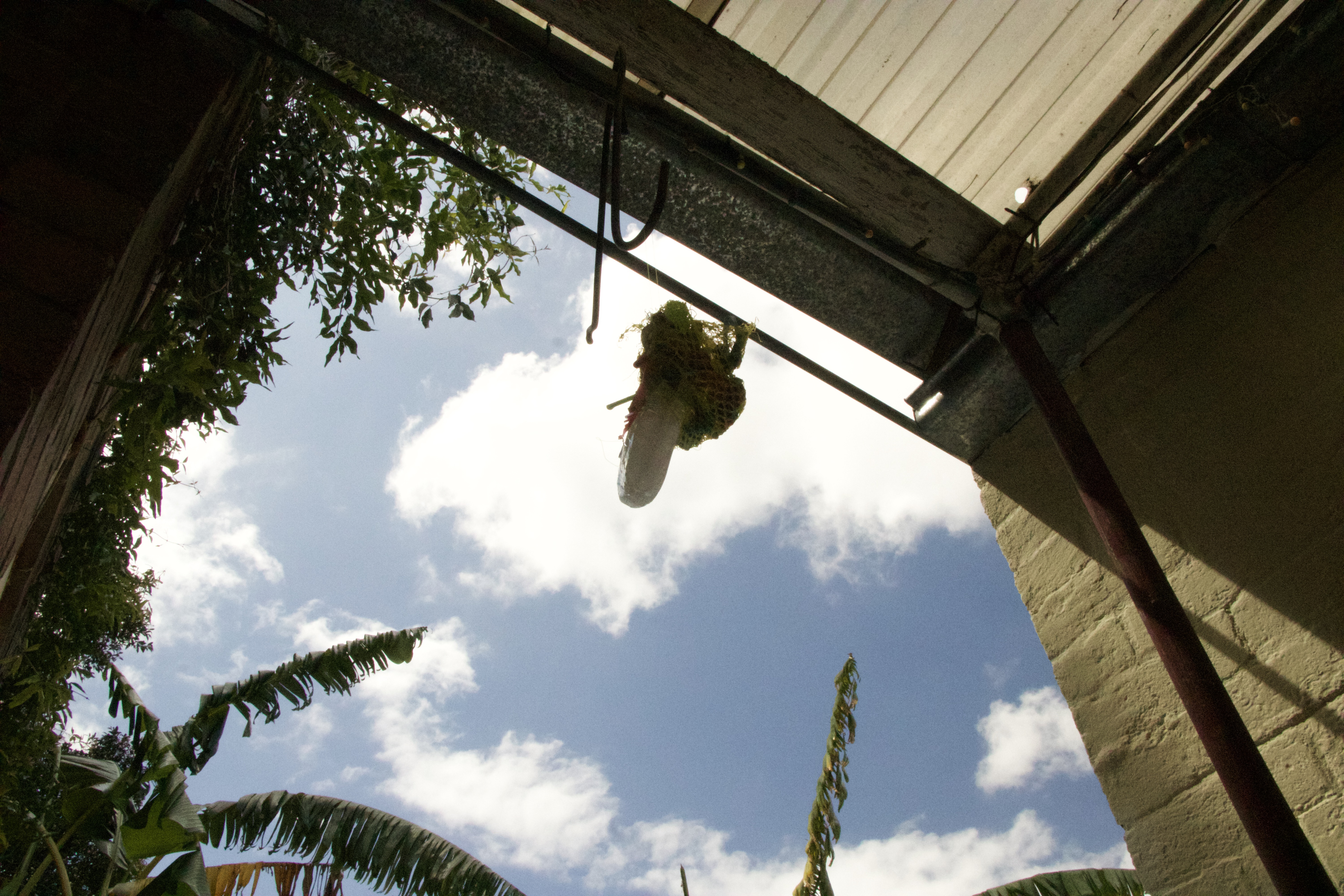
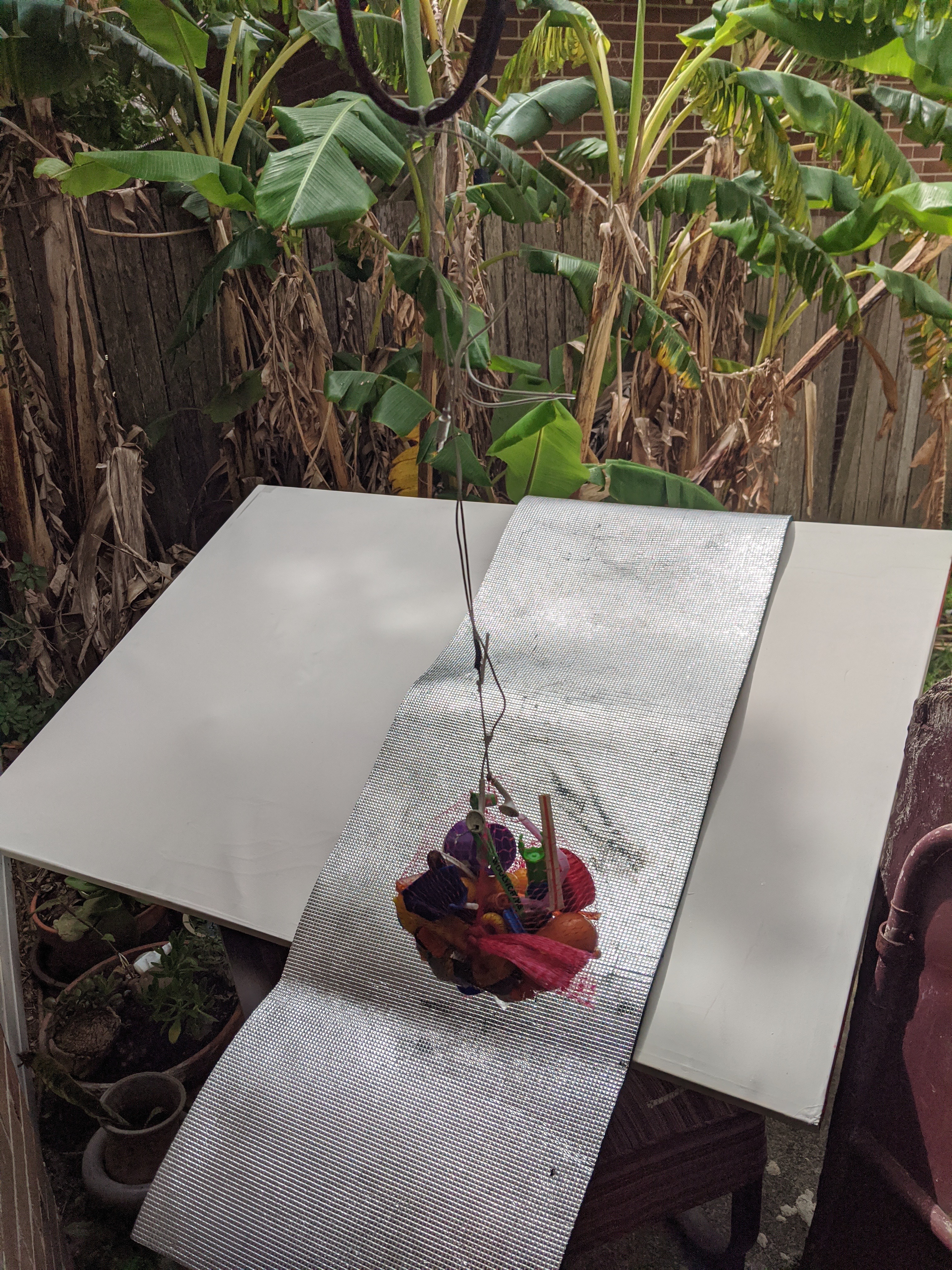
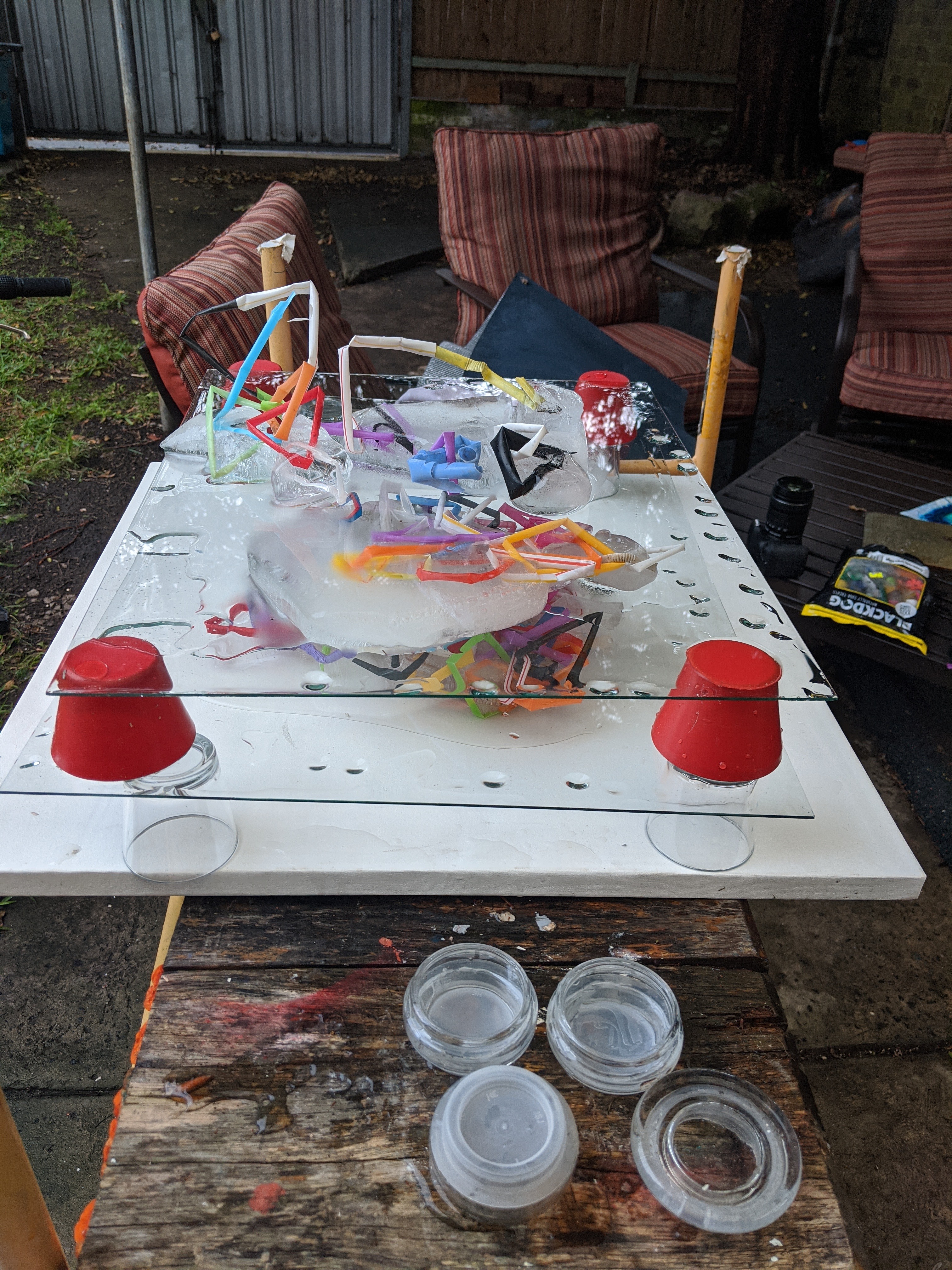
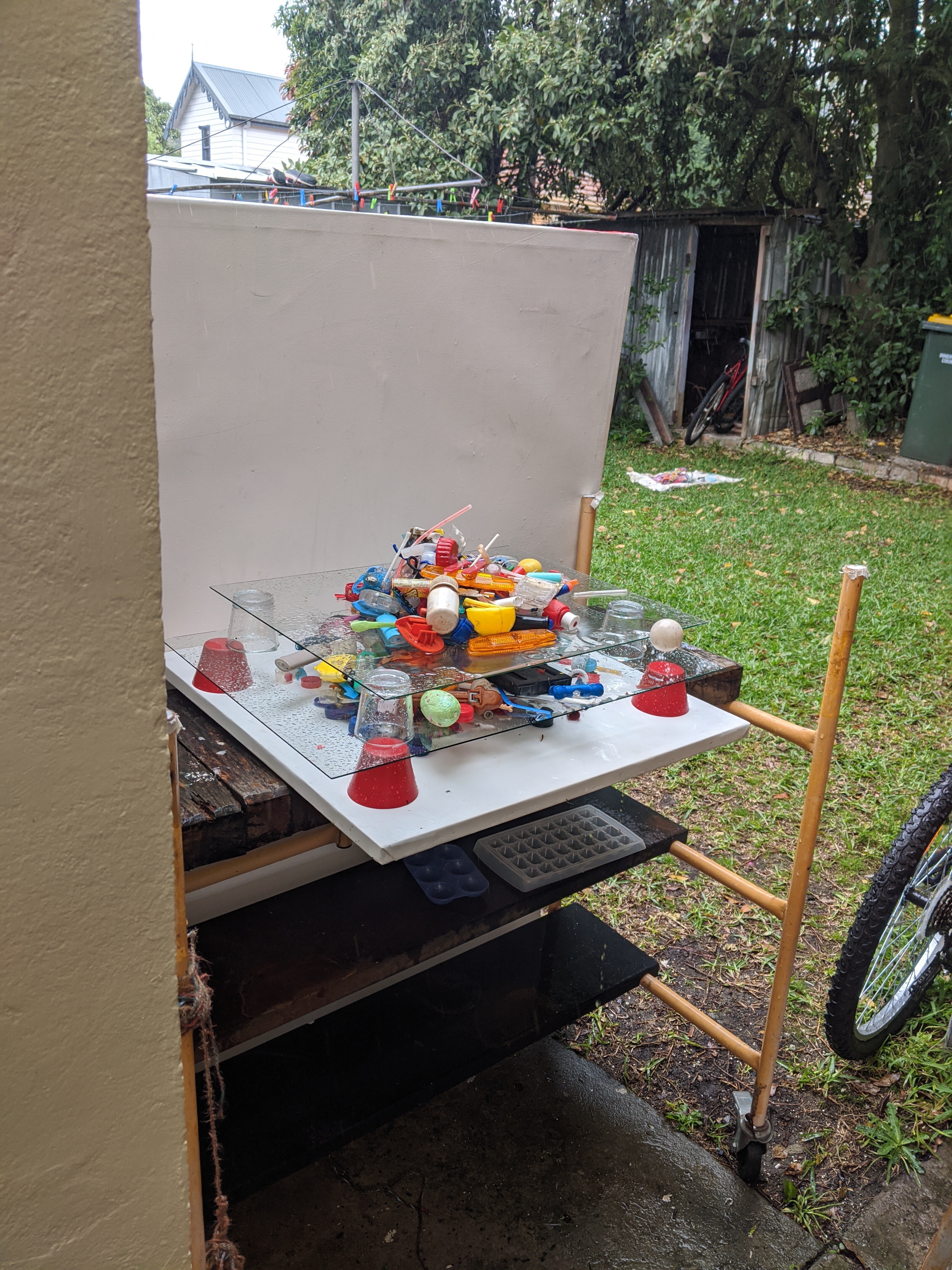
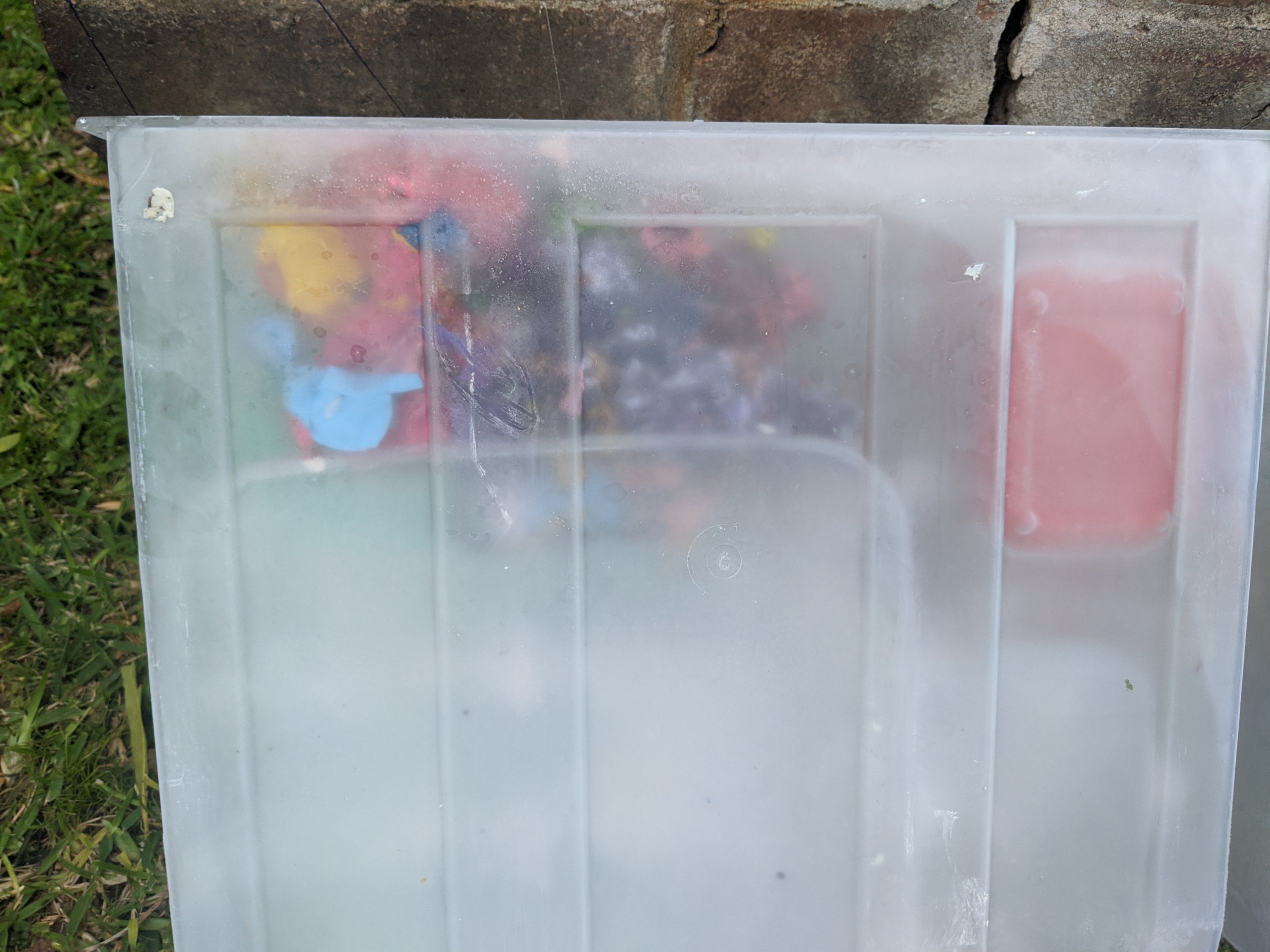
The second location was in Summer Hill, not a great time to move during semester however it had to be done. Thanks to COVID I was able to locate a premises that was actually decent. the series of photo shoots conducted at this location consisted of being hung on the cloths line, being propped against canvases, making a mock copy stand out of glass, hanging from the rafters of the awing.
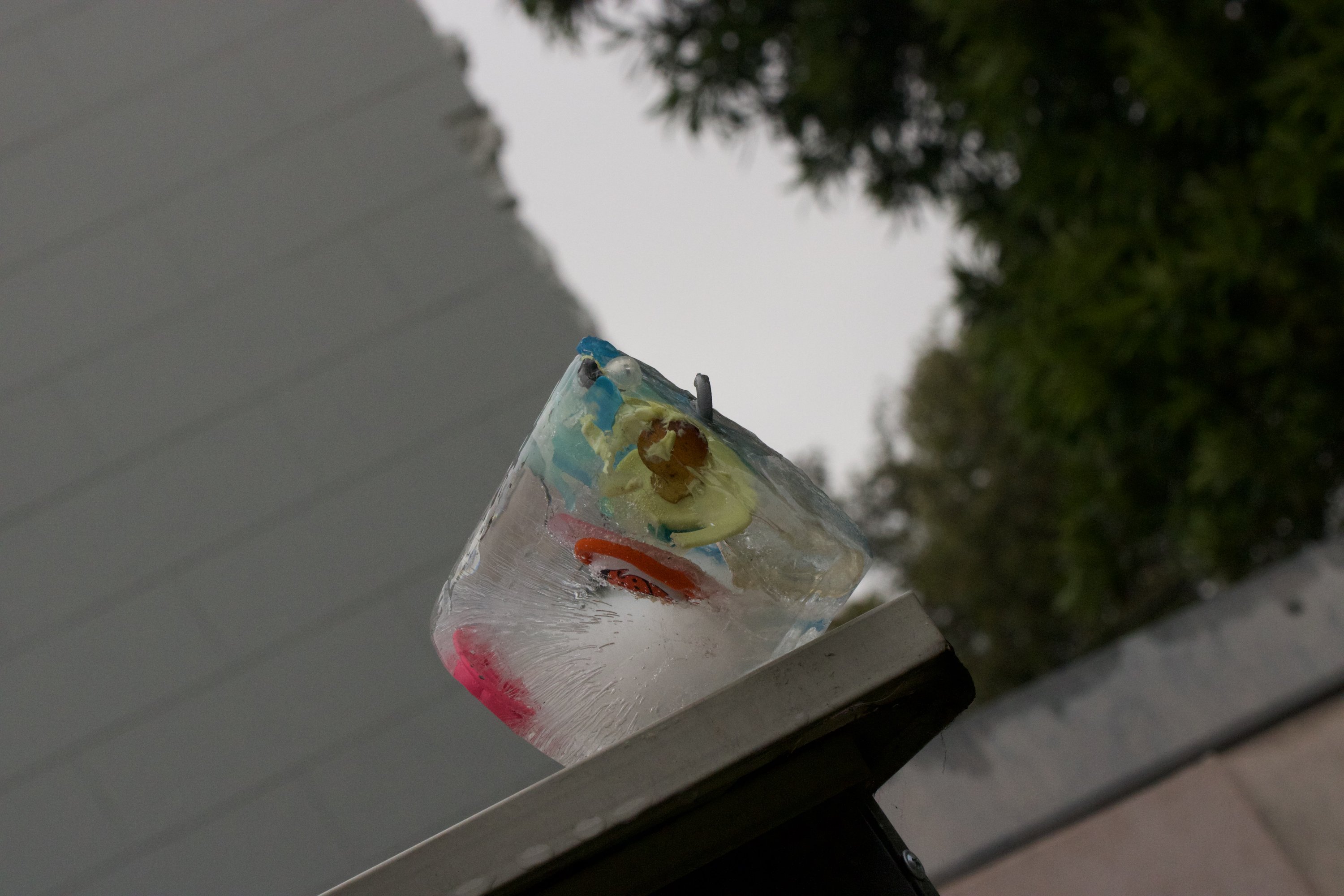
The positions I took a majority of the images on was upside down so I could get the only the sky in the background, so a majority of shoots I was lying on the cement or on the grass or on a blanket or rug and then contorting my self to make sure I had only the subject and the sky in frame, unfortunately during these series I dropped my lense which then took some stress to replace, however it was worth it as I did get some lovely images with the new (secondhand lense ).
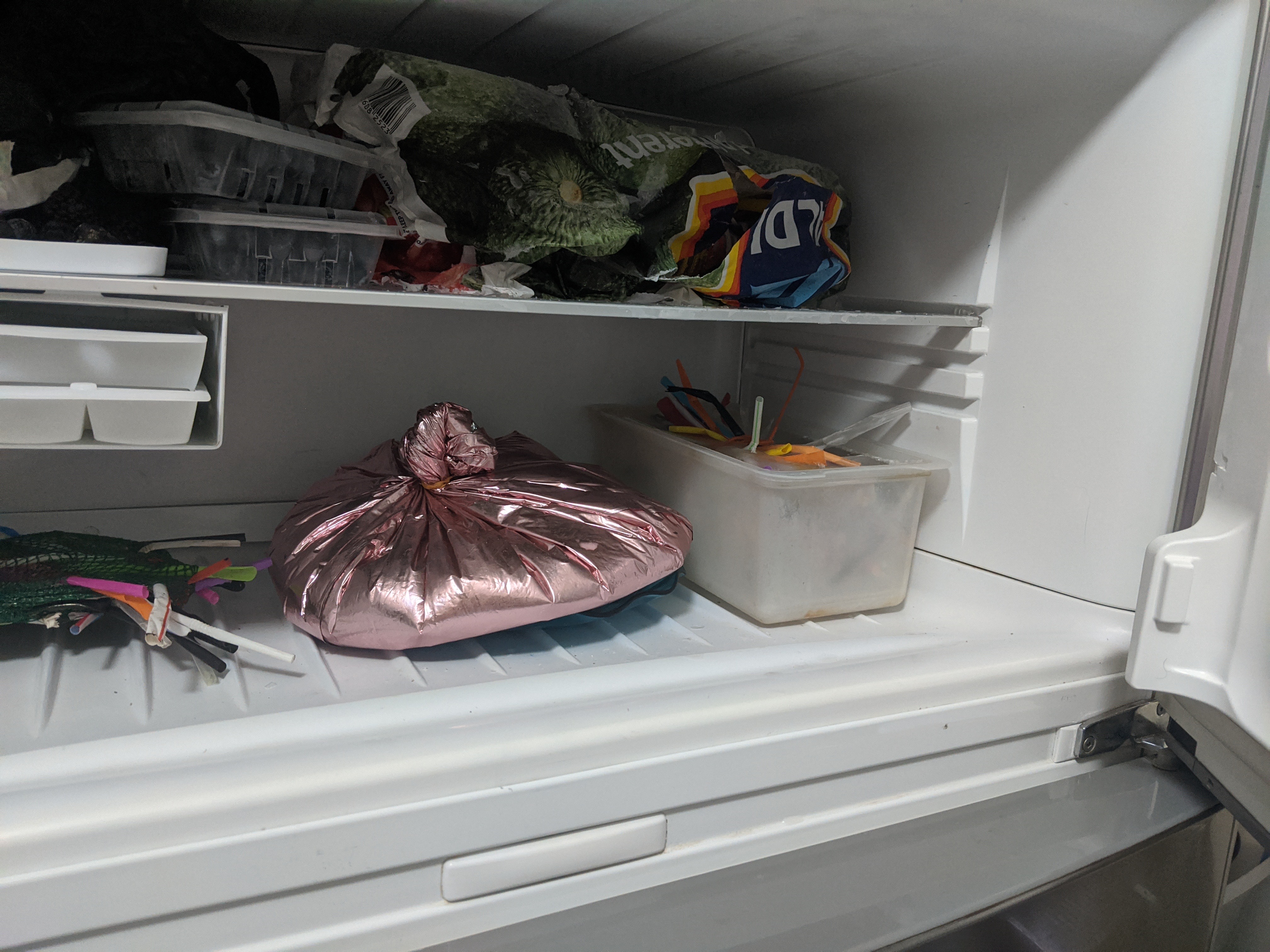
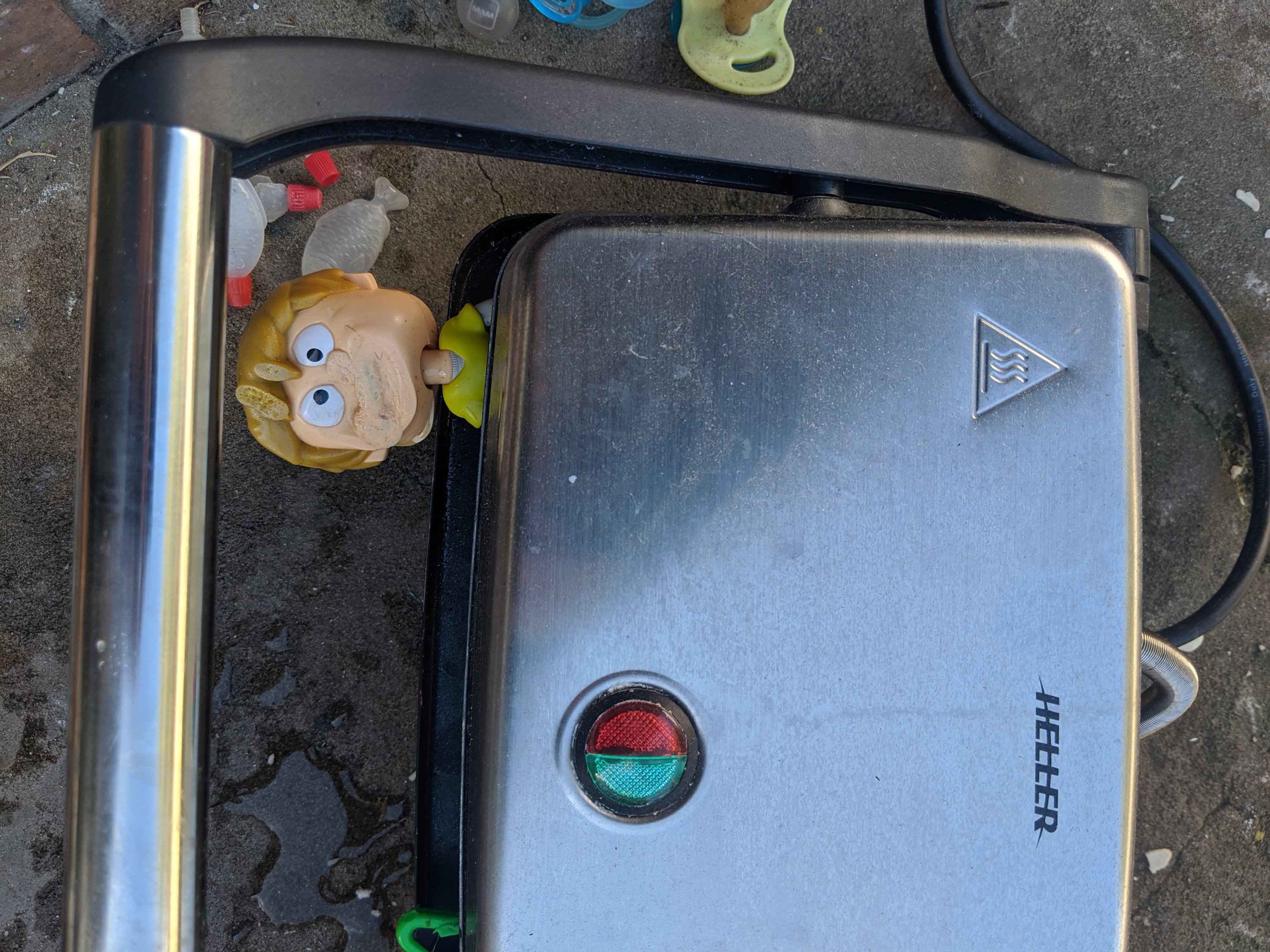
Again due to the experience from cava301, I knew what was successful and what was difficult because of reflection and also what style of image I was aiming for. The main props used were a silver/ black rubber mat the size of a yoga mat found on the side of the road, glass sheets found on side of the road, large canvas (donated from a Freind of a Freind). Small freezer (purchased last semester). Small sandwich Toaster (purchased last semester). My camera and two lenses mentioned earlier and my iPhone. All materials used in all of the photographs have been collected over the entire semester (still can’t stop, I am like a plastic scanner, I see it jutting out of the environment like a sore thumb!)
Multiple series of photos hoots, trying to capture the best image, I worked on the themes/statements that kept coming up during my collecting, we are bound, we are linked, on thin ice, tangled, tied up, hanging on a thread, tip of the ice burg and so on.
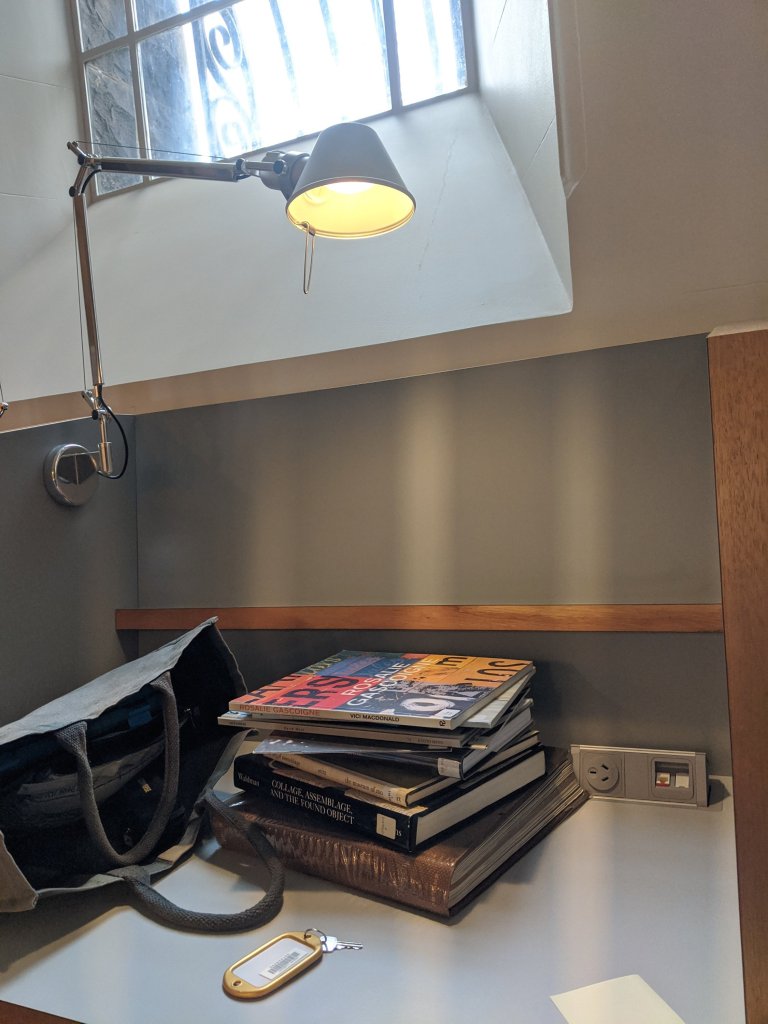
This week)12th September 2020, I sought the opportunity to go and visit the NSW Art Galleries library, looking for artists that worked with waste.
Unfortunately this week (SEPTEMBER), it did not bring up any thing significant towards my current work.
Here is what I found:
ARTIST RESEARCH CAVA 390
Aime Ntakiyica: African Artist that works with plastic, Librarian suggests that I check her out online.
Huseyin Sami:
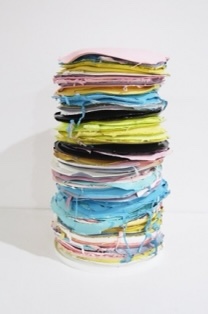
Huseyin Sami, Untitled (Long stack), 2015
Straight away the the first books presentation presentation is in a cute bright light blue booklet.
Huseyin S & Cottier S 2010, “a beautiful waste” Huseyin Sami, Edition 16, viewed 9 September 2020, AGNSW LIBRARY.
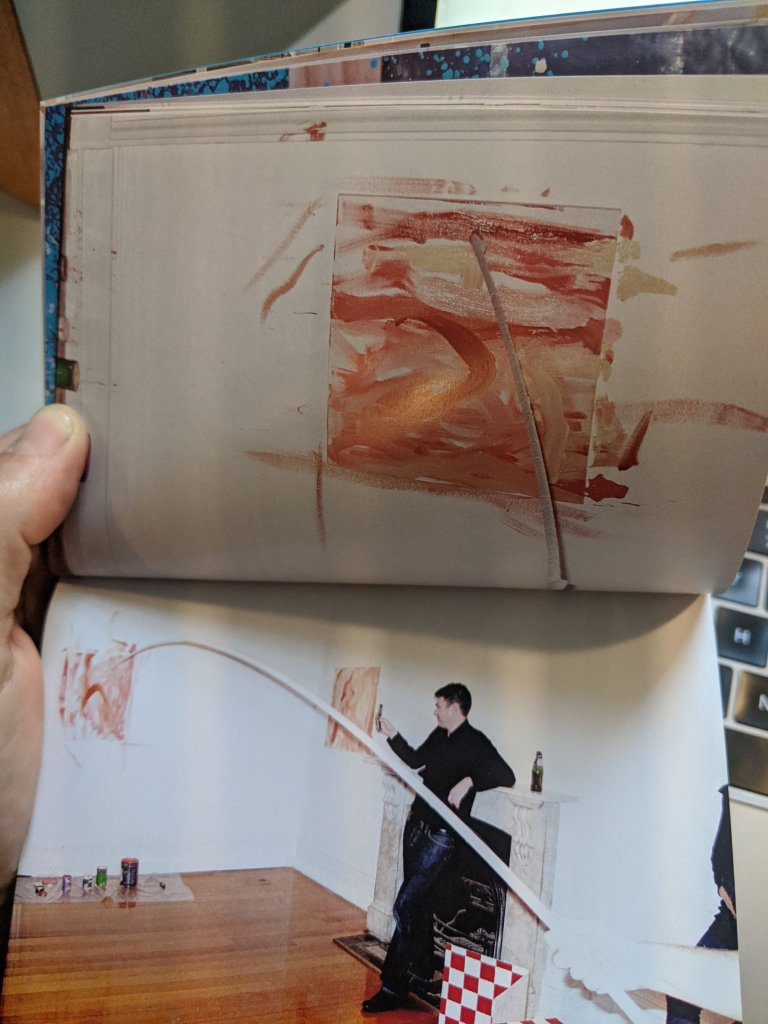
This little book is not really of rubbish, however, it would be good for the mural course and it shows you options on paint distribution.
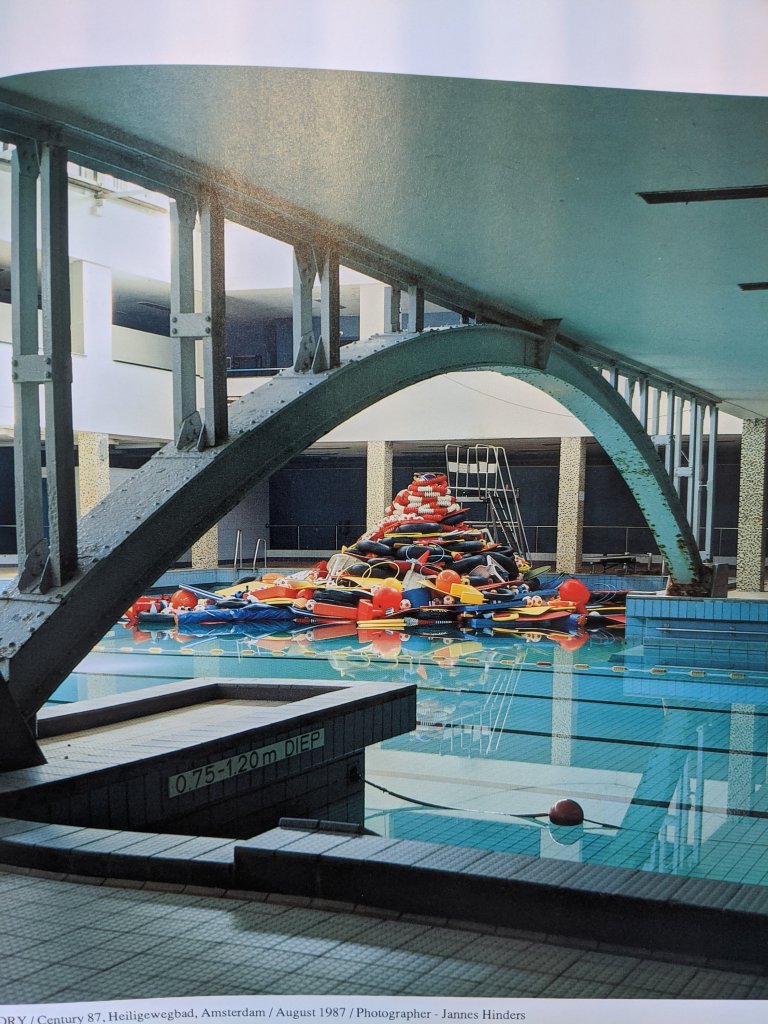
Book: David Mach 1990, “David Mach”, ArtRandom, SHASHIN KAGAKU, Kyoto Japan.: HIGH & DRY / Century 87, Heiligewegbad, Amsterdam / August 1987/ Photographer – James Hinders
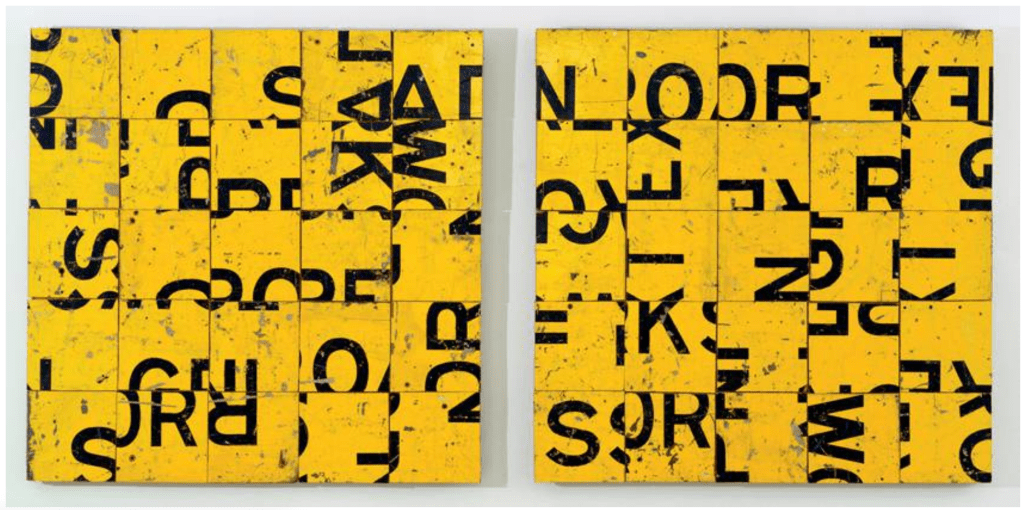
Rosalie Gascoigne: her works definitely dealt with waste however more so on found object and relic items such as old bee hives to create her assemblages, ignage, lots of signage.
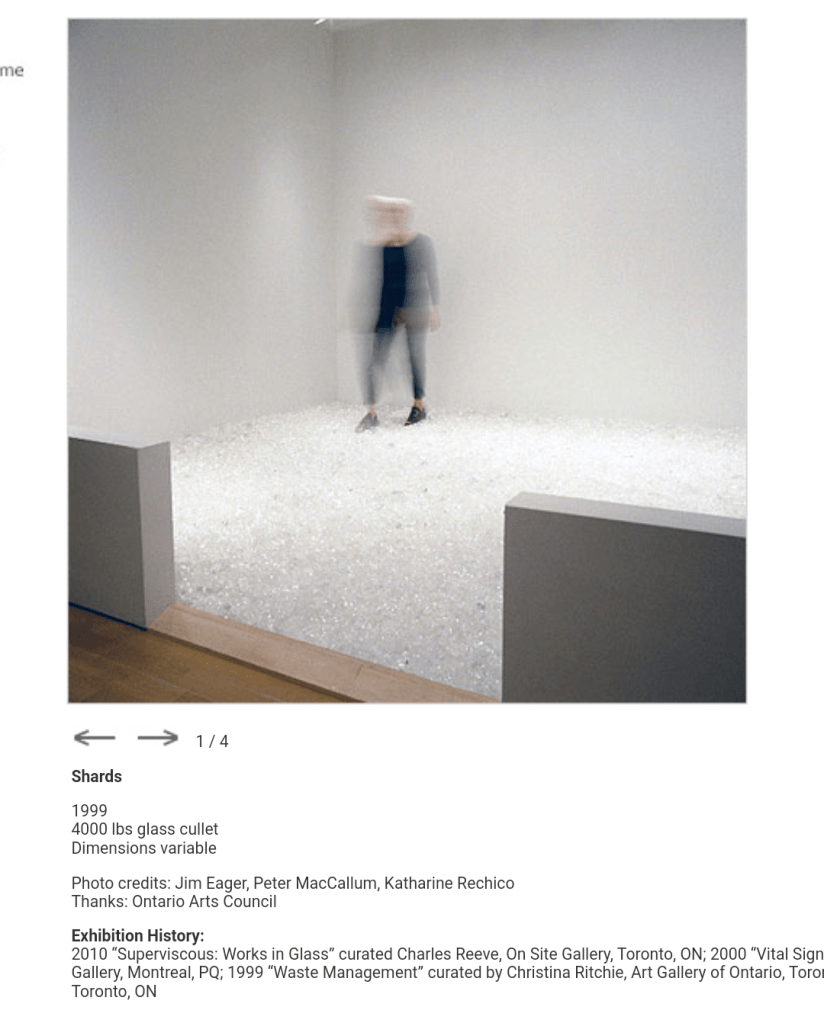
Book:Ritchie C, 1999, “waste management”, 11 July 1999, Art Gallery of Ontario, Viewed AGNSW, Toronto.
“ The category of waste is dialectically linked to the category of value.” (Christina Ritchie 1999)
“ Thus, waste management refrains from constricting a theoretical framework, preferring to explore the metaphorical possibilities that the term invites” (Christina Ritchie 1999)
Sandra Rechico 1999 floor in Shards II (1997-99)
Tom Freidman Untitled (1995)
Germain Koh Sightings (1992)
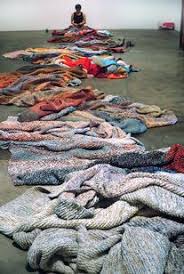
Germain Koh Knitwork (1992, ongoing) : life long undertaking in which Koh will unravel and renit the yarn from cast-off garments into a single disturbing object.
Micheal Landy- Scrapheap Services (1995)
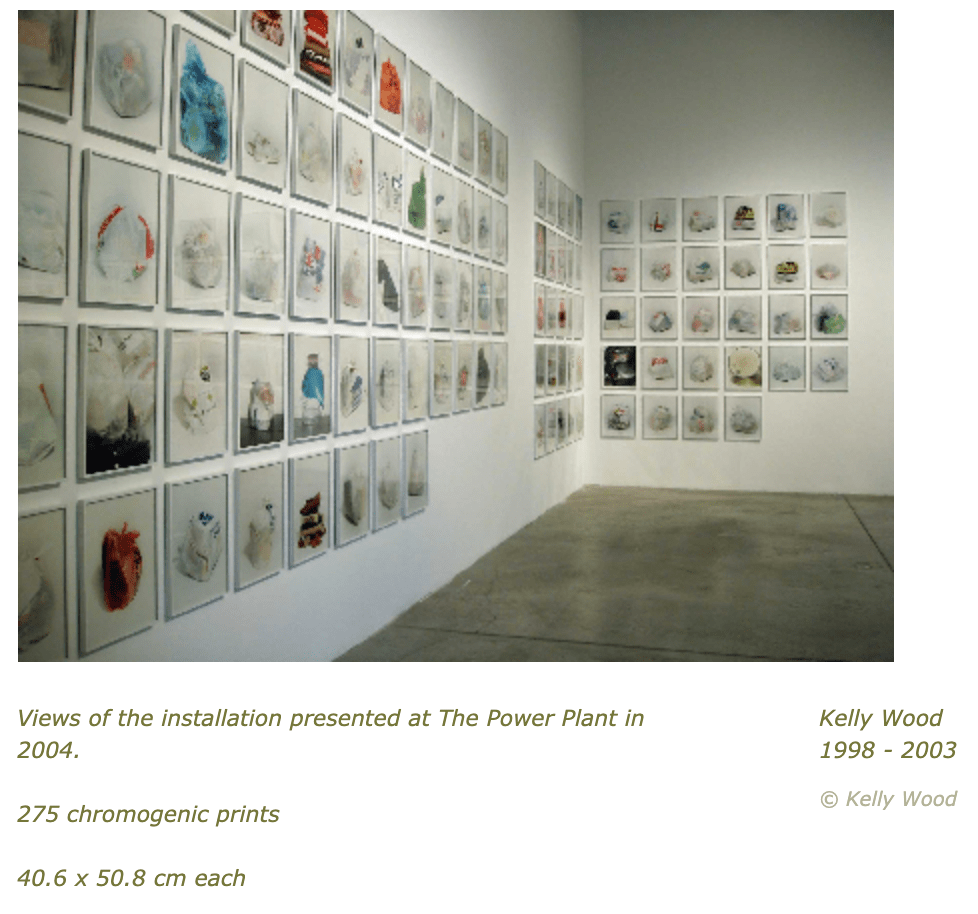
Kelly Wood Continuous Garbage Project (1998)
David Shrigley
Daniel Olson Ballet mecanique (1998): works with mass-produced mechanical toys and produces a sound loop. Ethically he will locate his toys from wil,l not from consumers, he scavenges flea markets, charity shops and a broken-down a remnant of some long-ago childhood.
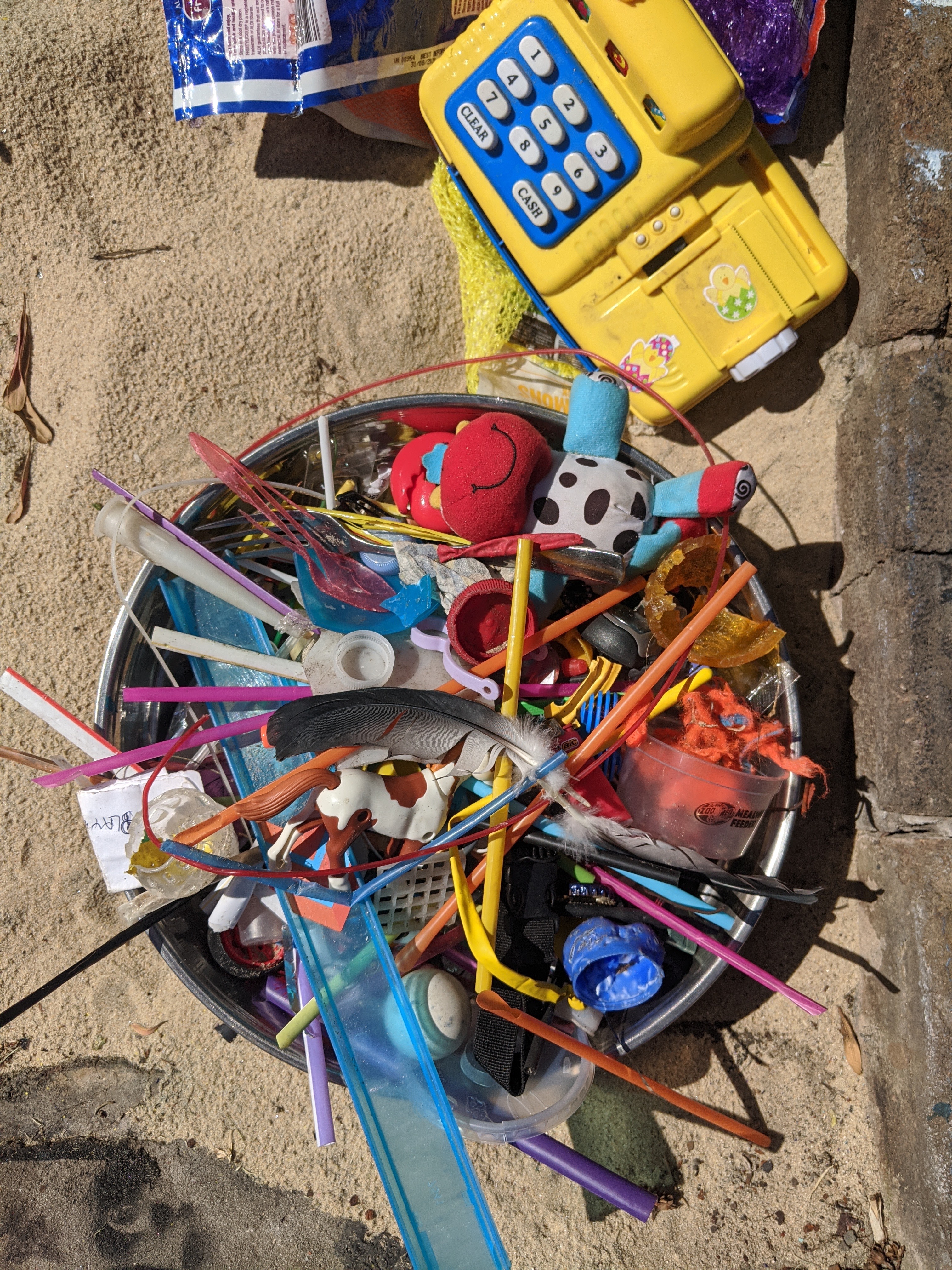
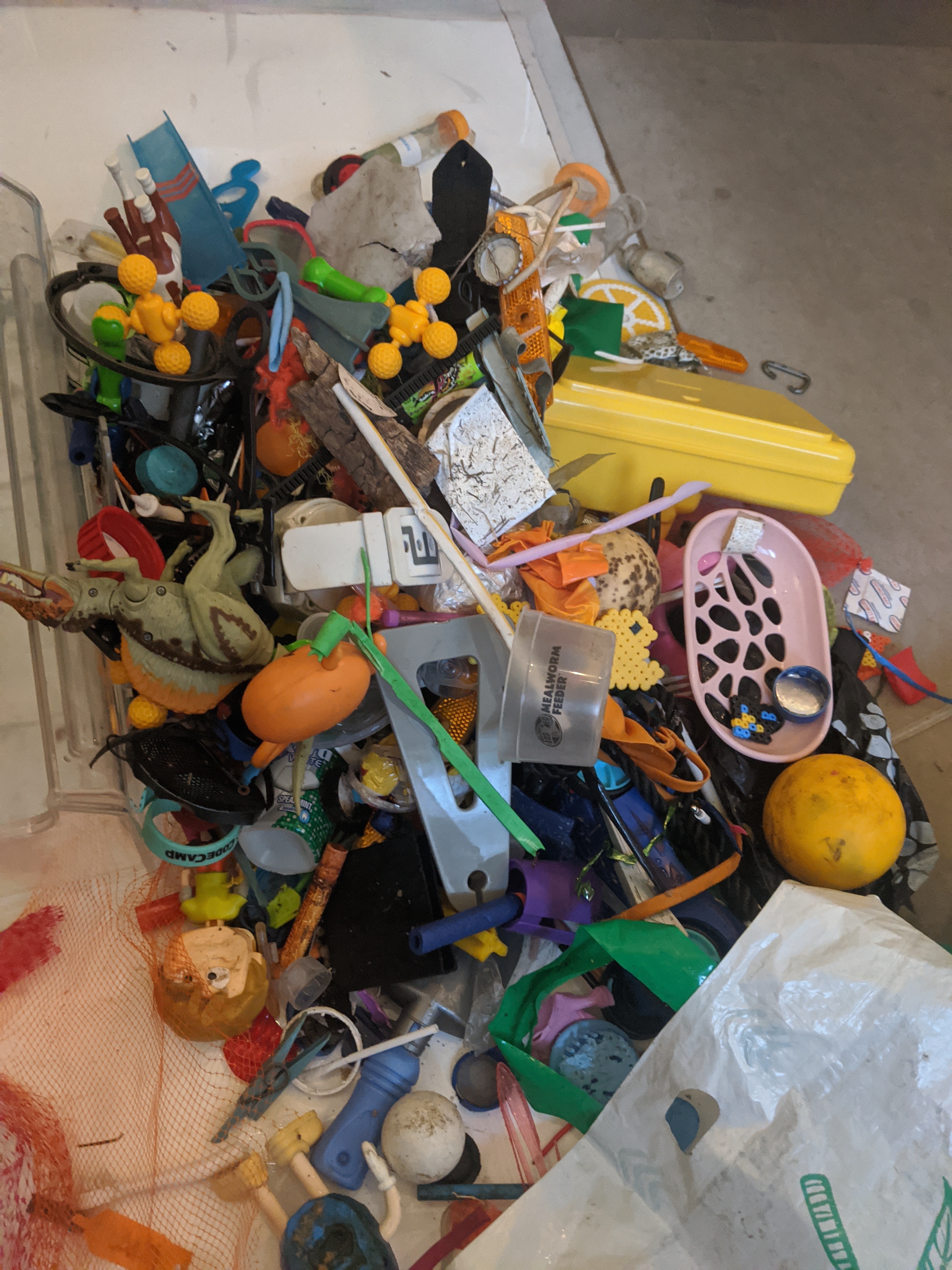
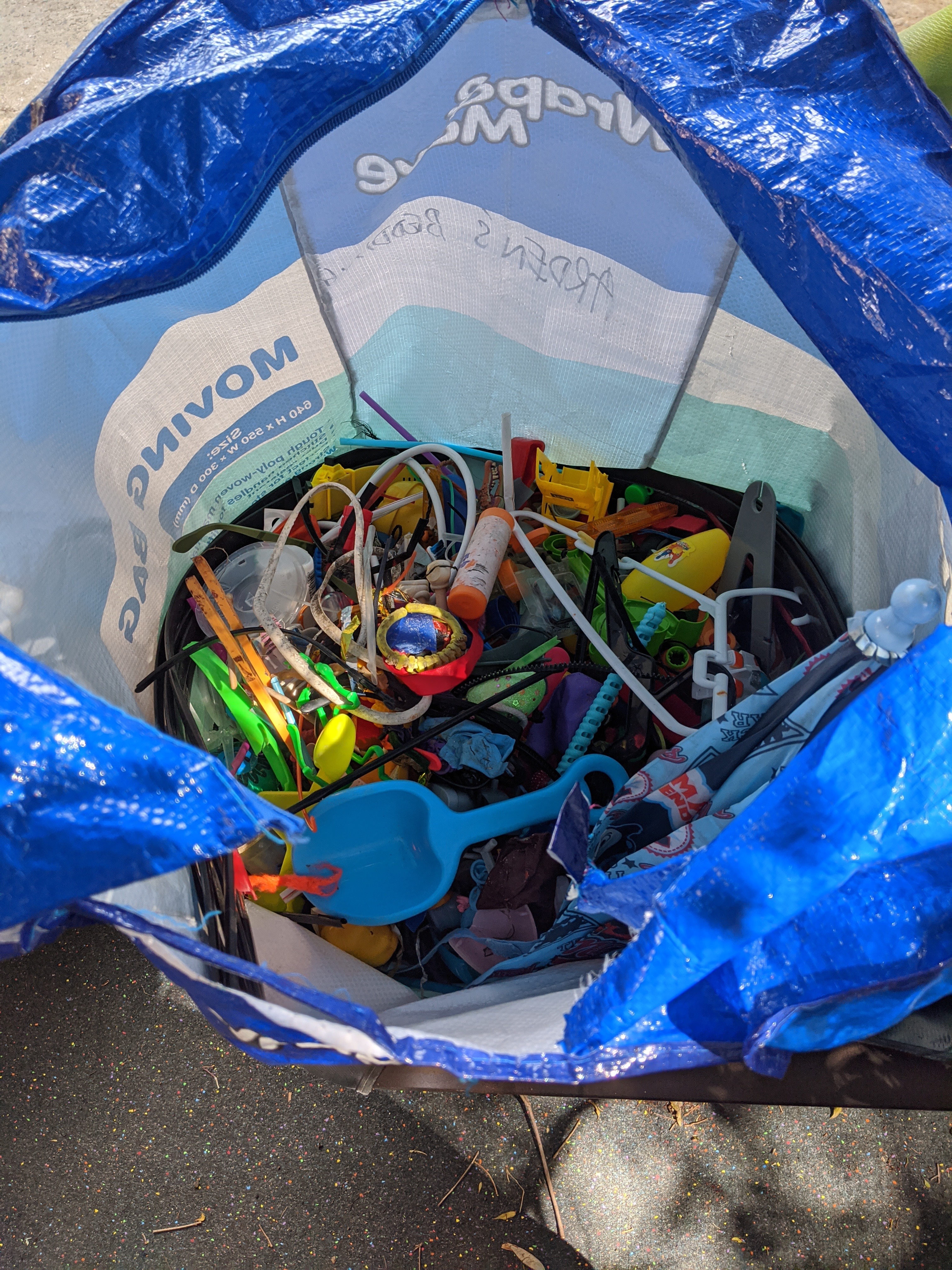
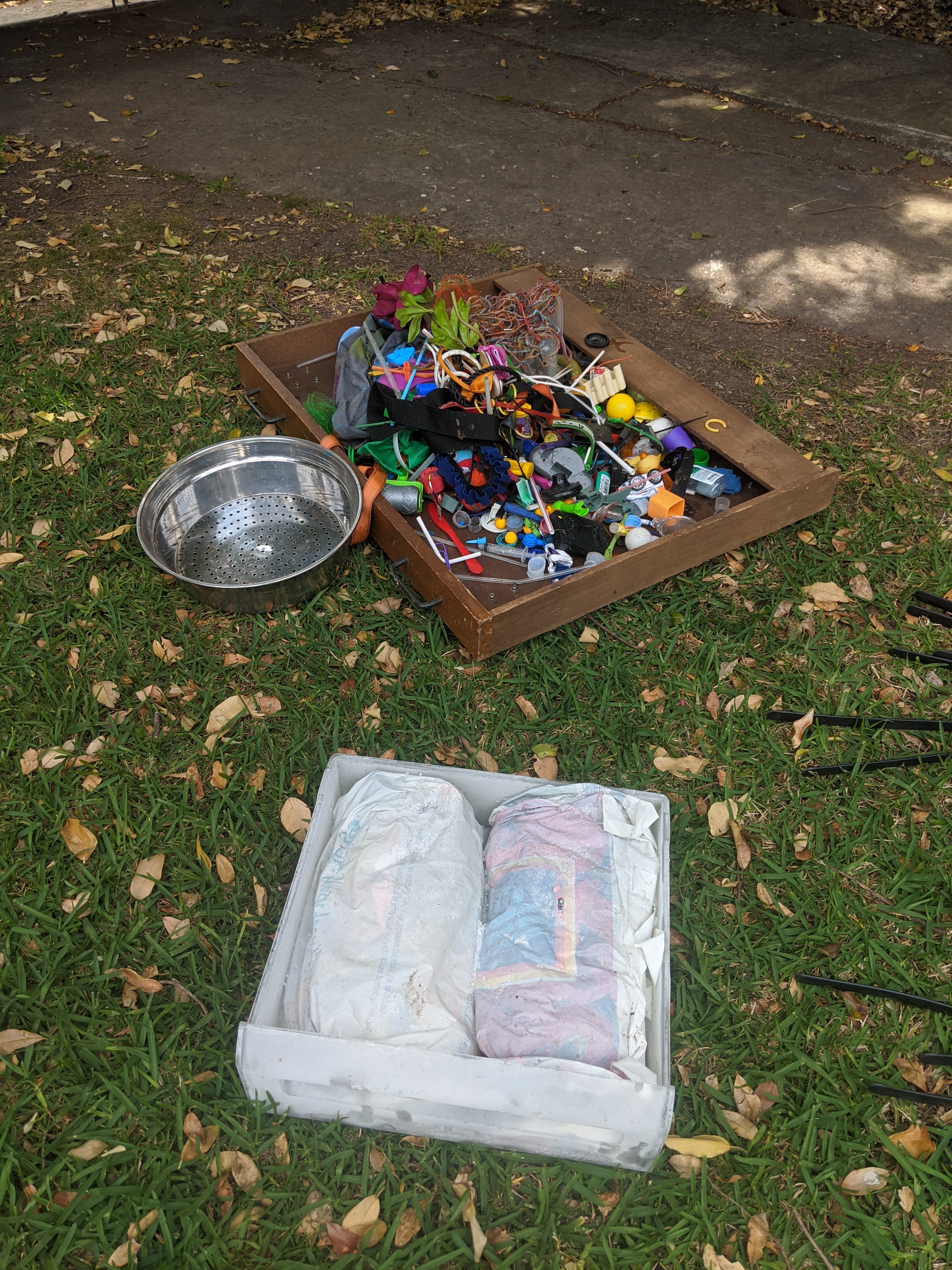
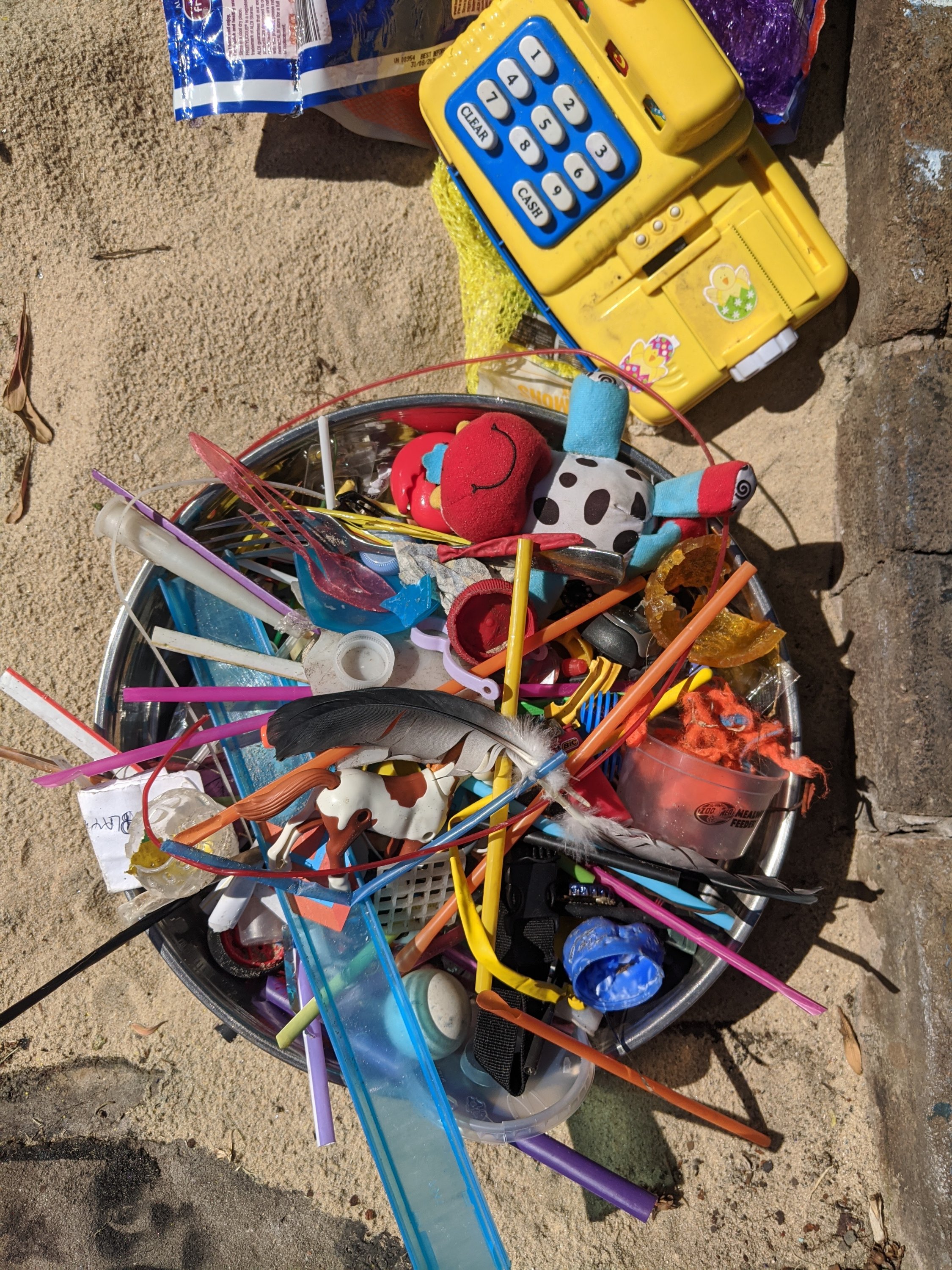
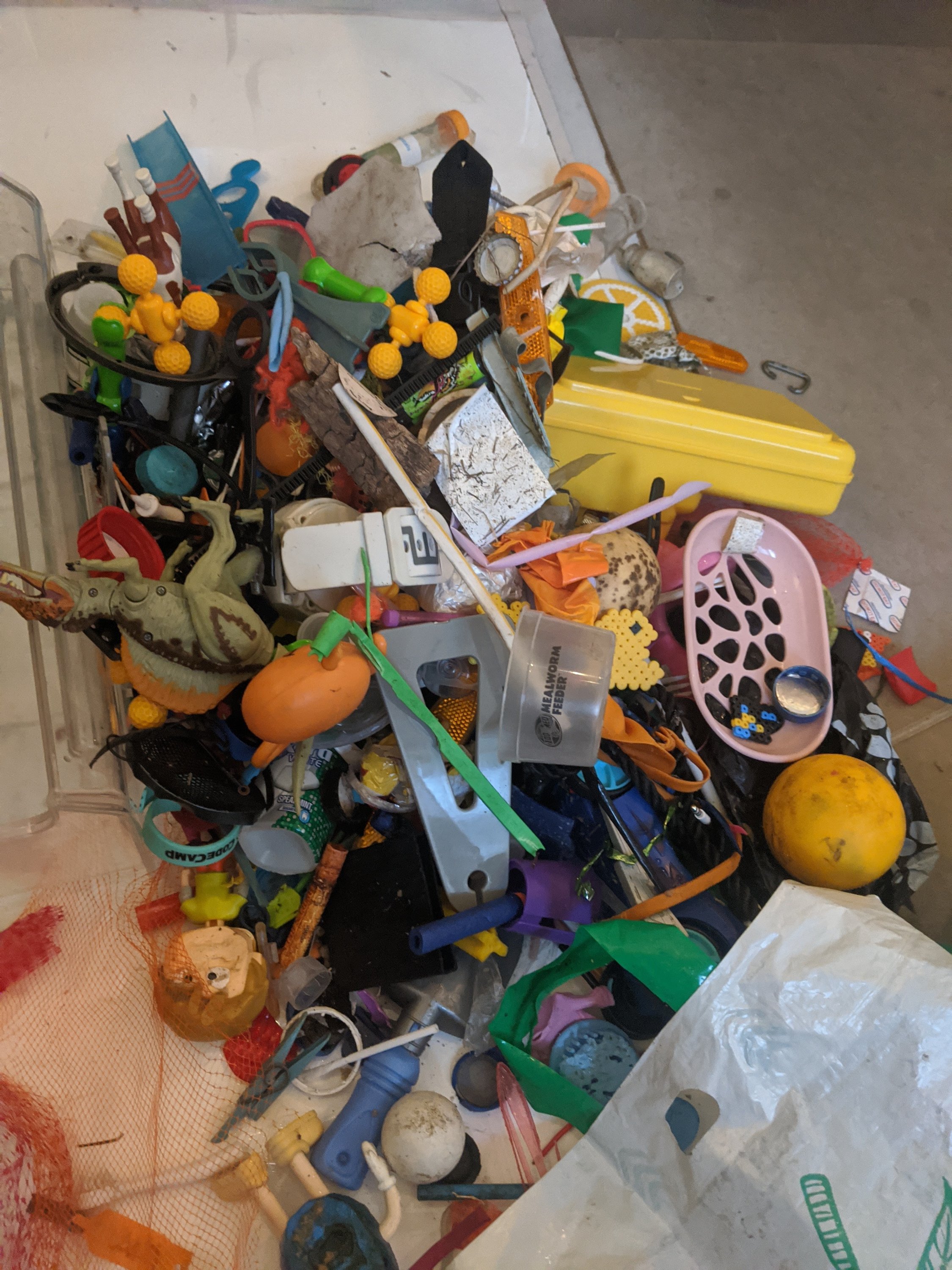
Over the weeks I have been collecting micro plastics, found plastic objects, and children’s toys. These have been from water fronts and parks where I do my morning walks. After contemplating the recent artist research, I structured some of my frozen experiments around them.
Photo experiments shots documented for blog on my iPhone
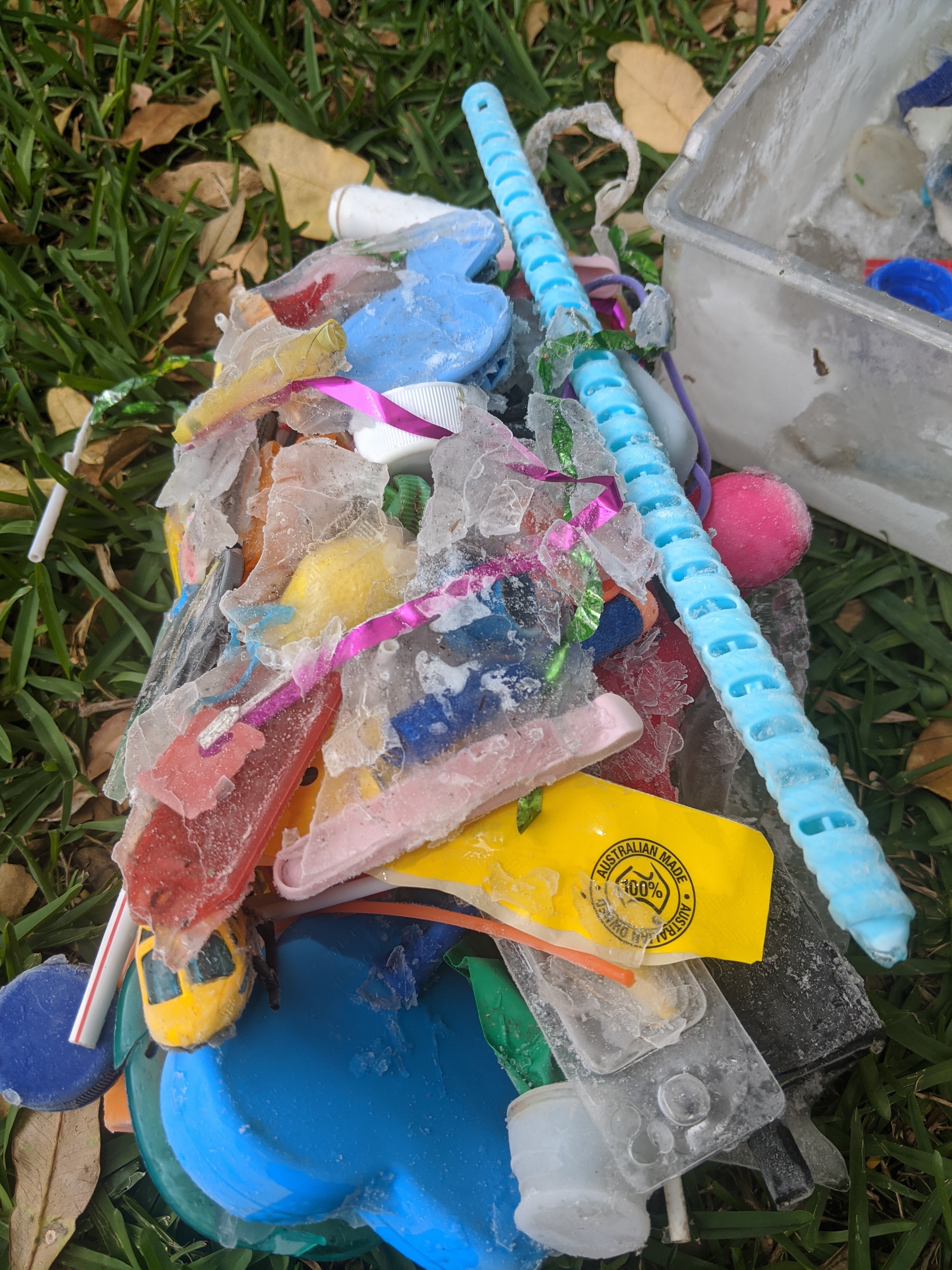
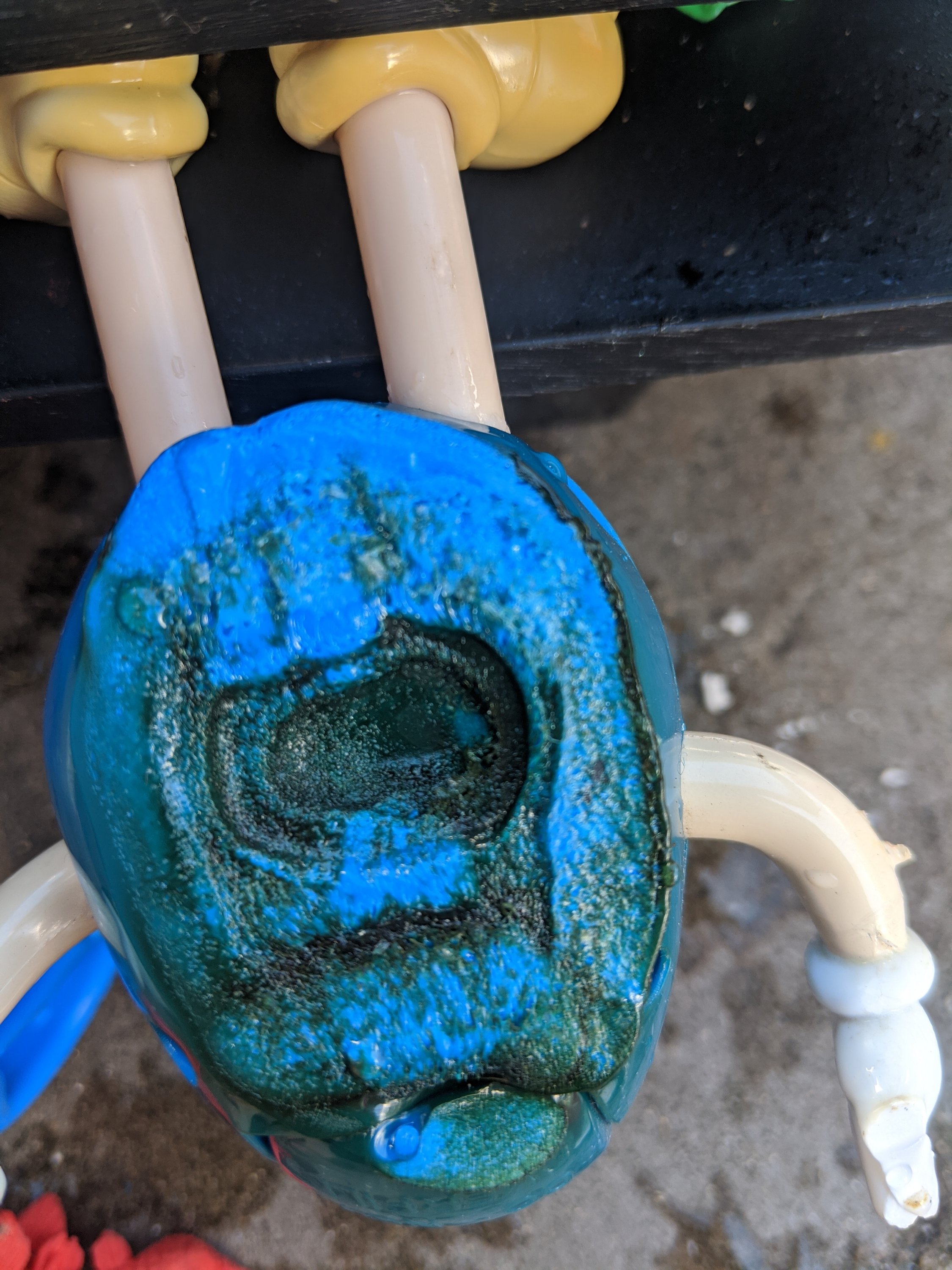
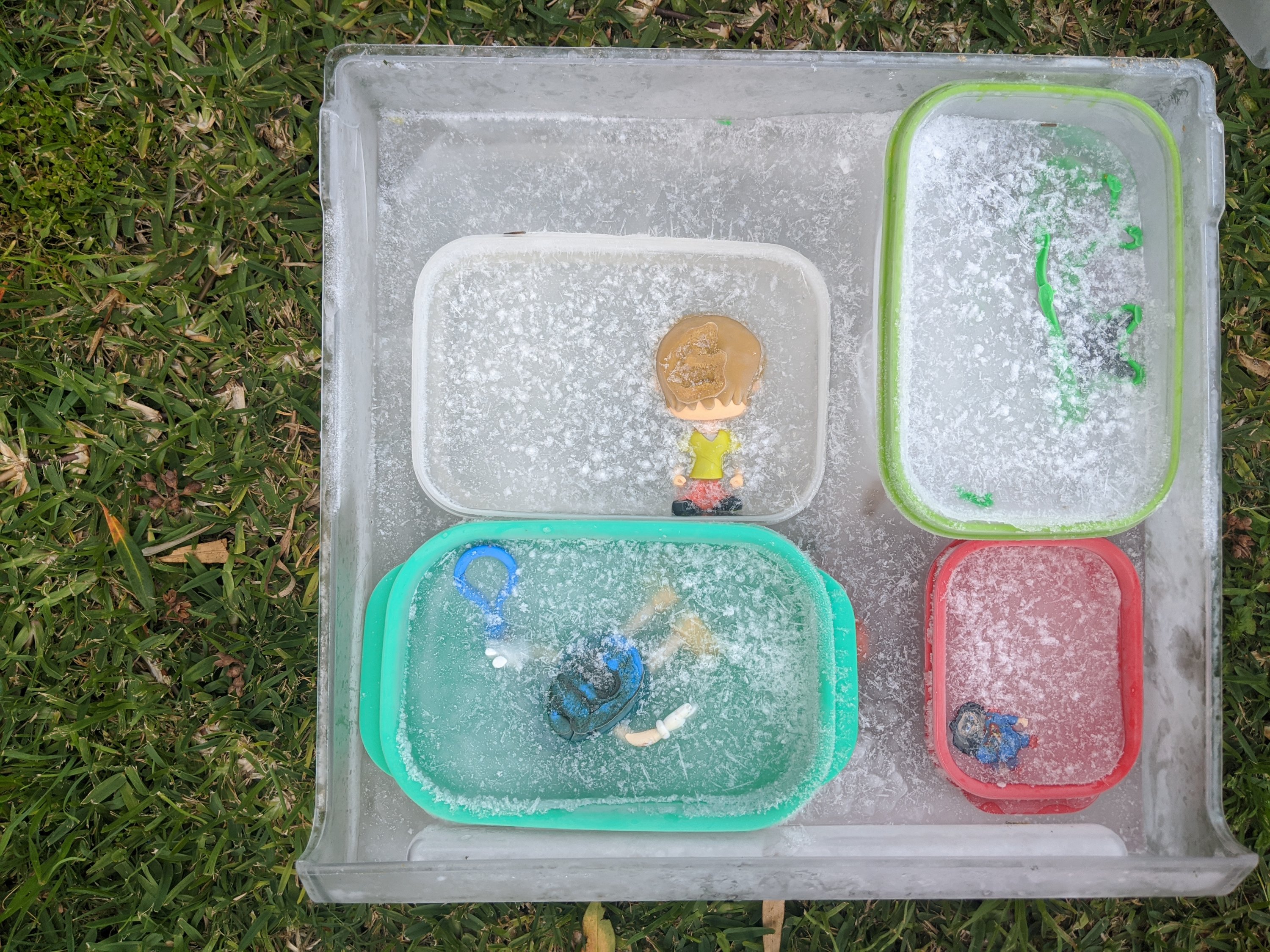
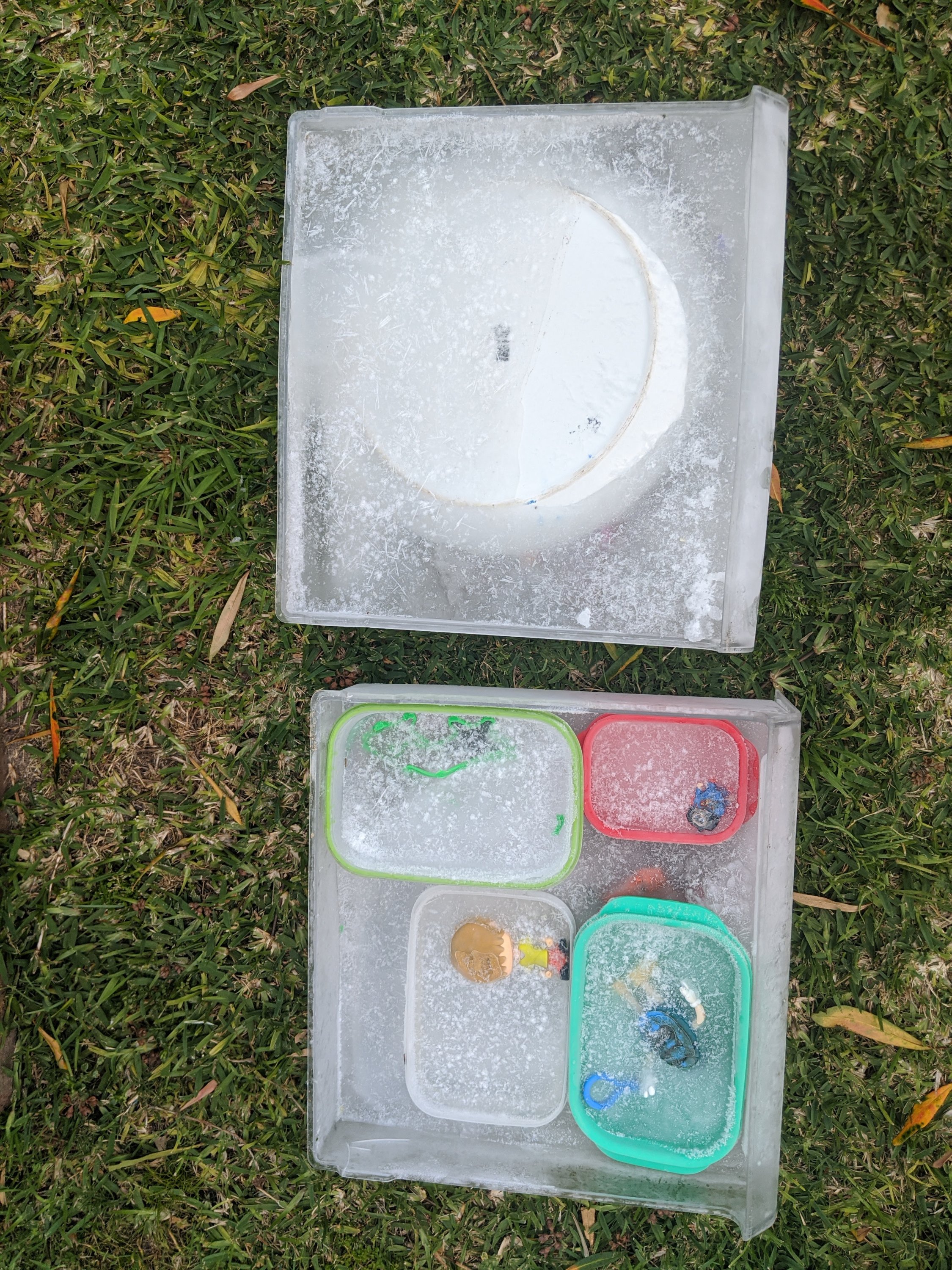
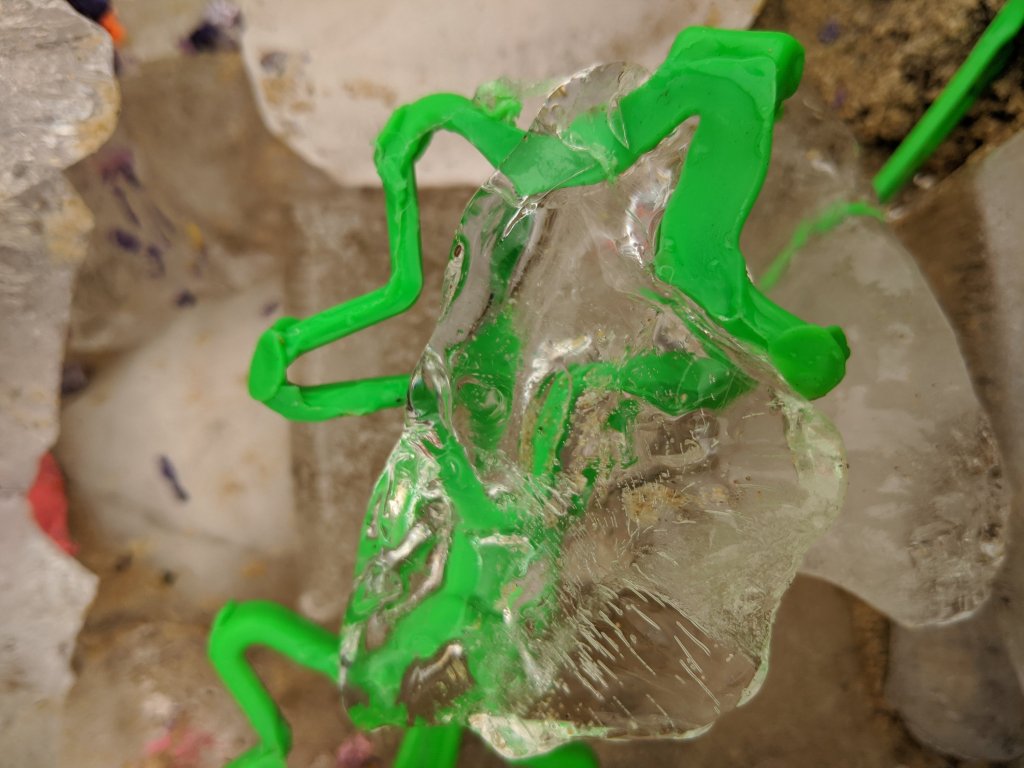
Before freezing I experimented with melting the found objects, this relates to global warming (industry pumping out all of the rubbish I am collecting). Then once frozen I experimented with photographing the objects with in the ice. I did this from all different angles, such as upside down and on the gutter of a roof. I am more aware of my frame and reflection this semester as I lost a number of good shots due to this last semester.
Found objects, melted and frozen, iphone
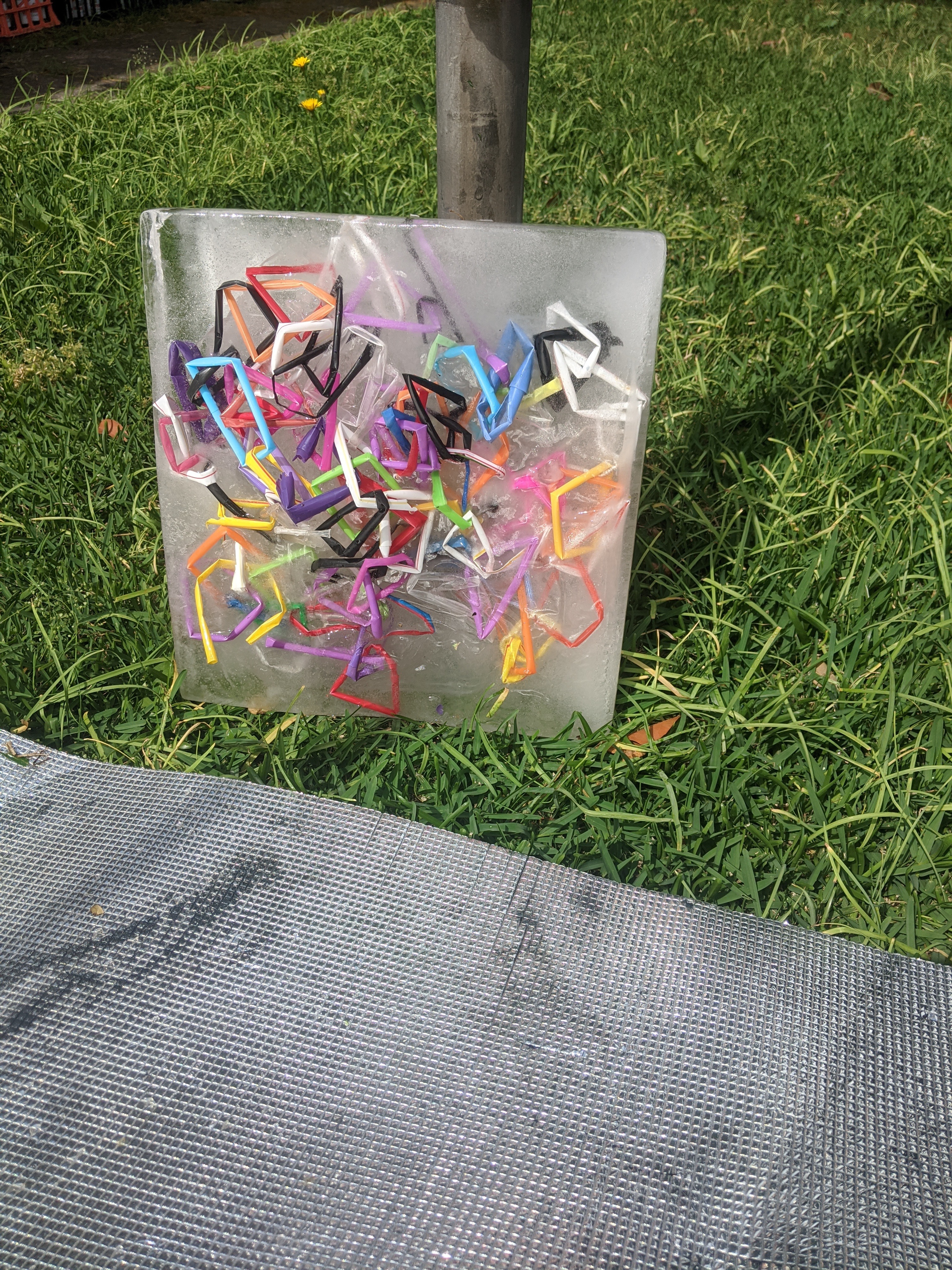
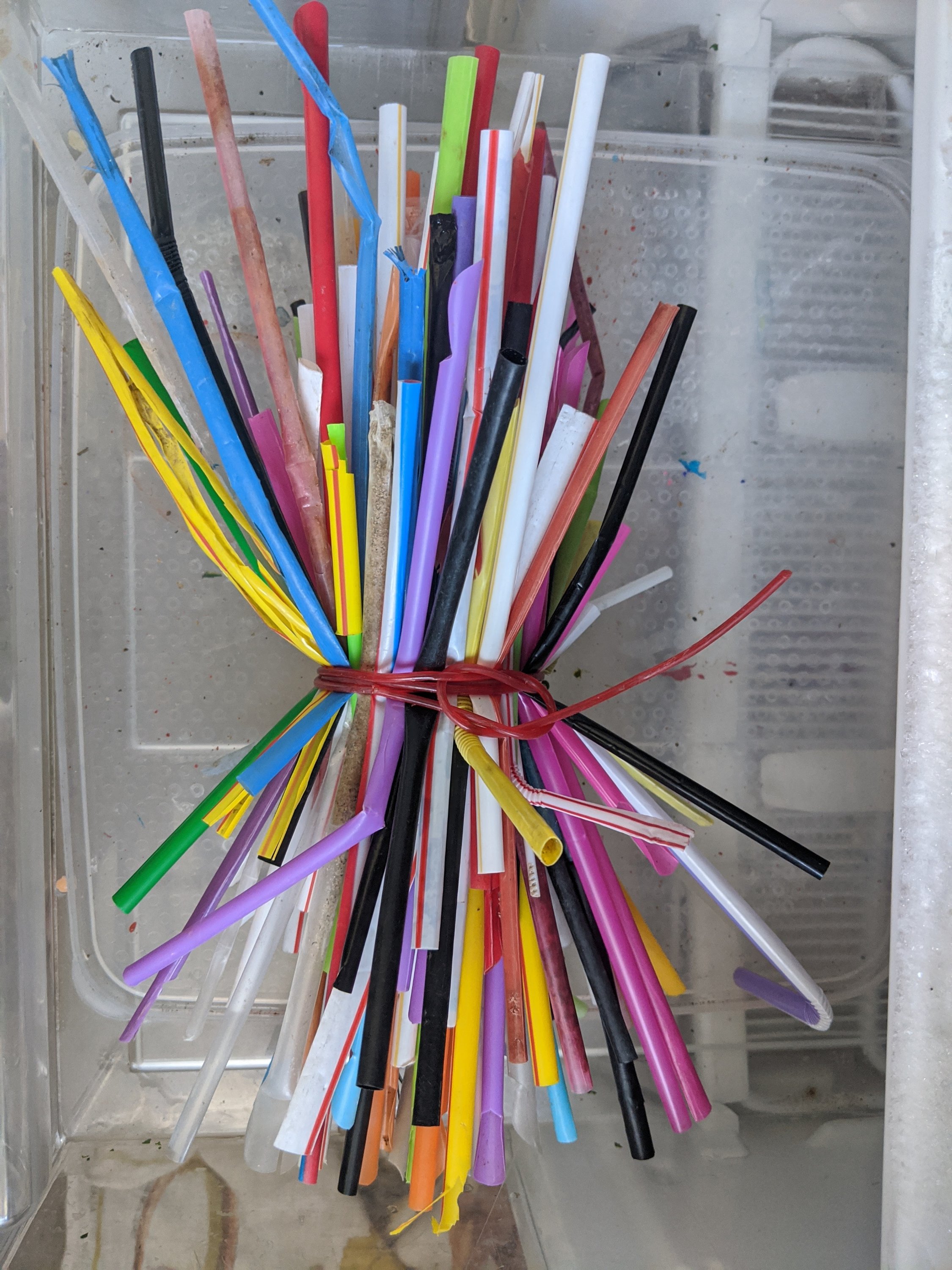
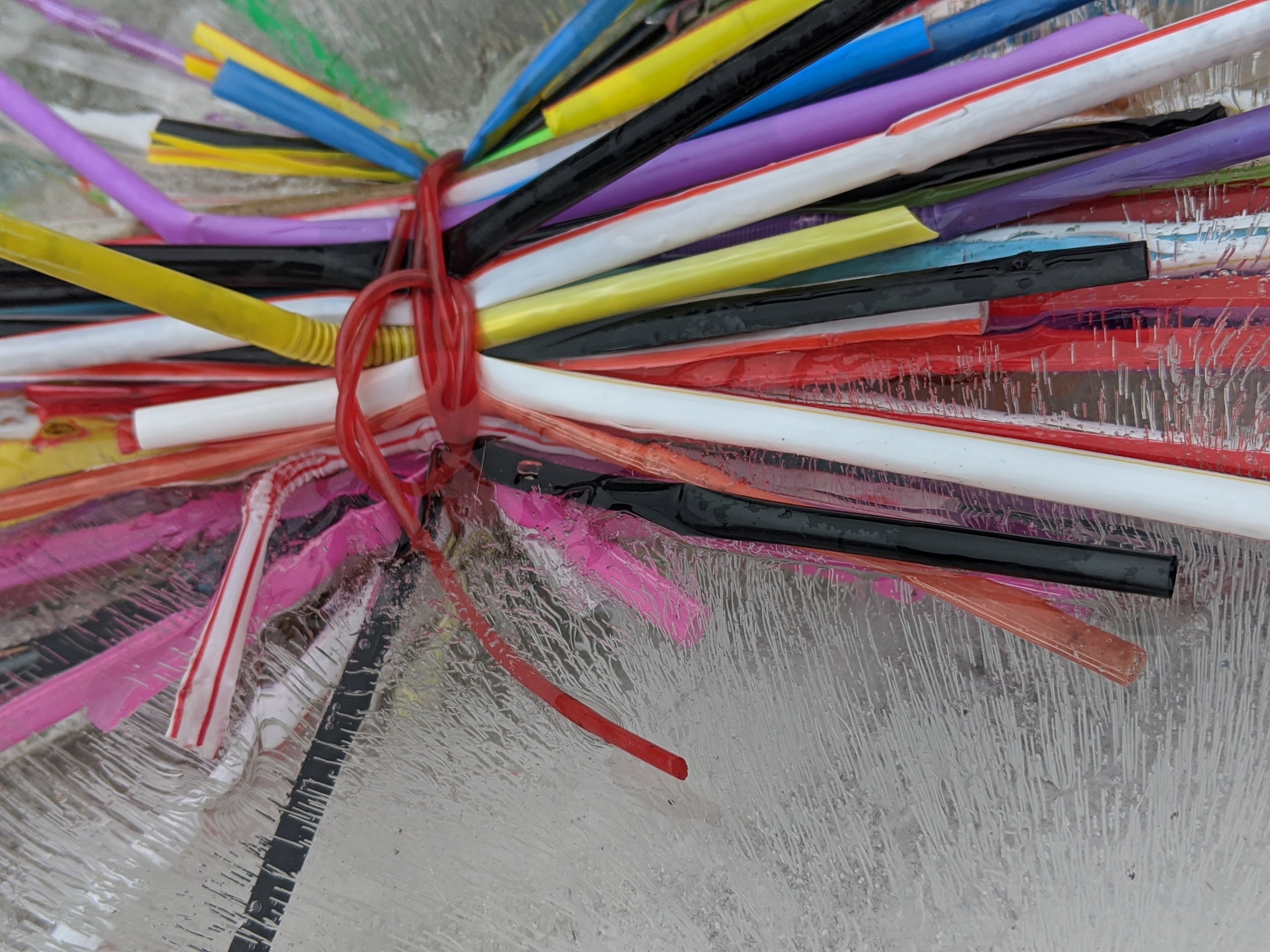
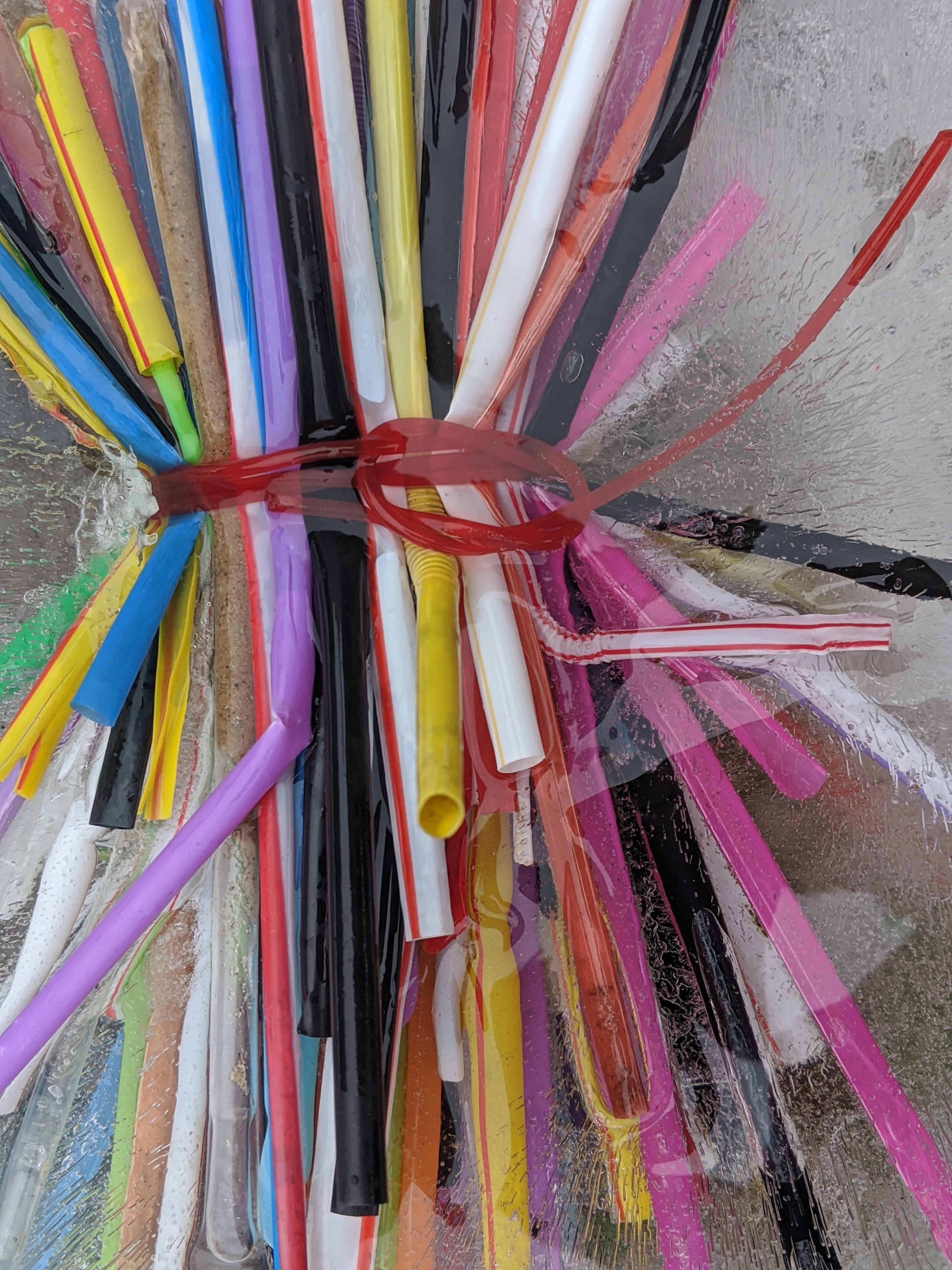
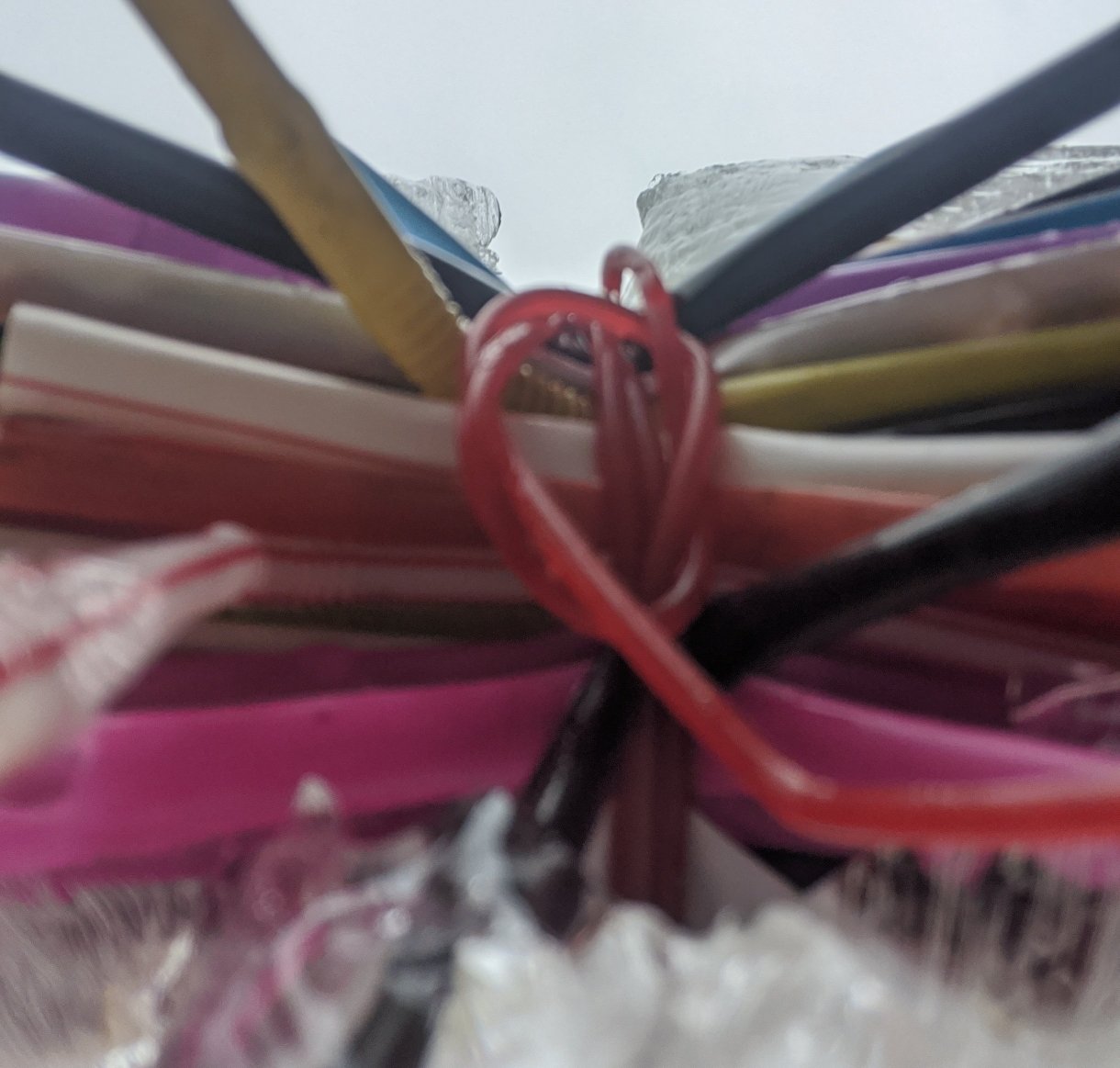
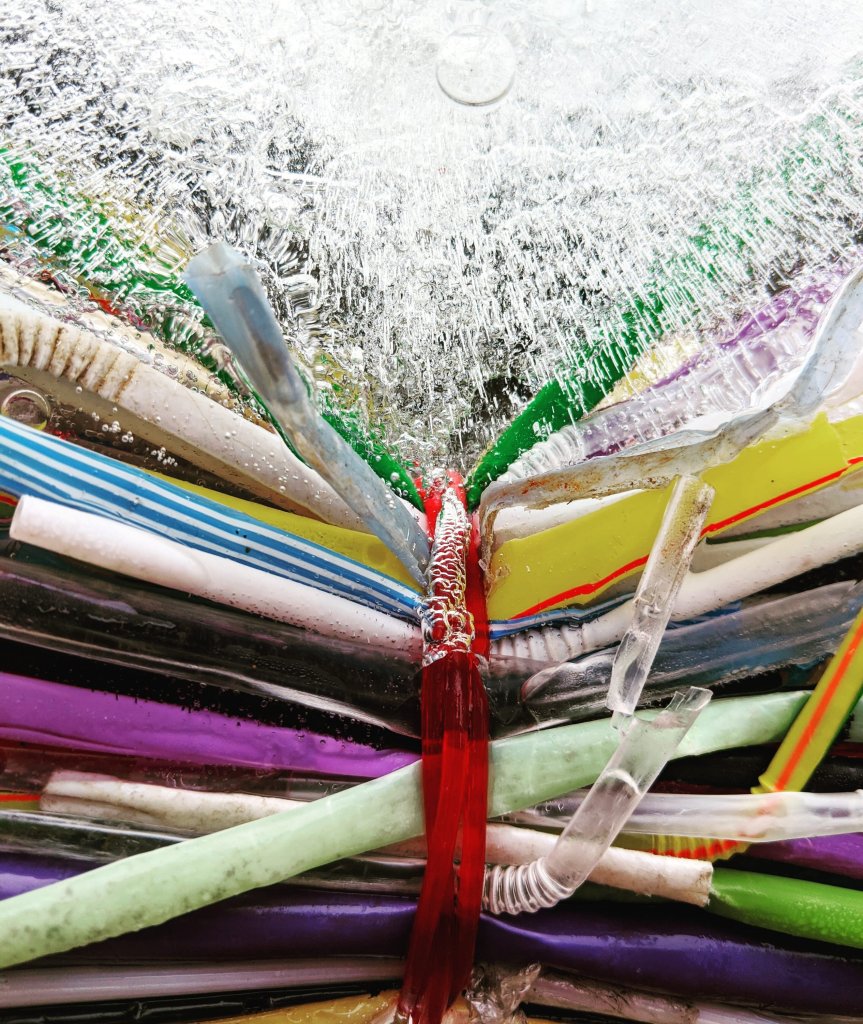
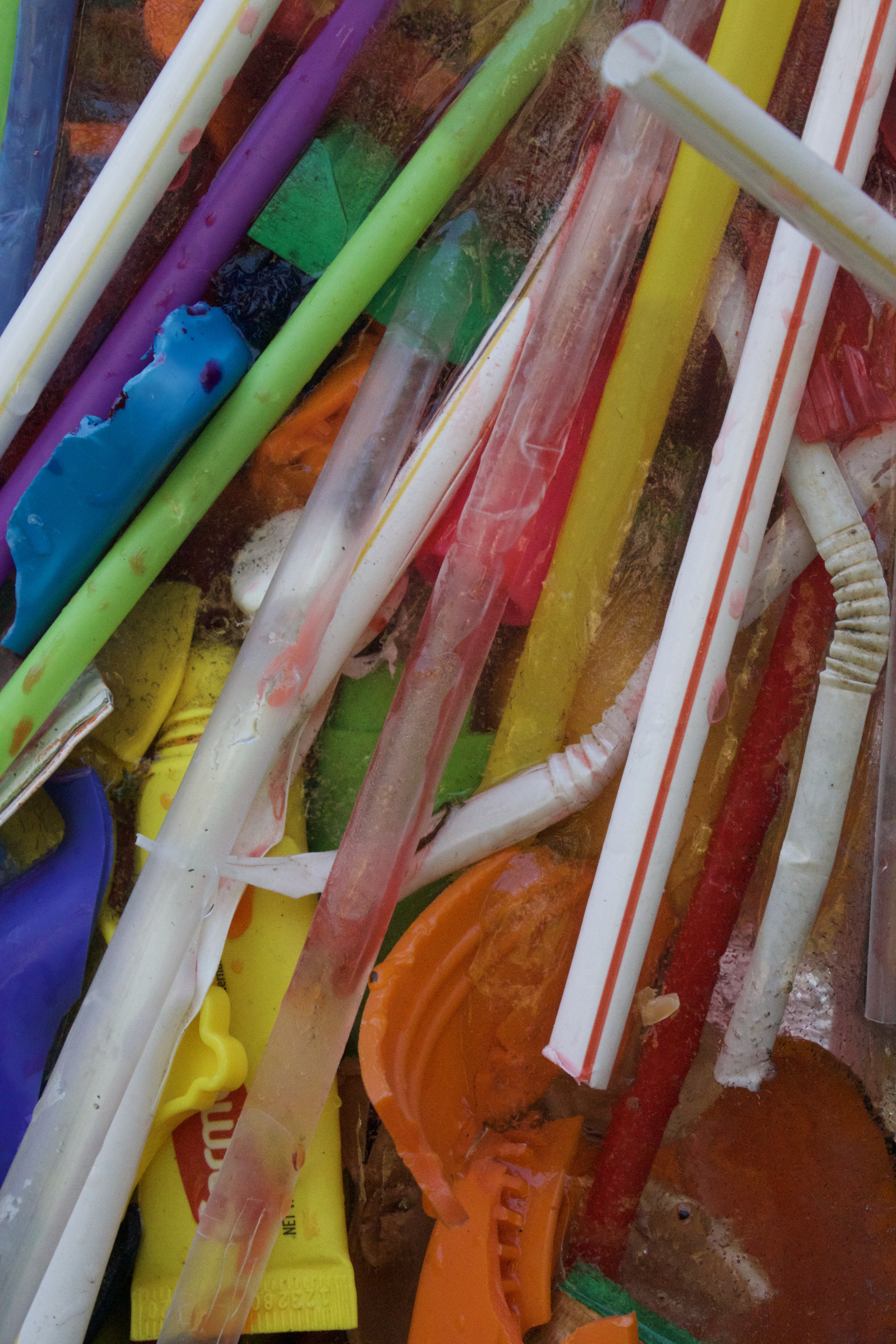
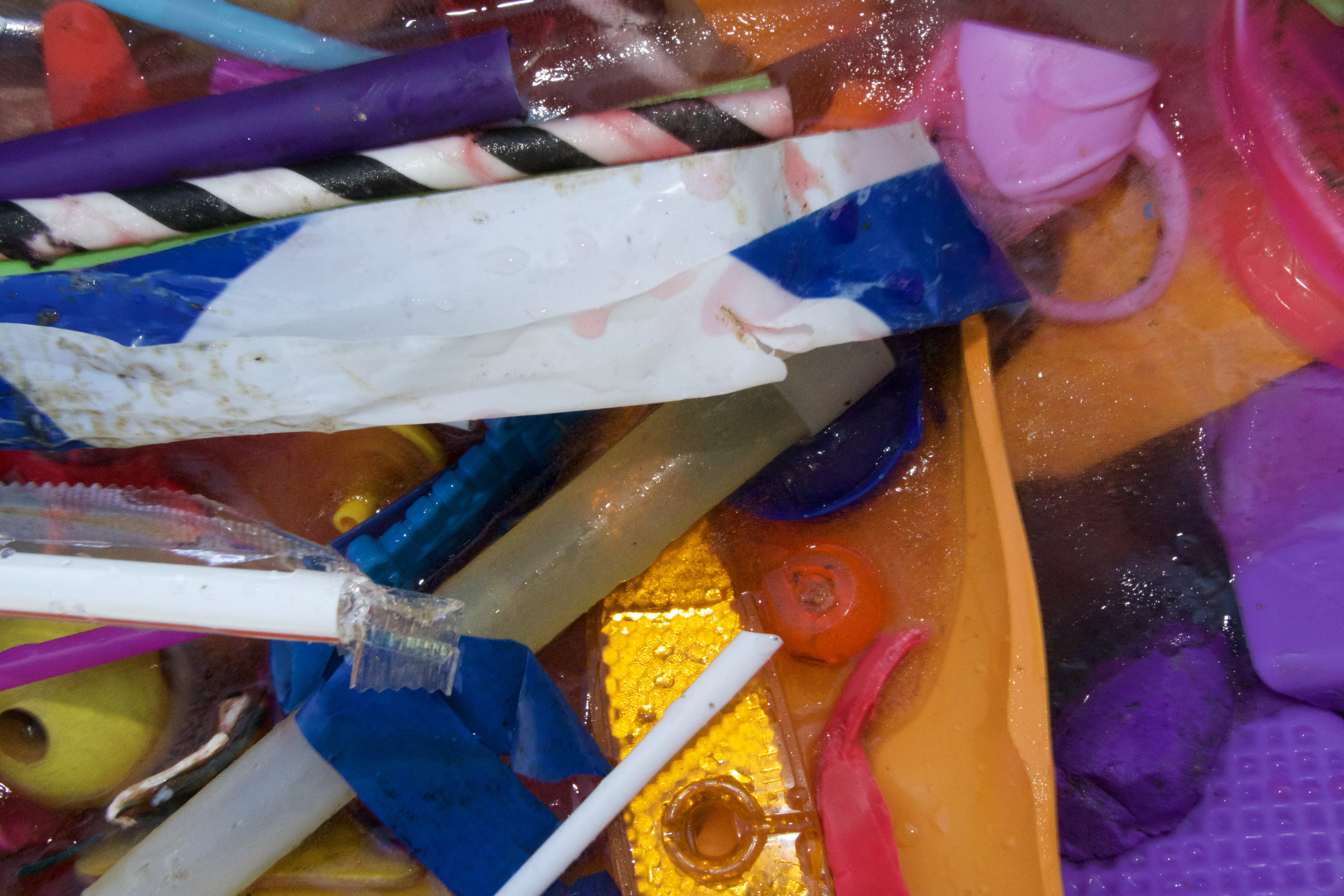
I decided to bind all of the straws together, the straws resemble people, and the tie (bruscutter plastic) is binding us together, with pressure about the common problem that is upon us.
We are all in this togetherK, Naylor,2020 Bound, image, Found objects, straws, frozen, iPhone.Head in the sand
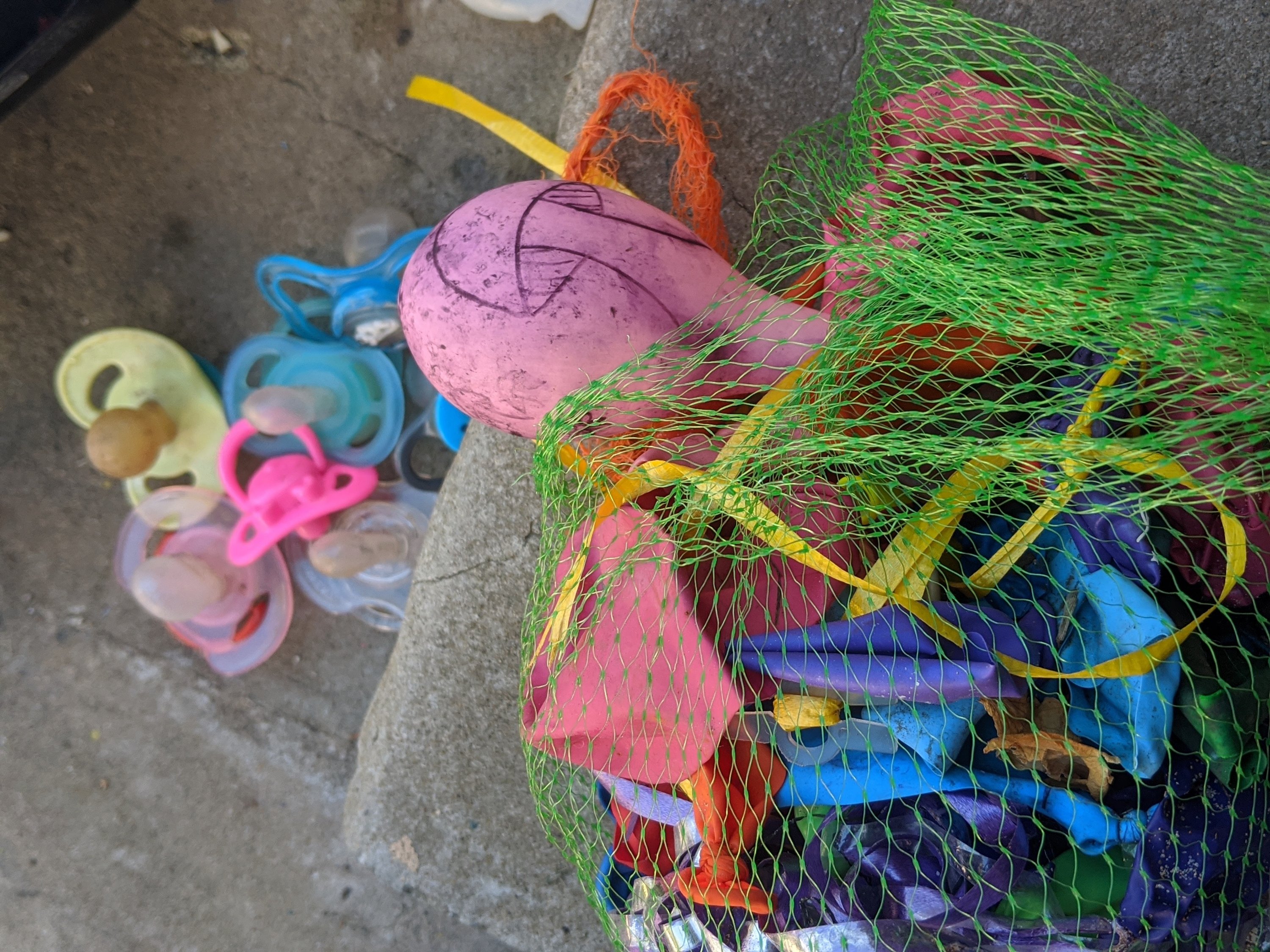
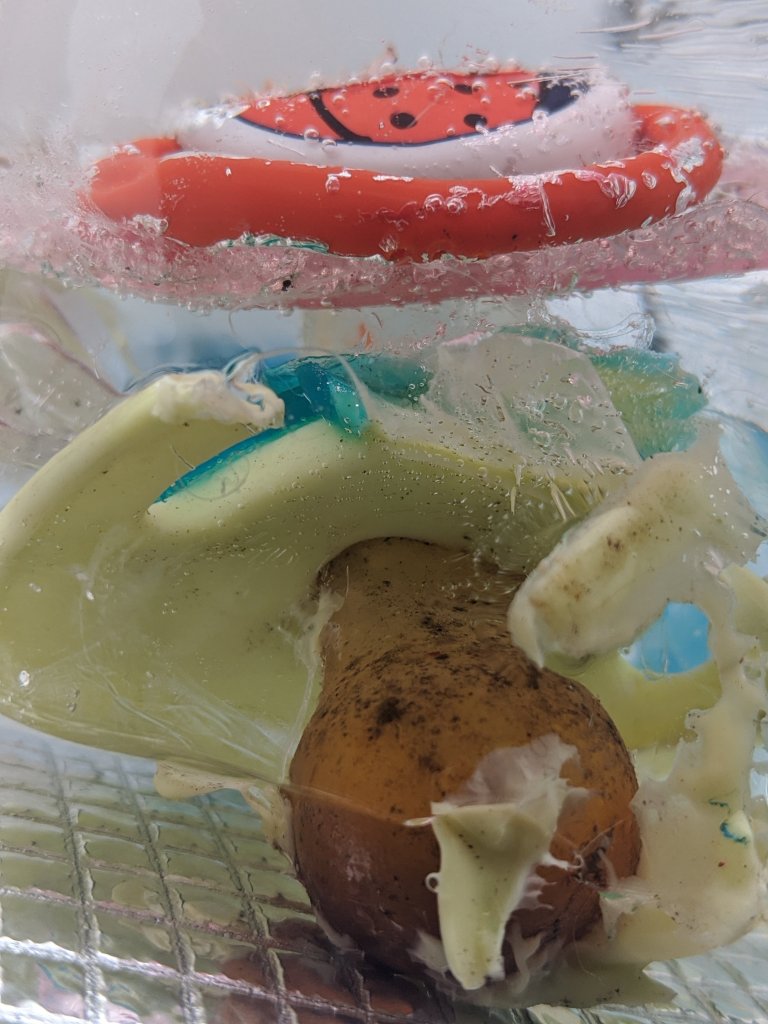
For this series of experiments, I’m really happy with the way the dummies turned out, I used the sky as a background so the white with the clear plastic makes a lovely abstract composition. When I was melting them it was clear to me how terrible it is that we stick plastic in our babies mouths as soon as they are born.
This is going in for a second freeze
Making sure the frame is right
Found objects, melted dummies, frozenFound objects, Plastic dummies, melted and frozen, iPhone
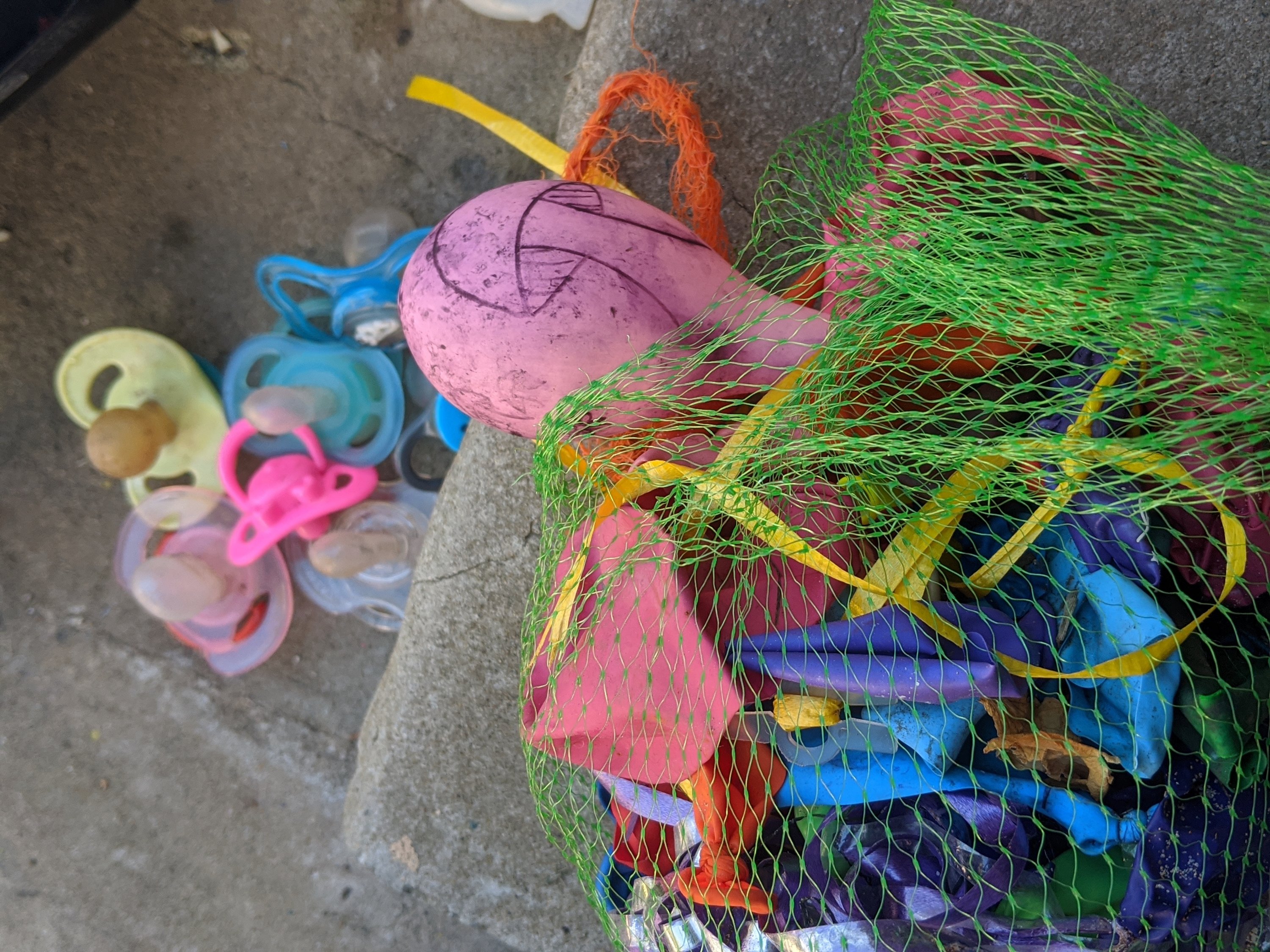
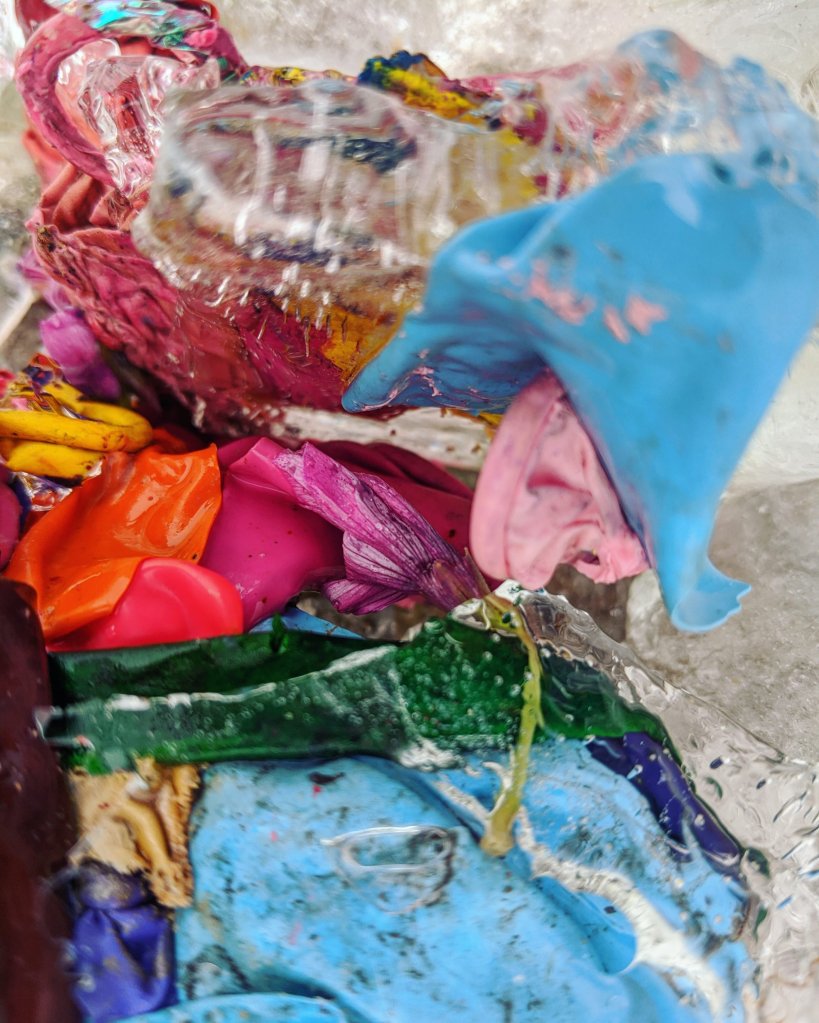
It’s really shocking on how quickly I have been able to gather a new bunch of balloons. They photograph well because of the colour and abstract forms they create. I have tried melting them to turn them into more of a mess.
Melted, frozen balloons, documented with iPhoneFound objects, Melted balloons, frozen, documented with iPhone.
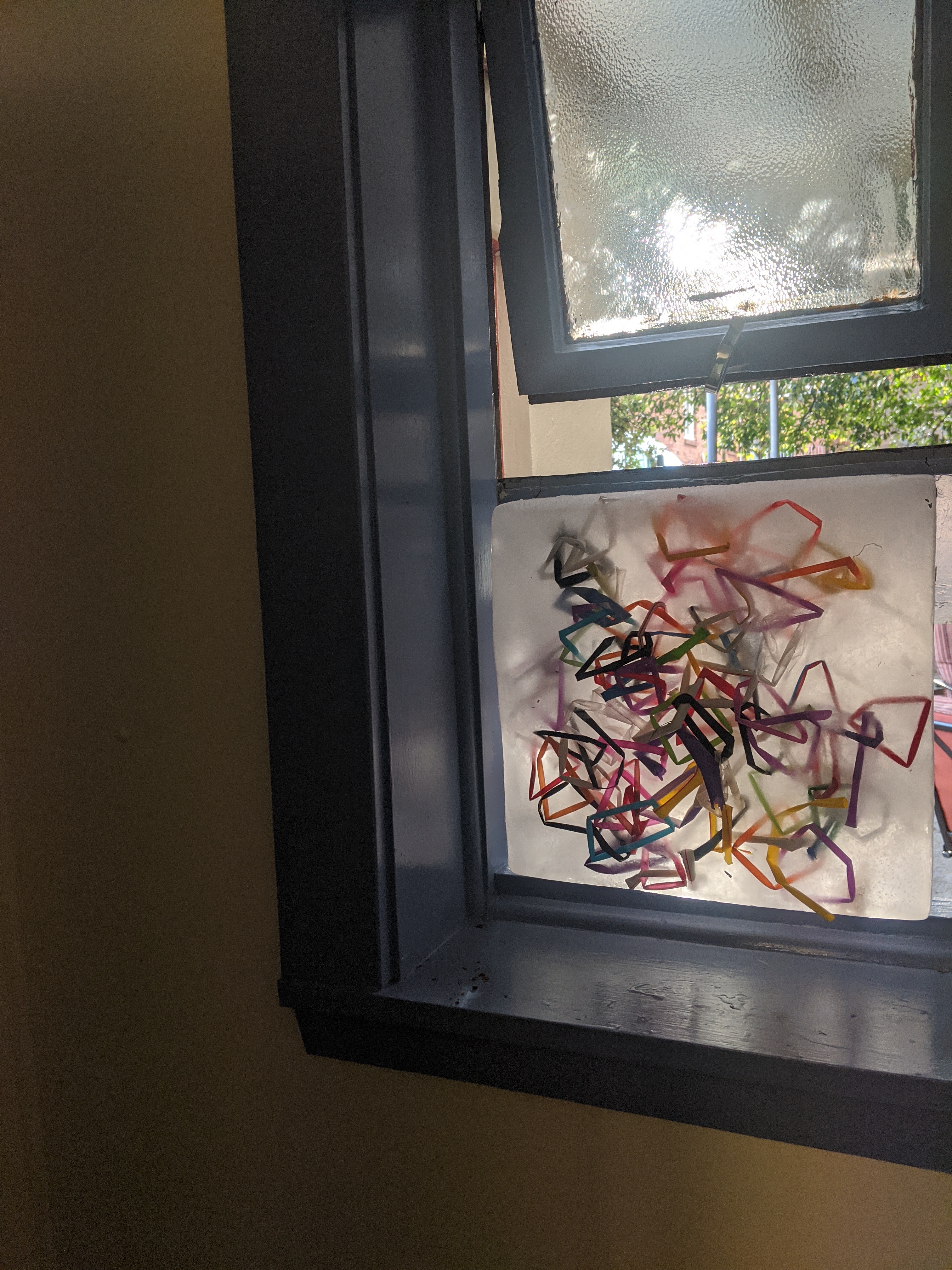
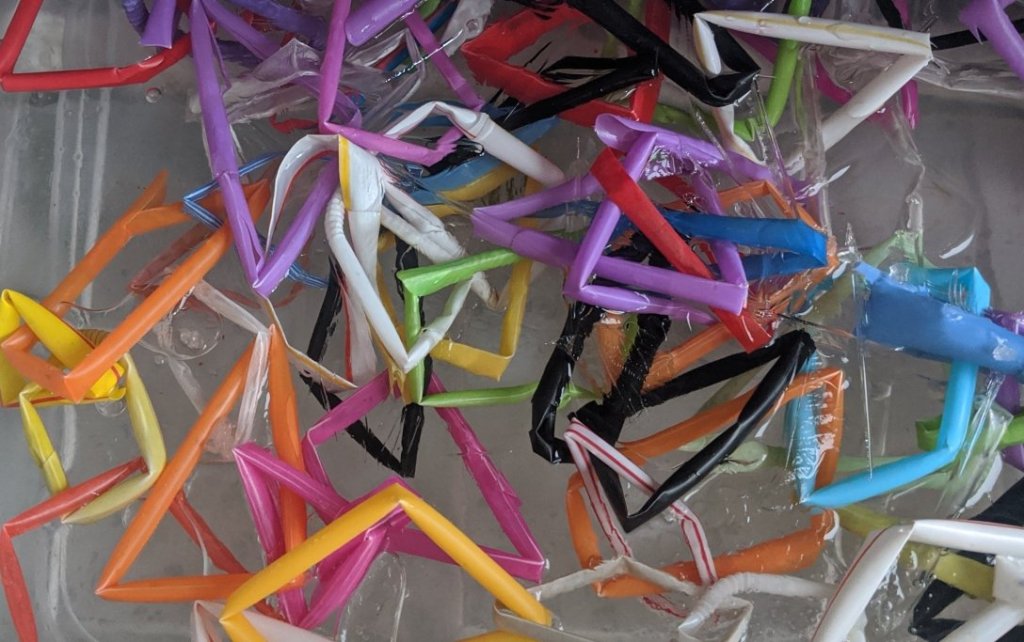
After completing the first straws photoshoot, comments that initiated more ideas resembling my passion towards this seriesb work came to light. The first was the plastic netting bundling. And the second being that making the straws into links…we are all inextricably linked to the problem of waste.
Straws connected resembling that we are all linked
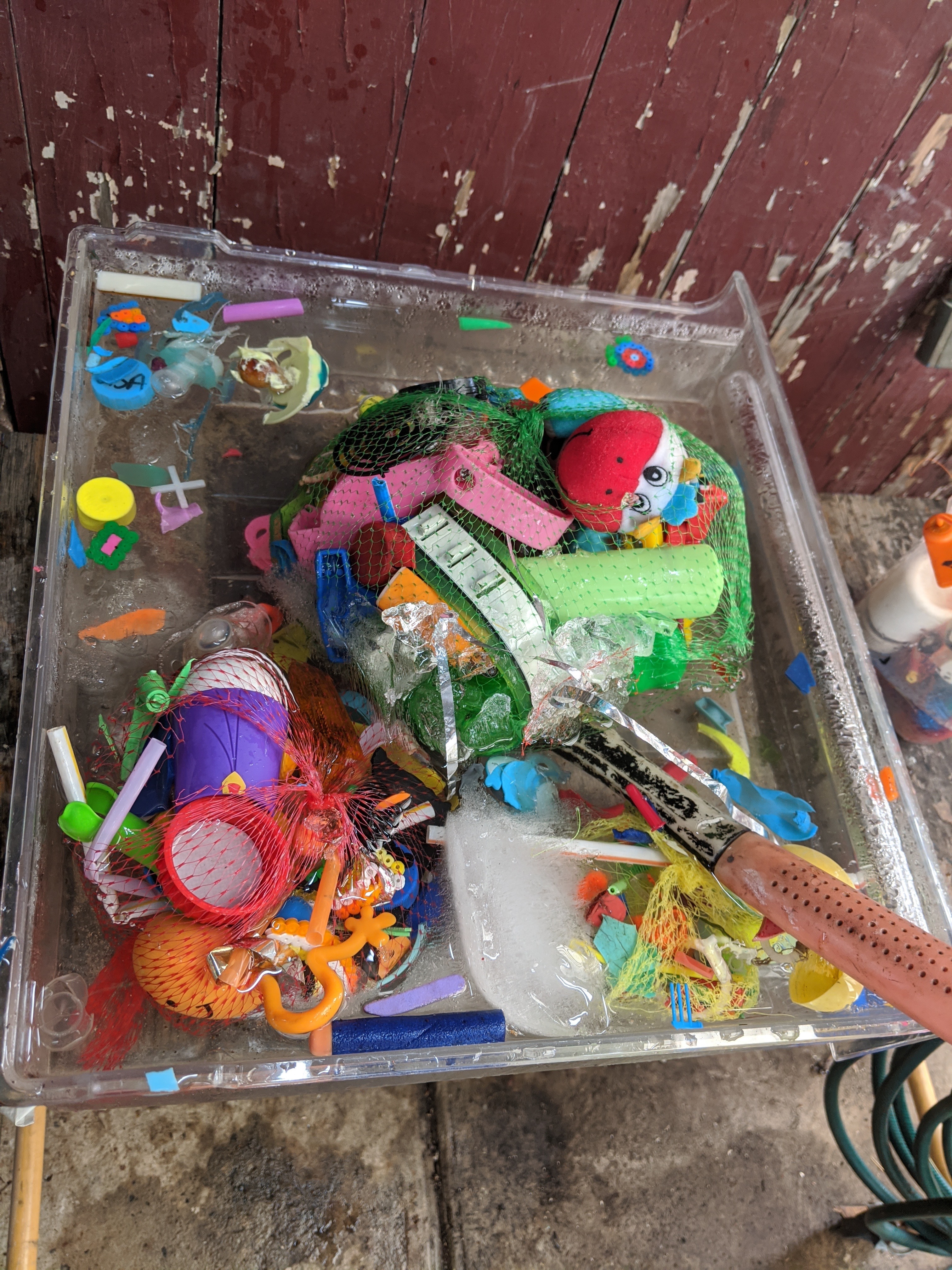
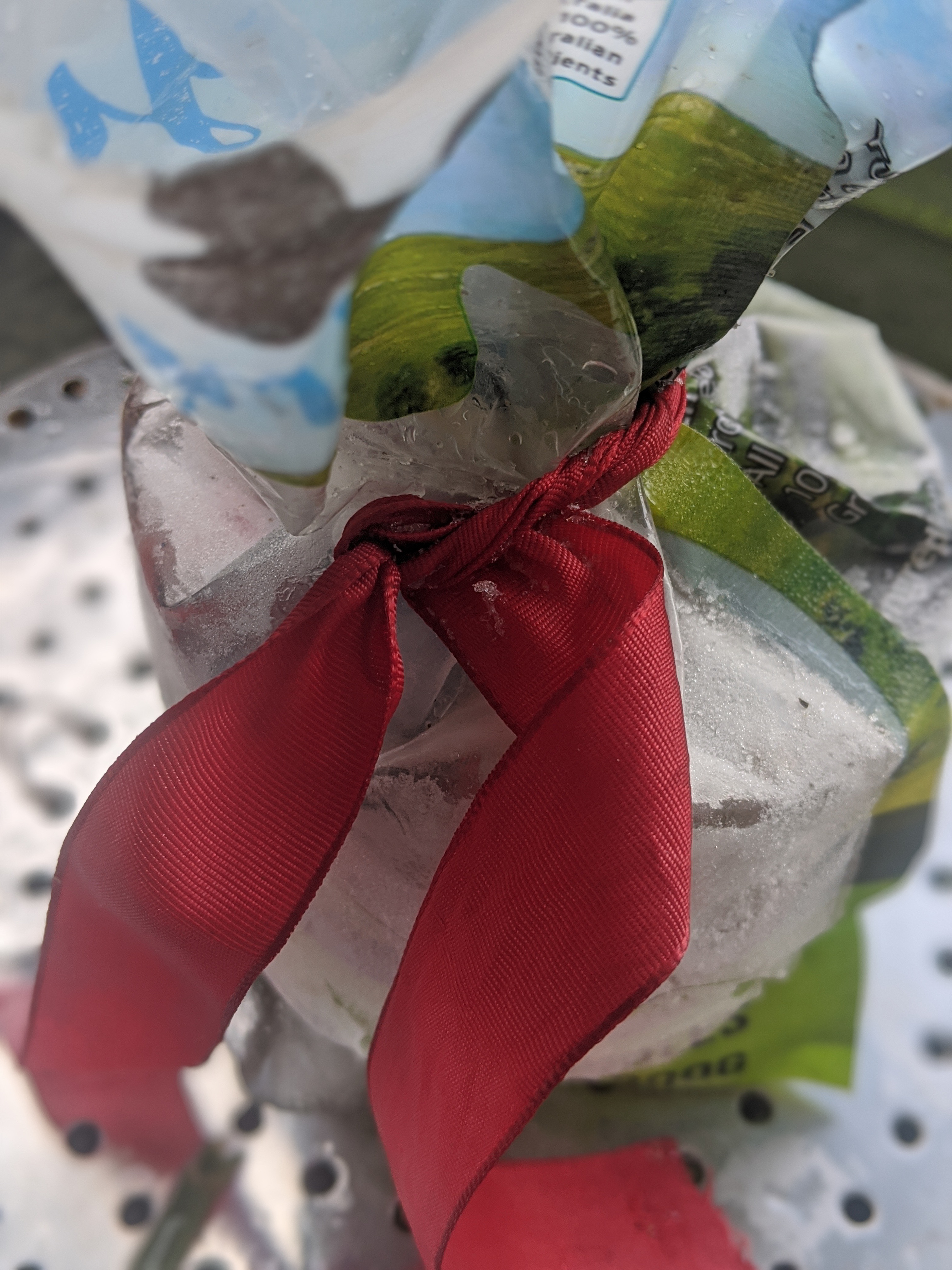
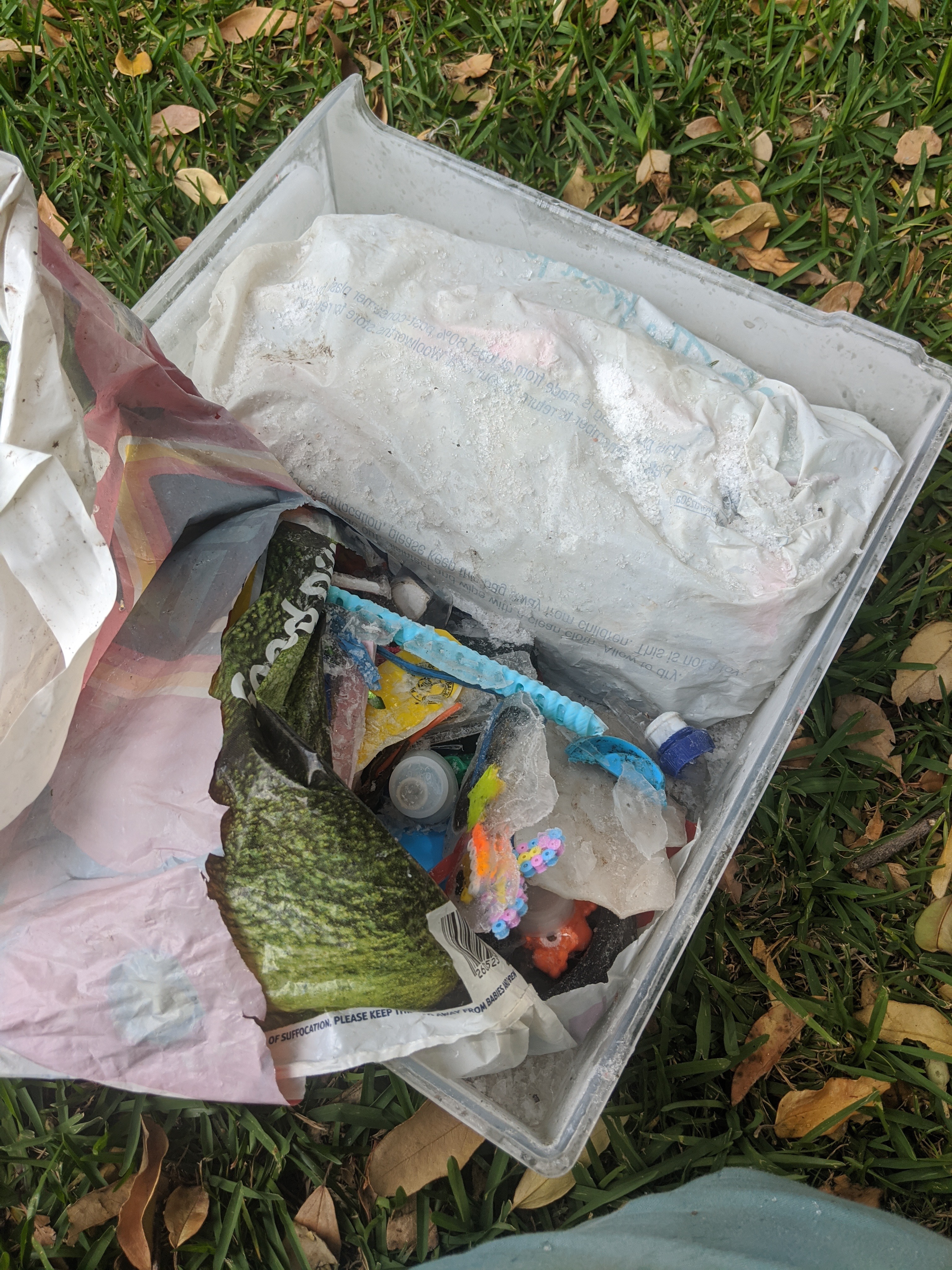
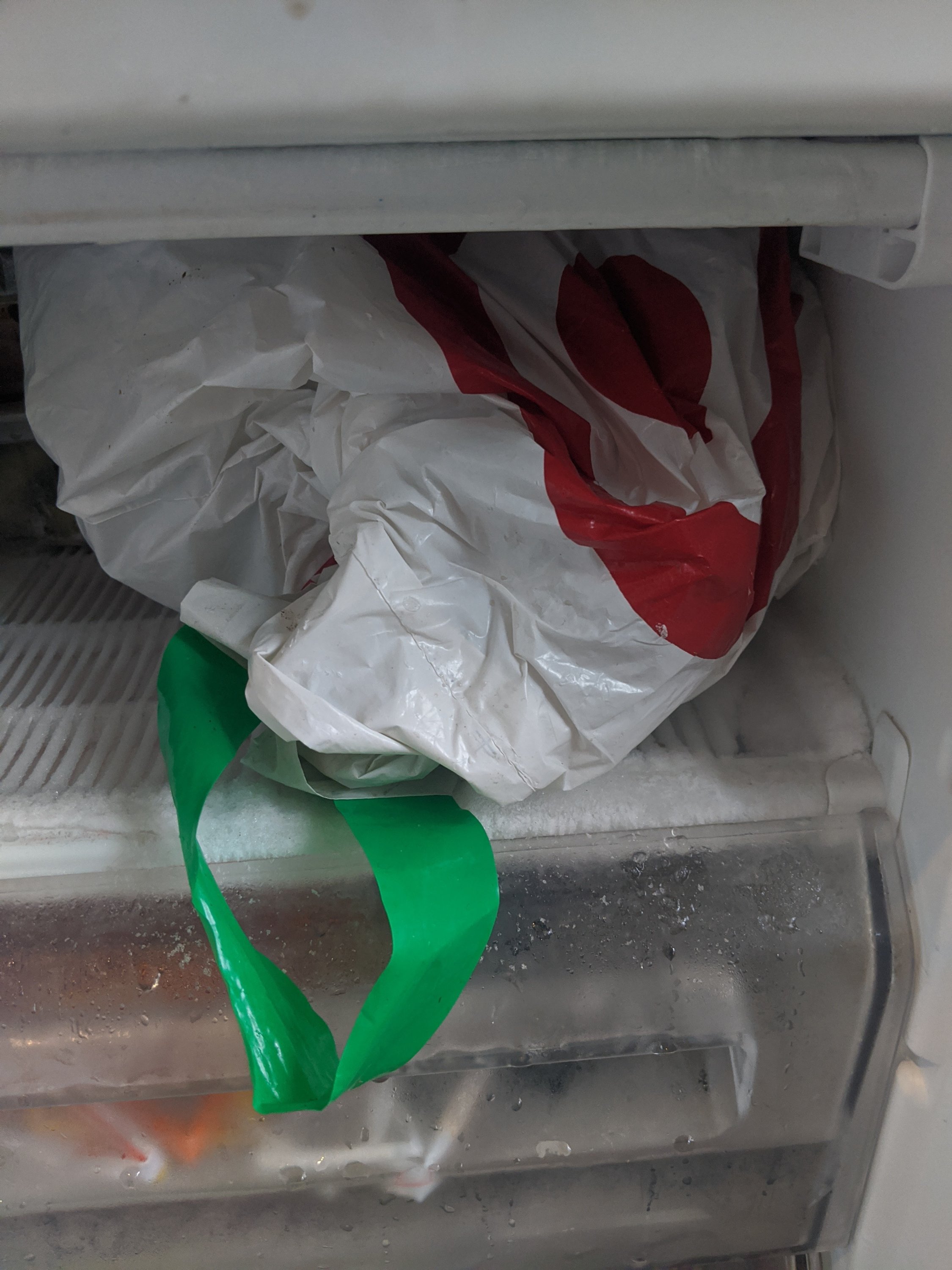
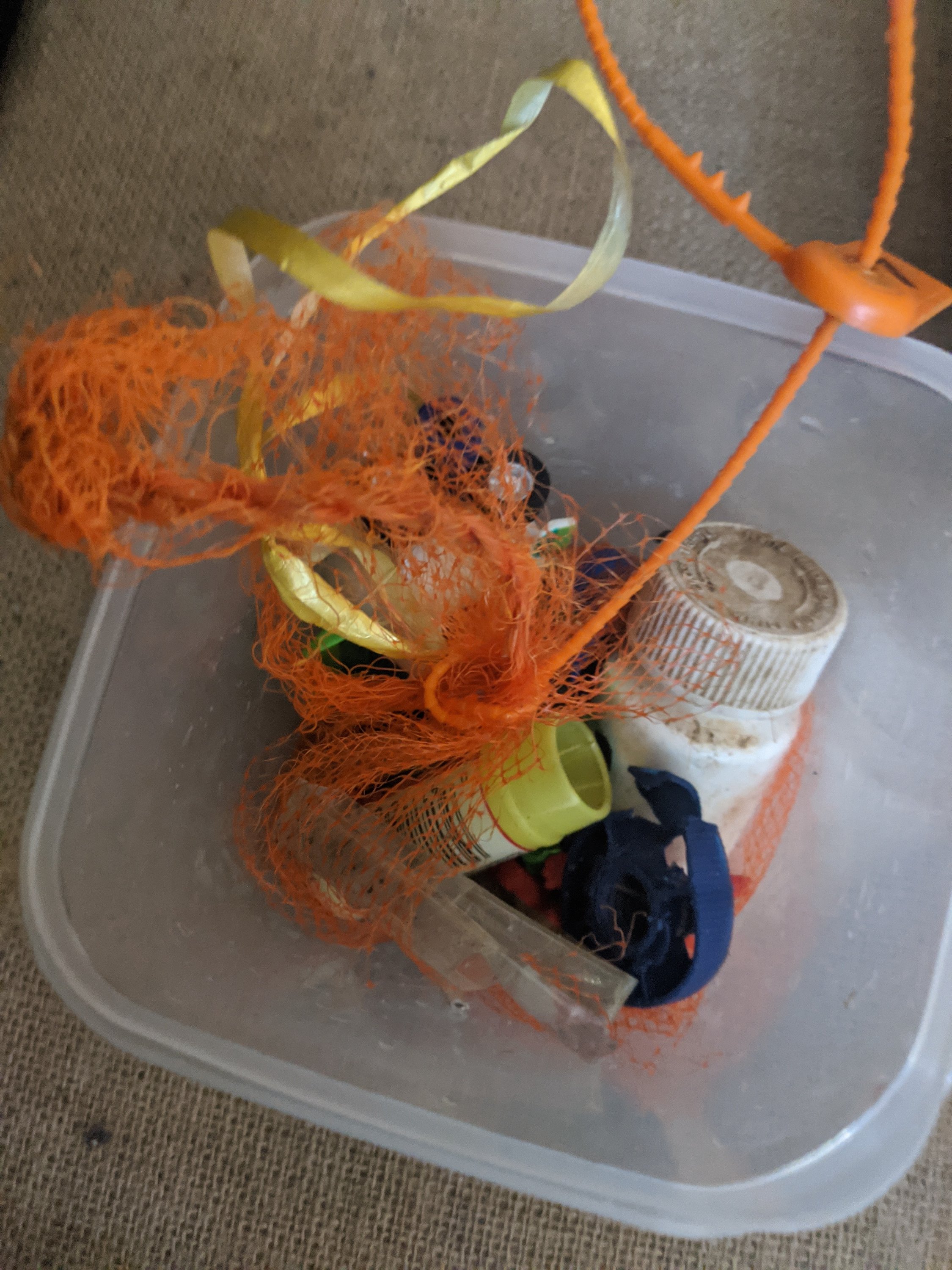
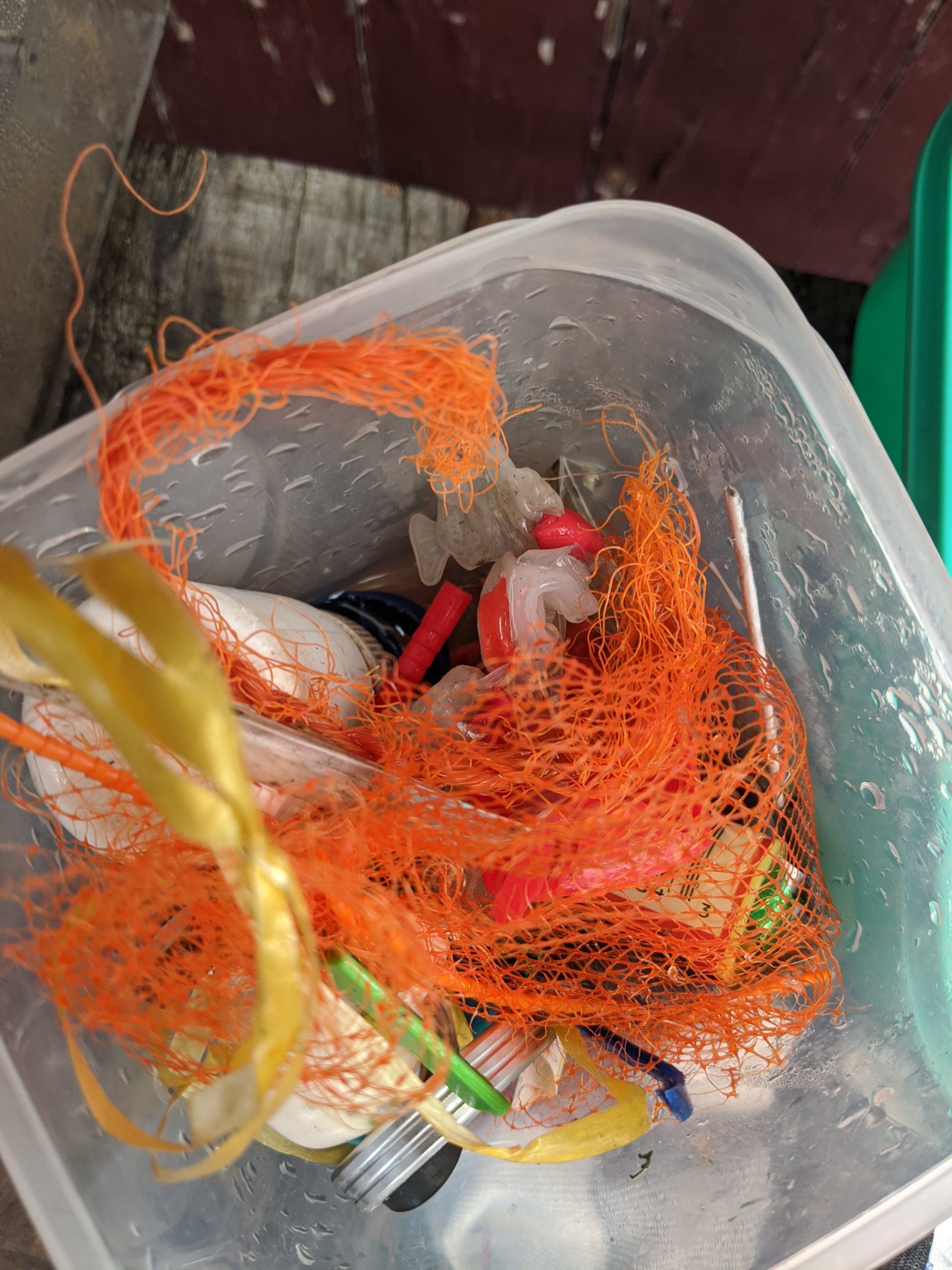
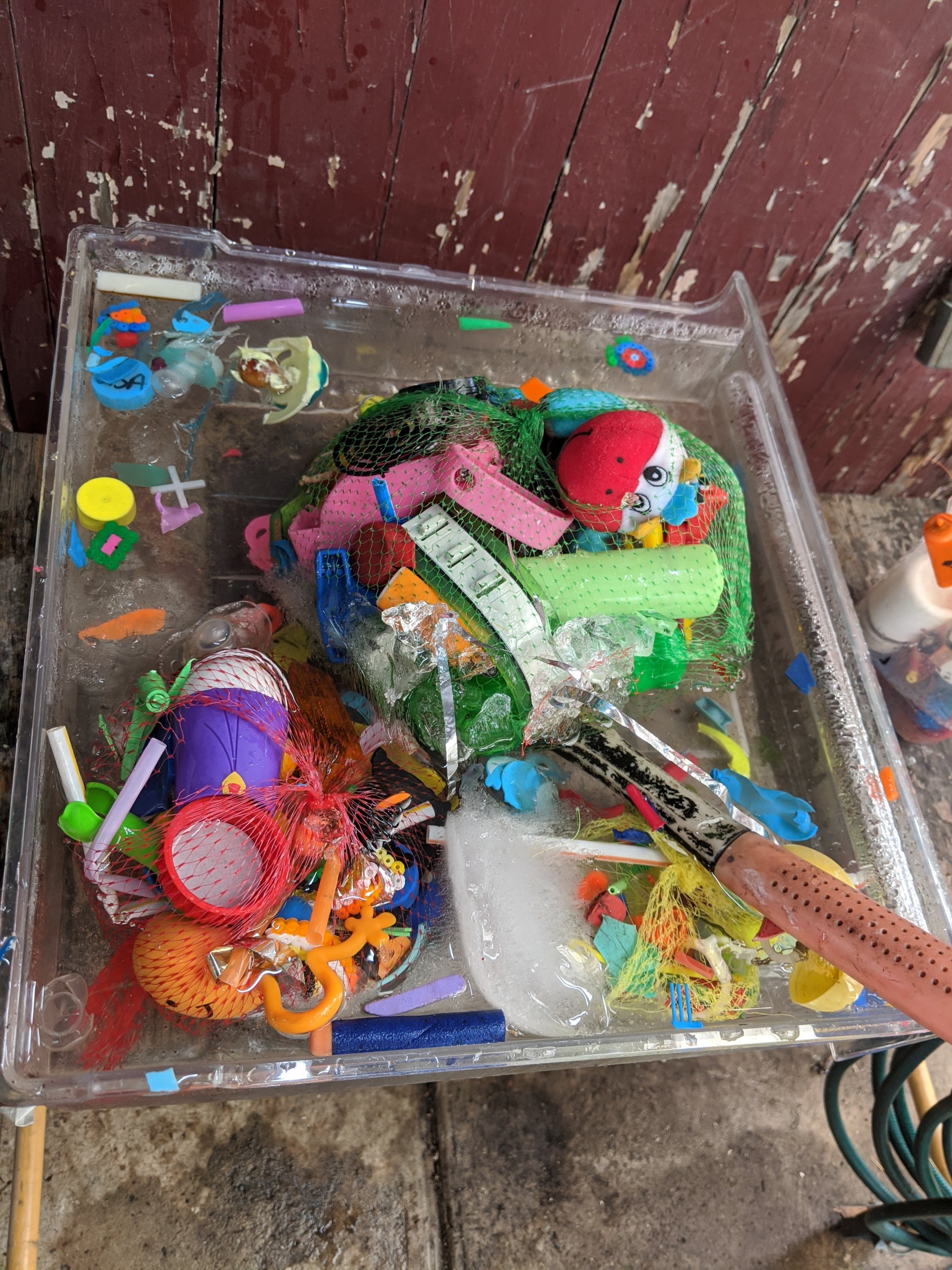
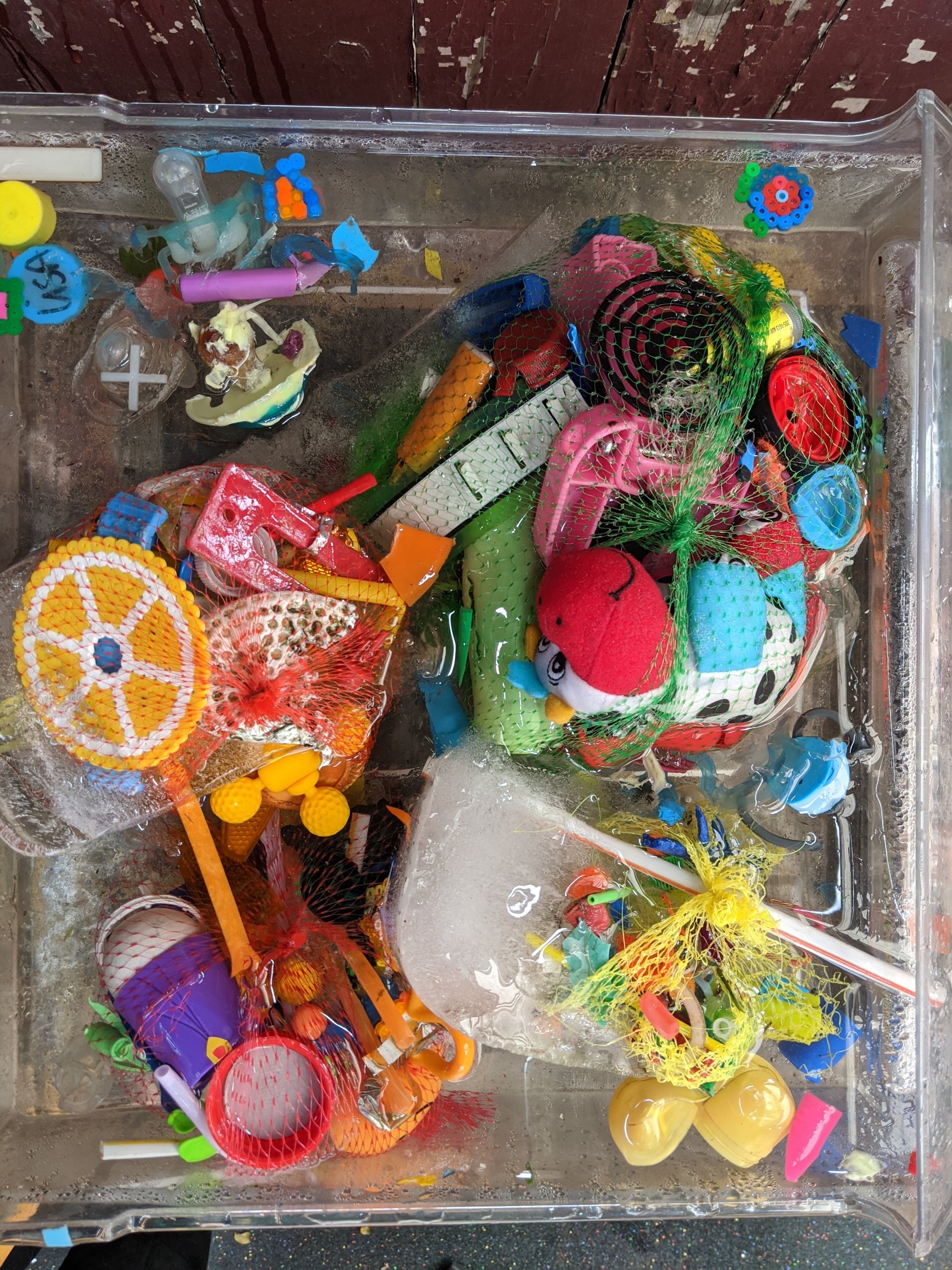
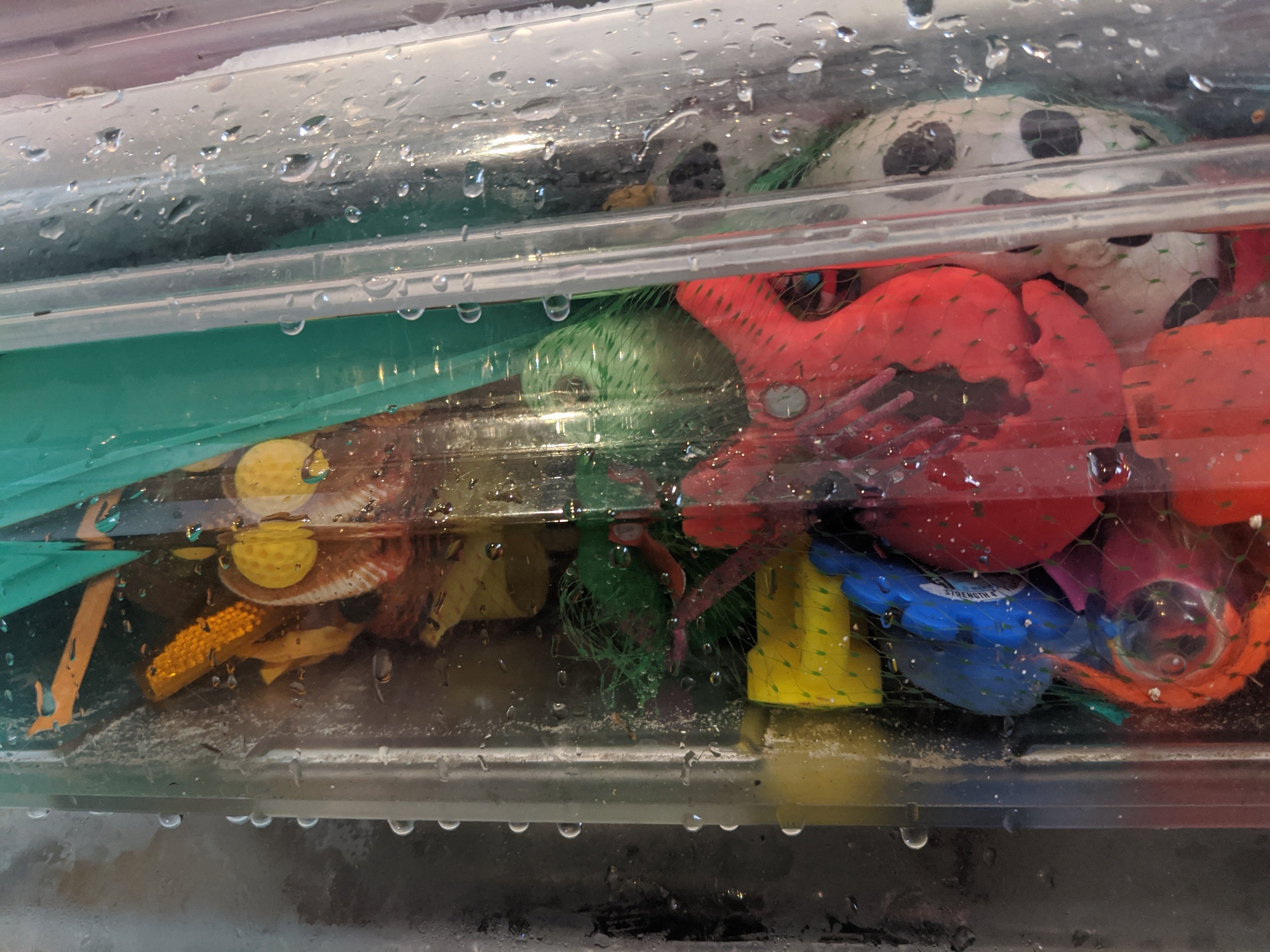
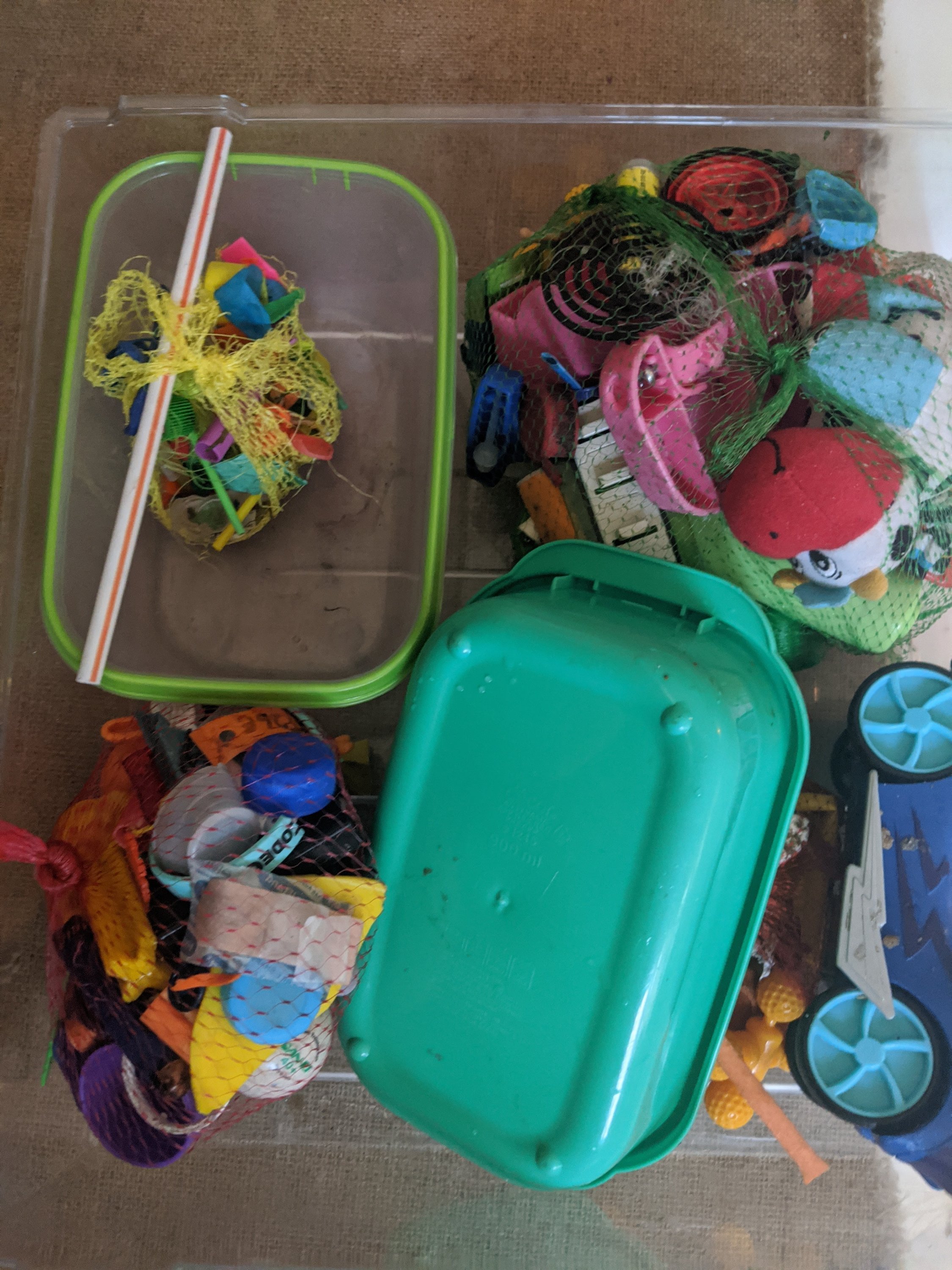
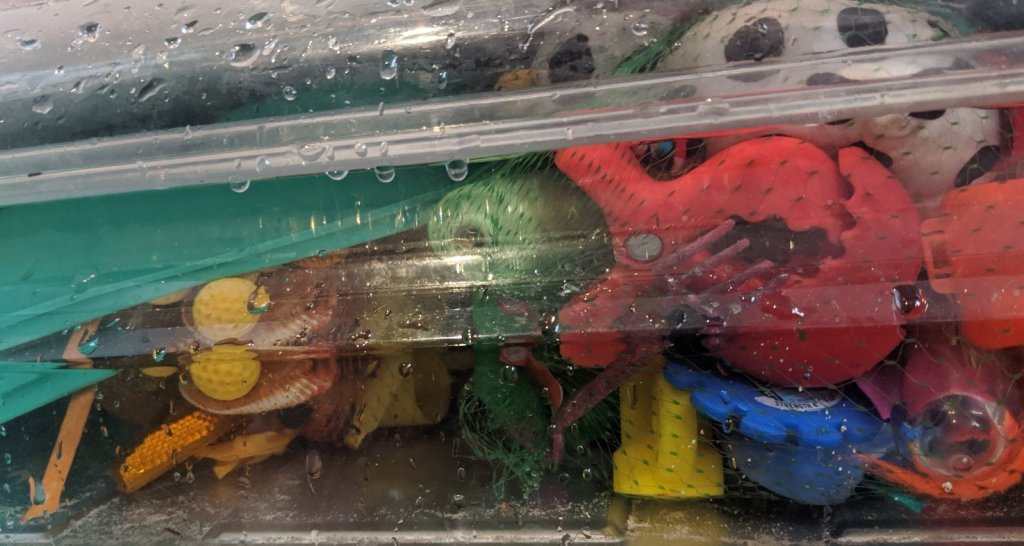
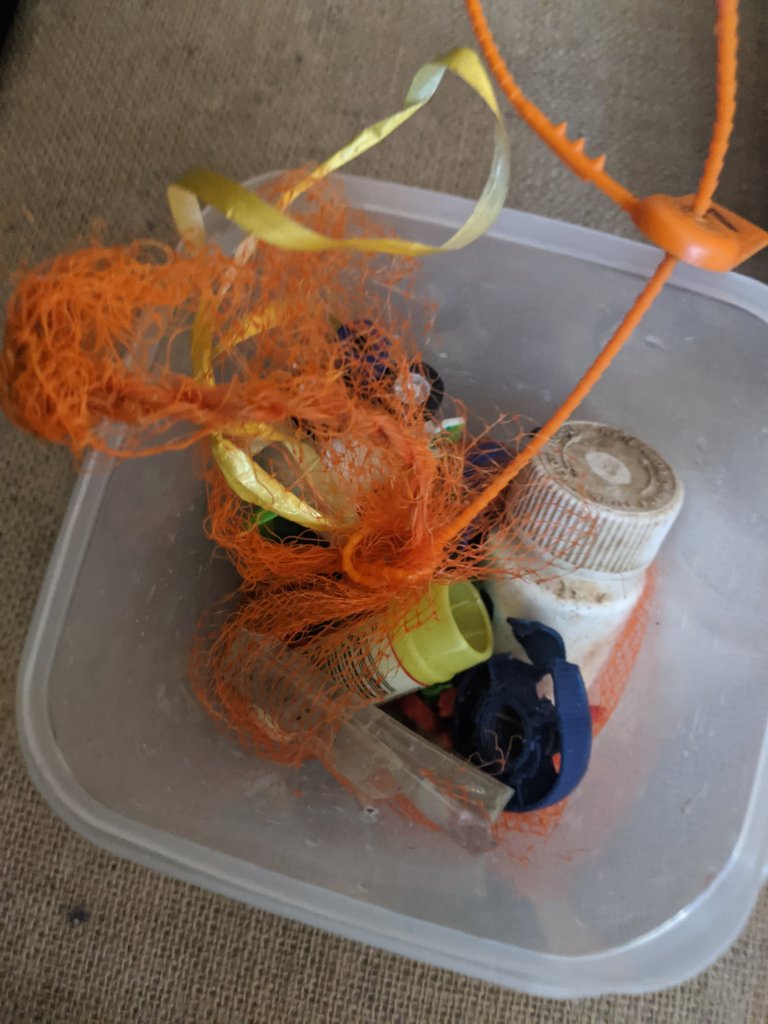
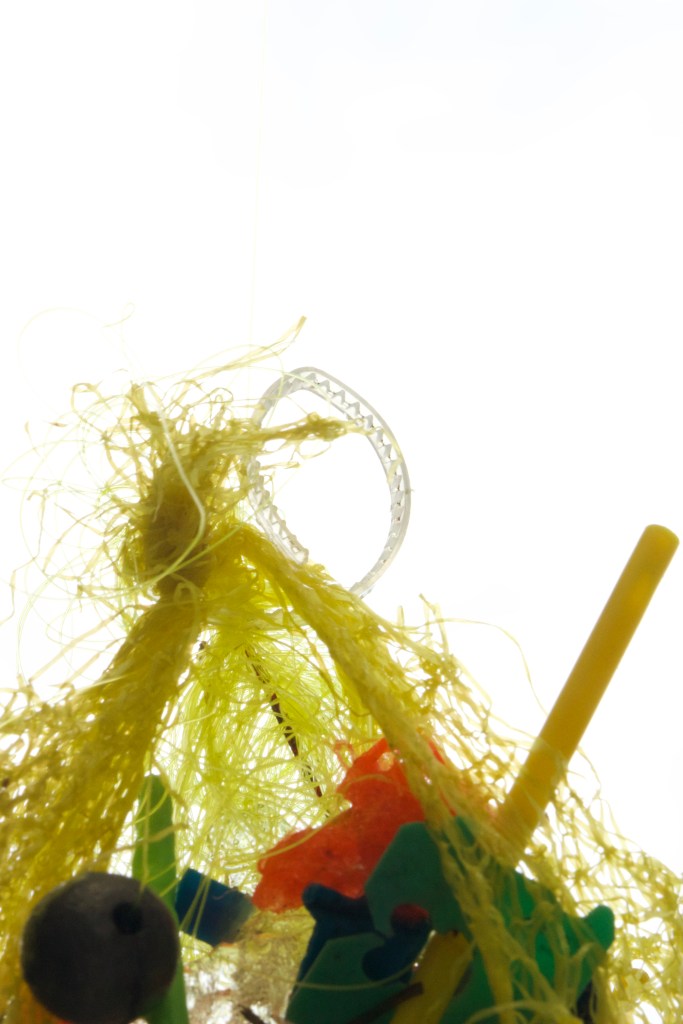
I have collected some plastic fruit/passionfruit bags, I have filled them all with the found plastic objects. I am grabbing onto the idea of the net being the collective, we are grouped in the same problem. The peices are people. Photos in the next blog…
Second series prepared for freezing.Bundling then problem, photos to come
For this blog post I have spent some time looking at Contemporary artists and how they represent climate change through their aesthetics, of the articles I read I have selected the artists works I resonated with and that I thought made the biggest impact in consideration to the message trying to get across.
All of the works sparked ideas and where also thoughts I have had in the past as to how I feel about the problem of waste and climate change. Below I he left comments on why I selected these particular works and the potential connection to my current work and ideas that developed from looking at other artworks that address environmental issues.
“Human-induced climate change, which certain politicians deny and many of us choose to ignore, threatens the survival of every species on Earth. If emissions continue at their current rate, scientists anticipate widespread coastal land loss, agricultural and economic collapse, food and water shortages, frequent and severe natural disasters, and unprecedented refugee crises. For the third installment of our series T Agitprop, we asked 12 contemporary artists, including Alexis Rockman, Mel Chin, Erin Jane Nelson and the members of the collective Dear Climate, to contribute works, most of them new and created exclusively for T, in response to this global emergency. Here are their pieces and statements.“
In recent years, however, as wildfires ignite across the globe, ocean levels rise, and entire ecosystems collapse, artists have been faced with the ever-increasing and inescapable effects of our climate crisis. Now, the radiant majesty of a Georgia O’Keeffe flower or the unperturbed wilderness of a Thomas Cole landscape can feel of another time—or another world entirely.
Shannon Lee, “These 10 Artists Are Making Urgent Work about the Environment, Artsy, Apr 20, 2020 1:17pm
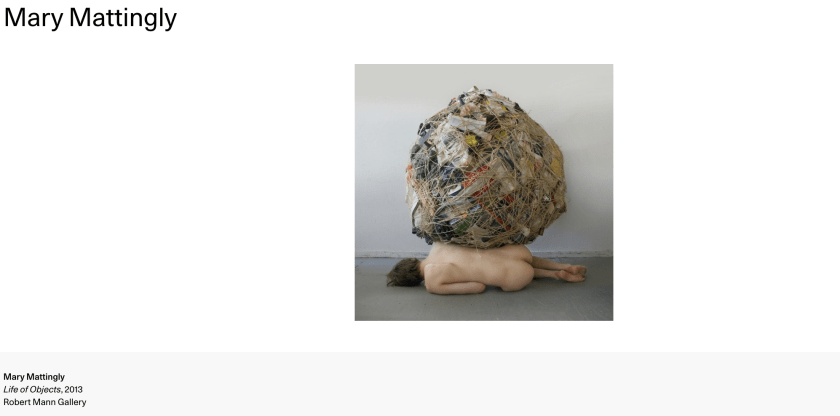
One word that come to mind when I look at this image is BURDEN, I like that the human that is in the work is naked and vulnerable and that they are being almost squashed consumption. The roles have been reversed, the rubbish is the world and the person is the planet. however the string ties both together. Influences of this work could be bundling the found objects together and freezing them, melting the ice so the shape protrudes out. See experiments blog in the future
CLIMATE CHANGE HAS ALREADY TRANSFORMED EVERYTHING ABOUT CONTEMPORARY ART
“In New York 2140 (2017), sci-fi novelist Kim Stanley Robinson imagines cultural life in a city changed by the warming climate. Rising seas have flooded this future Gotham, transforming much of the five boroughs into an intertidal zone. The two great “pulses” that inundated downtown Manhattan and other low-lying areas had catastrophic effects on citizens of the former financial capital. The tides also ushered in a thriving, anarchic aqua-urbanism.”
The Artists Leading the Conversation on Climate Change
Combating climate change with art: These artists are creating work that highlights and raises awareness about the changing state of our planet.
“Occupying galleries, streets and public spaces, artists have become a mainstream voice with the power to lead discussion and play a universal role in climate discourse.”
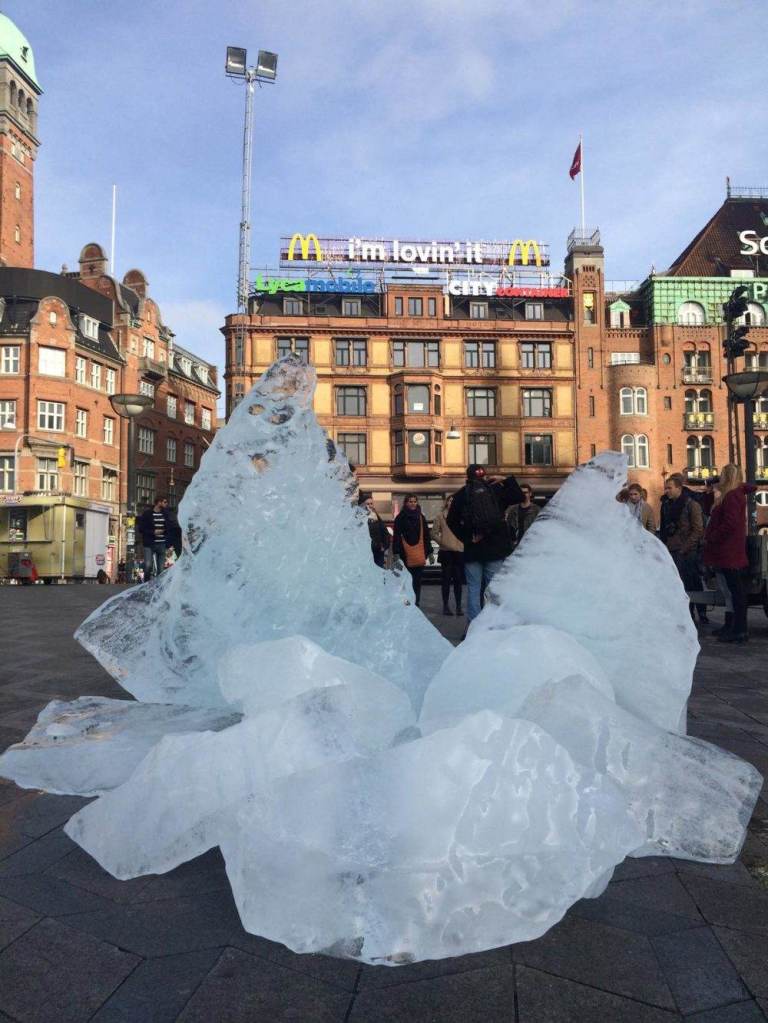
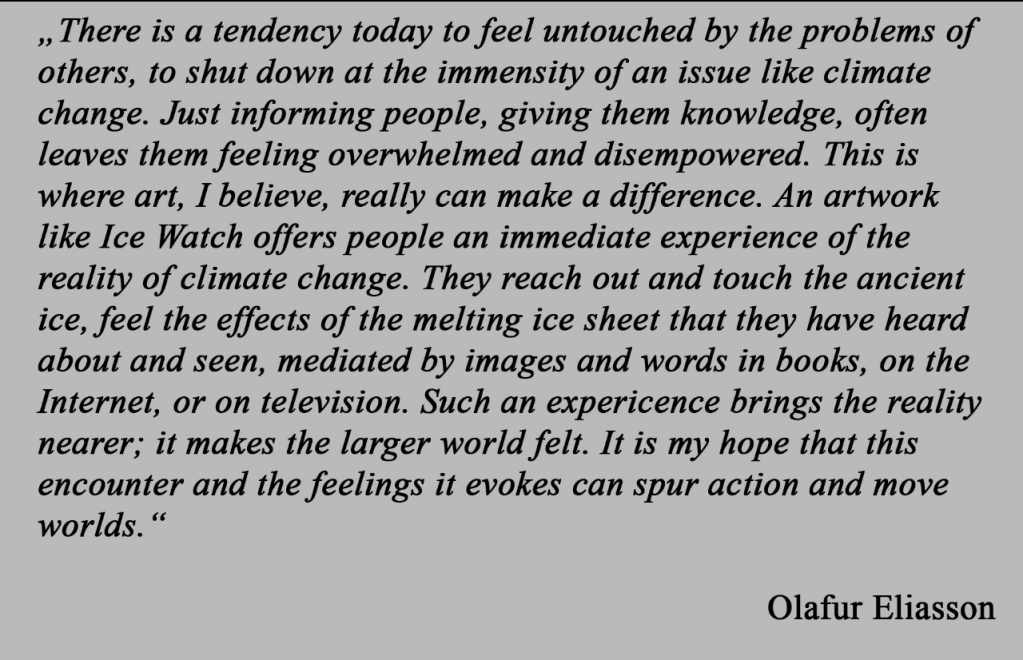
I am a huge fan of Olafur Eliasson, especially his cylindrical sphere work. I think that Eliasson is also great because he is such a well renown artist, he has a captivated audience. What he chooses to show that audience is always hitting goals. This is talked about on so many levels. One of the reasons for choosing to freeze came from his campaign.
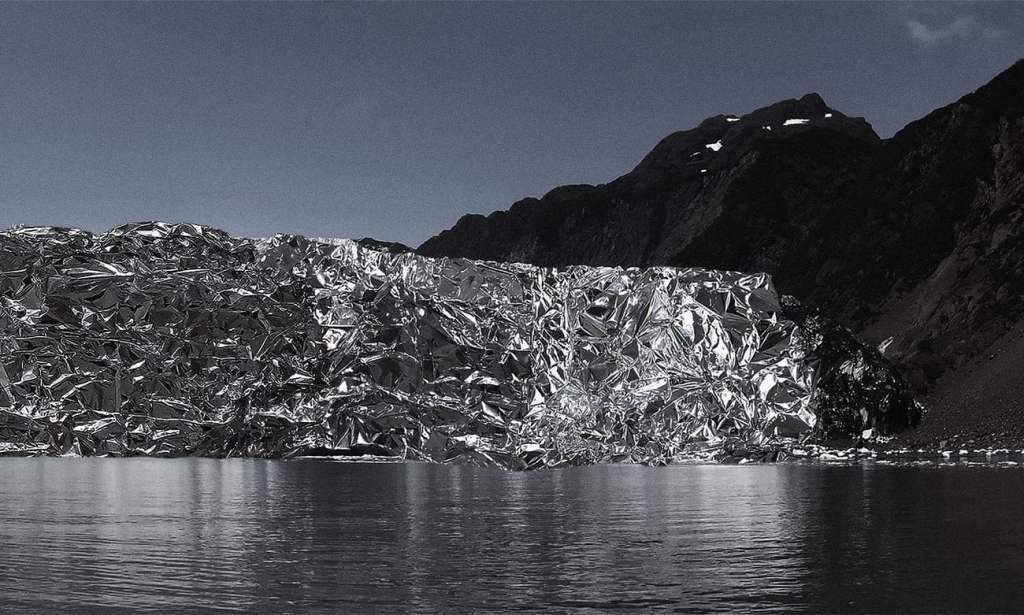
From foil-wrapped glaciers to the Alpine storm cyclist: the artists fighting climate change
“After too long a silence, art is finally tackling global warming. Here are the big players – including the artist who’s lighting up Alaska”
To the end of the Earth … Aialik Glacier in Alaska, covered in foil after being contaminated in the Exxon Valdez disaster, from the series Light by Michel Comte. Photograph: Copyright the artist
“Whether as an unambiguous and giant sculpture like Olafur Eliasson’s global political statement Ice Watch which, after Copenhagen and Paris, can be experienced in London from 11 December, or as a silent and magical moment on a lake near Hannover as with Frank Nordiek’s and Wolfgang Buntrock’s Ice Virus: Art makes certain things visible and perceptible. It is a thought made physically tangible. It can help us to appreciate the world we live in more – and that is an important step in finding a common approach for topics like climate change that are incomprehensibly huge and thus also overwhelming. “
Rainer Jacob, lenin 03/03/18/13:12 (2018), Ice Sticker, each 19 x 19 x 2 cm, Berlin
I Like this representation of ice with colour and that it is not the dominant form in the frame. The work continues to change and re present itself. My influence is the colour, I could consider applying a colour to suggest seepage of pollution for industries that are making plastic. Or I could combine the melted plastic with hard to suggest global warming…inside the melting ice block…see experiments in future
REMEMBER WHEN CONTEMPORARY ART SOLVED THE CLIMATE CRISIS?
Not every artwork needs to be about the climate crisis. Nor should it be. That being said, with a recent, sharp increase in climate-change as a topic for artworks and exhibitions, it is necessary to address a sizable gap in the typical perceptions of what a climate-crisis-themed artwork “does” or “accomplishes” and what it is physically and chemically—and, as a result, its actual material effects on the atmosphere. Climate change is, after all, a large-scale physicochemical problem. It is an accumulating flow of gaseous carbon that is immune to our individually held thoughts, beliefs, hopes, and fears. It is responsive to (and constituted by) the emergent phenomena of humans’ collective material activities at a planetary scale.”
This was by far my favourite article, Katherine Brooks researched so many great artists, I wonder why it has taken me so long to really delve into this work, I believe it’s fear, I think that far has to be ignored in order to create works that will hopefully encourage thought on such an important subject. These artists have been charging ahead with artworks from this 2014 article and the majority I looked at are gaining momentum with the most amazing ideas art art works, still as environmental artists.
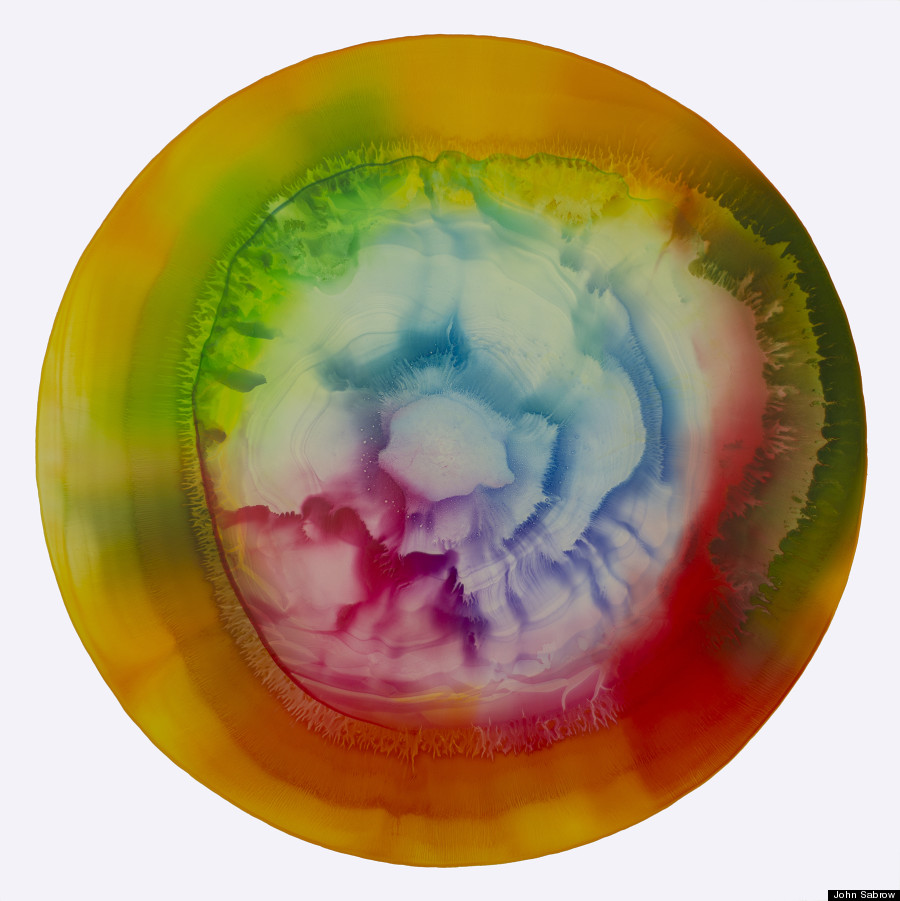
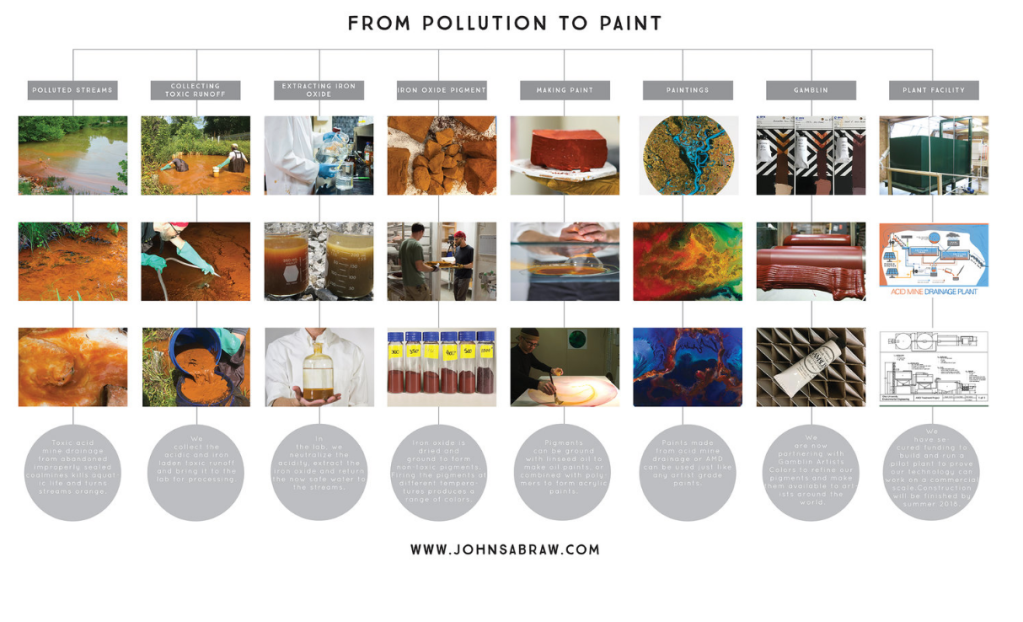
John Sabraw: making pollution paint
“Artist John Sabraw was born in Lakenheath, England. An activist and environmentalist, Sabraw’s paintings, drawings and collaborative installations are produced in an eco conscious manner, and he continually works toward a fully sustainable practice. He collaborates with scientists on many projects, and one of his current collaborations involves creating paint and paintings from iron oxide extracted in the process of remediating polluted streams.”
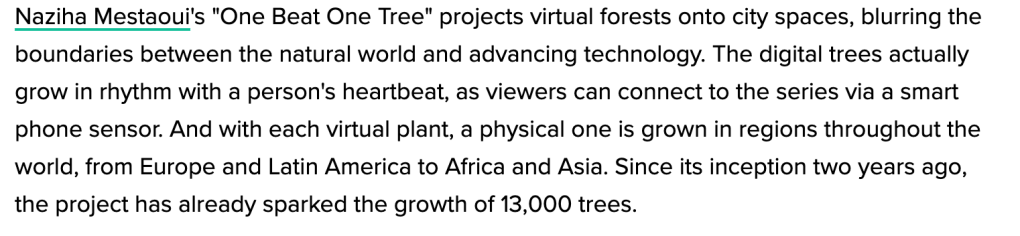
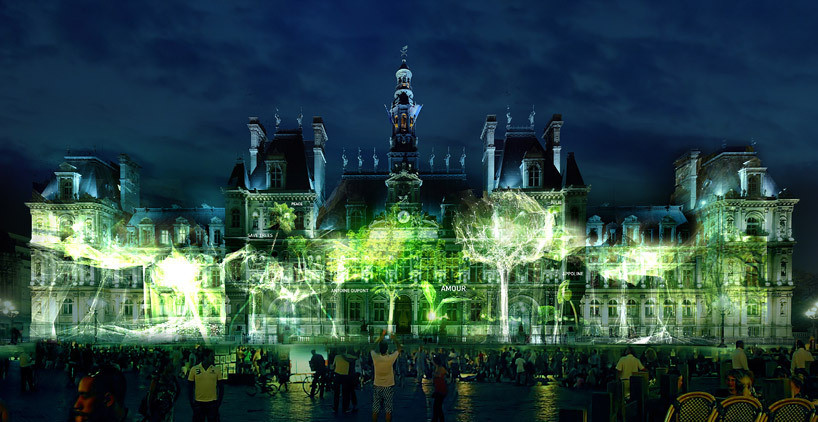
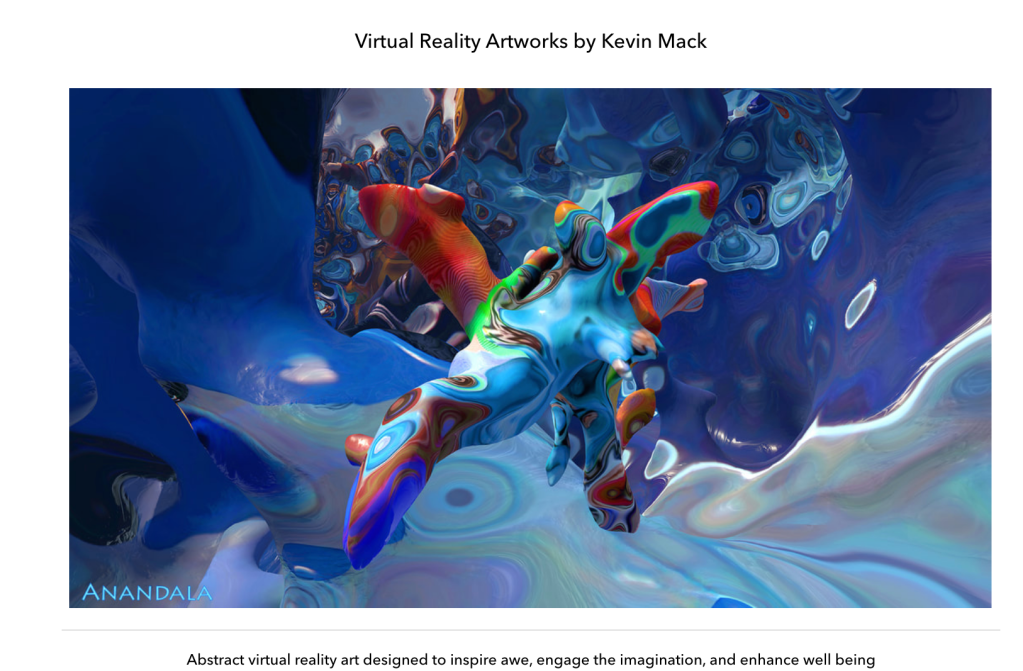
Naziha Mestaoui : digital art
Naziha Mestaoui One beate , One tree,
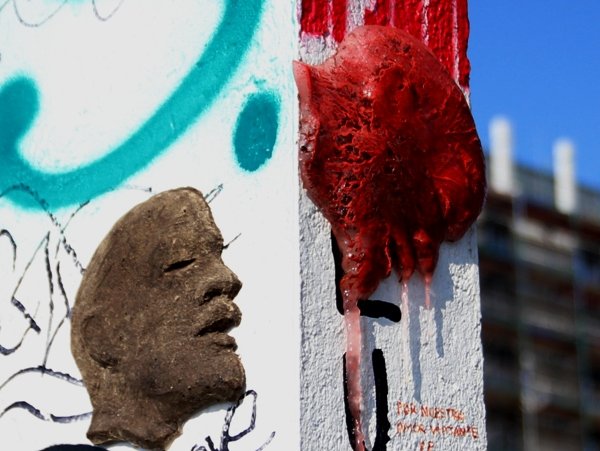
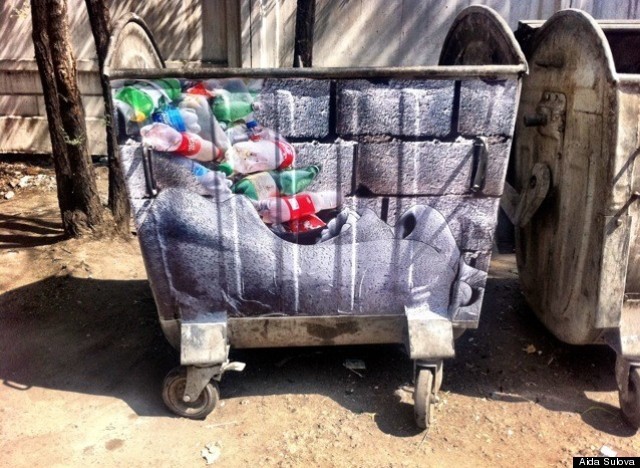
Aida Sulova : uses powerful imagery
By Aida Sulova, from Bishkek, Kyrgyzstan (a remote, former Soviet-Union, Central Asian country).
Here’s what Aida Sulova has to say about her project:
‘I wanted to raise awareness about the rampant garbage problem in Kyrgyzstan, I found that the ugly trash cans in the city can actually serve as a nice canvas to express my concern. I made a series of large photographs of the wide open human mouth and I placed them on the sides of the garbage cans around the city. So they would remind people that what they throw into the world, eventually ends up inside us.”
Intolerable Beauty: Portraits of American Mass Consumption(2003 – 2005)
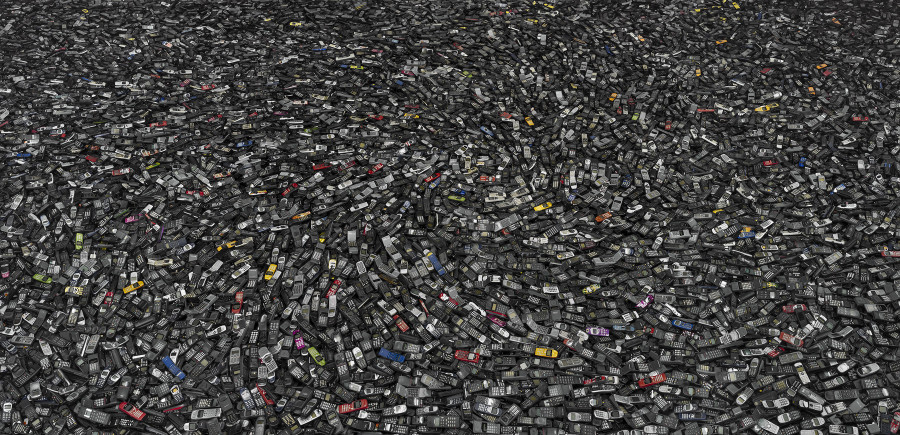
Photographer Chris Jordan puts consumption into perspective with his series “Intolerable Beauty: Portraits of American Mass Consumption.” His works show the debris we as a society leave behind, from massive dumps of cell phones, to crushed cars and circuit boards, all squeezed together in hypnotic quantities. “I am appalled by these scenes, and yet also drawn into them with awe and fascination,” Jordan explained in an email to The Huffington Post. “The immense scale of our consumption can appear desolate, macabre, oddly comical and ironic, and even darkly beautiful; for me its consistent feature is a staggering complexity.”
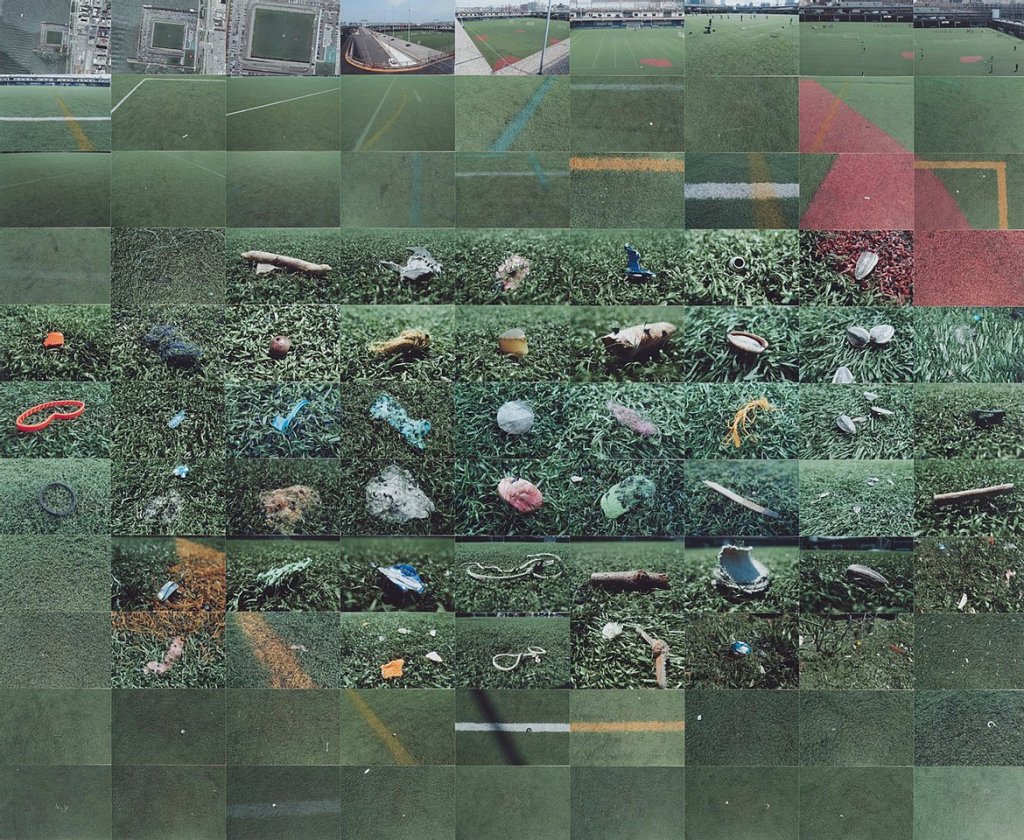
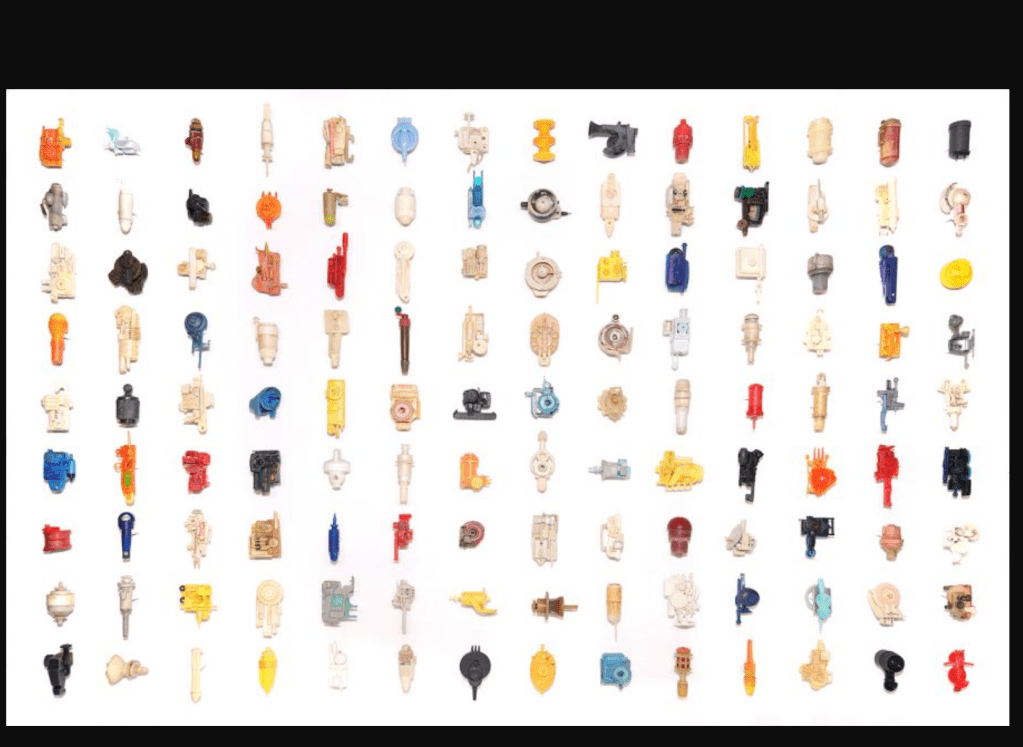
“For the 2012 installation “Sandstars,” Gabriel Orozco arranged over 1,200 objects from the Isla Arena, Mexico trash repository on the Guggenheim Museum’s floor, accompanied by a dozen large, gridded photographs depicting the individual objects in a studio setting. The found treasures bring hints of the ignored wastelands into a gallery setting, forcing viewers to confront the effects of industrial and commercial refuse.”
Gabriel Orozco, Astroturf Constellation (2012), 44 x 54 inches (111.8 x 137.2 cm), Ink jet print
There are two works of Gabriel Orozco I have placed in this blog, they re two separate series, one instigated a museum to commision some of his work similar to Sandstars”2012, which was born from “Astroturf Constellation” 2012. I like them both for completely different reasons, “Sandstars”2012 is pragmatic, clean and displayed with consideration to every single object in mind. While I have been collecting waste, I am constantly reminded that I am just one person and the amount I collect over such a small amount of time astounds me and overwells me to imagine how much is out there. By placing the items in a sterile gallery, they objects are able to paint a bigger picture, it also looks impressive aesthetically which draws views in. The second work I liked because it’s still at the scene of the crime, Orozco leaves the objects where they are found and uses gridding and photo collage to tell a story in an artistic way and it has less of a carbon footprint. I like this as well because brings the idea of one small impact gathered to see the bigger picture..e.g. it’s just gum, it’s just a cigarette butt or wrapper and so on, but combined with all the other simple items its metamorphosis. At this stage I am not sure if these will directly influence me, however I am using photography as delivery and I definitely want it to be clean and pragmatic to get the best viewer impact.
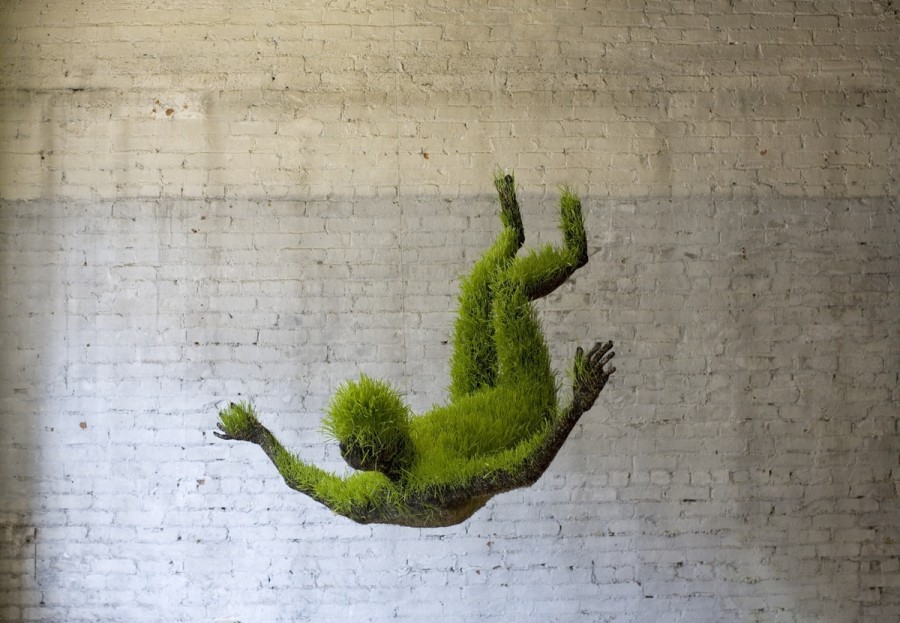
French artist Mathilde Roussel created a series of living grass installations that take the shape of human beings. Made of recycled material and fabric filled with soil and wheat grass seeds, the pieces are meant to symbolize the centrality of food. “Observing nature and being aware of what and how we eat makes us more sensitive to food cycles in the world — of abundance, of famine — and allows us to be physically, intellectually and spiritually connected to a global reality,” the artist explains.
I was influences by Mathilde Roussel because of the idea of growth and the context of the processes it goes through during her exhibition. I wanted to experiment with the amount of straws I have been collecting, attempting a juxtaposition of nature and the pollution it is trying to engulf and break down. another option could be placing flowers in the straws, they could resemble all the faces of the people that have drunk them… I like the straws representing the people as it is a very individual plastic item. See future experiments with straws…
So after commencing 390, it seems that the same commencement of Cava 301 has happened, that being that my concept has changed. The change is not due to COVID 19 more so on the reaction of feedback from my work and processes for Cava 301. I was under the impression before the feedback that the work was not responding to anyone, however on further research and as mentioned via feedback it has been received well. Although I am three weeks into the subject the cover 390 I have decided and sought permission to change my proposal and extend on the work previously for this subject. What does this mean this means that I will be leaving my work that is relating to the body, and I will be continuing where I left off on plastic waste.
Mind map
I did a very quick mind map and found that I had to unpack the image to get to a point that I had a proposal that was attainable in the timeframe allowed. In order to understand what pace that I’m going to need to be working at, what outlines I need to prepare, I said about questions that will hopefully hopefully keep me in check and on the right path. One important thing I did learn during CAVA 301 is that this is a huge subject, and has many many paths go down. A couple of other important things that I learnt was to allow myself editing time, and to make sure that the work has a reason behind it, e.g. when I ended up deciding to use water and freeze was because it was important for me to not to add to the contexts of the work being an environmental issue on waste.
Questions
Grow
How does growing on plastic objects connect to my work?
This idea came to mind After looking at eco-brutalism architecture from abandoned buildings all over the world, I liked the juxtaposition of the cement and man-made in comparison to nature. My biggest concerns around this are that it may look like nature is responding to the plastic and that it actually does no harm to the environment. From another perspective it could be about my thoughts around archaeological digs and that our futures children are going to be digging up plastic rather than bones and pottery, so maybe plants growing out of the plastic being absorbed into the environment may not look as aesthetically as desired for the future, will it help reflection to the situation.
Theme Legacy
Why is the term legacy as a theme so important to you?
For me the term legacy is really important because I am addressing the future, I am trying to point out that we are teaching our children that shiny new things are okay to throw out. I feel we are creating a society that throws everything out and after it’s chucked out there is no regard however the plastic and waste that is being discarded…once the thrill has gone, is creating a legacy that is detrimental to the environment.
Alejandro Duran, Brontes (Shoots), 2014Displaying plastic in between natures elements
What will result in stacking found objects do to your work?
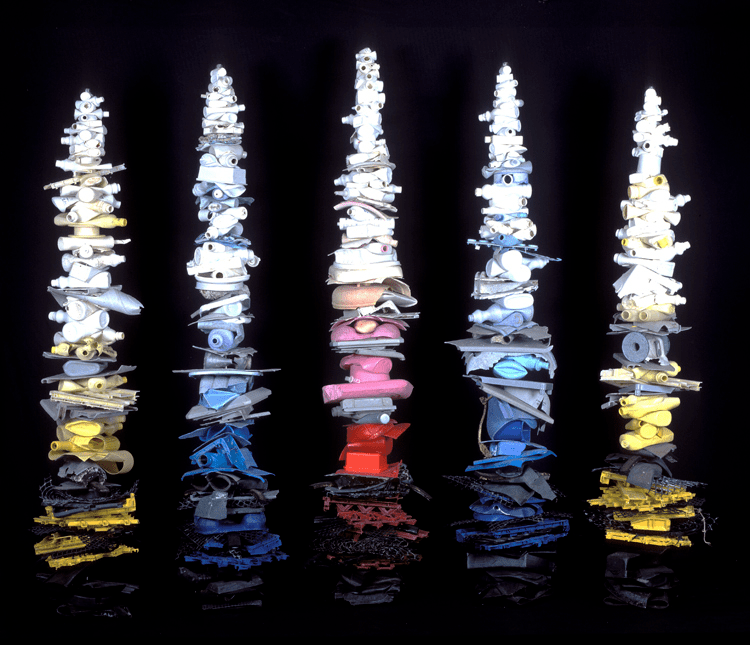
The idea of stacking found objects is because of already tackling this subject, and it’s very very easy to consume a lot of stuff in a short while. The stacking relates to the term more, we continue to fill our lives with rubbish and it just gets stacked onto other rubbish that we don’t need or really want either. I also think that the stacking will be a good visual representation of my idea, I think it will look good aesthetically, especially if the stacking goes above people’s head and into the sky lines, on looking up the objects will be framed by nothing blue sky so the objects will be accentuated. Depending on the time of the day you may see them in detail of with a casted shadow.
The image below was one of two influences toward to idea towards Toytumpole.
Drifters Project, Economies of Scale II, 2016, 2650 x 918John Dahlsen, Primary Totems, 2000-2013, Powerhouse Museum Sydney, 2.2m x 50cm base, 6 totems.
Above is an example of thinking I had an original Idea, but found this in November 2020.
Grind
Call grinding plastic accomplish with your work?
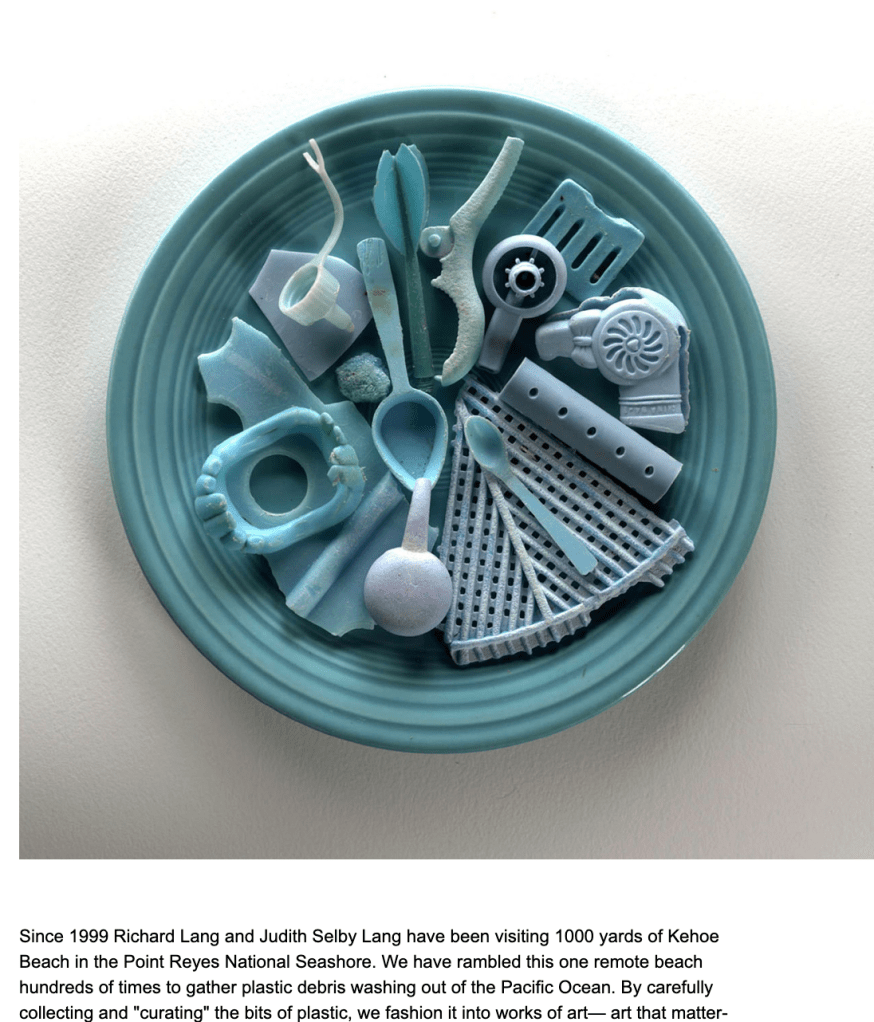
Last semester after working on the items I had collected, the last part of the work the plastic went under a roller, then I was able to freeze them and photograph a huge amount of shapes and colours. This brings me back to being stuck on how to remove the waste after the work was done, the flattening created quite a lot of very small pieces, much like micro plastic that you see on the beach and inside autopsied animals. On reflection I was at the end of my work at the time and definitely thought there was more to investigate in regards to small pieces and what to do with them. So this time grinding down the collected assortment of things could be displayed on dinner plates, And find China to point out that there is no such thing as a non-toxic fish in the ocean any more. Another idea could be filling the churned up plastic and placing it in fish tanks, filling them 80 to 90 % full, then adding water and with the remaining space, I could place some live fish, photographing from the side and above hopefully capturing the contrast of plastic to fish.
Have you gone as far as you can go with this process?
Last semester the main body of my work did end up being found objects underwater, and frozen. In order to carry this out I ended up purchasing a freezer, and learned some Perspex containers from a secondhand shop, it was great difficulty in photographing the works a lot of the photos were ruined due to reflection and lack of studio supplies. If I could create a better studio space I would really like to continue to explore this method as some of the images were striking. I also found that after many many photo shoots some of the better works were when the ice blocks were in the outside environment and the daylight light created a bright and colourful composition.
Collecting collections again, why should you refine this time?
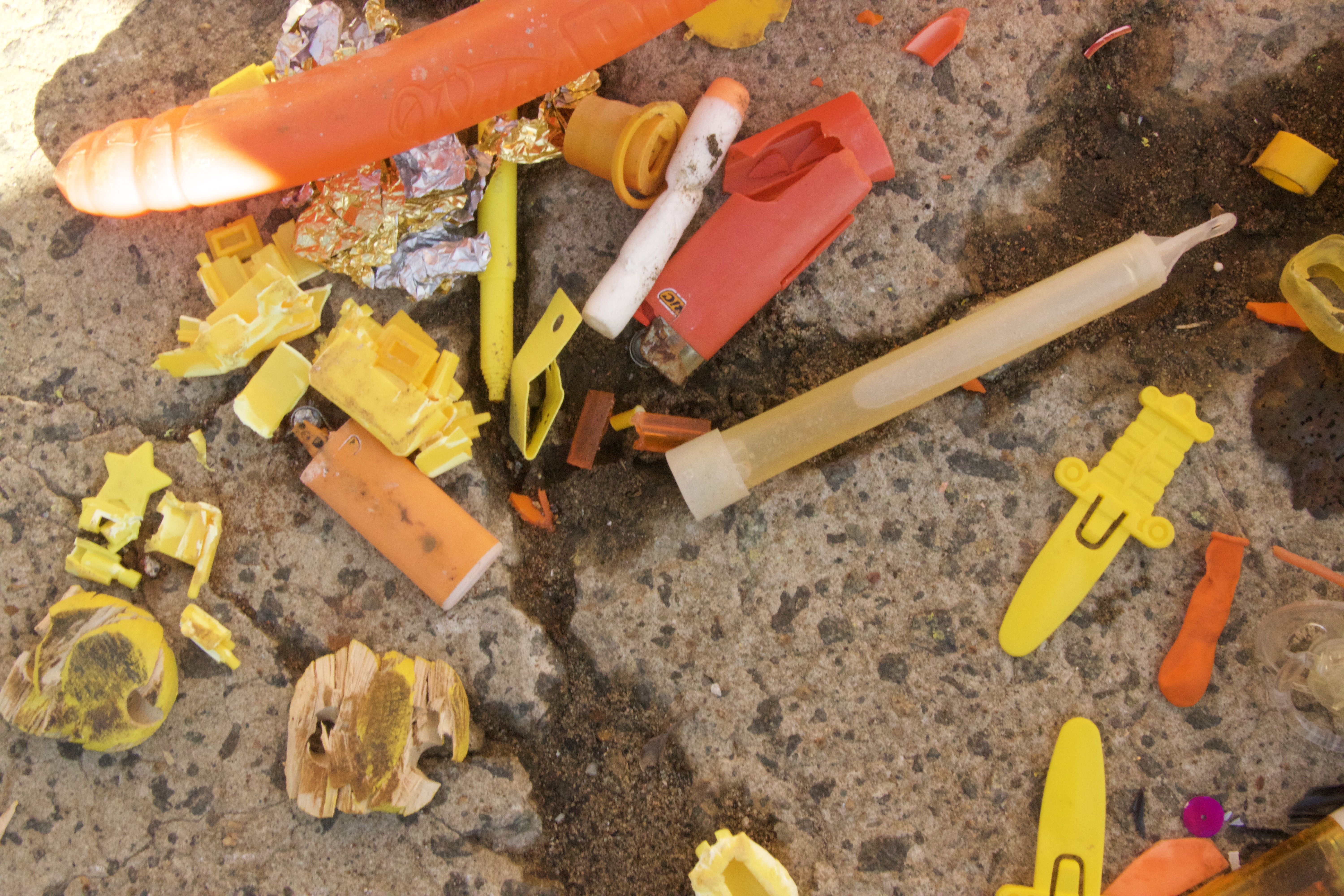
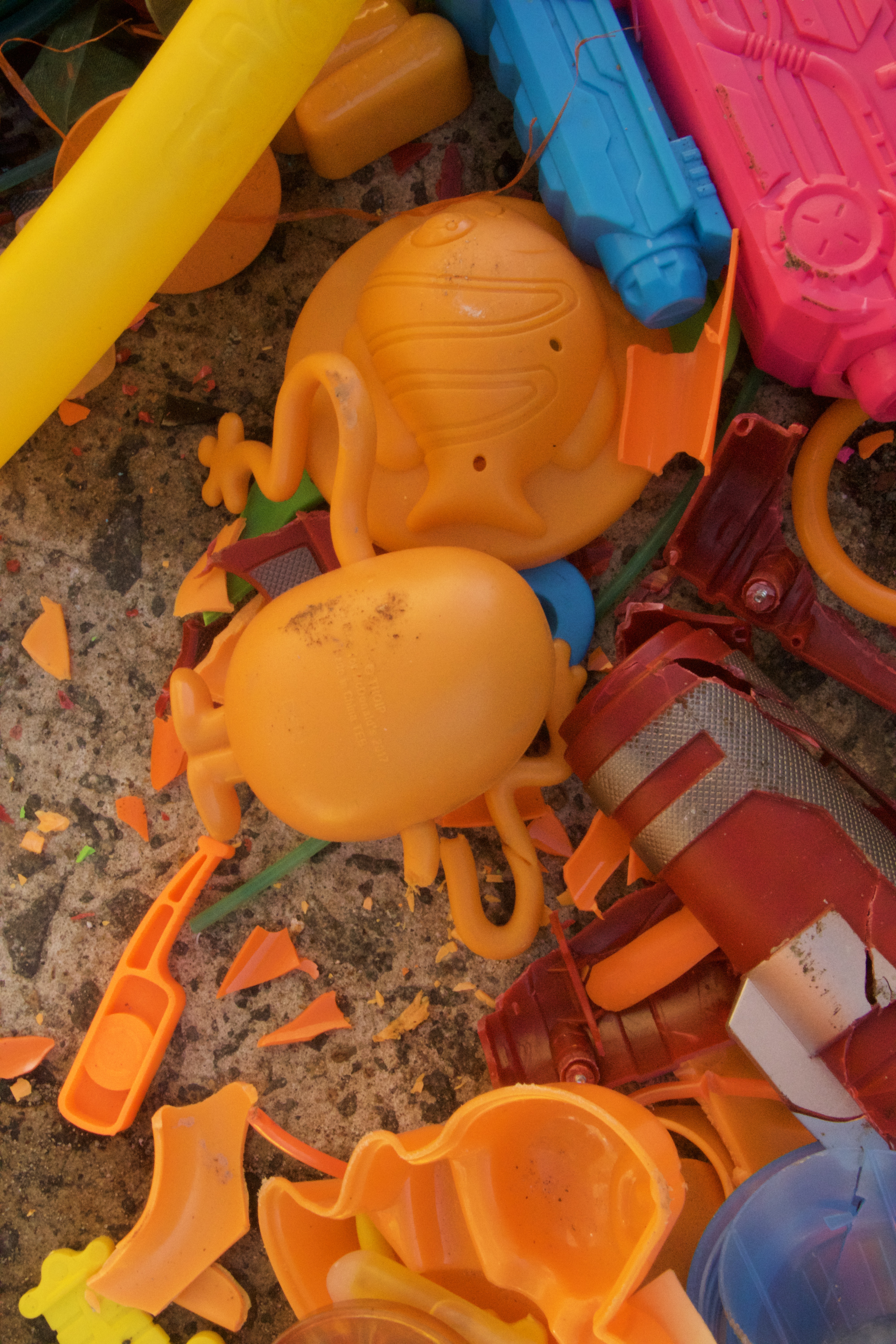
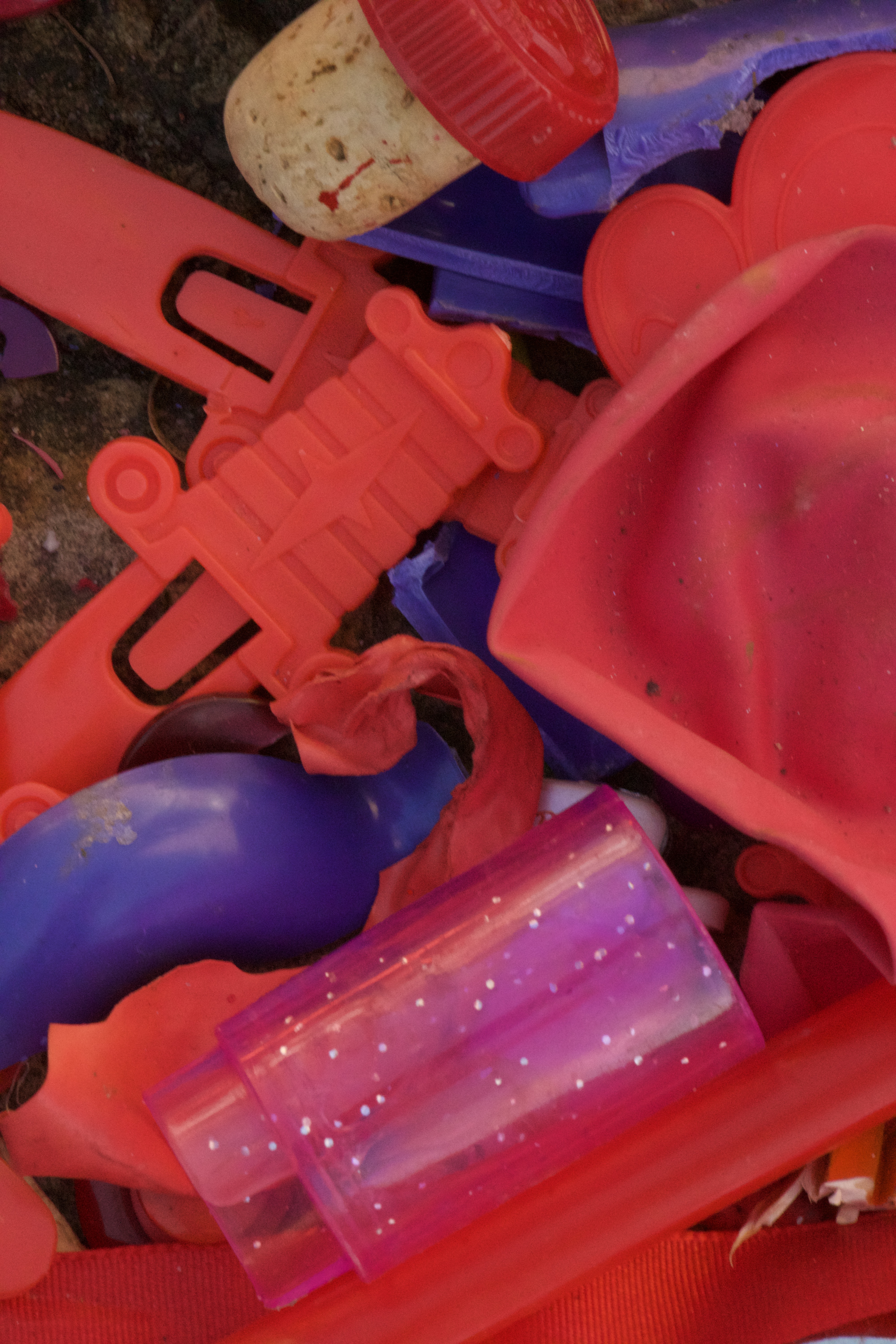
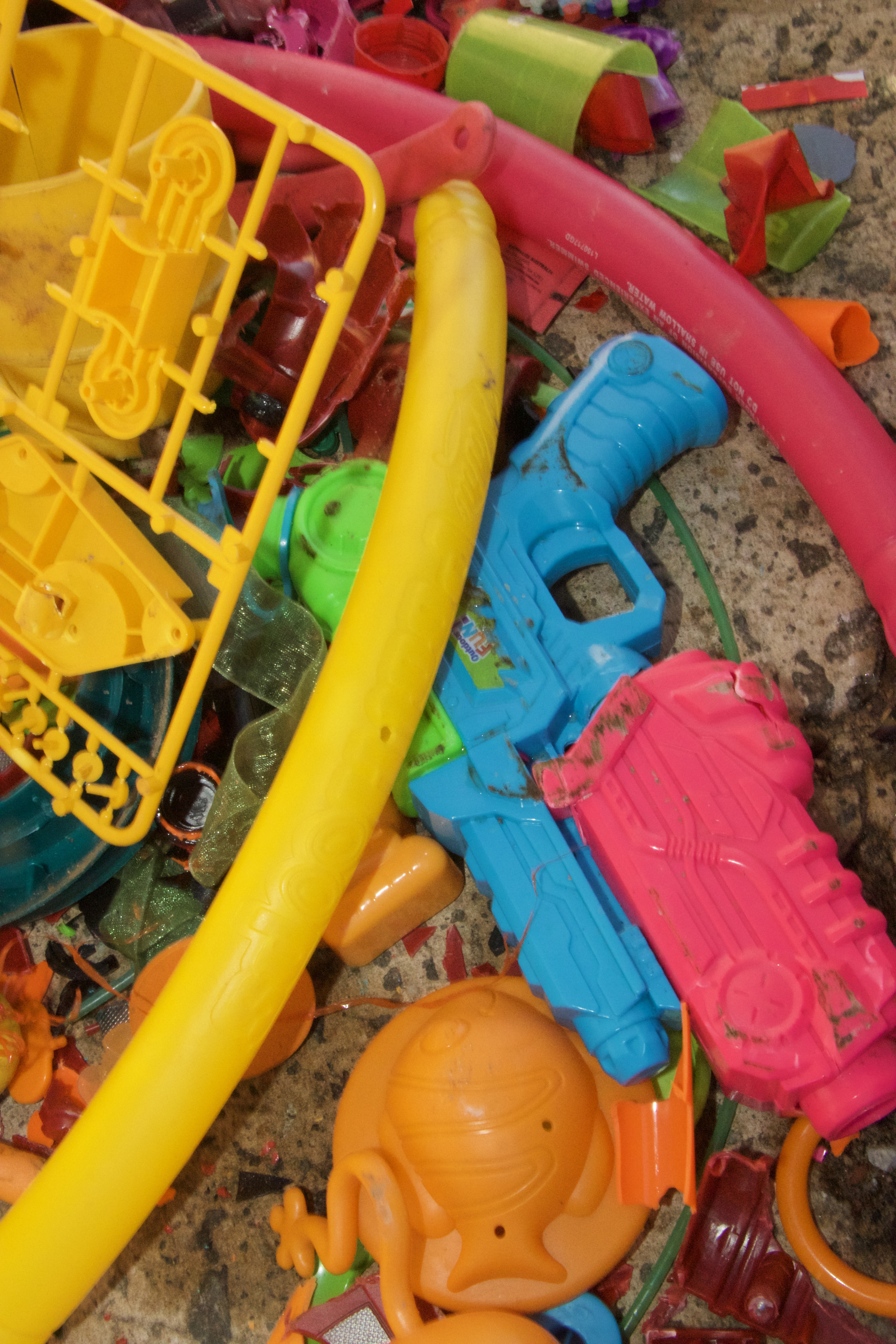
Over the months of collecting quite a lot of materials, which unfortunately have now been given to op shop’s and thrown in the recycling bin. I did find that certain items were much more photo genic than others, such as balloons and children’s toys. During artist research I found that cigarette lighters are popular, and there are a lot of those I pick up at least two a day. So for these reasons I will direct my collecting towards things like children’s toys, plastic lids, plastic straws, cigarette lighters, and children’s dummies. In saying this I find when I’m walking on the beach is that things will present themselves to me, it will be a strange shape or it will be a prominent colour against the stand and I have no choice but to pick it up and put it in my pocket.
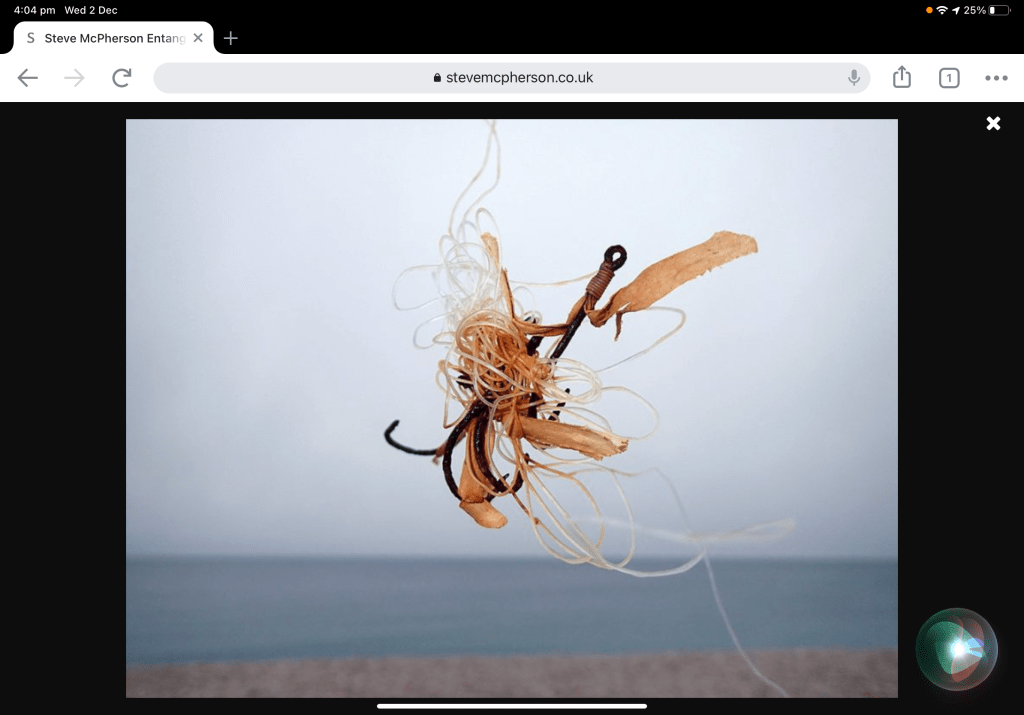
https://www.stevemcpherson.co.uk/artwork/synthetic-legacies/Steve McPherson , Dormant Fabrications, Dimensions (approx.): 7cm x 102cm x 102cm. White wood box frame, UV conservation glass.Steve McPherson, Entanglements, A selection of images form a continuing project documenting found plastic monofilament and fishing line tangles on the coast. From 2017 to present.
Above is another example, looking back at my research seeing influences I have unconsciously gathered, this looks very similar to one of my Tangled Series, I like that common concerns create similar works.
Kylie Naylor, Tangled was 2020, image, photograph, found objects.
Melt
Why am I melting the work?
The reason why I am interested in melting the work is because of the fact that due to the subject matter, the bright shiny colours combining this work, to try to capture a perspective of this one’s love item is actually a major problem. Because I wanted to try and capture the ugliness. By melting the products together I was able to try to disassociate the work with pretty and playful, instead trying to creating disaster and waste which is what it becomes.
How I would visualise the melted works would turn out…
Shape
Shape relates to everyone?
The idea of being able to manipulate the plastic objects into a shape, such as a hand made mould, I am not sure what sort of shape I would conjure up that wold be relatable to all. However ones that come to mind that may not be identifiable straight away is a throat…choking the planet with plastic. Extending on this could be a series of dolls heads, creating mouths and melting the plastic objects onto and down the face of the dolls, the melted works would show contorted faces like while the plastic suffocates the doll. This could be a relatable message…should I start collecting dolls…
Laser cut
What will I gain out of laser cutting the found objects?
The idea around laser cutting objects would be because I am well aware that I will be collecting a lot of items again, the amount I collected last time ended up being so much that I didn’t use all of it and as mentioned I handed it on to op shop’s and the recycling bin. By locating a laser cutting company I could slice the toys and found objects in half and this may be interesting photographing only a piece of the item, and also the installation itself could turn into a typology as each part will be flat. As an artist I think that there may be a lot of potential with this experiment because of some of the abstract forms that will come out of it, such as how much can you cut away from the product until it stops being the fantasy. The point is, how much disaster and destruction of the planet do we need to see before we don’t see it for what it was anymore.
Crush
How much time and effort will result towards the major work if you go down this path again?
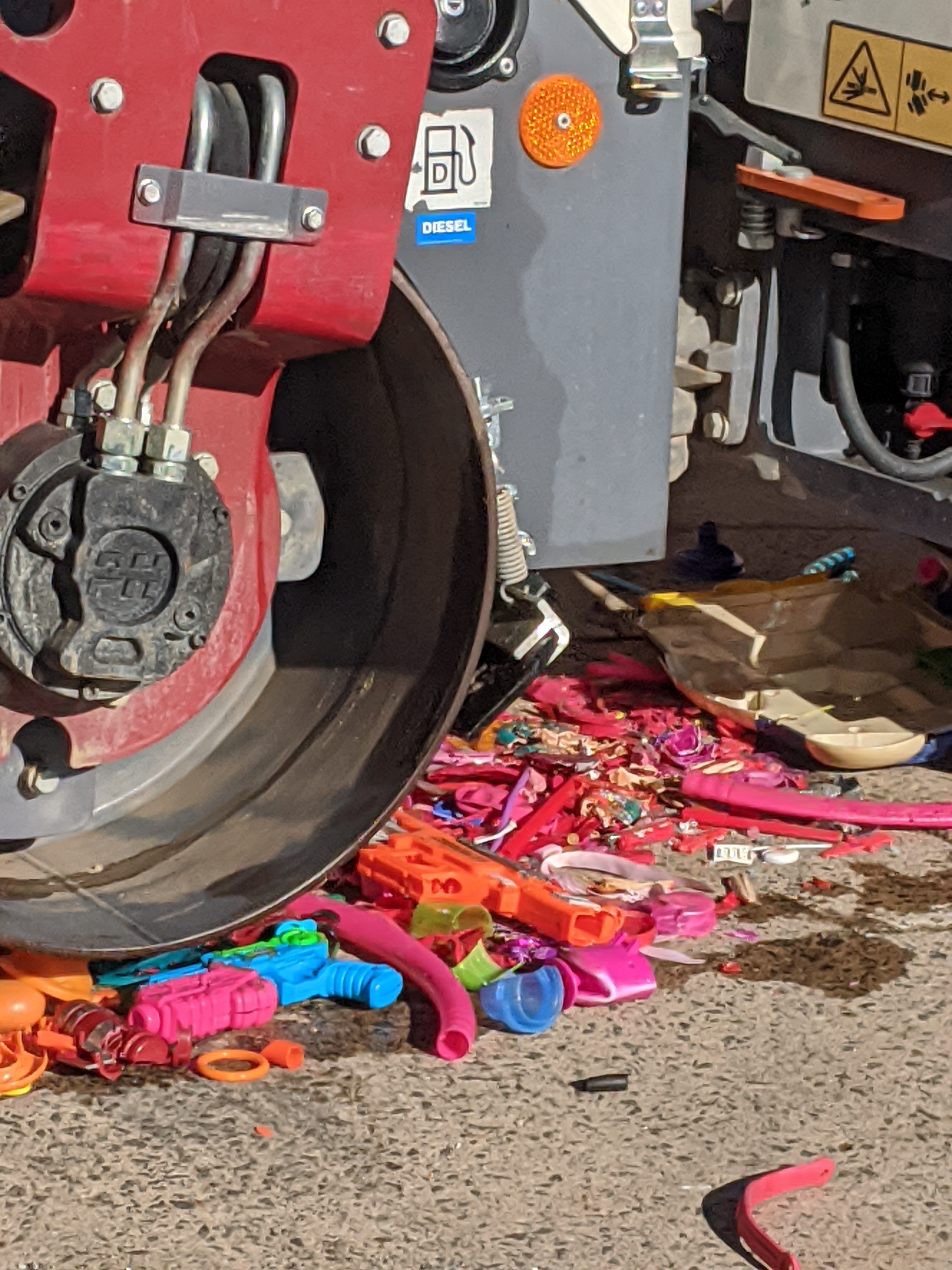
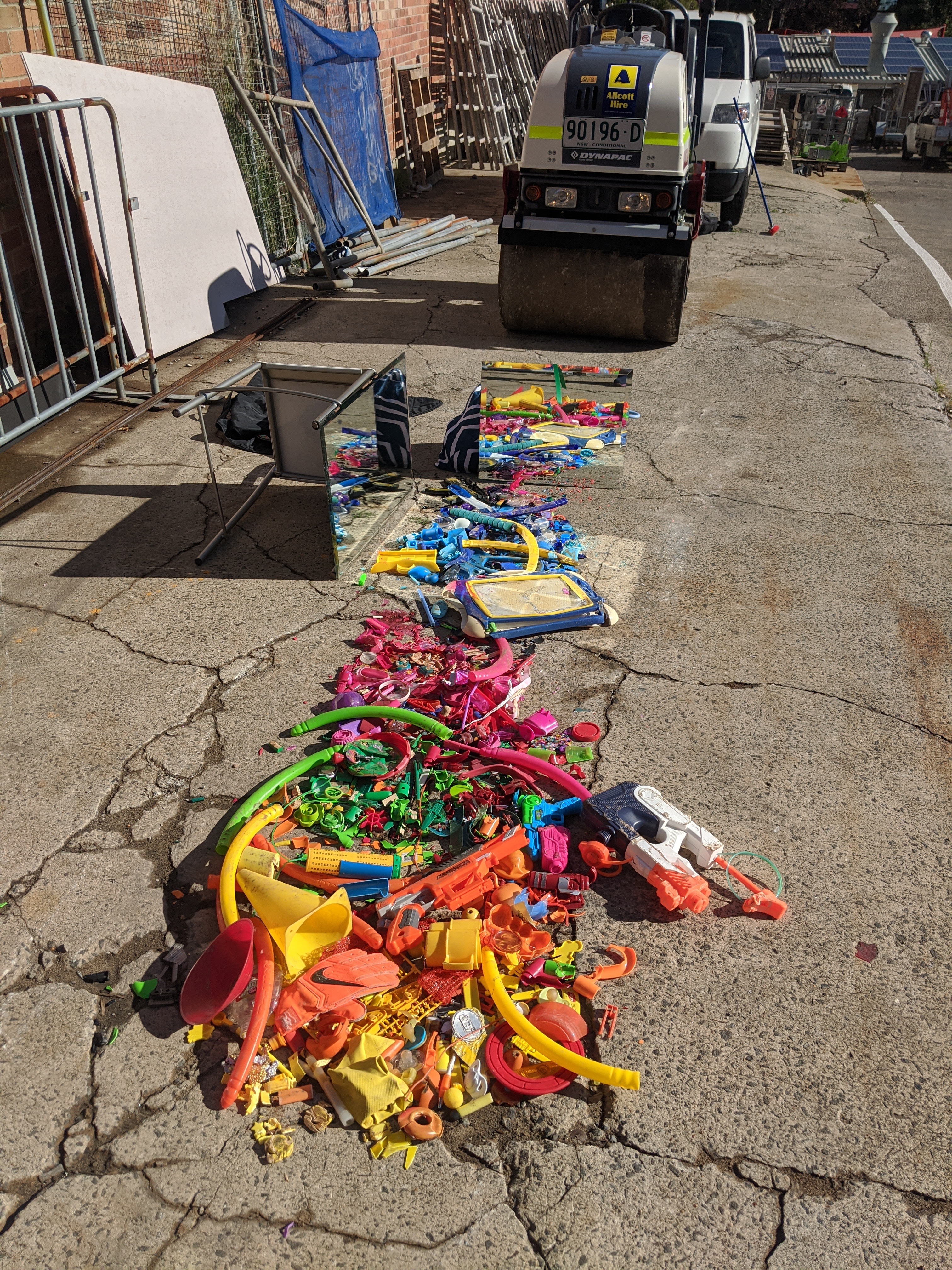
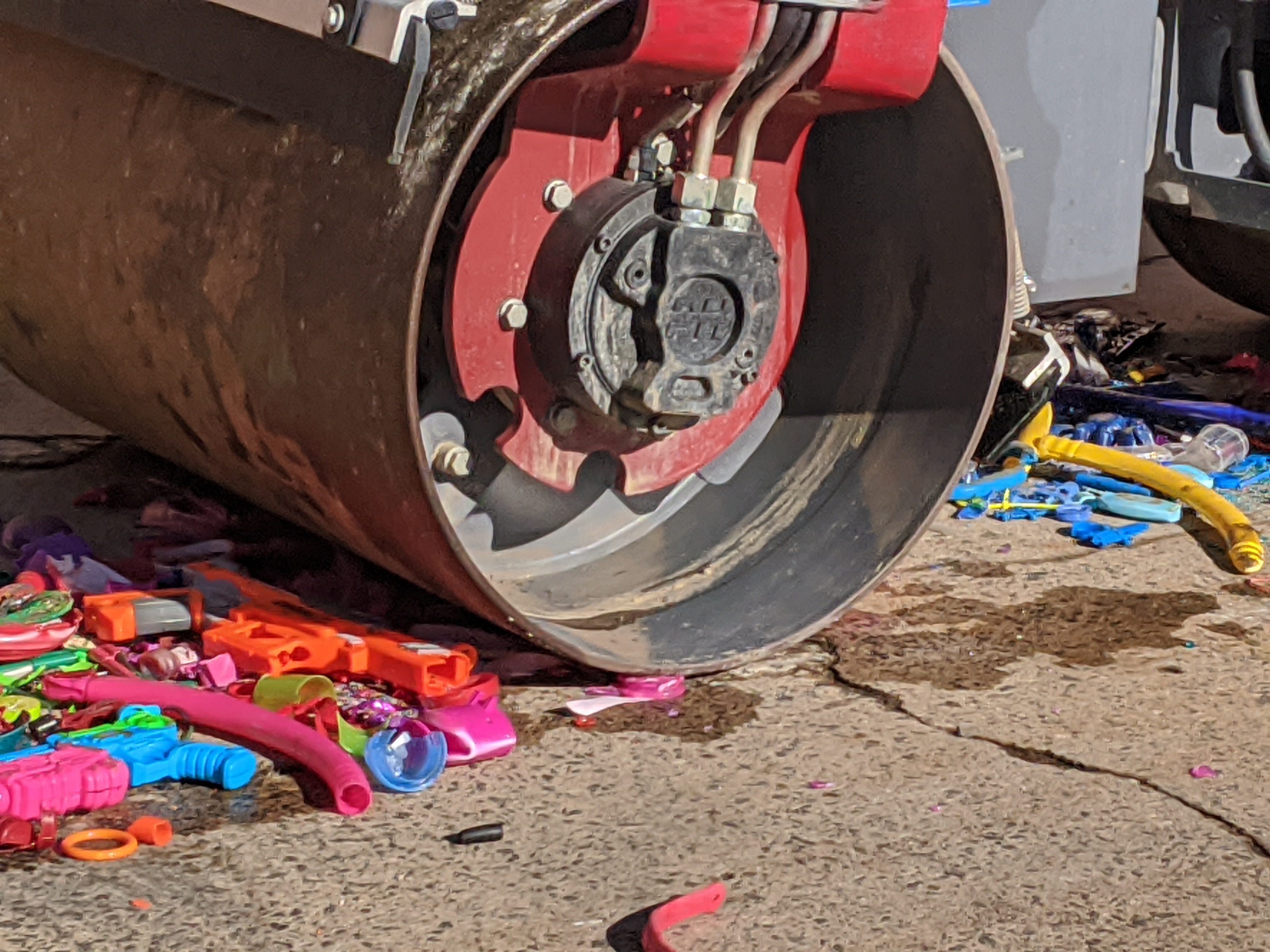
My idea around crossing last semester was to get a roller very large take it to a local area or/walking track and crush the plastic once it’s crossed place large pieces of Perspex over them so people can walk over the rubbish and see how much is consumed. I feel that unless it’s right under consumers’ noses once the waste is waste it is no tends to no longer be a person’s problem. This idea is doable, but time-consuming as I will need to seek permission and permits. I will need the weather to be right, I will need to fundraise for the glass or perspex sheets, and I will need to do a risk assessment. I will need to pay for the roller and the person driving it. I think because I have lost a month, this needs to be for another day/time in my life.
The work will depend on which I choose, which ones I work on, it could be that that is actually the found products themselves, or it could be just photographed. If I do the melting it could be one massive form.
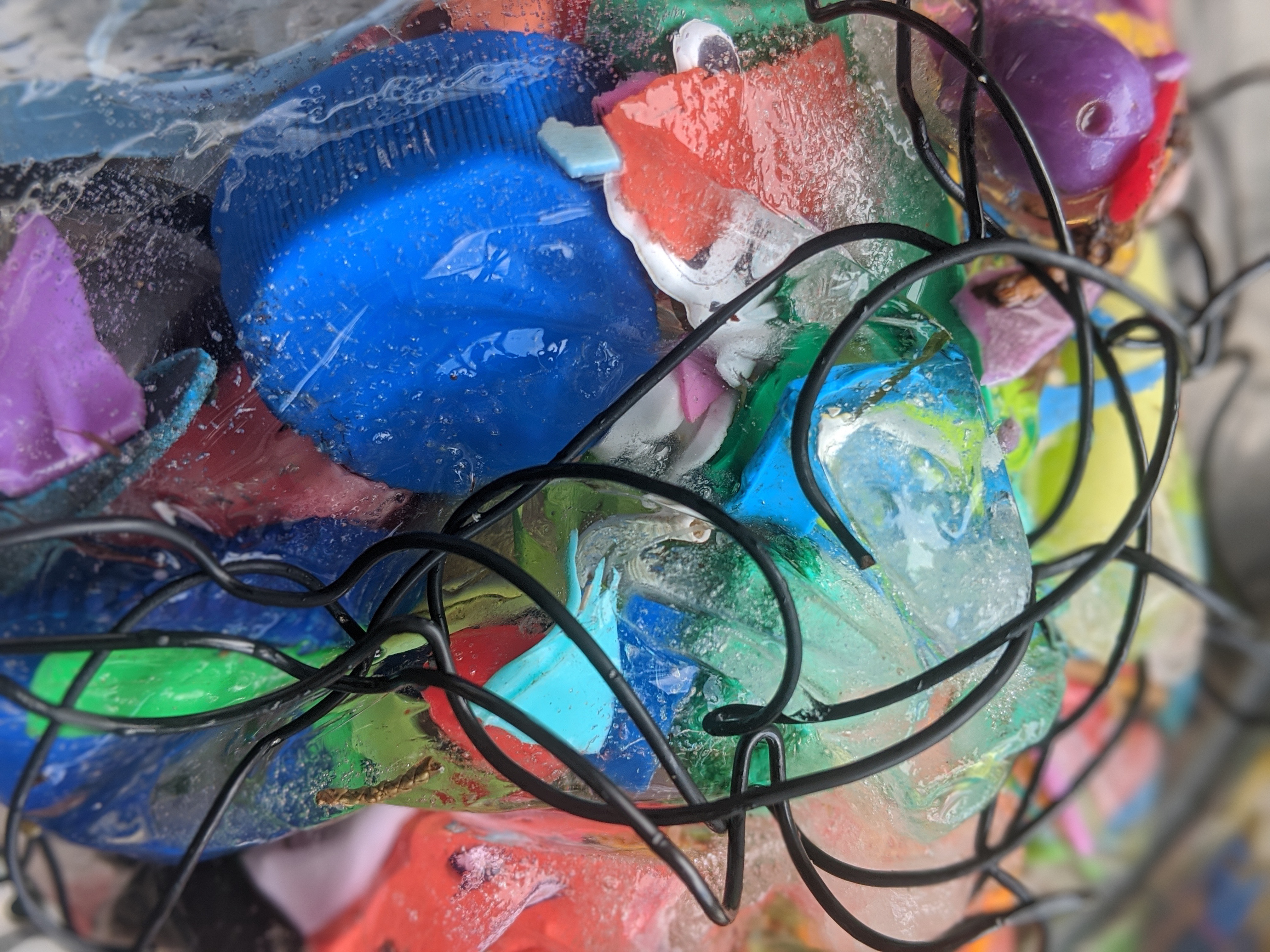
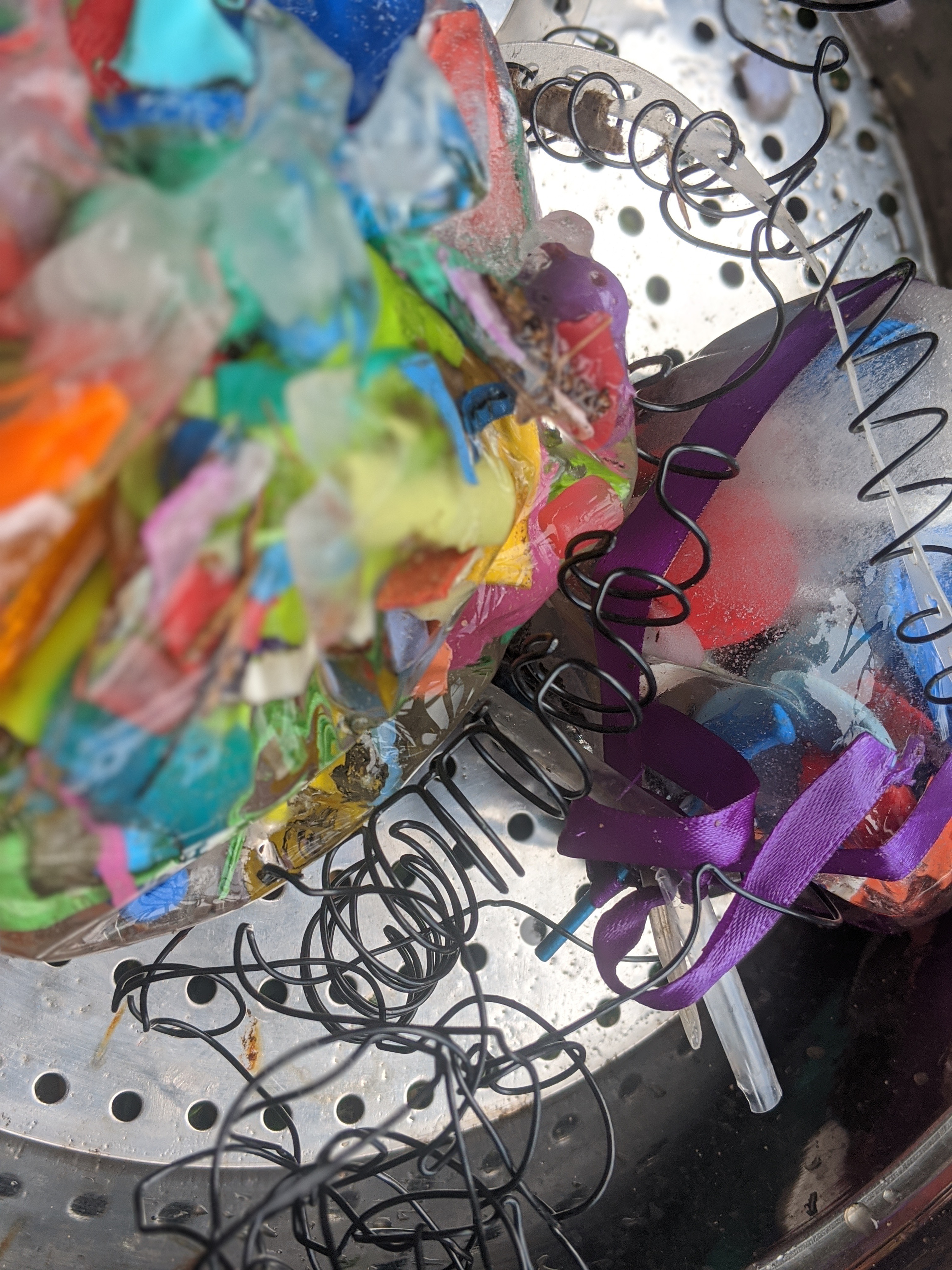
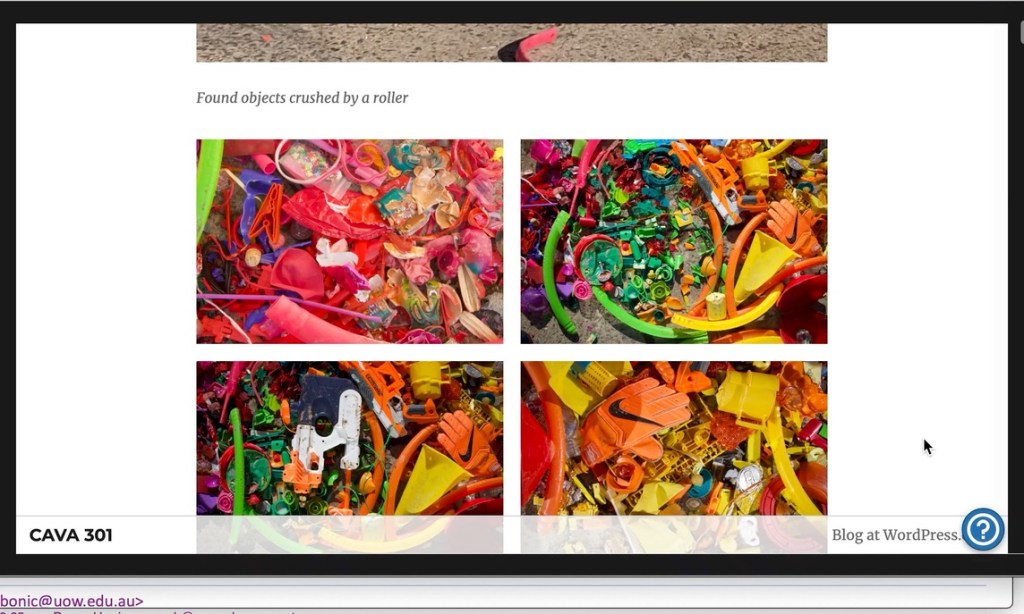
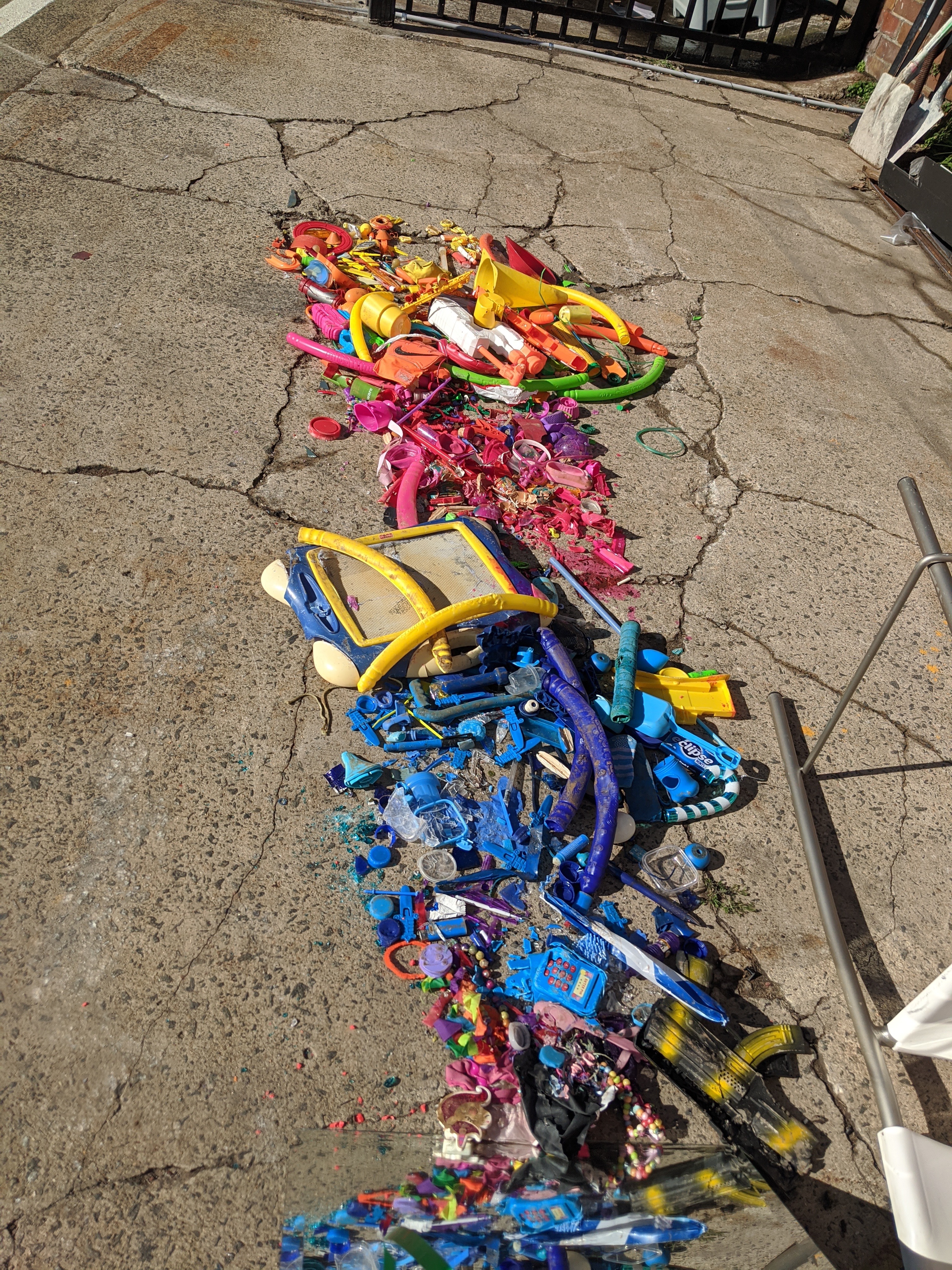
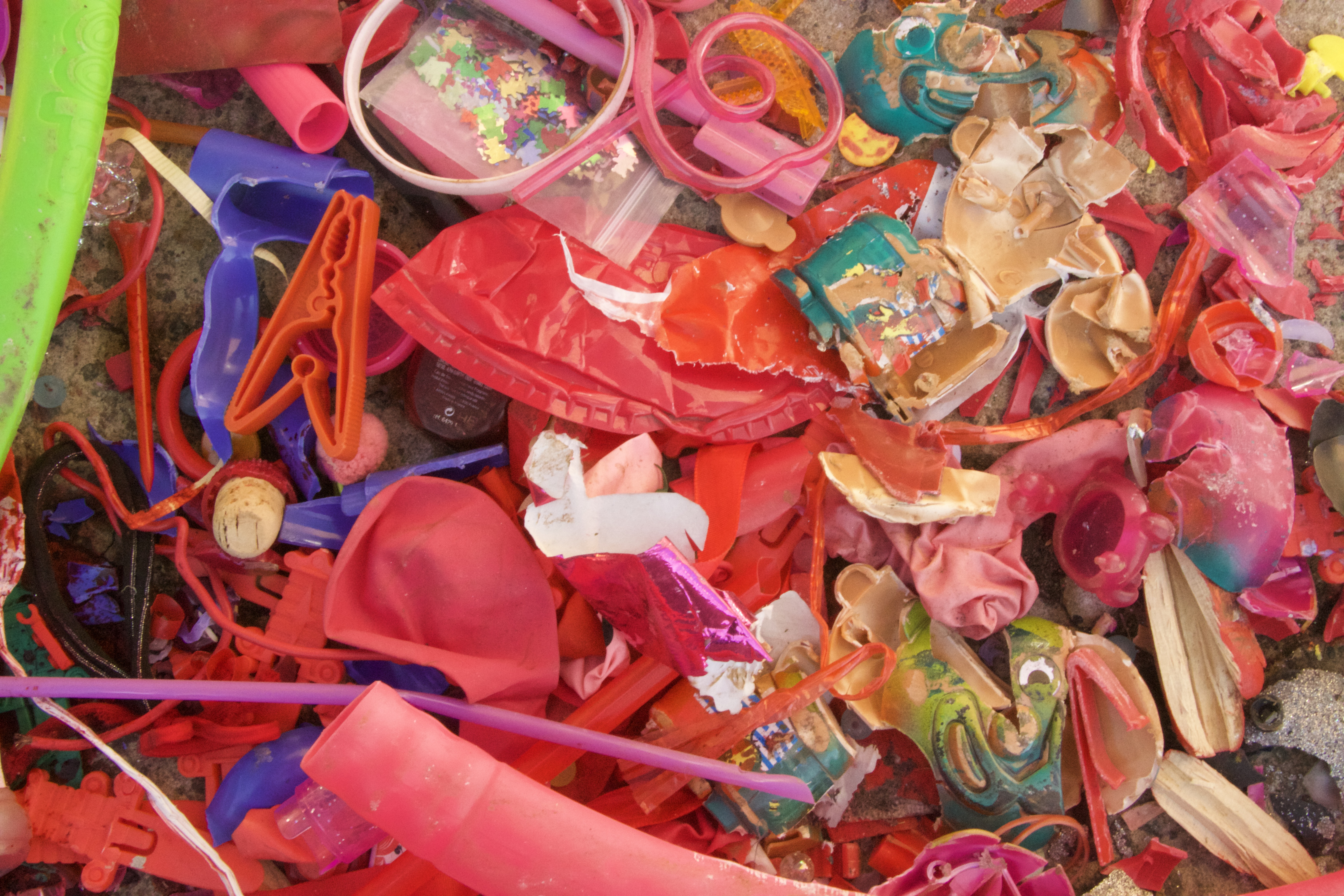
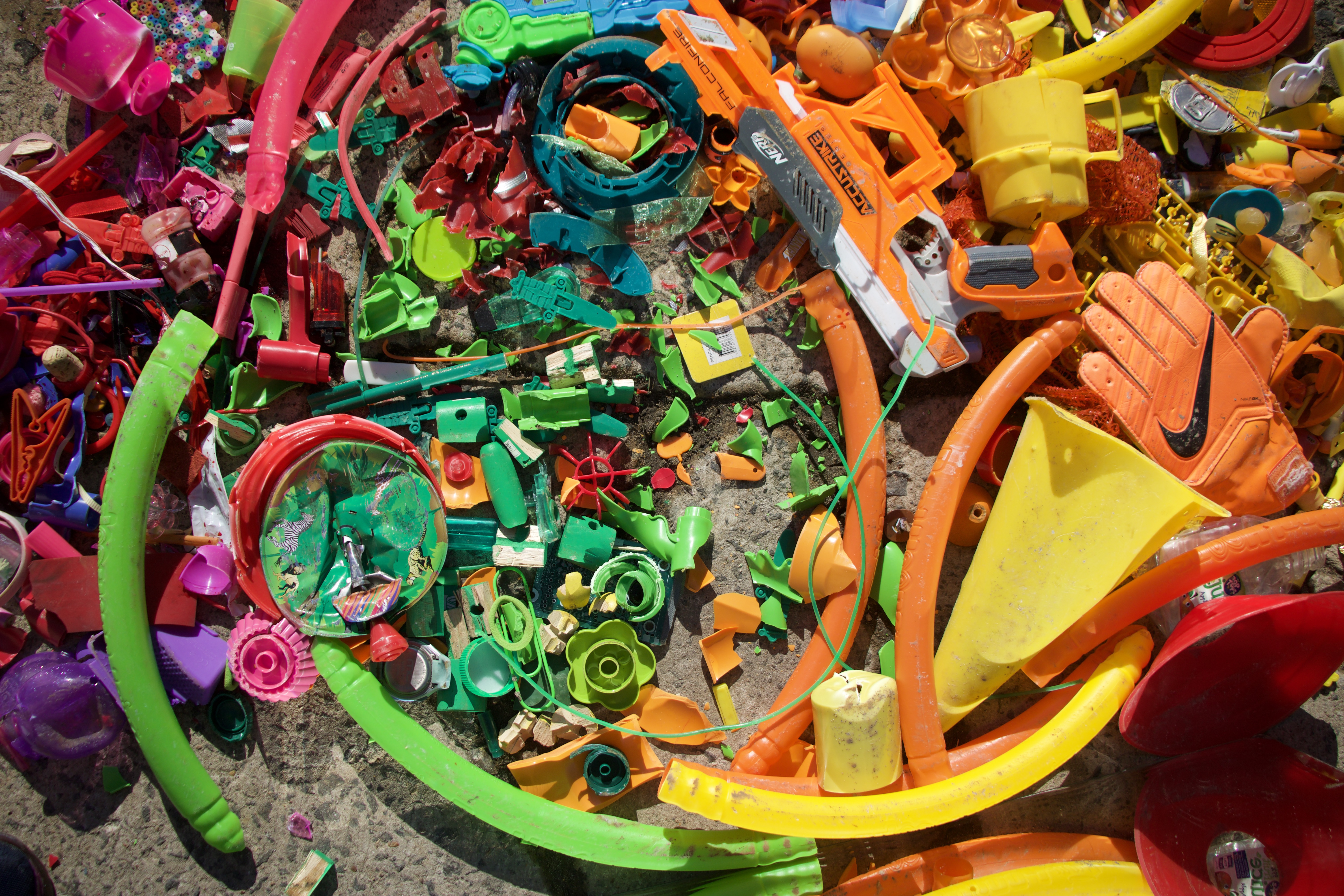
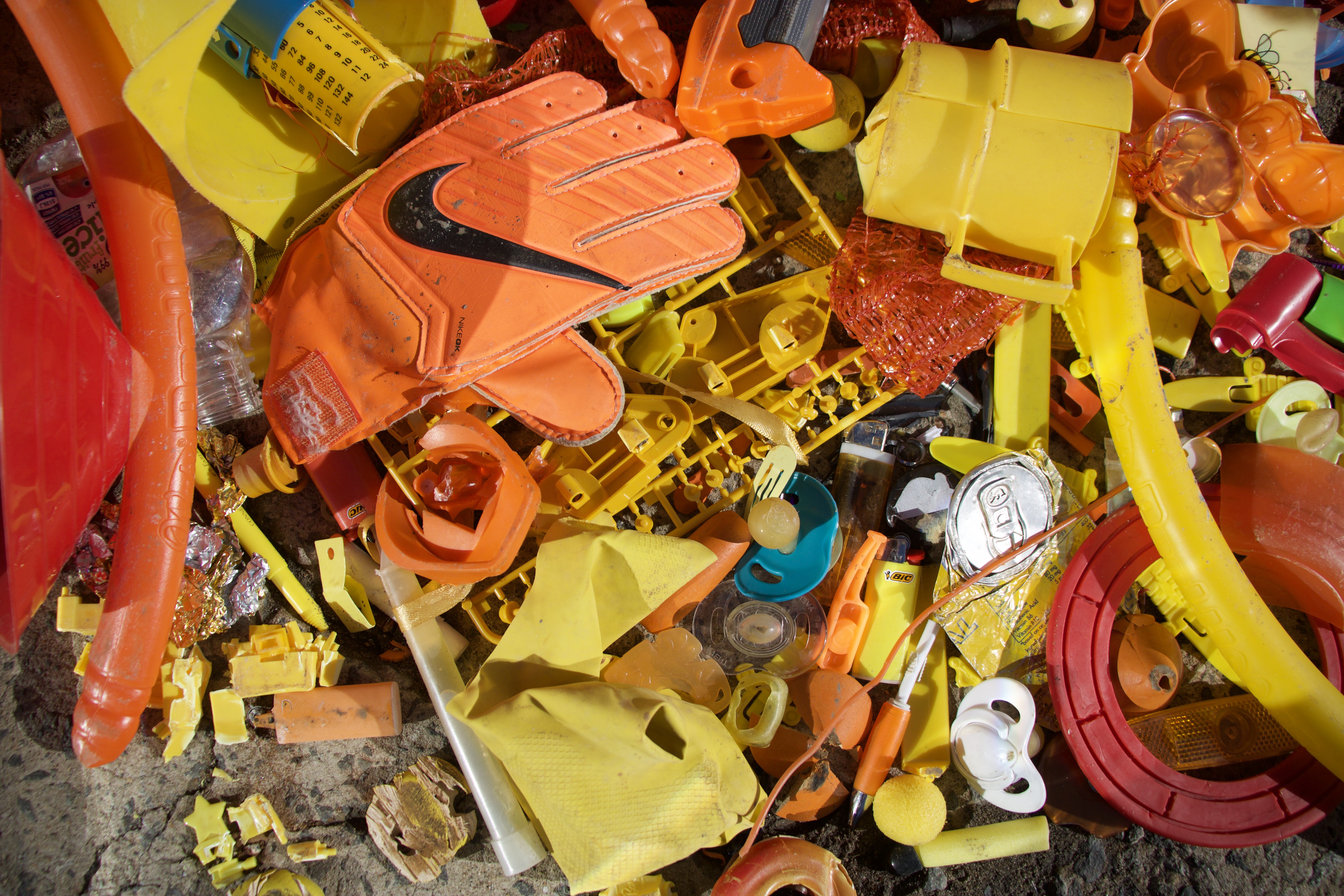
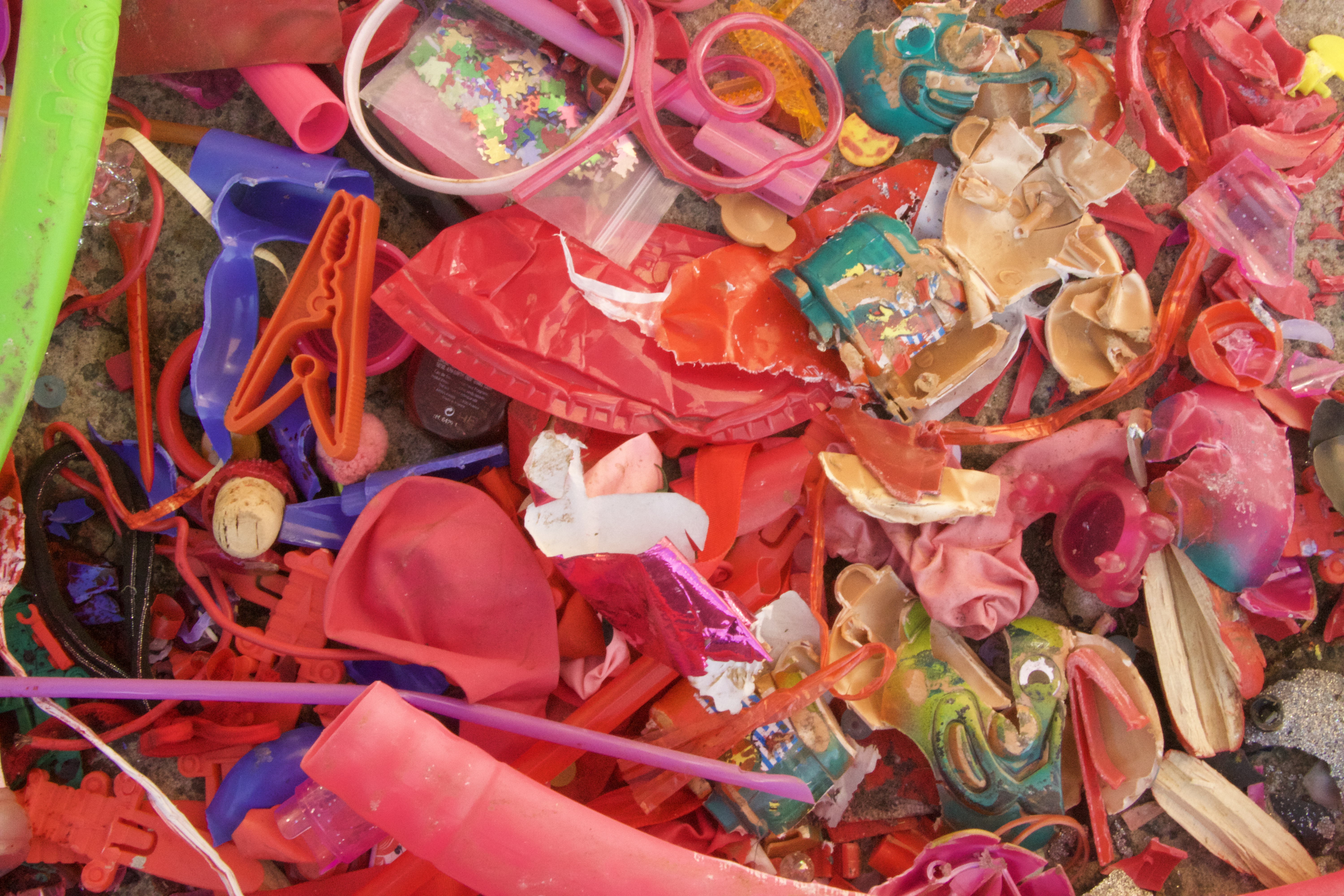
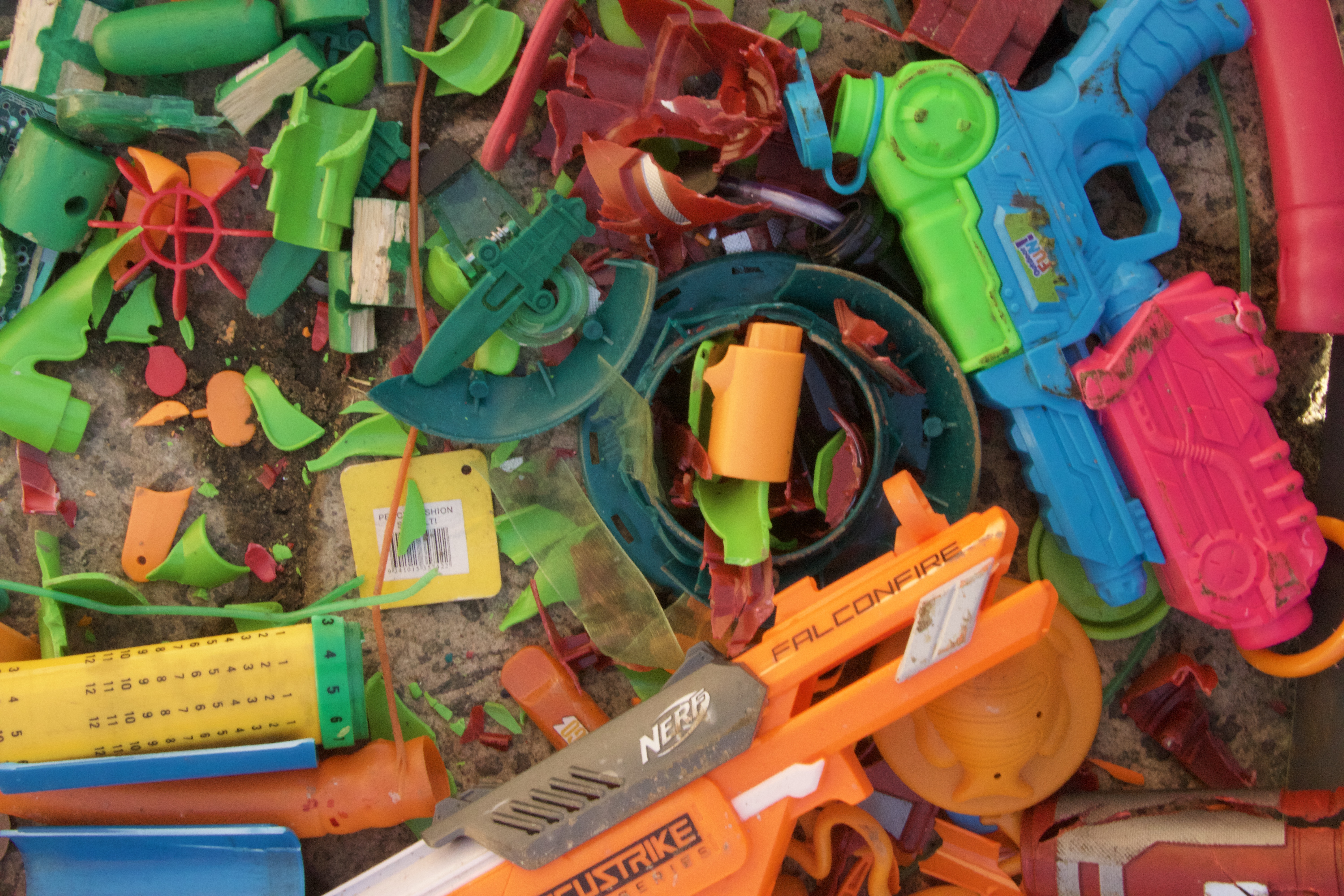
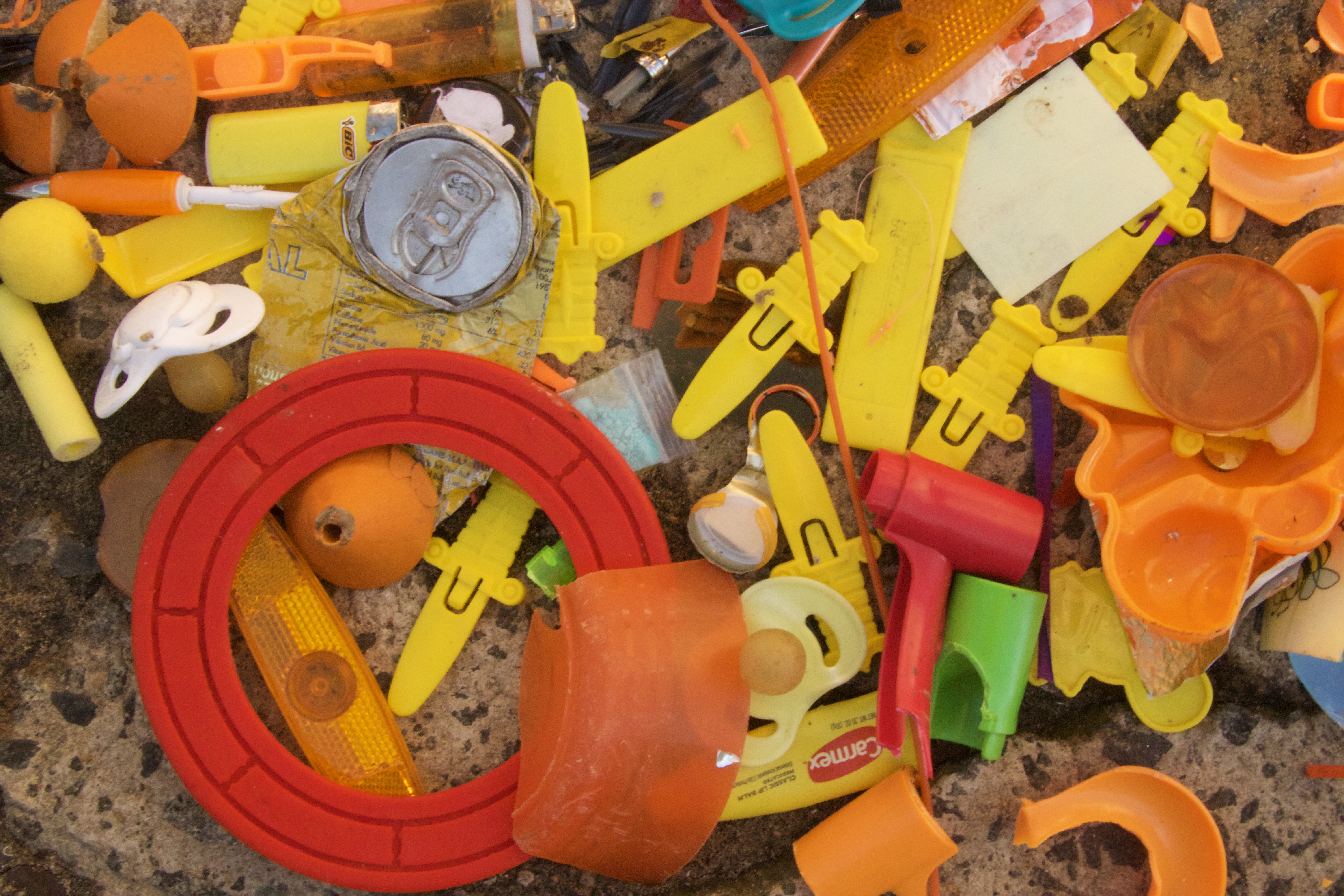
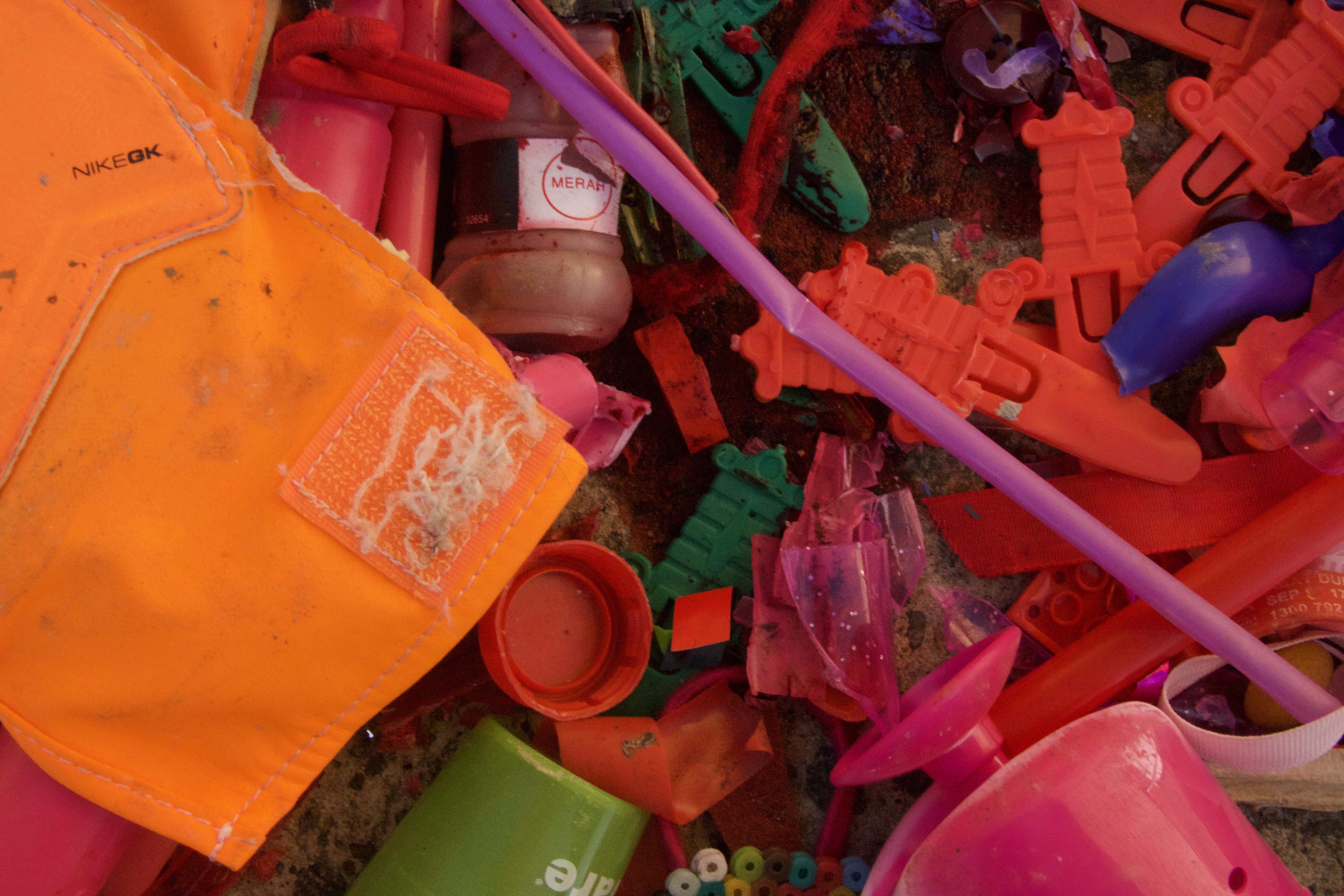
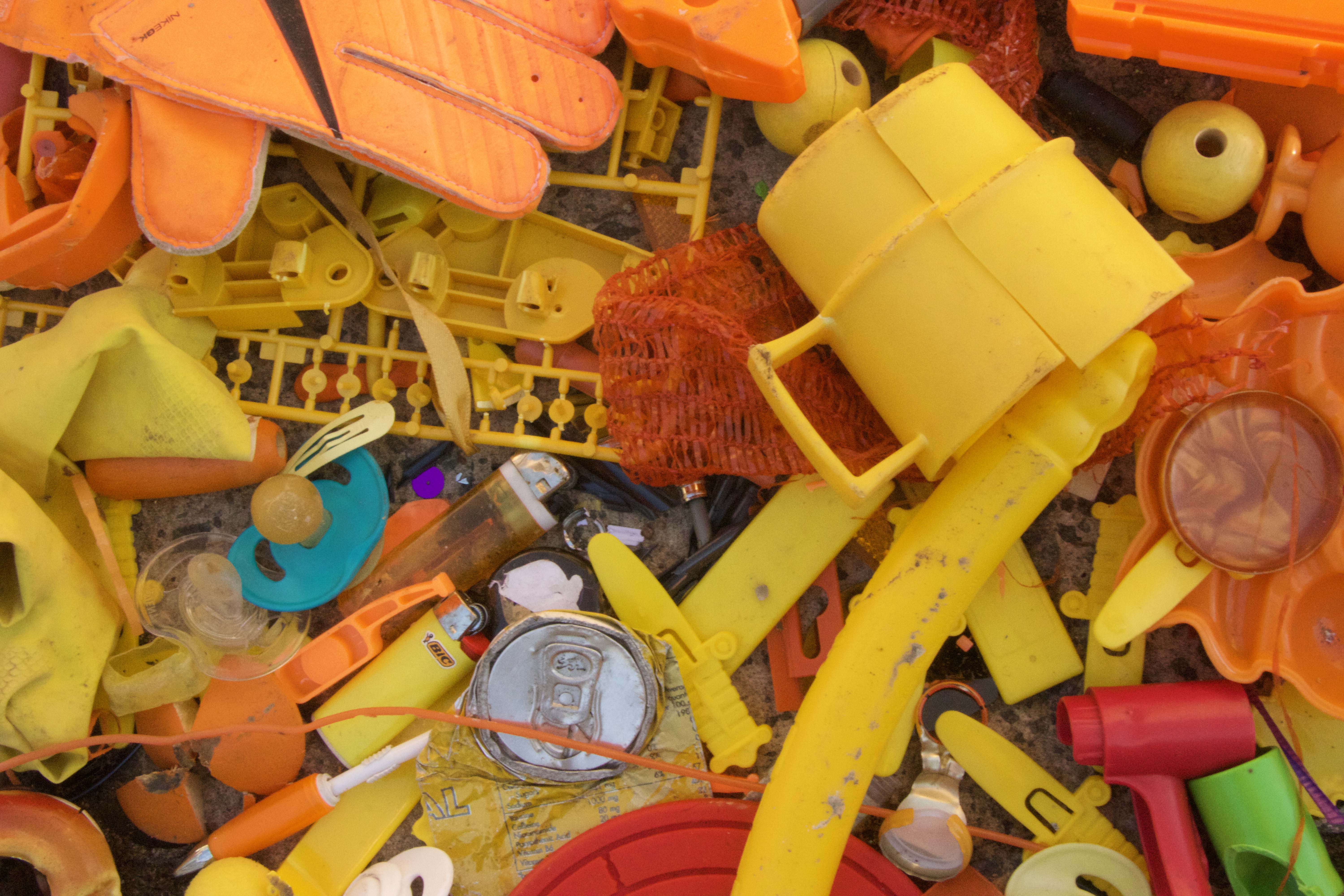
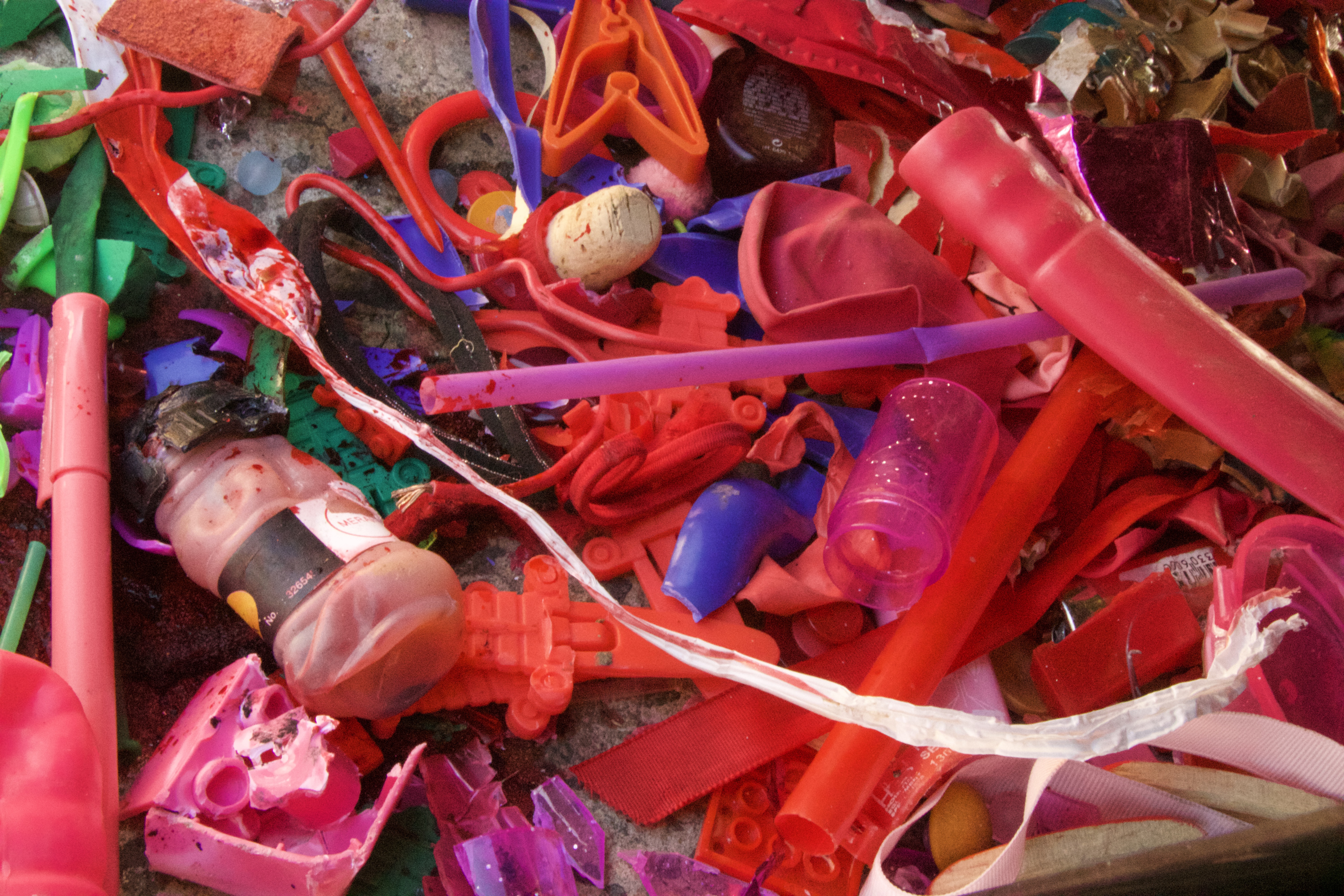
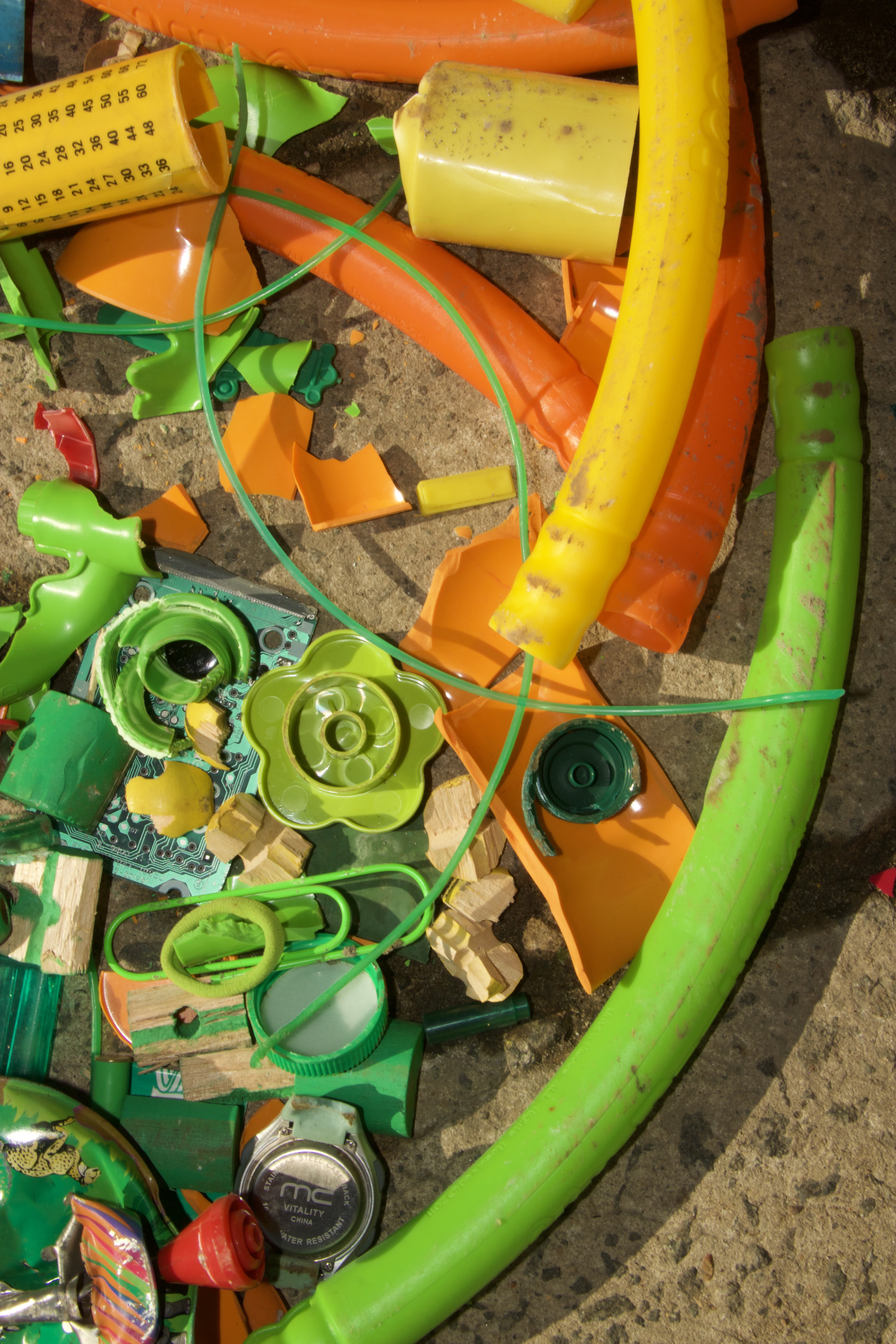
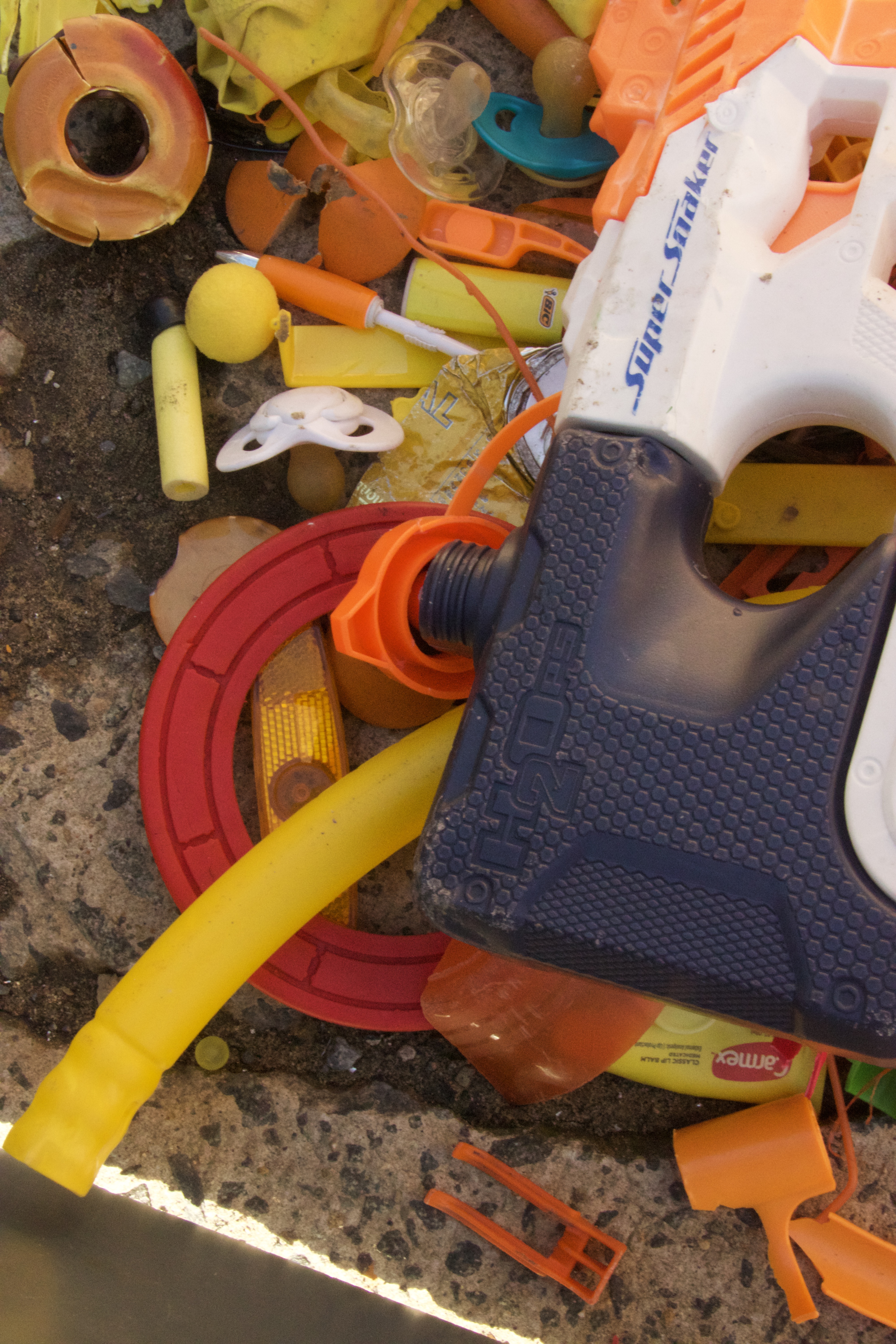
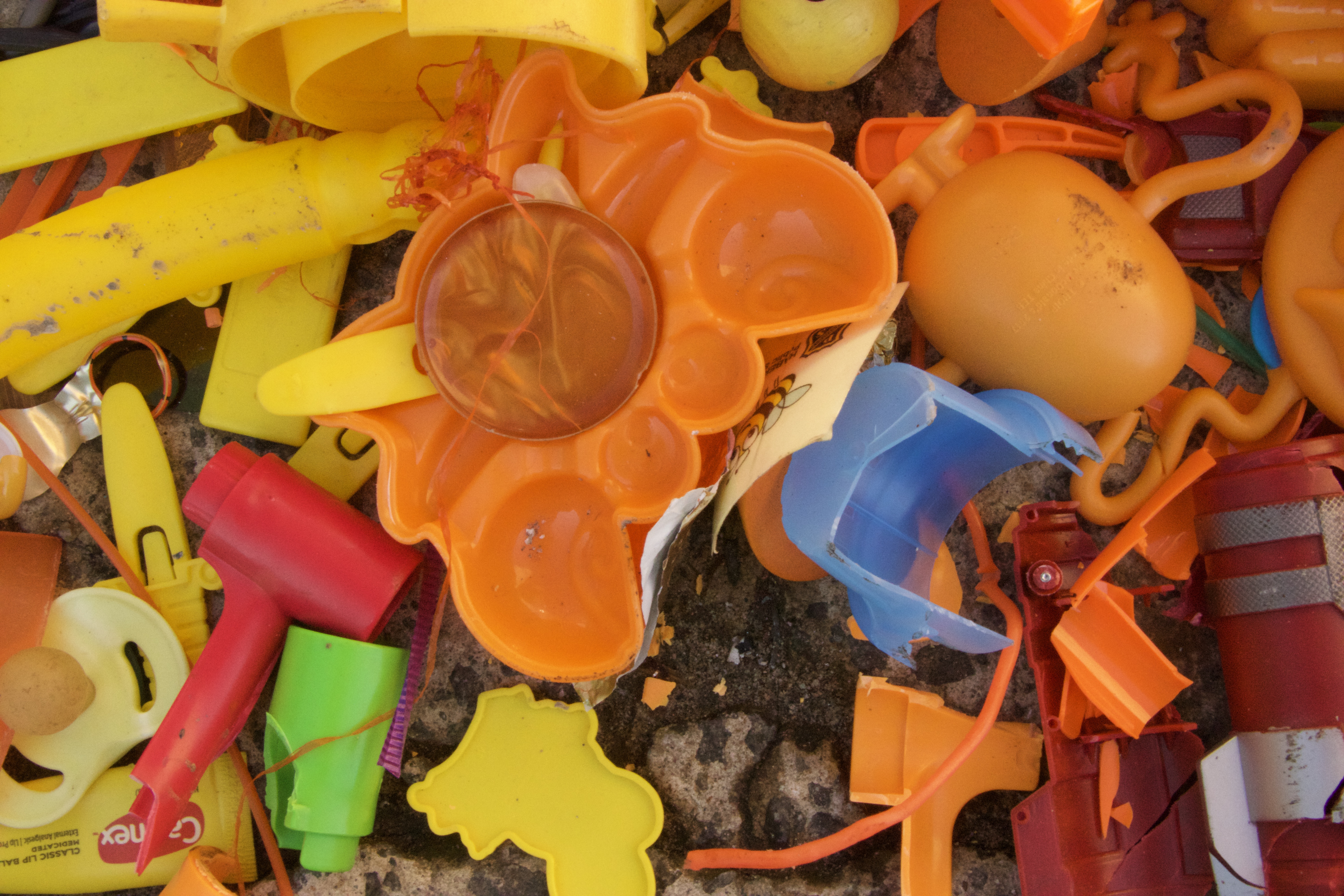
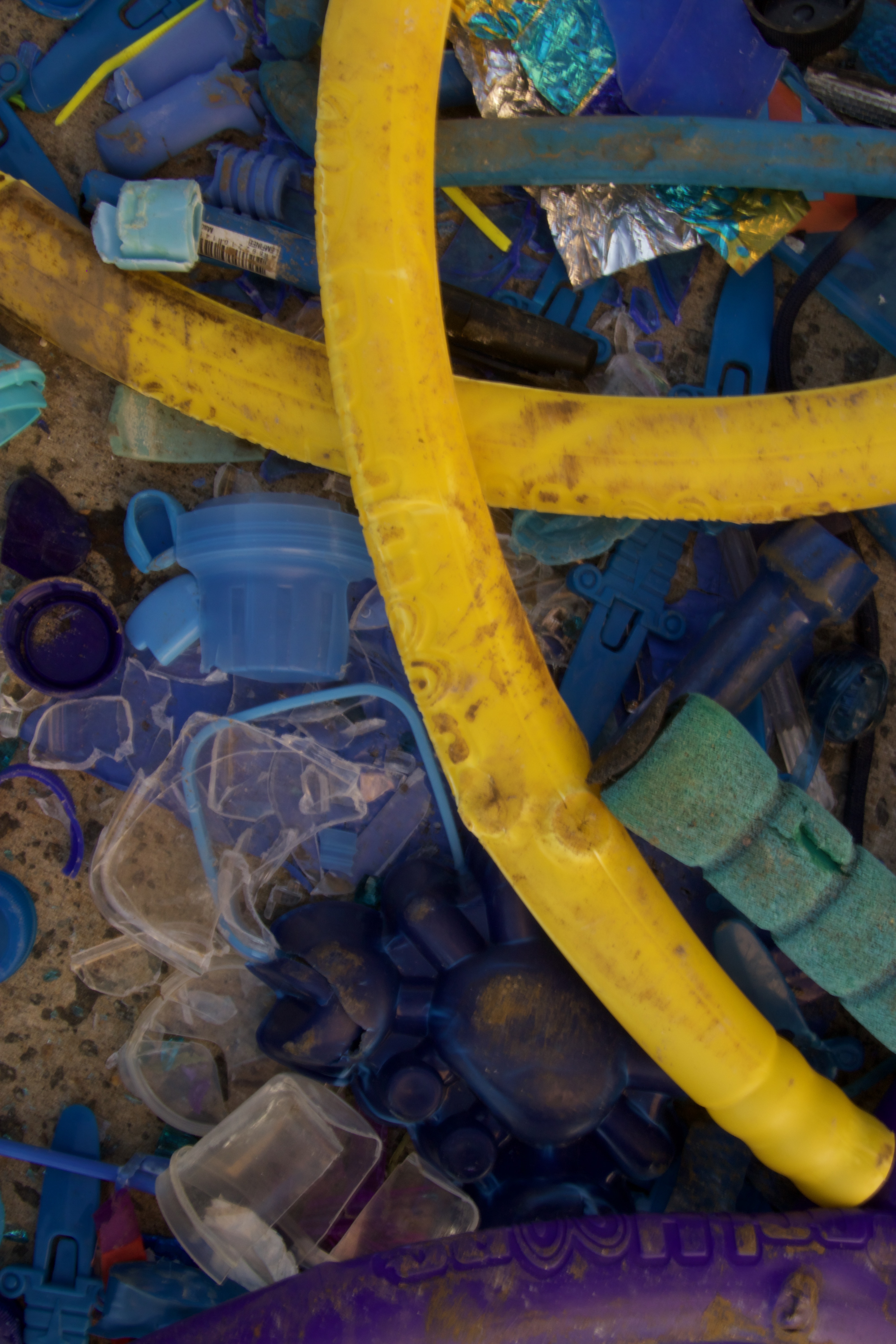
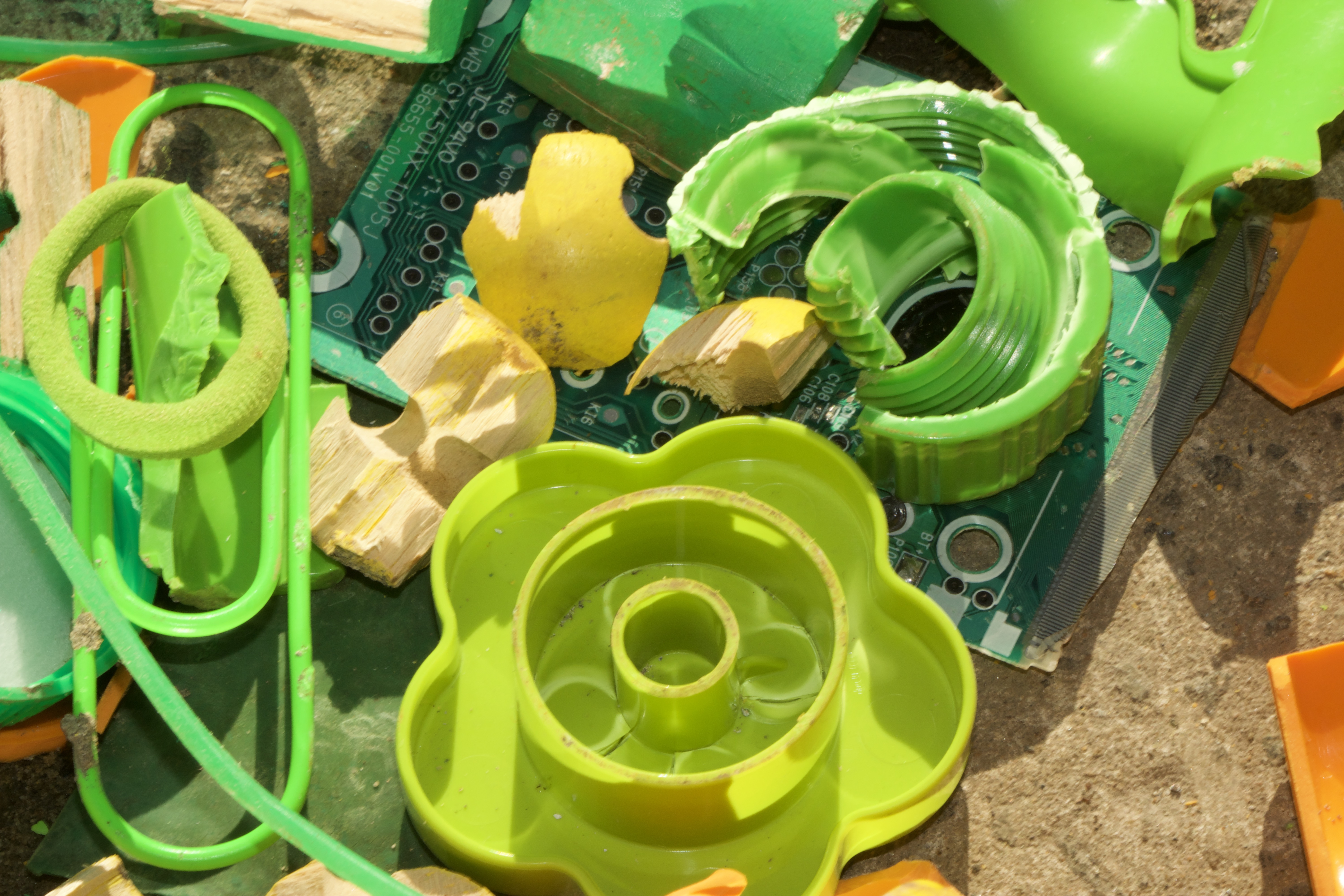
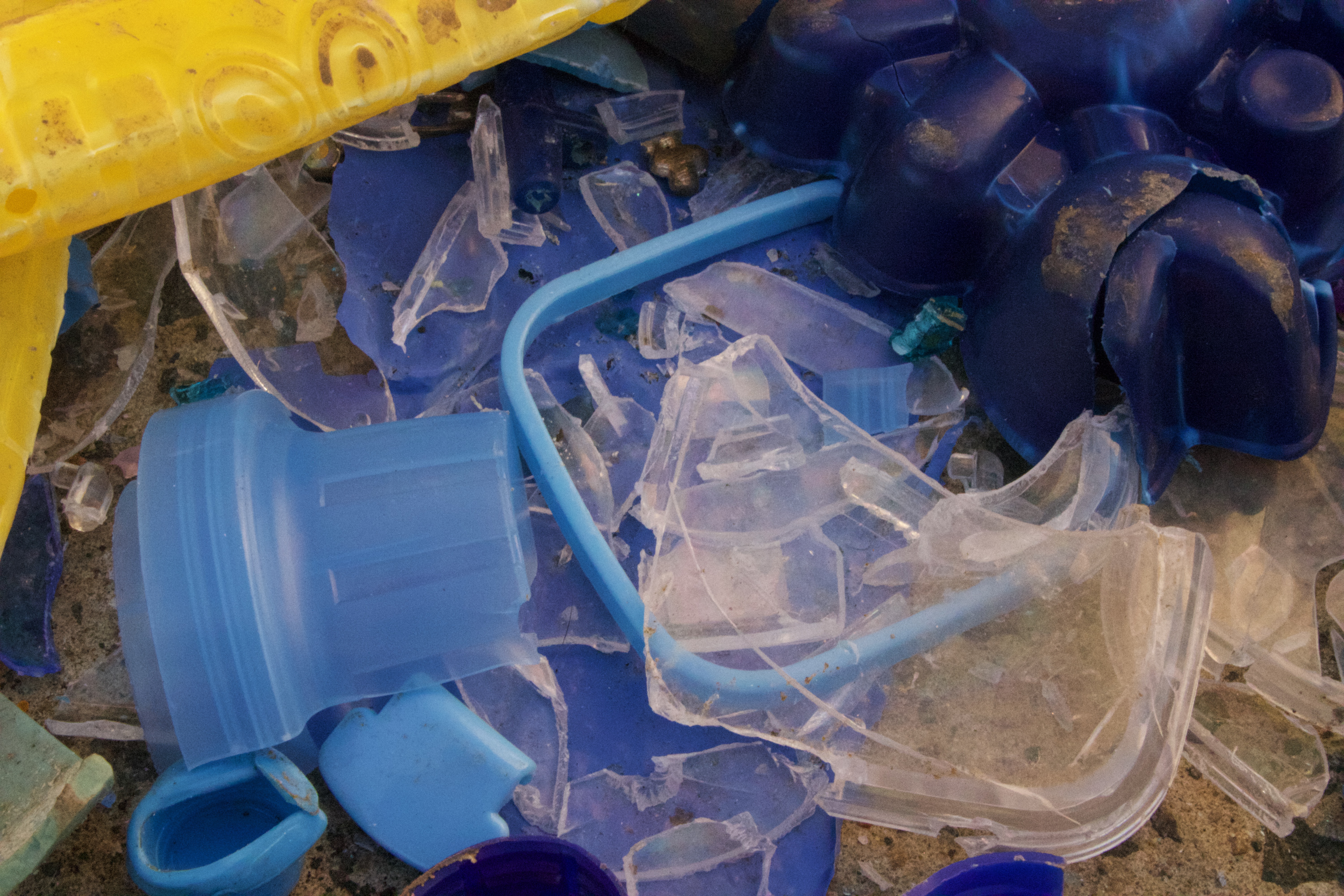
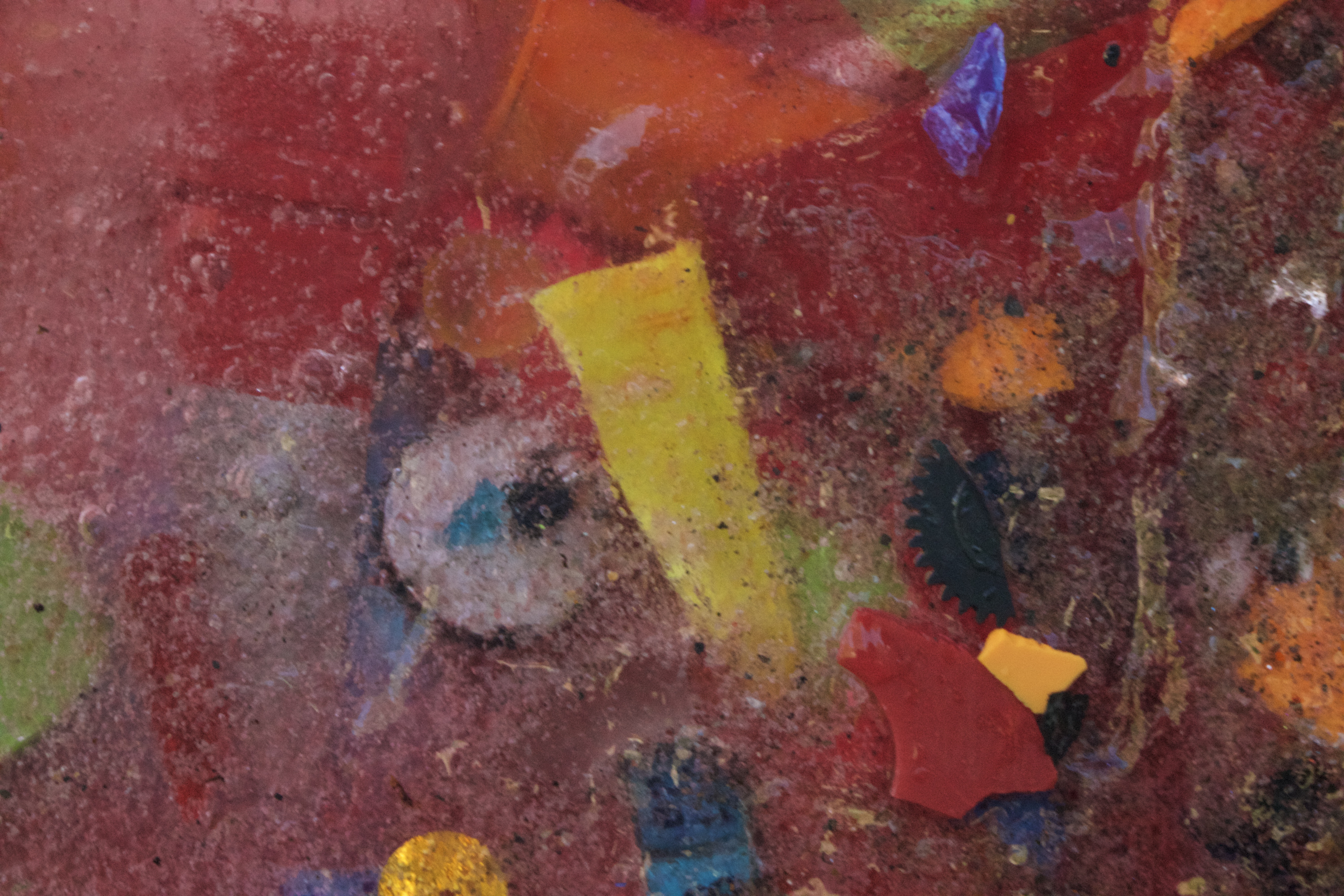
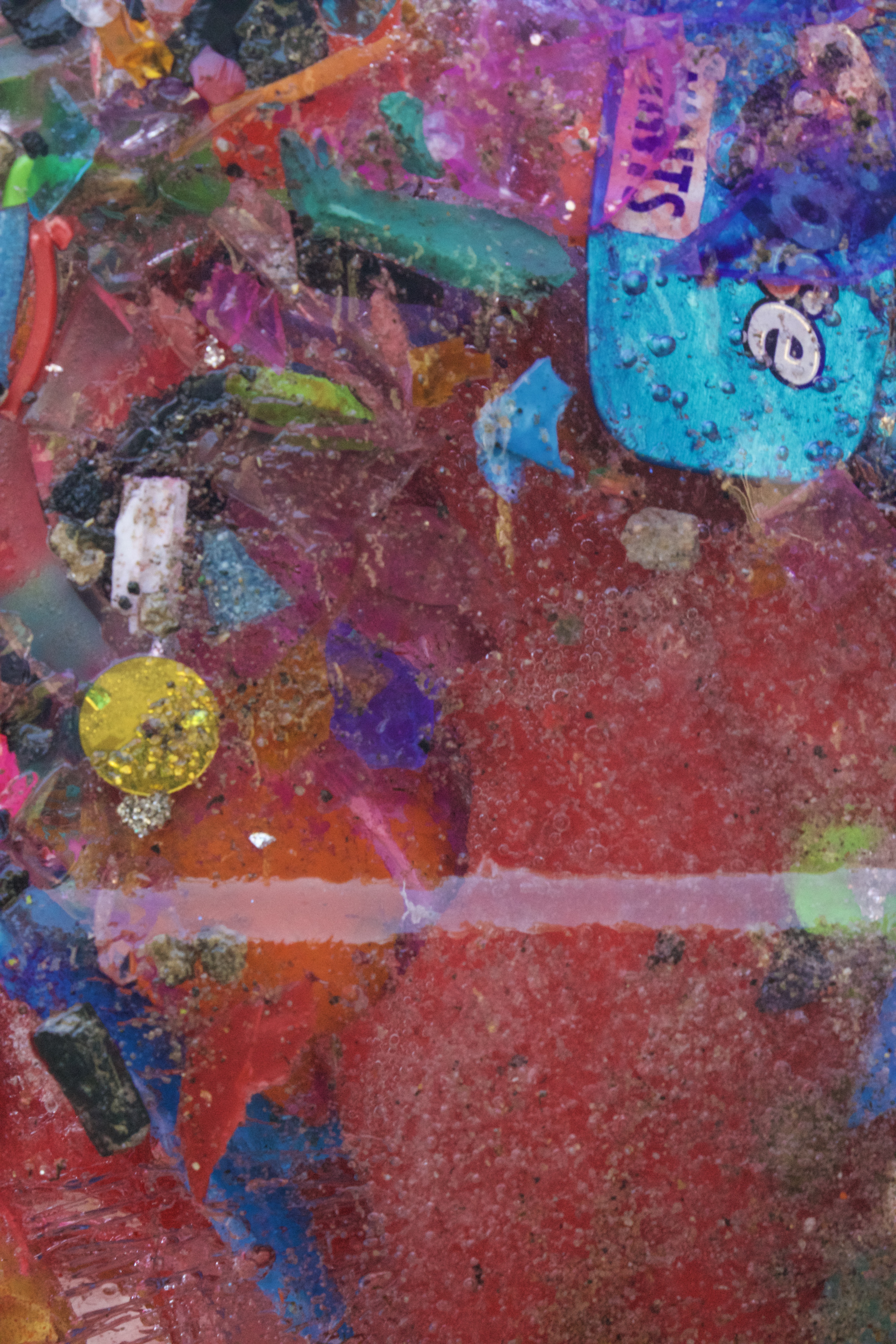
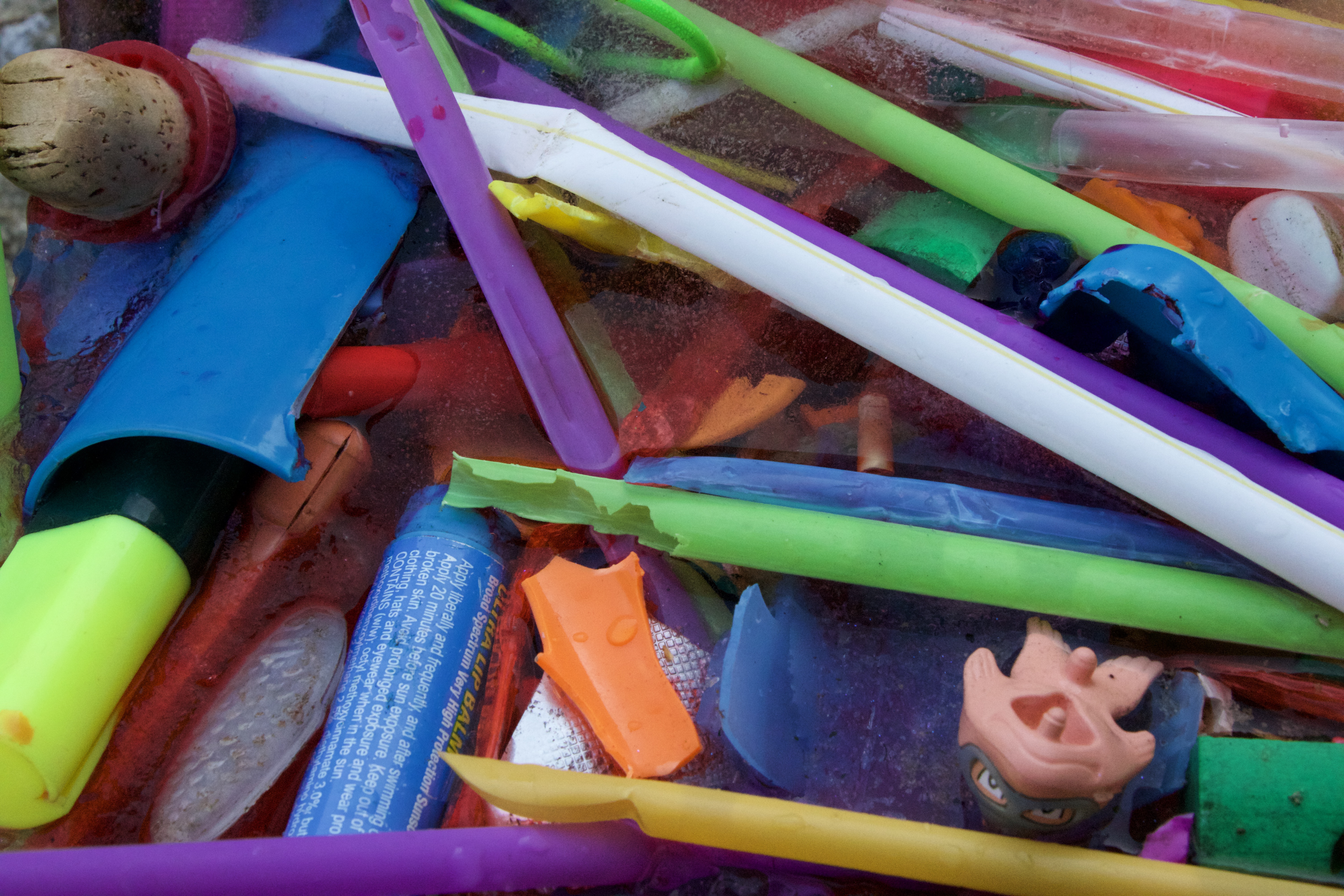
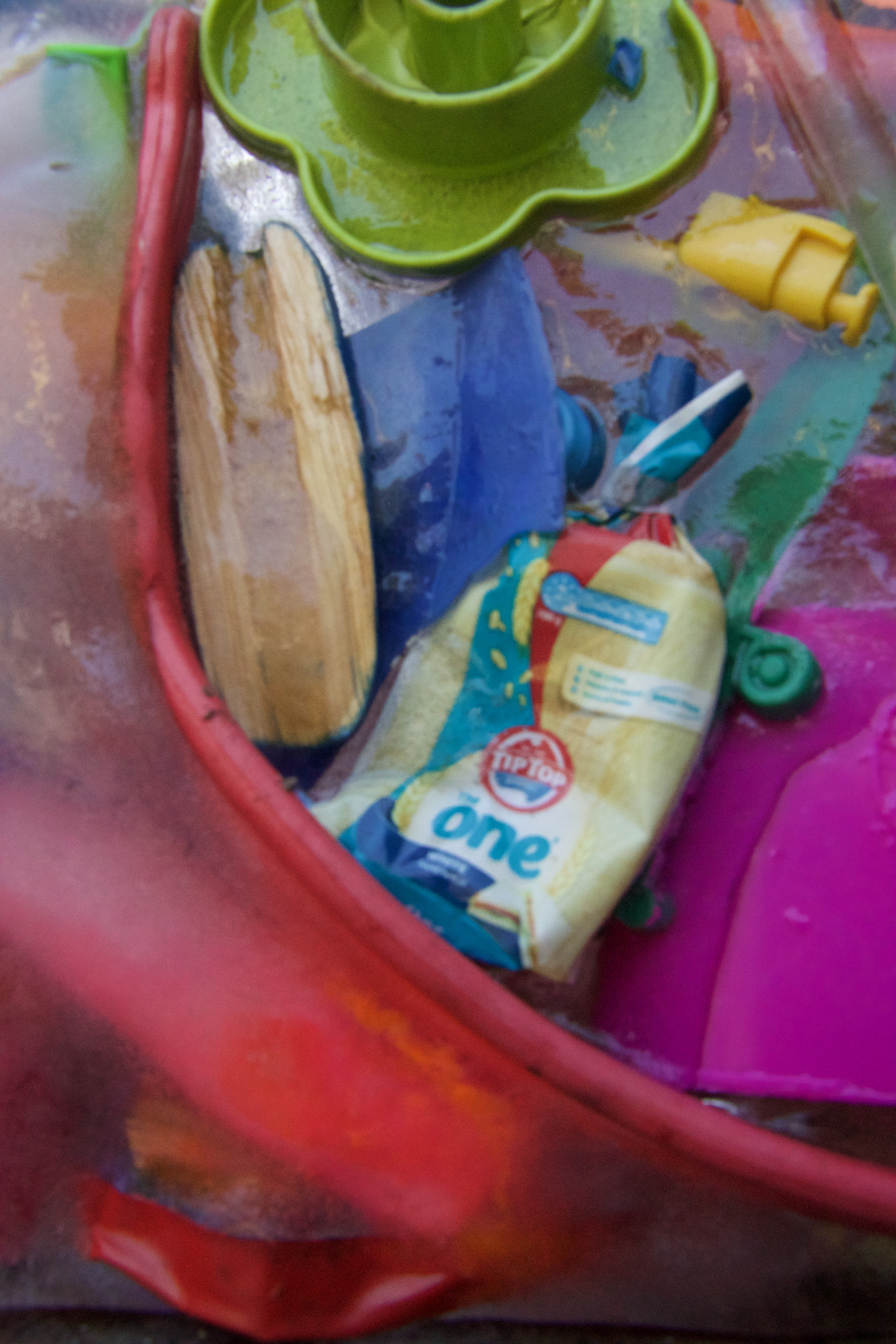
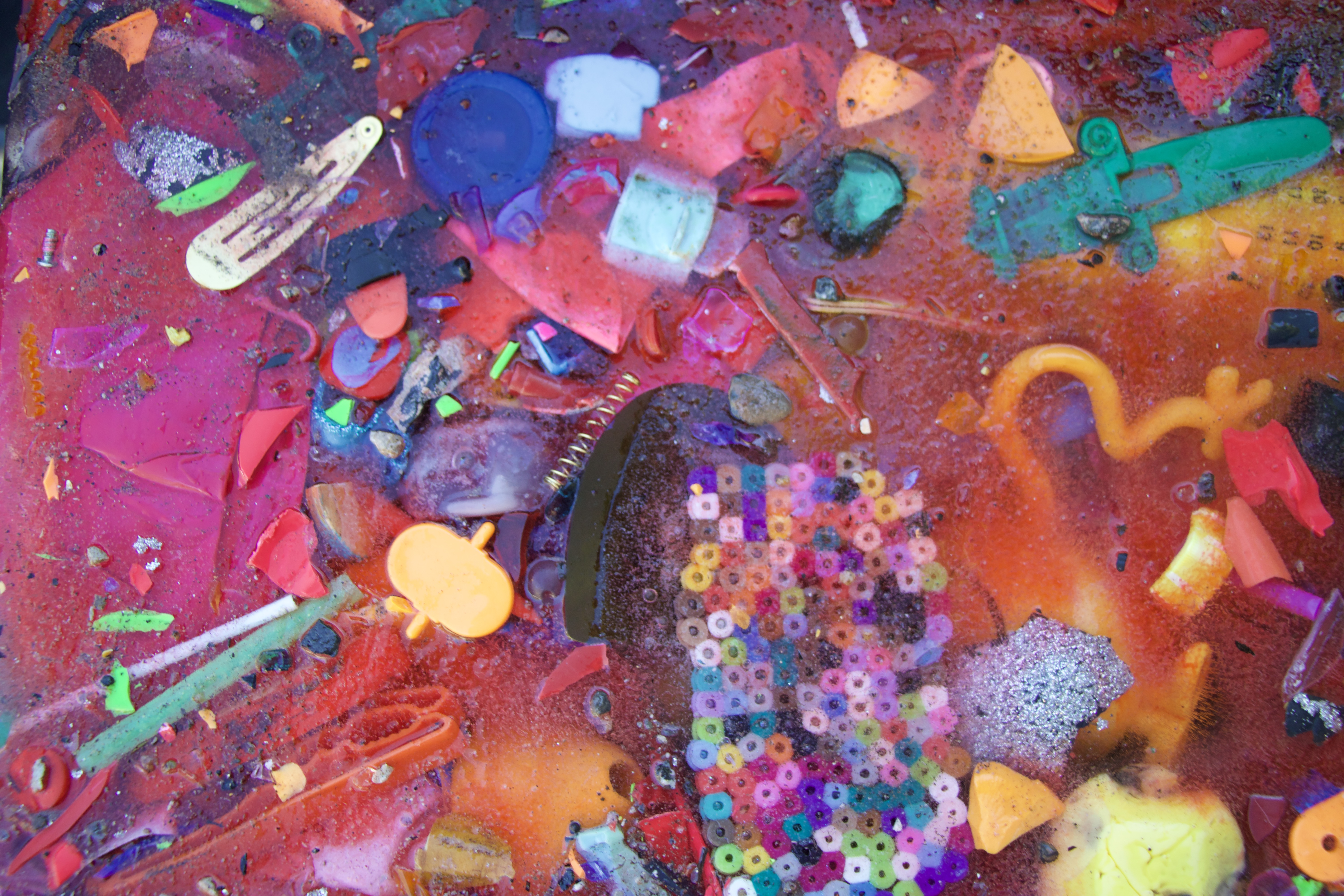
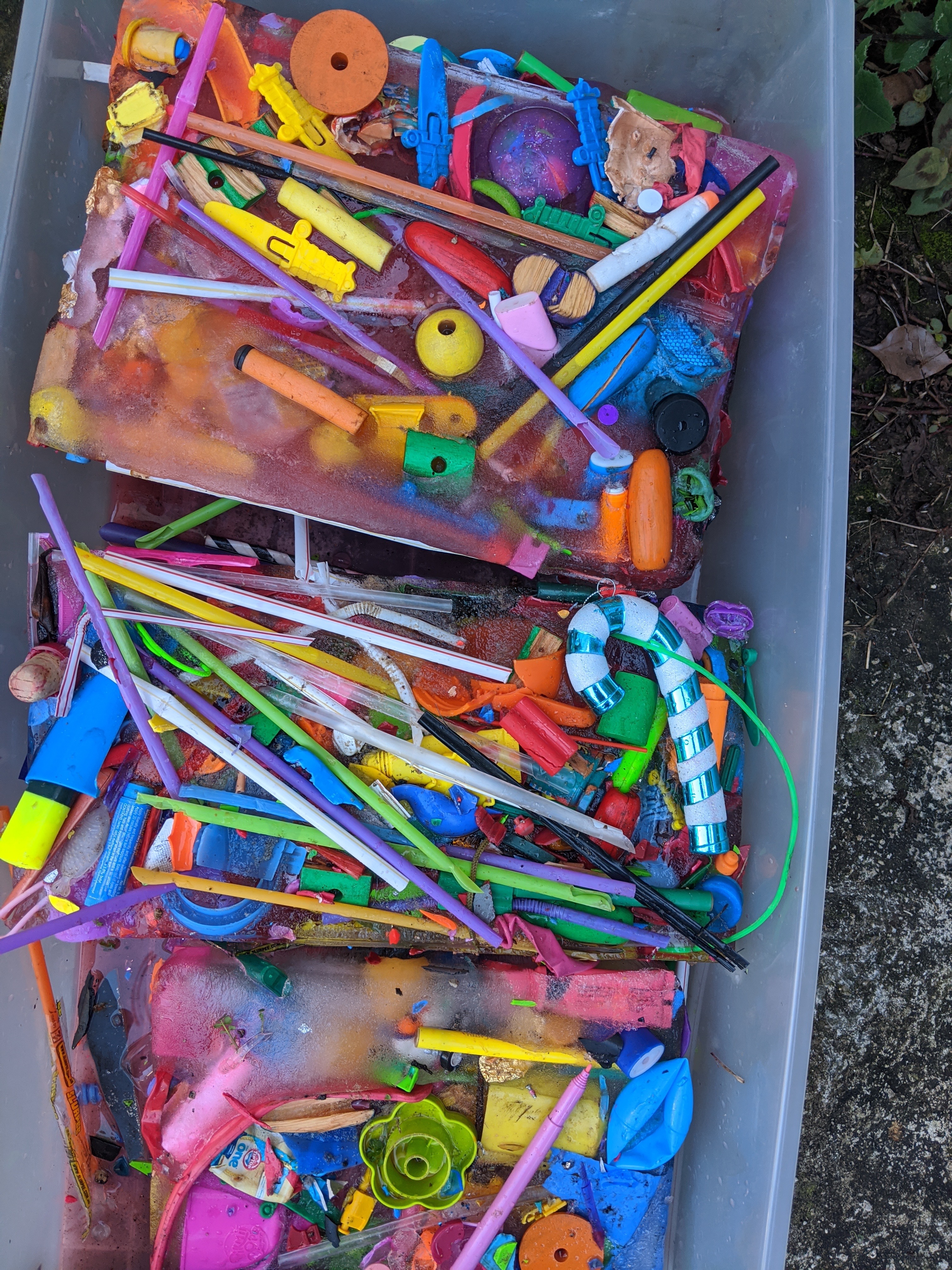
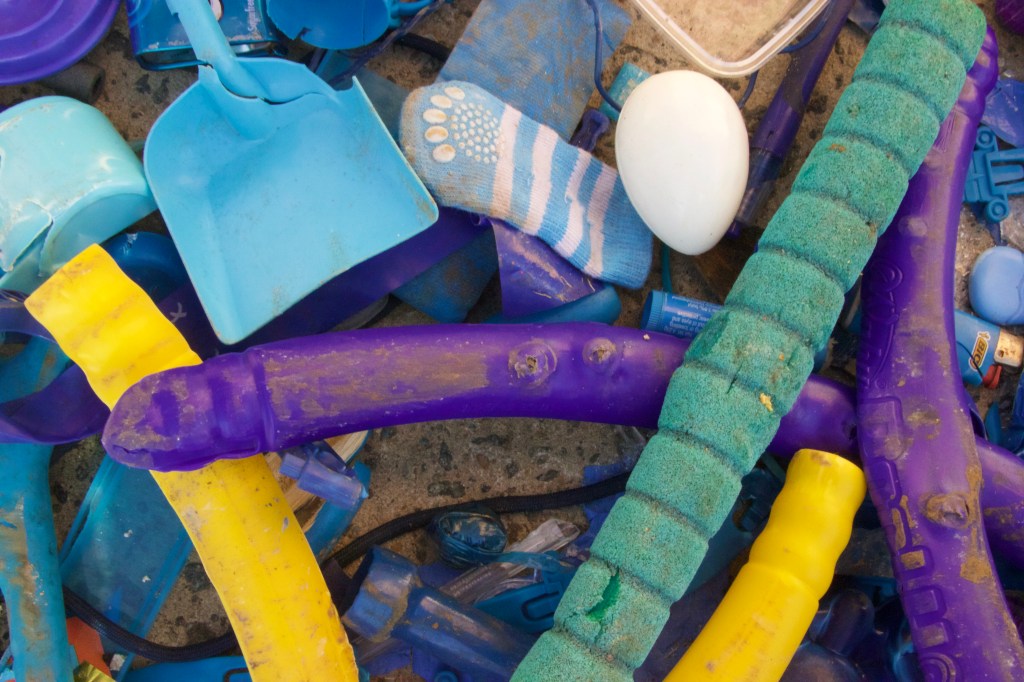
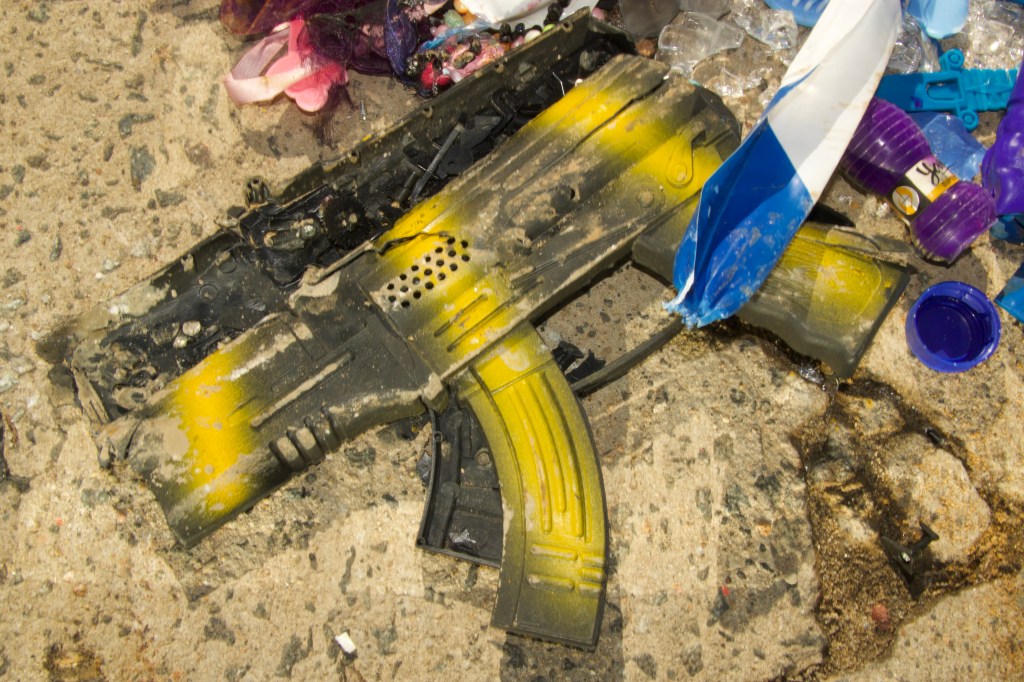
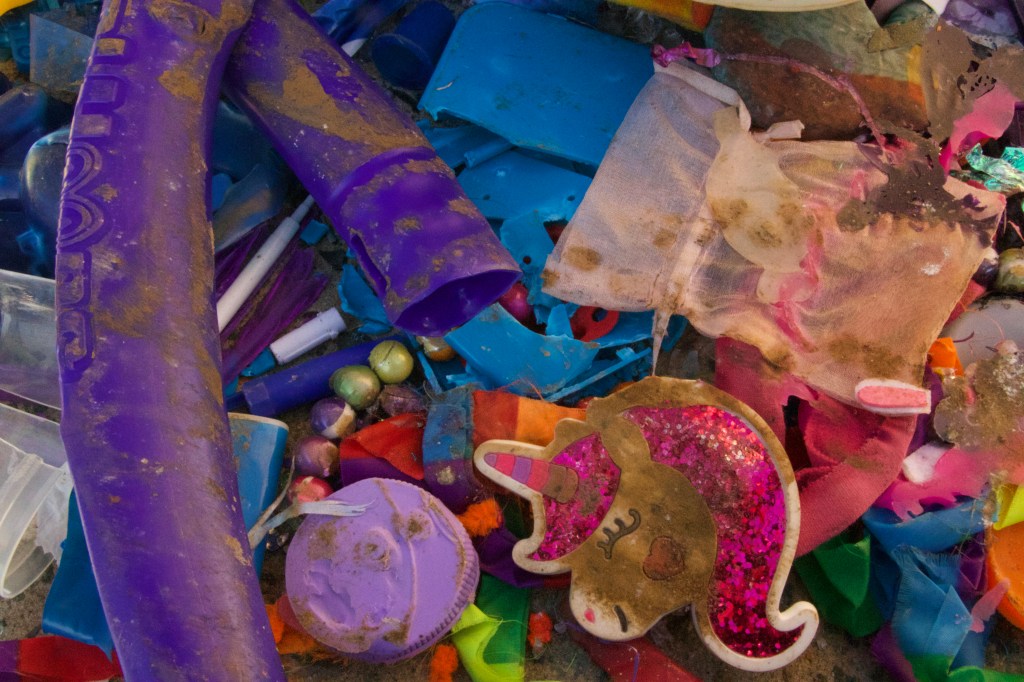
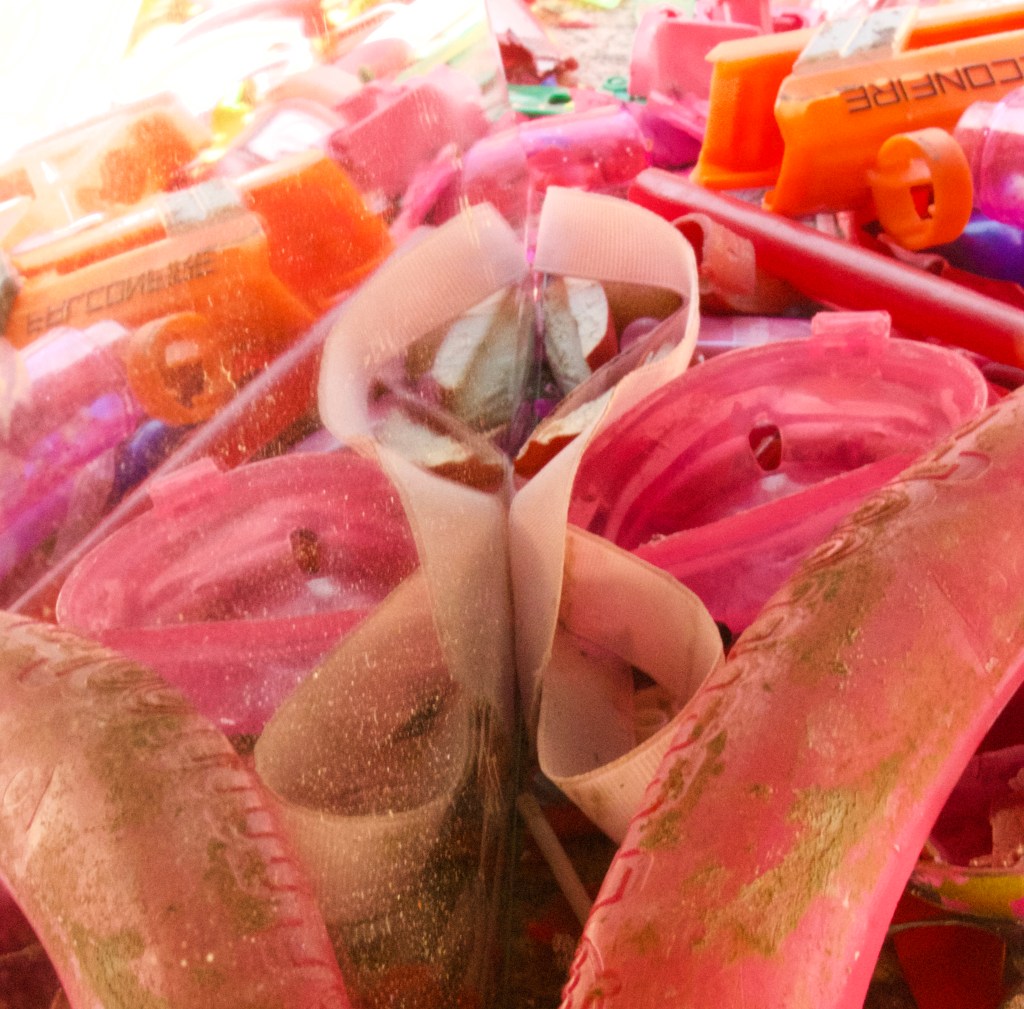
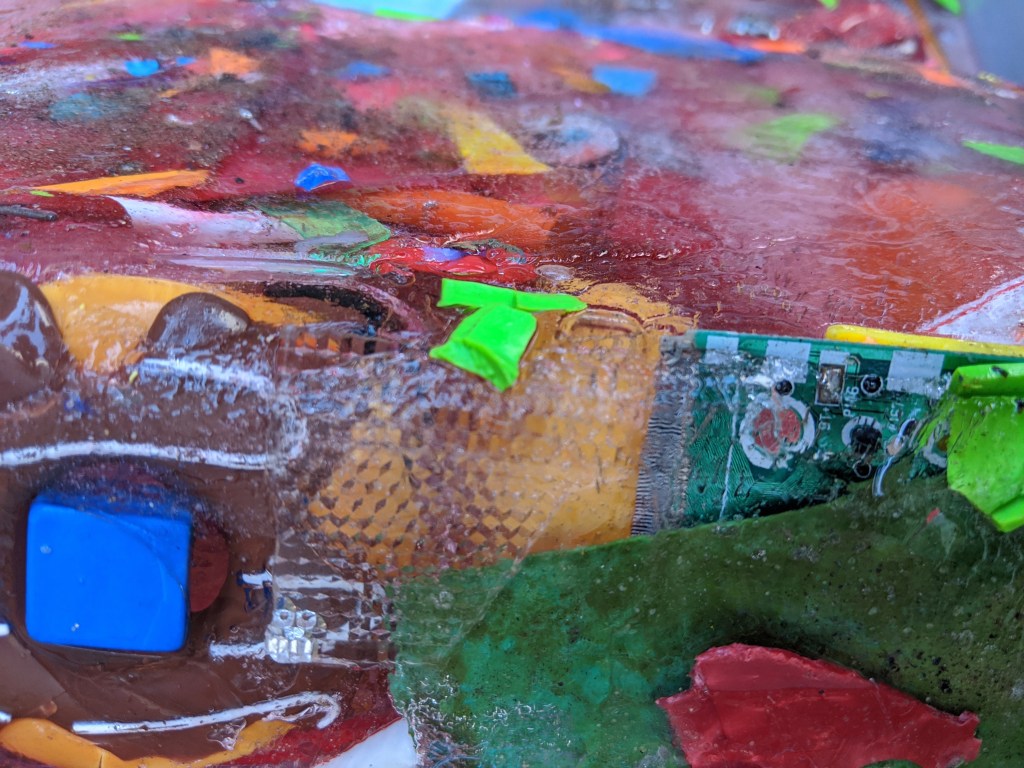
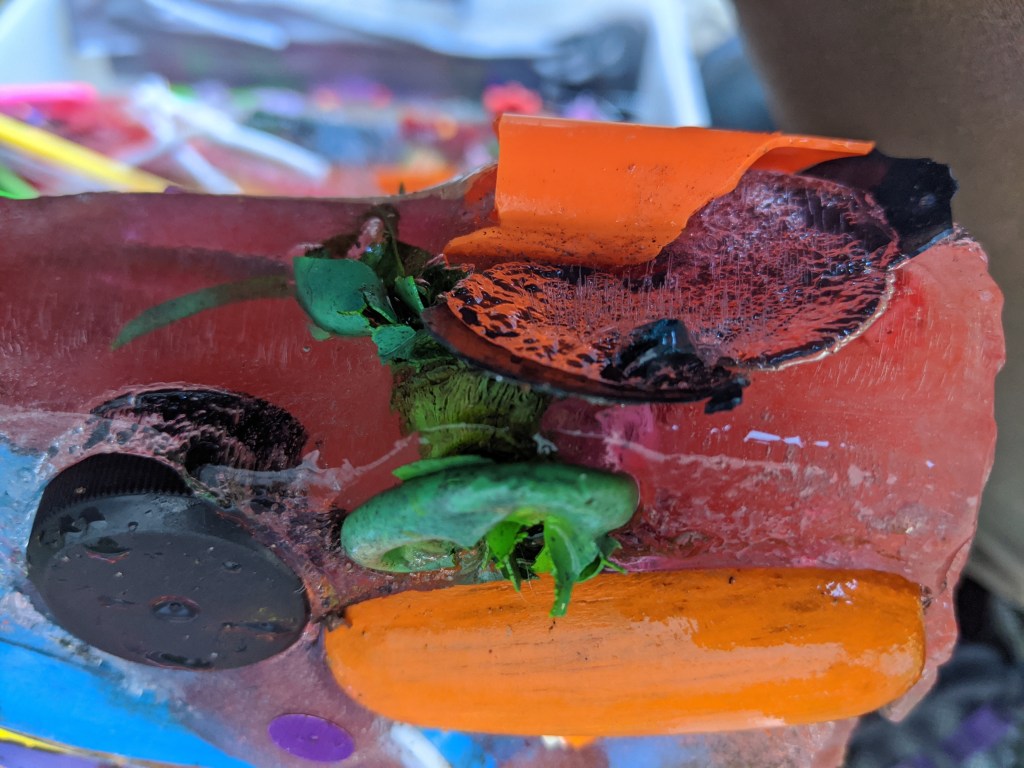
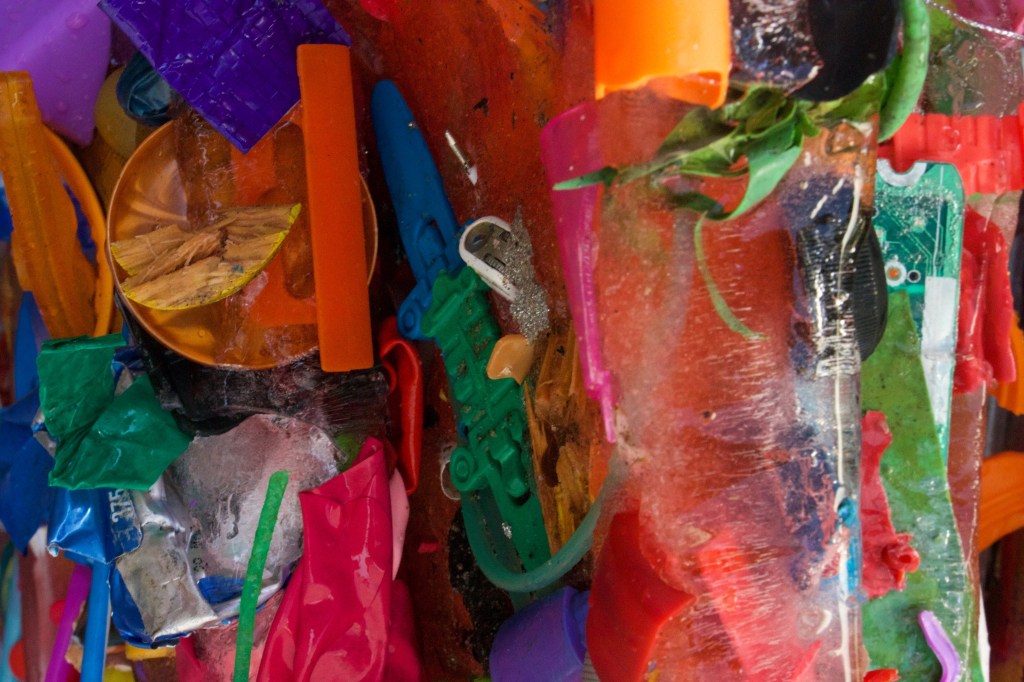
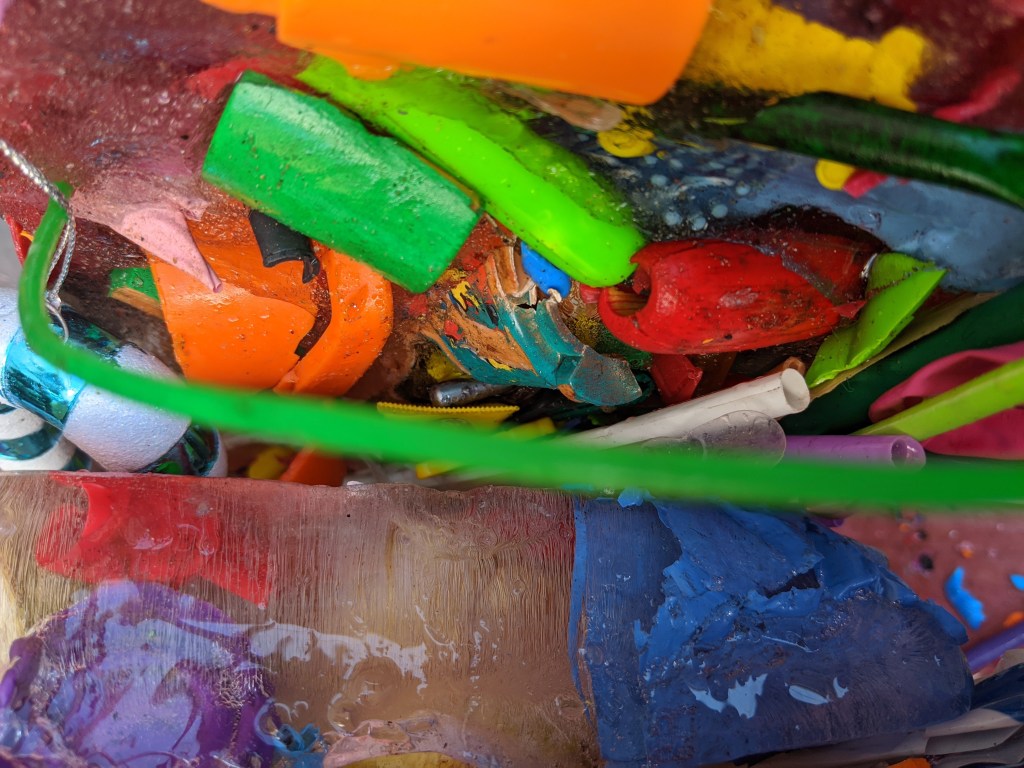
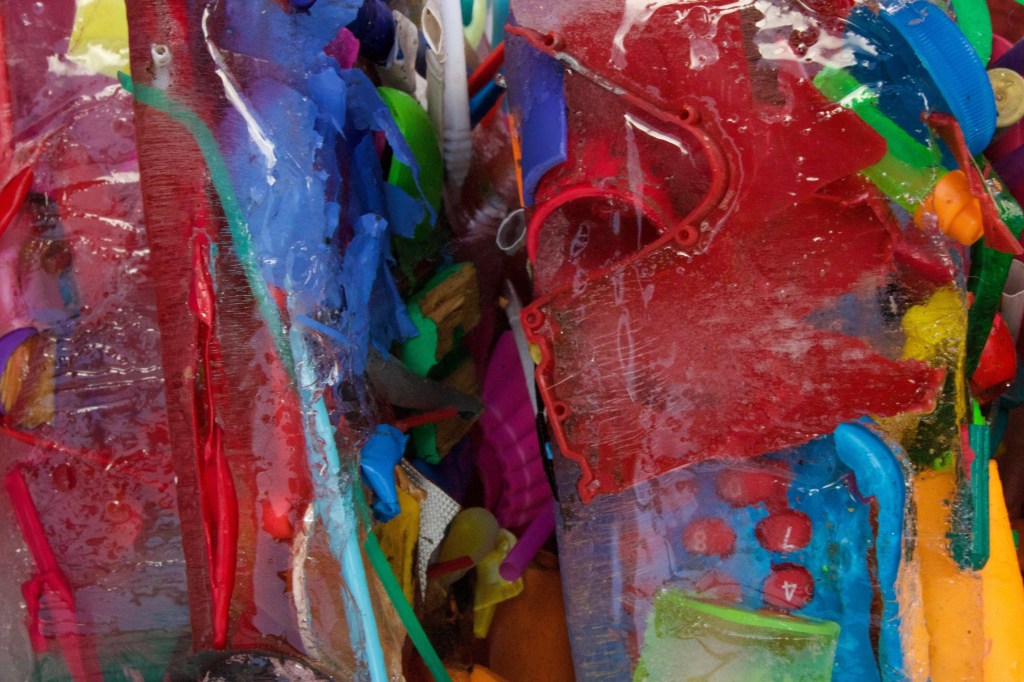
The final photo shoots consisted of combining all of found objects and crushing them as they would if in landfill, once crushed and photographed I took them home and froze them and the photos below are the final series of crushed frozen found objects.
Found objects crushed by a roller
Harsh realities match the harsh light
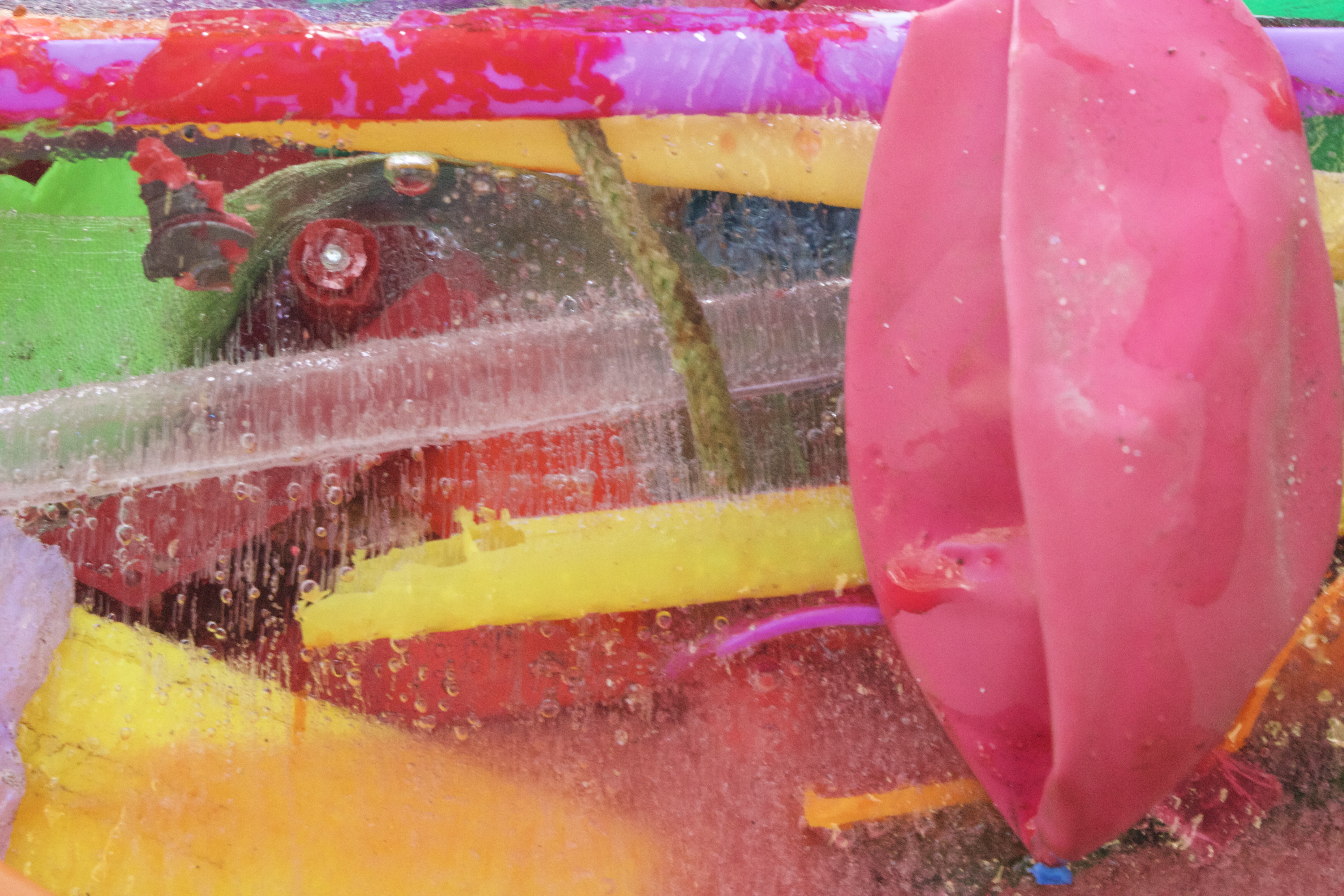
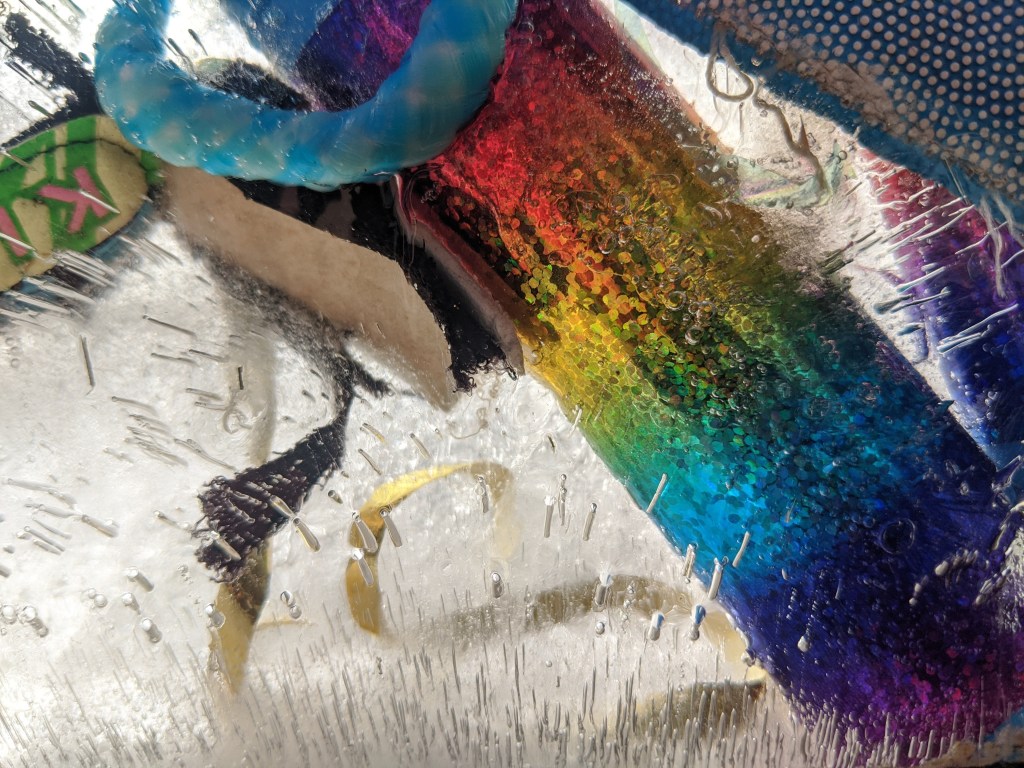
The overwhelming amount of rubbish just from picking small bits up off the ground is quite devastating, I think with this photo shoot I was trying to find the ugly as marketing companies know bright colours work and I still able to get some colourful abstract photos amongst the chaos of the crush.Kylie Naylor, Untitled #1, 2020, image, found objects, flattened with roller.Kylie Naylor, Untitled #2, 2020, image, found objects, flattened with roller.Kylie Naylor, Untitled #3, 2020, image, found objects, flattened with roller.Kylie Naylor, Untitled #4, 2020, image, mirror, found objects, flattened with roller.Kylie Naylor, Untitled #5, 2020, image, found objects, flattened with roller and frozen in water.Kylie Naylor, Untitled #6, 2020, image, found objects, flattened with roller and frozen in water.Kylie Naylor, Untitled #7, 2020, image, found objects, flattened with roller and frozen in water.Kylie Naylor, Untitled #8, 2020, image, found objects, flattened with roller and frozen in water.Kylie Naylor, Untitled #9, 2020, image, found objects, flattened with roller and frozen in water.Kylie Naylor, Untitled #11, 2020, image, found objects, flattened with roller and frozen in water.Kylie Naylor, Untitled #12, 2020, image, found objects, flattened with roller and frozen in water.
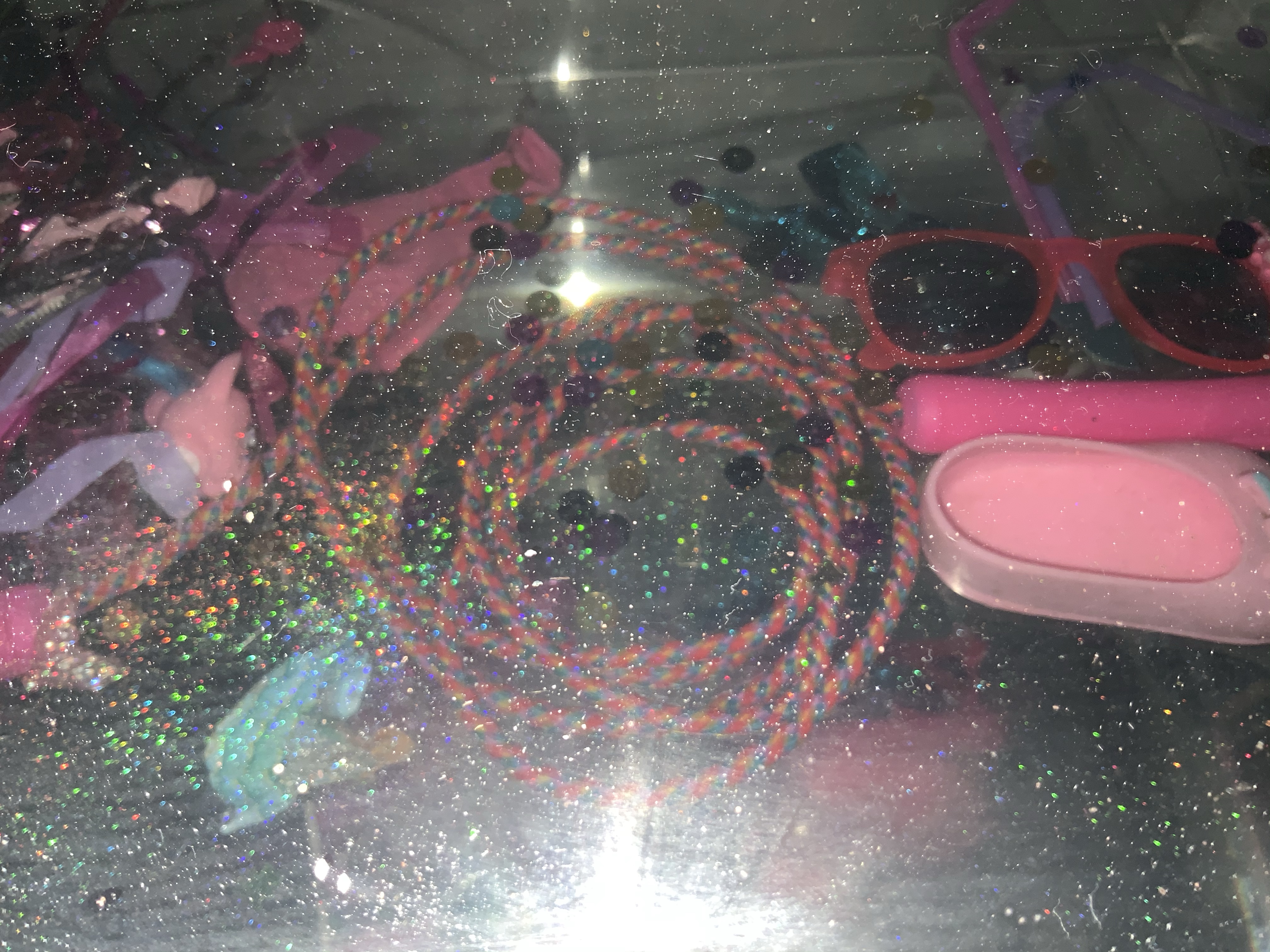
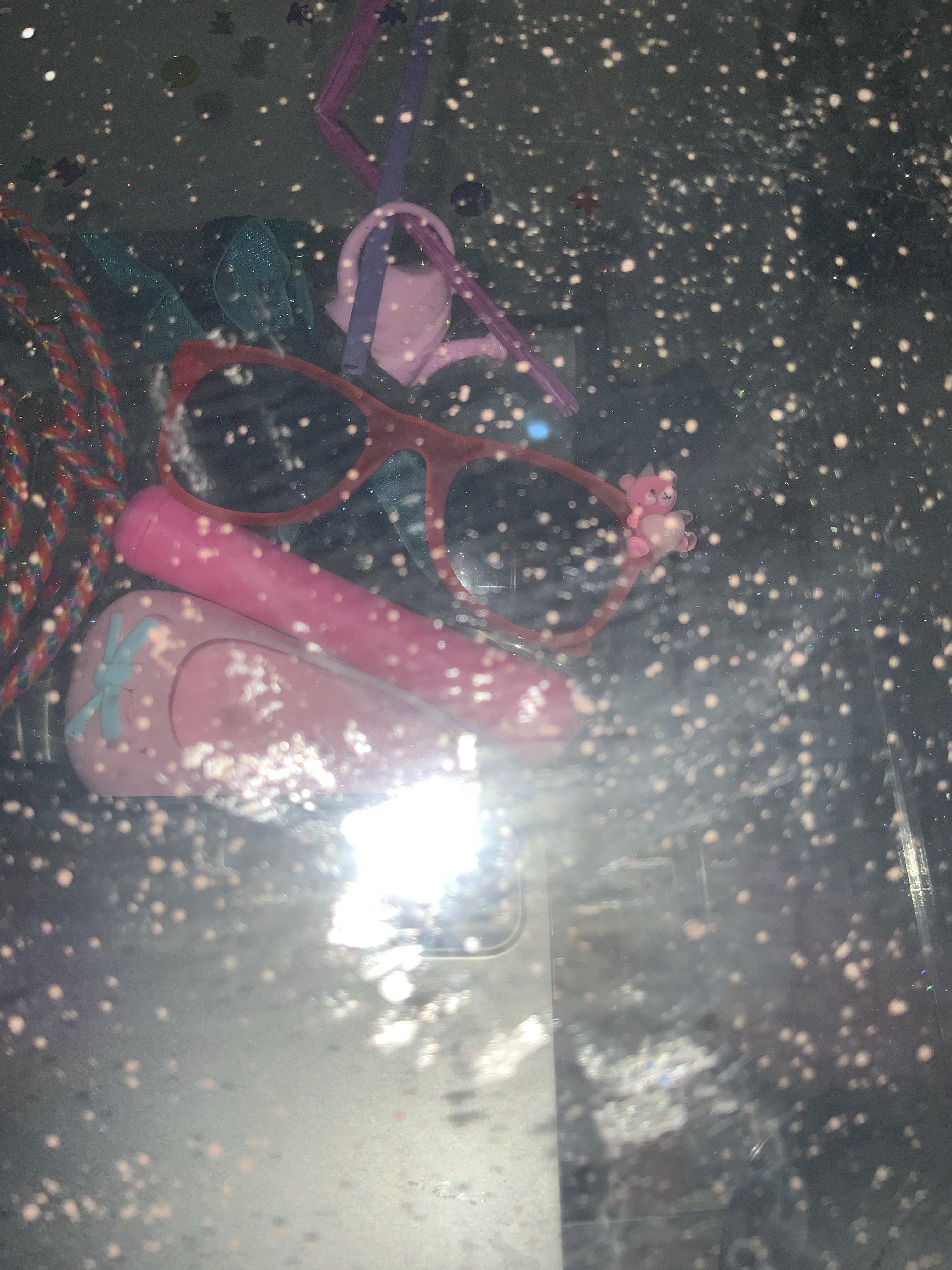
A series of photoshops took place with the little boy legacy them, dry assemblage, submerged and frozen twice.
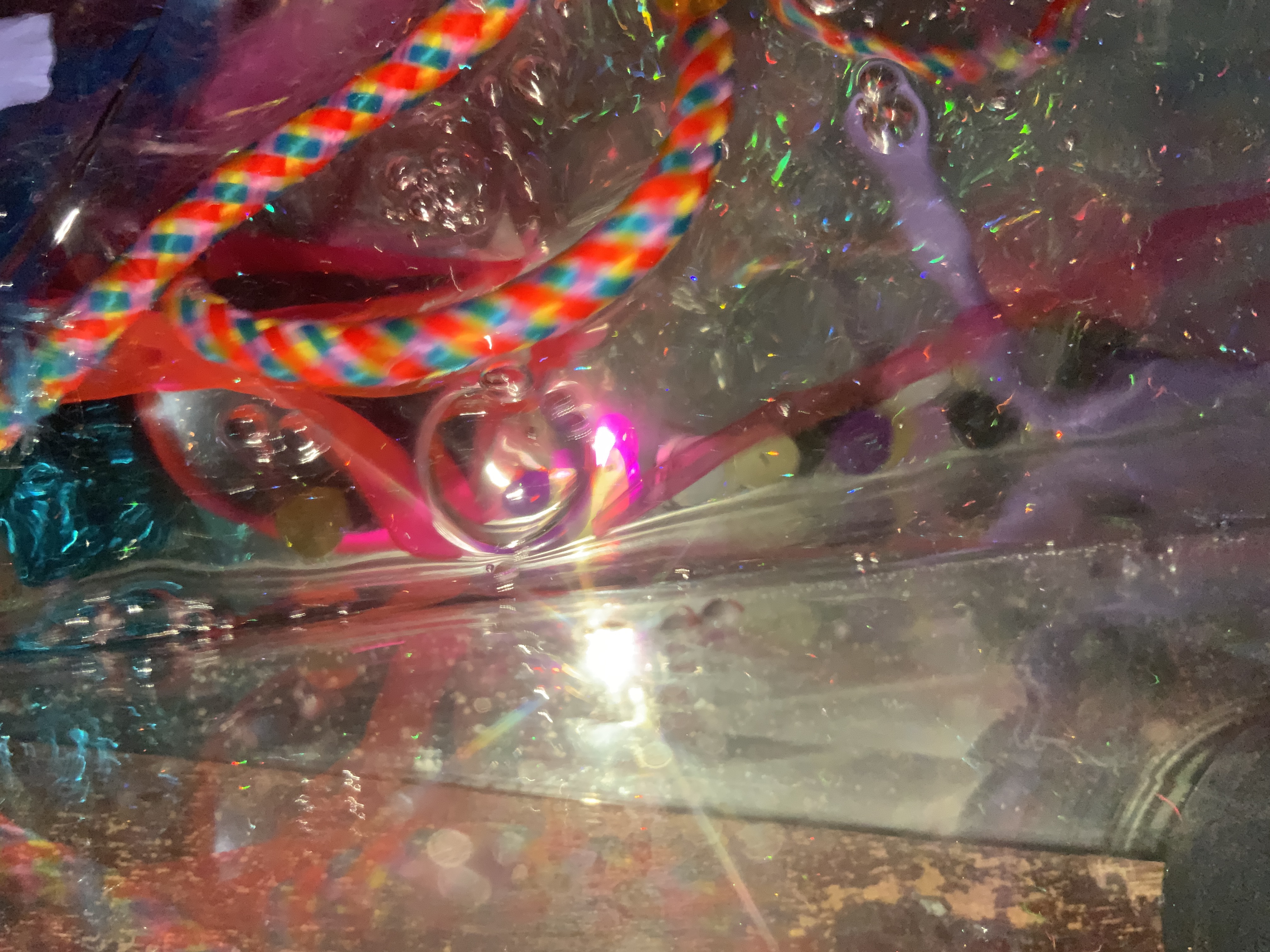
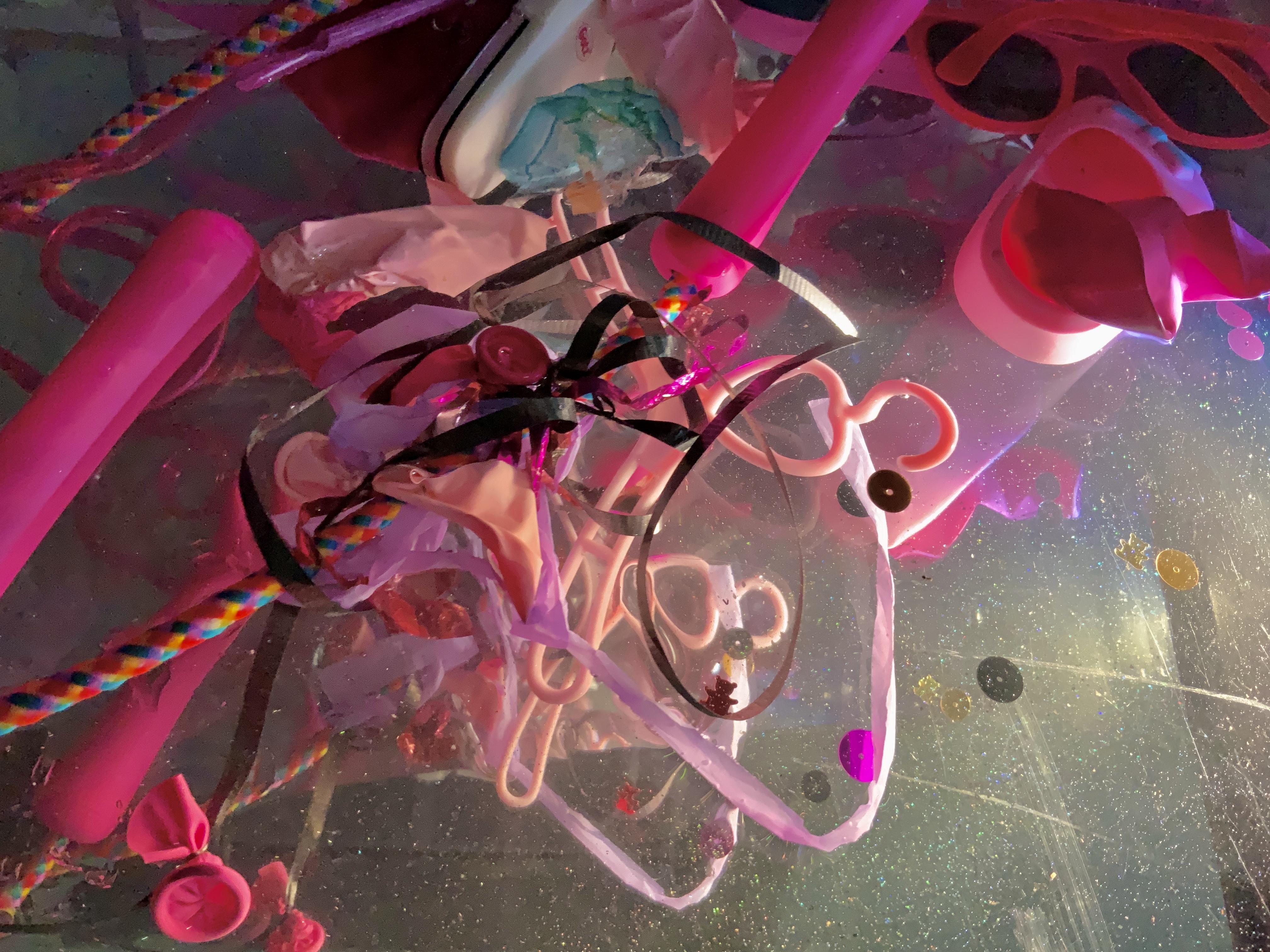
Working with wave style in Perspex, frozen against the light and in mock studio set up.
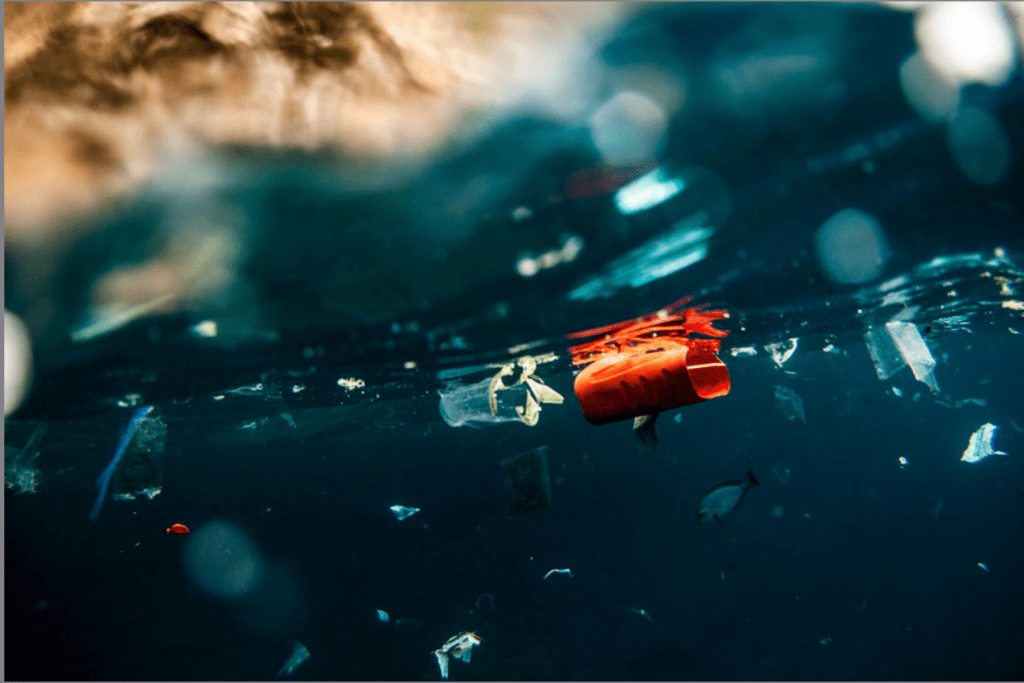
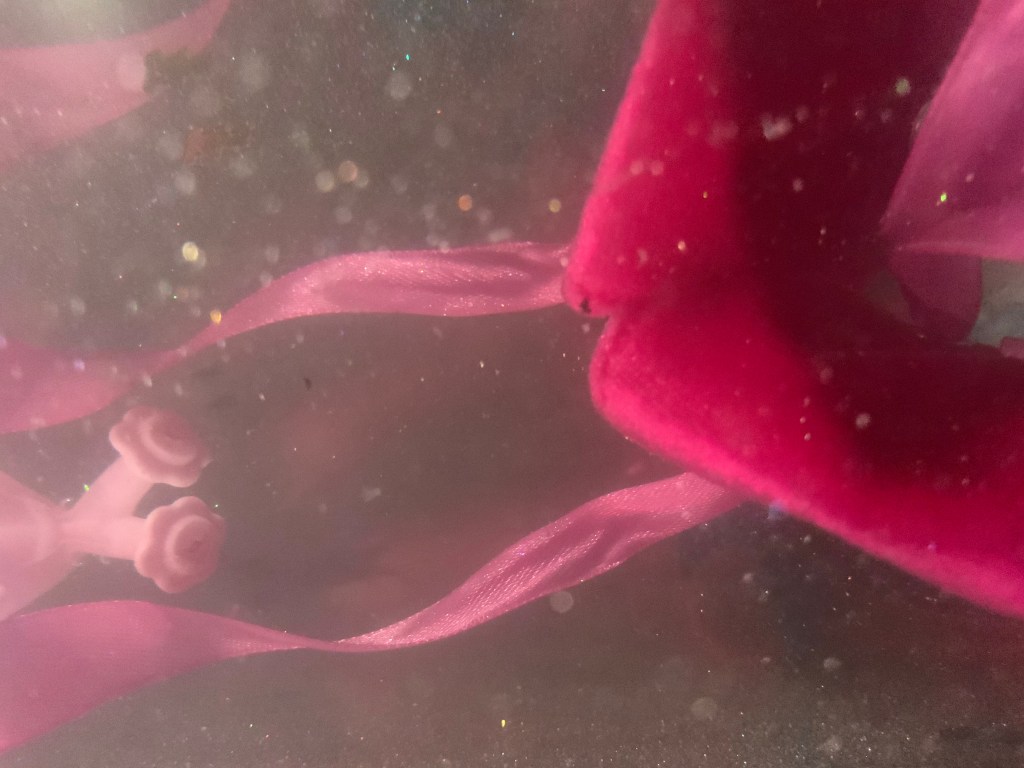
Playing with light to mimic the sense of under water, looking to the surface.
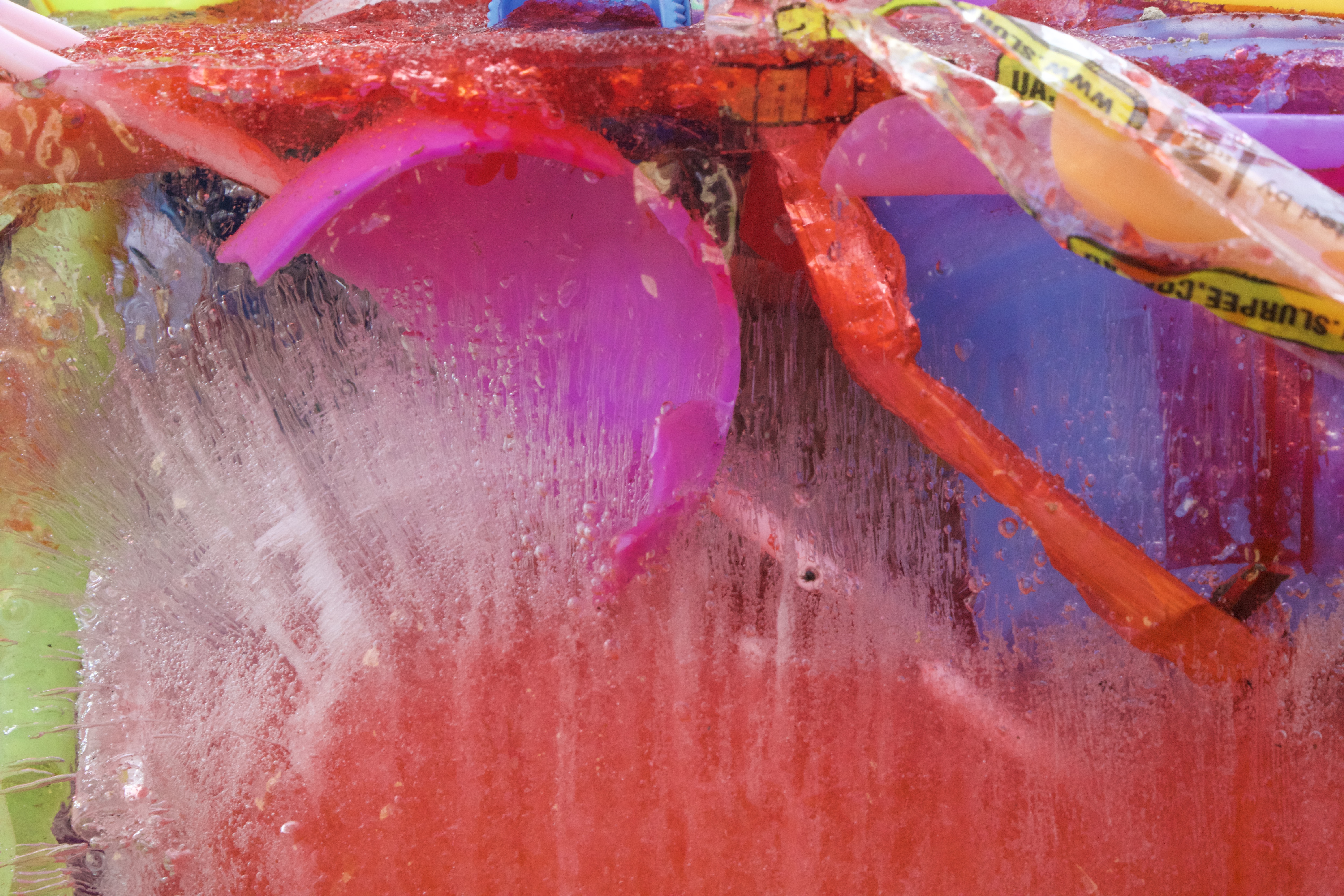
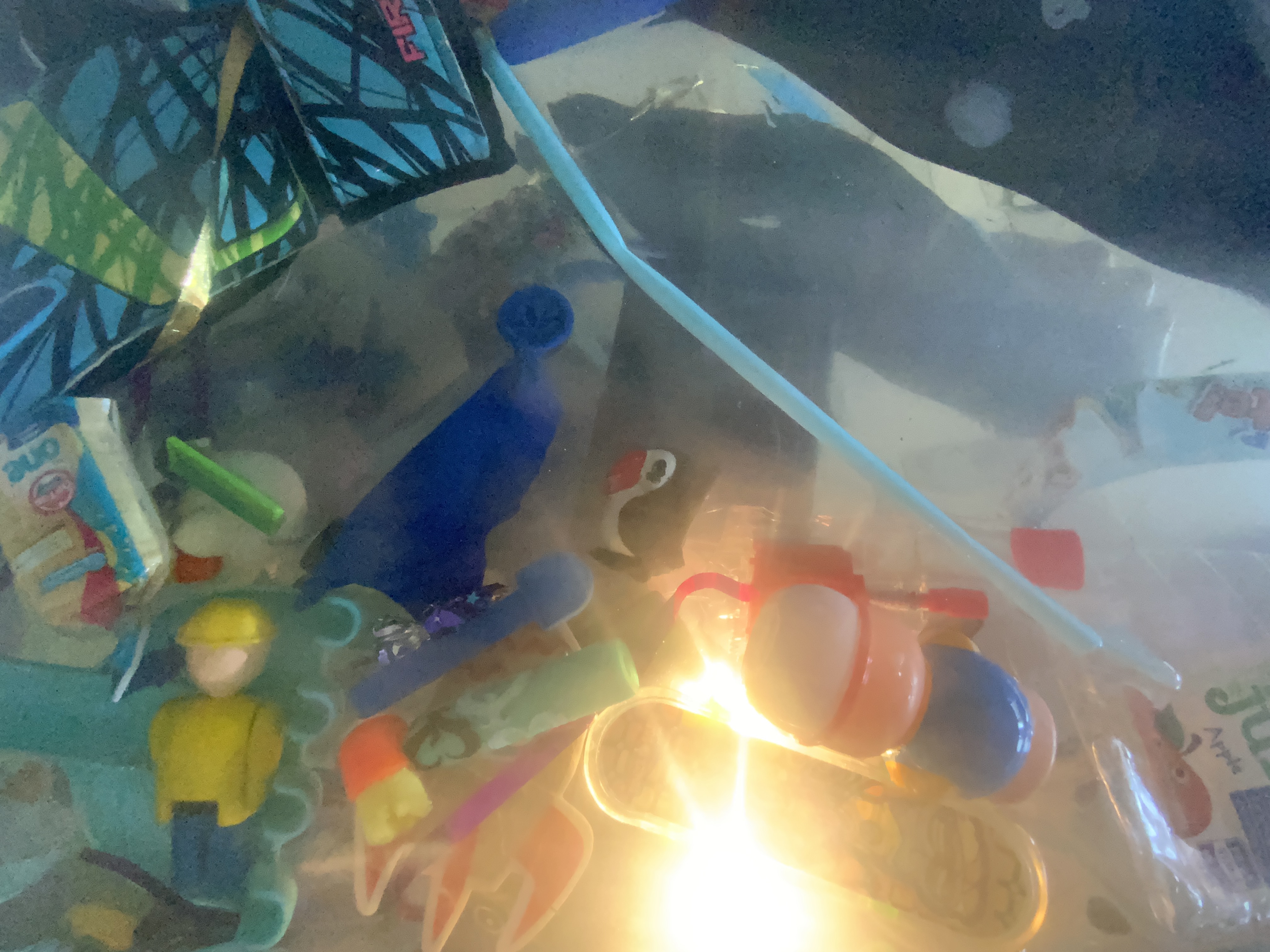
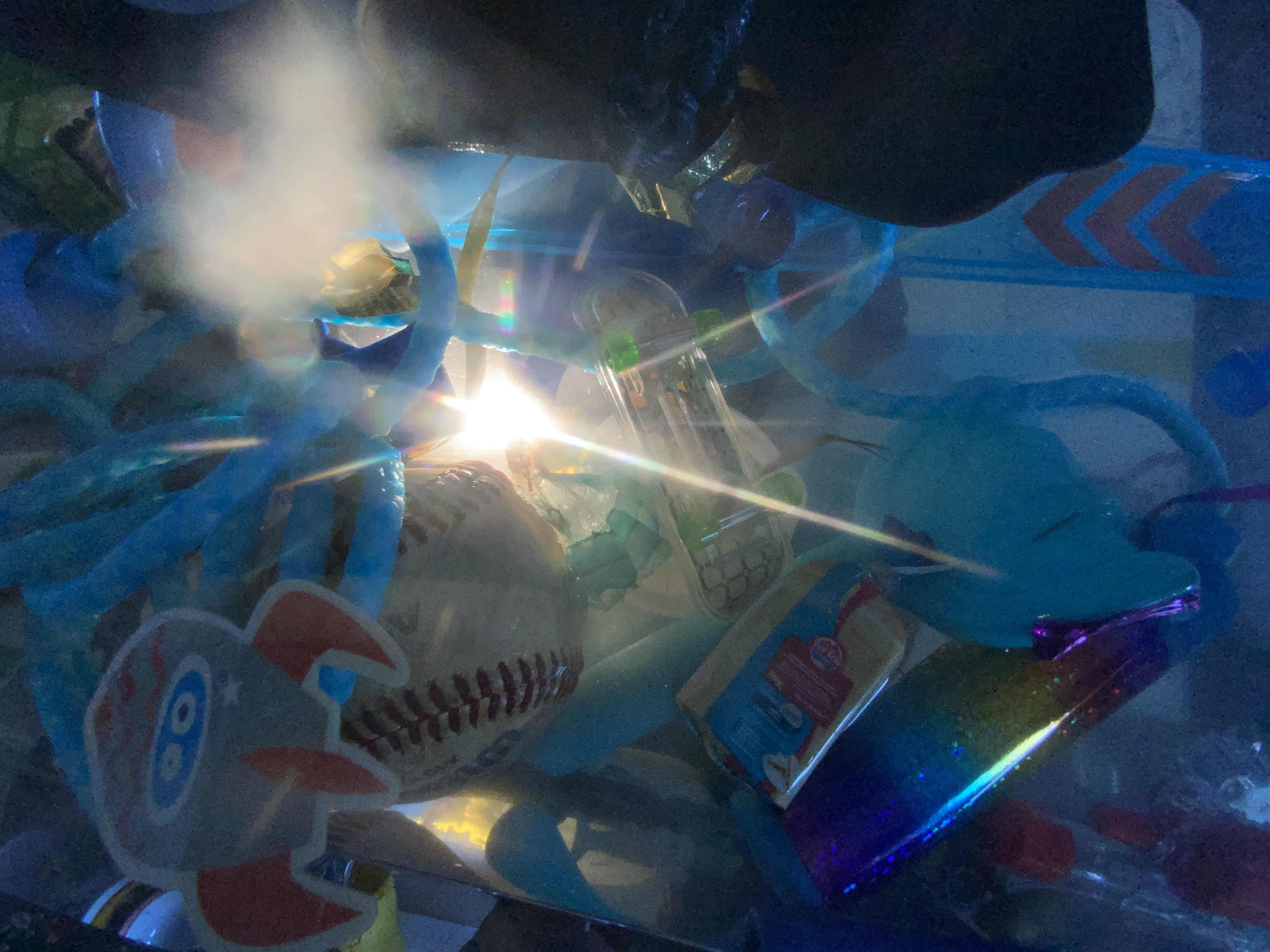
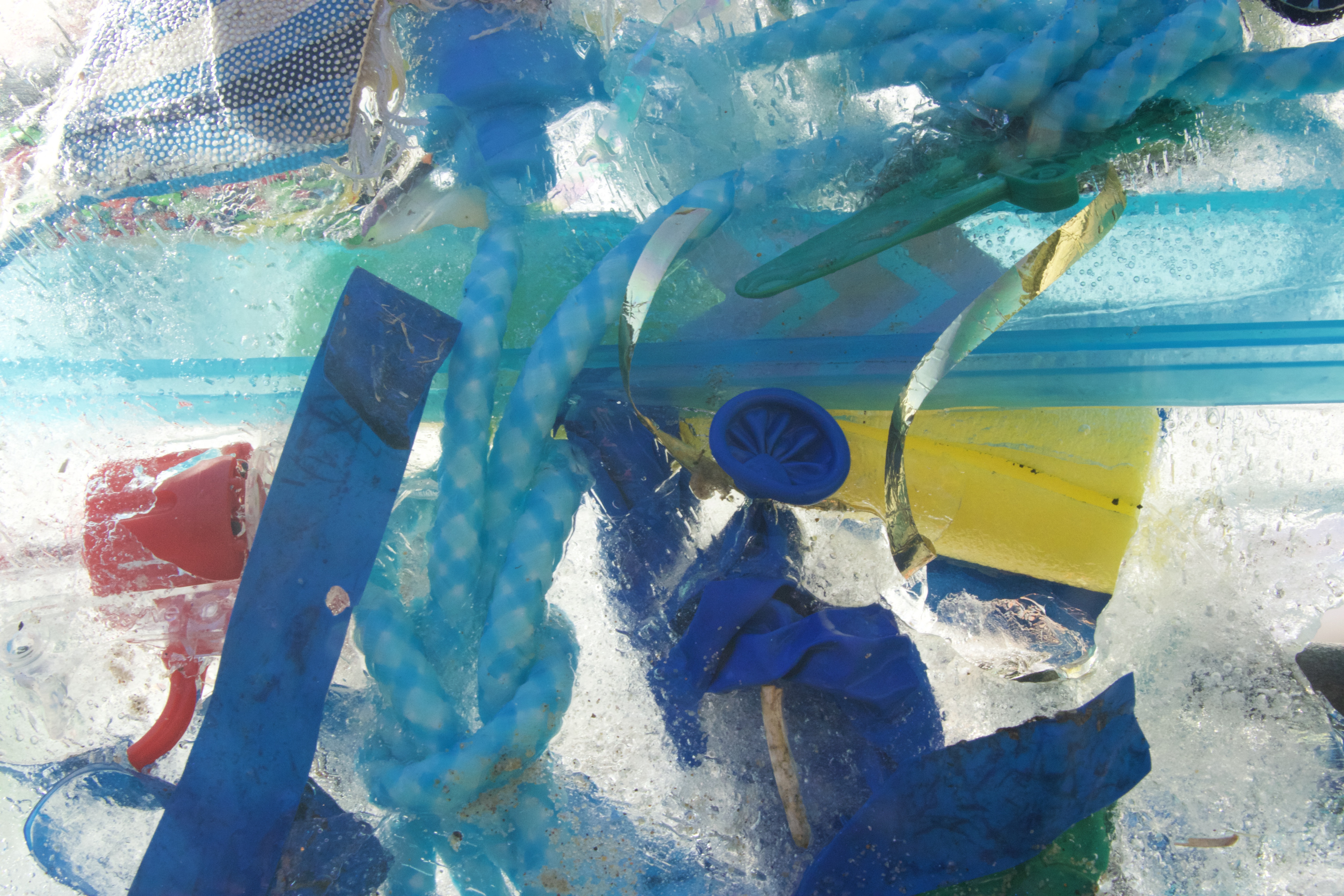
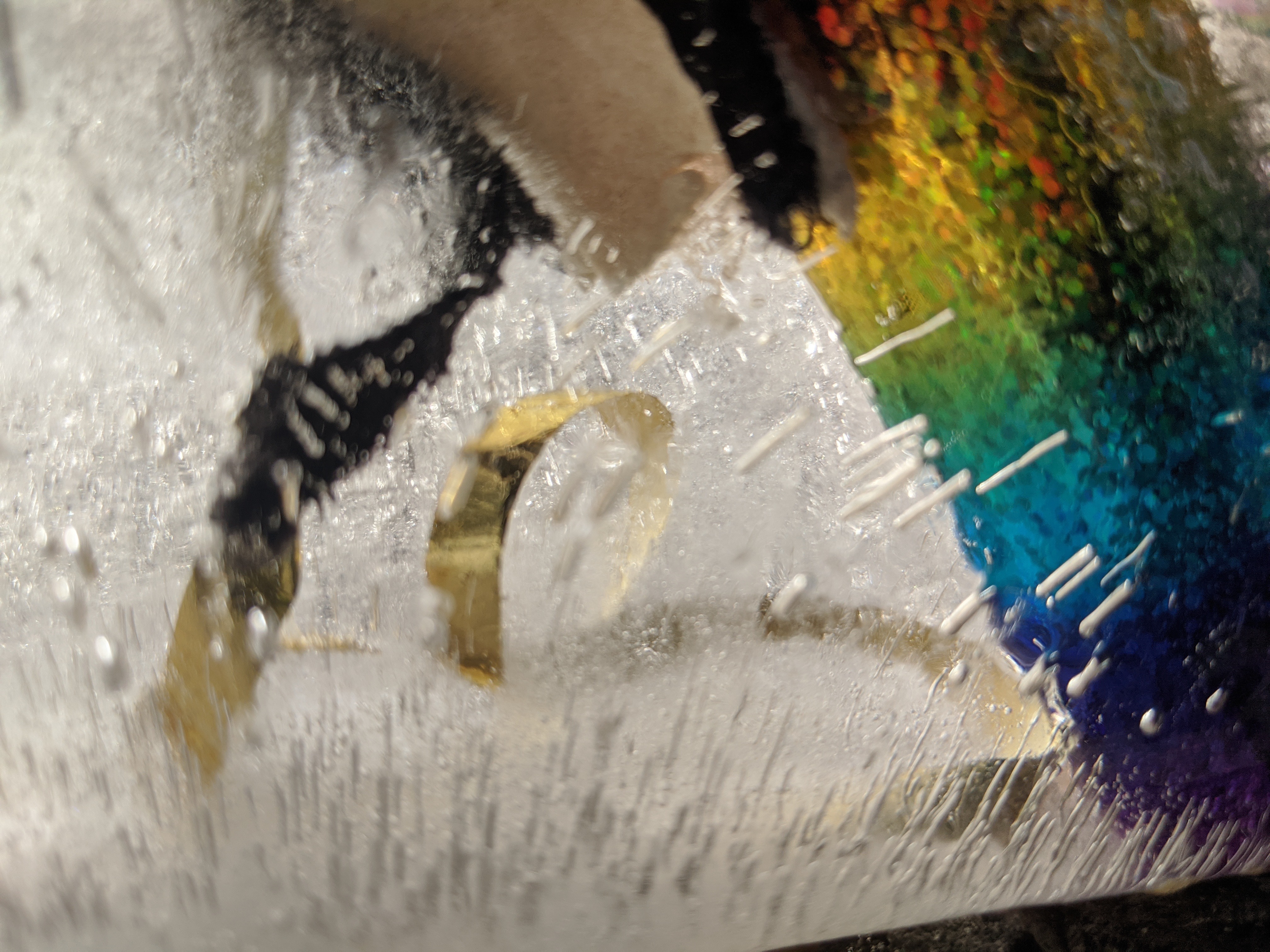
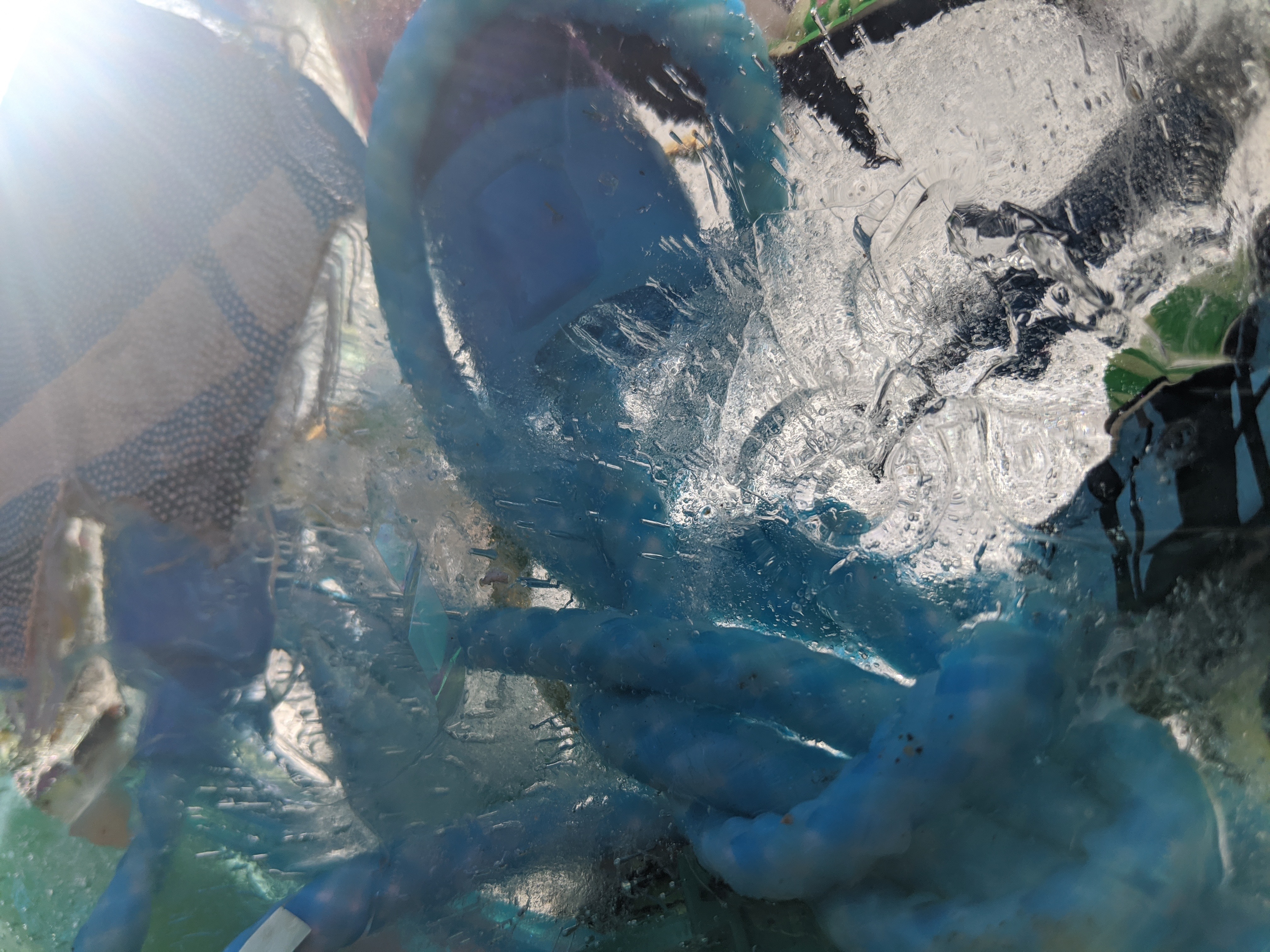
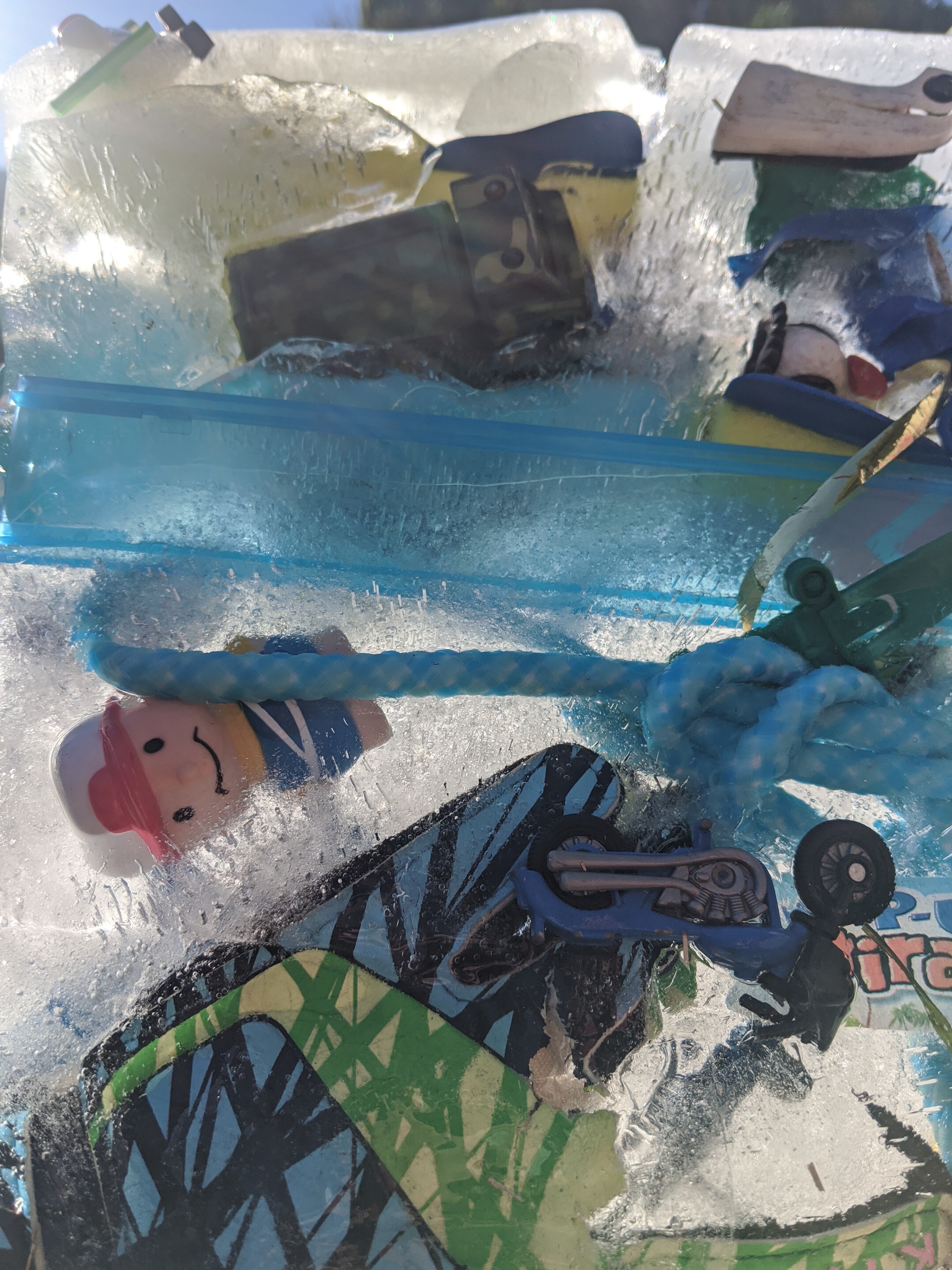
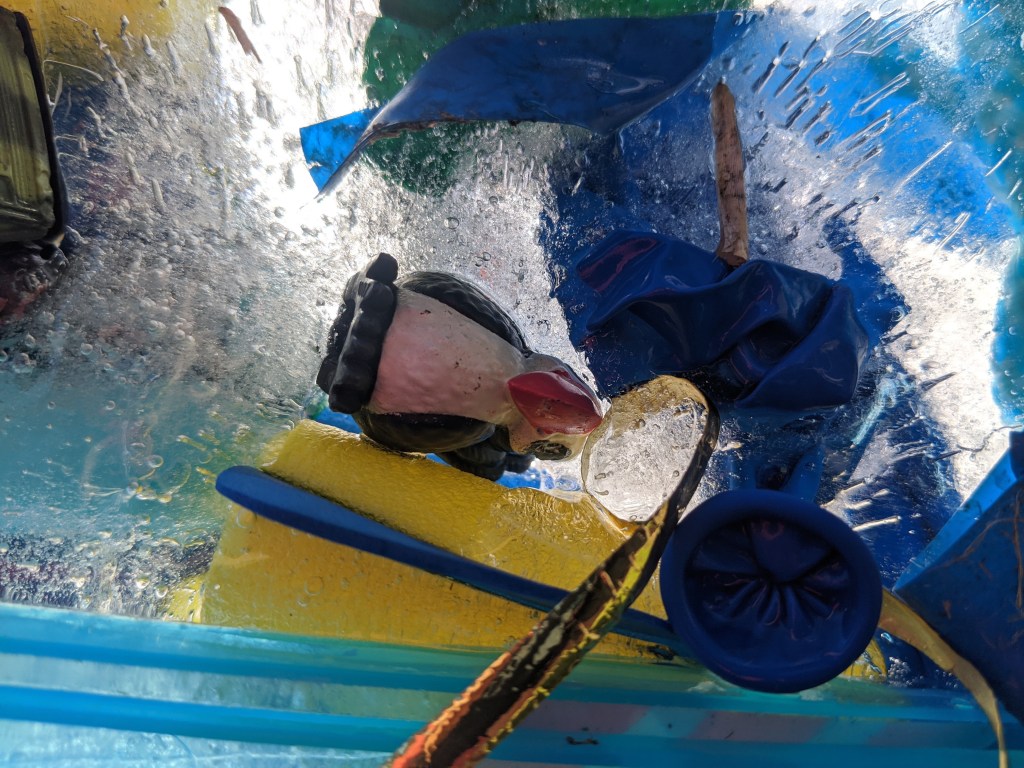
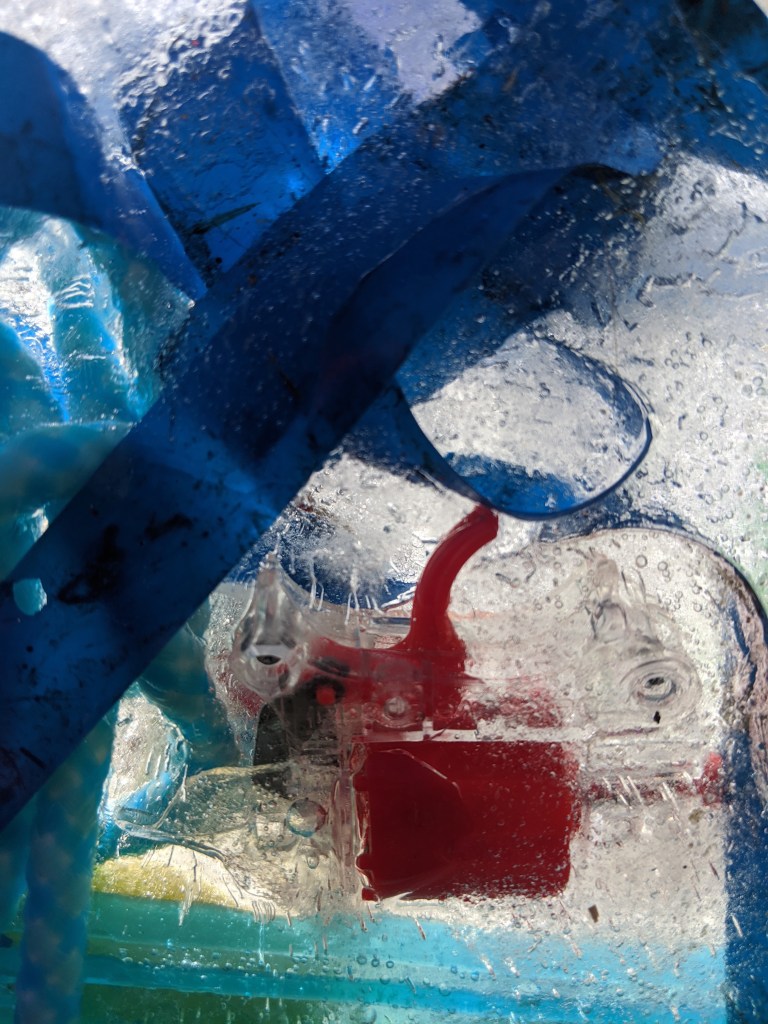
Frozen compositions were ver busy, so set about re freezing with less element, creating space for object to breath with in the frame.Kylie Naylor, Untitled #1, 2020, image, found objects, frozen water.Kylie Naylor, Untitled #2, 2020, image, found objects, frozen water.Kylie Naylor, Untitled #3, 2020, image, found objects, frozen water.Kylie Naylor, Untitled #8, 2020, image, found objects, frozen water.Kylie Naylor, Untitled #7, 2020, image, found objects, frozen water.Kylie Naylor, Untitled #5, 2020, image, found objects, frozen water.Kylie Naylor, Untitled #9, 2020, image, found objects, frozen water.
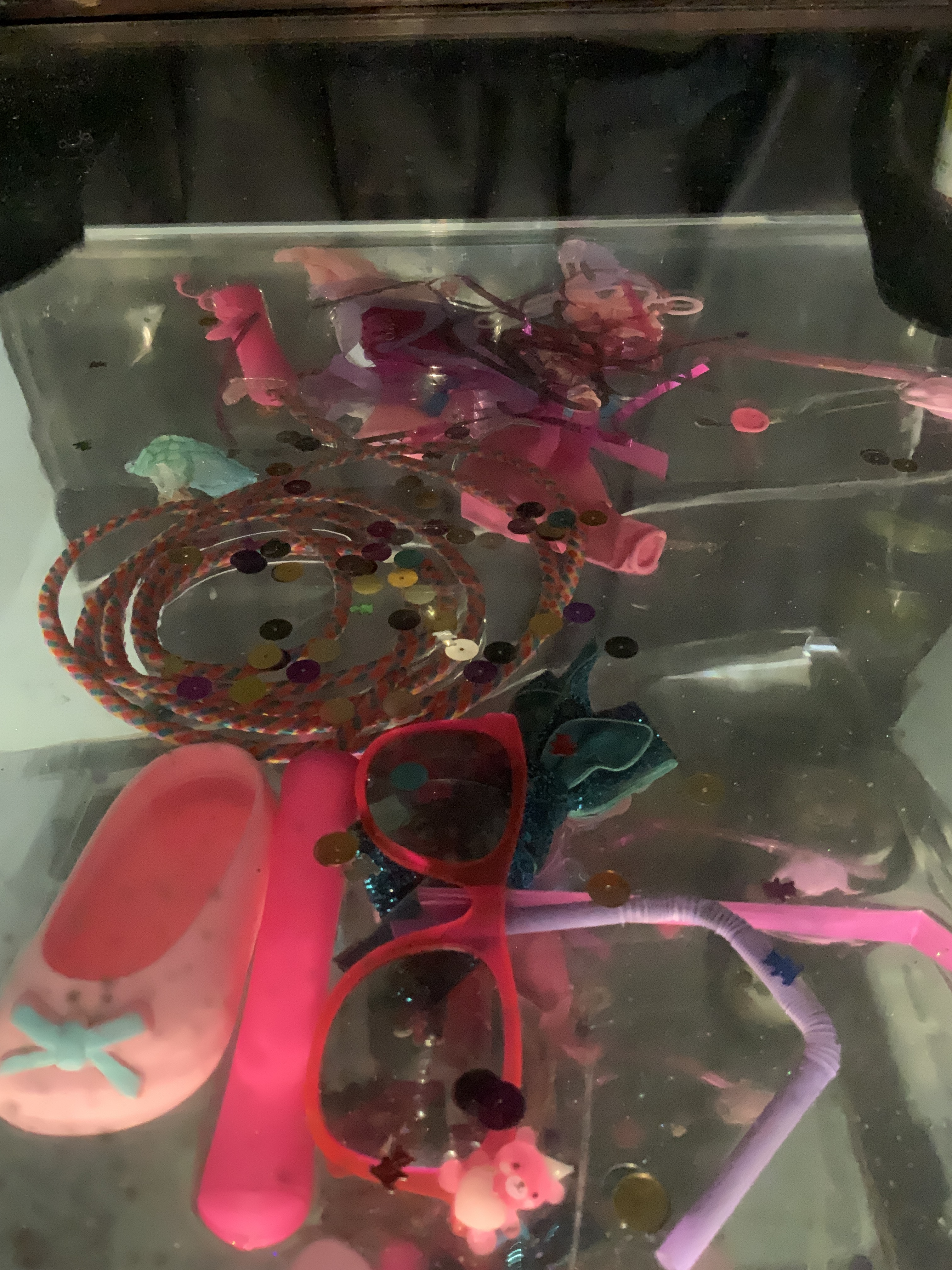
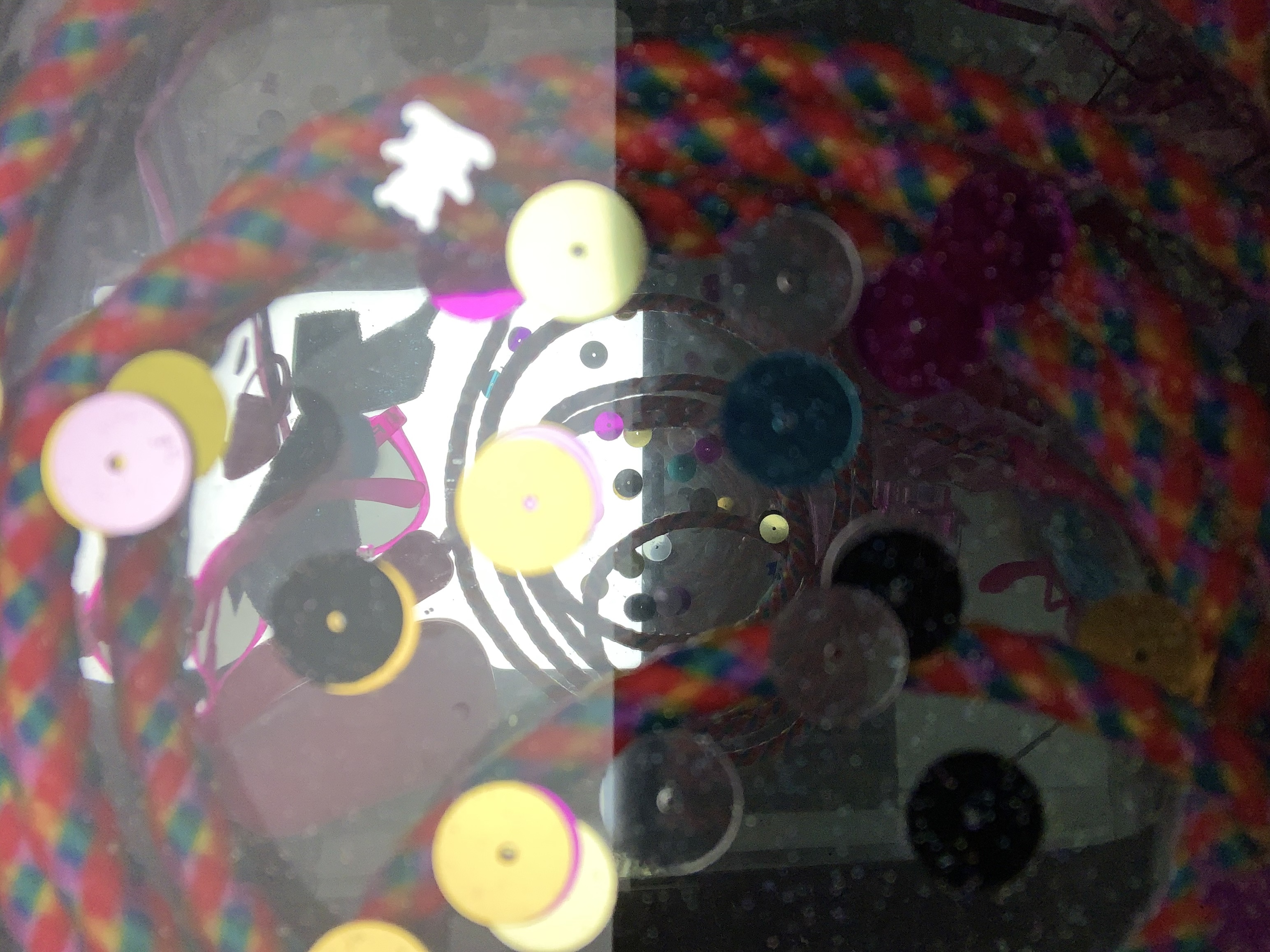
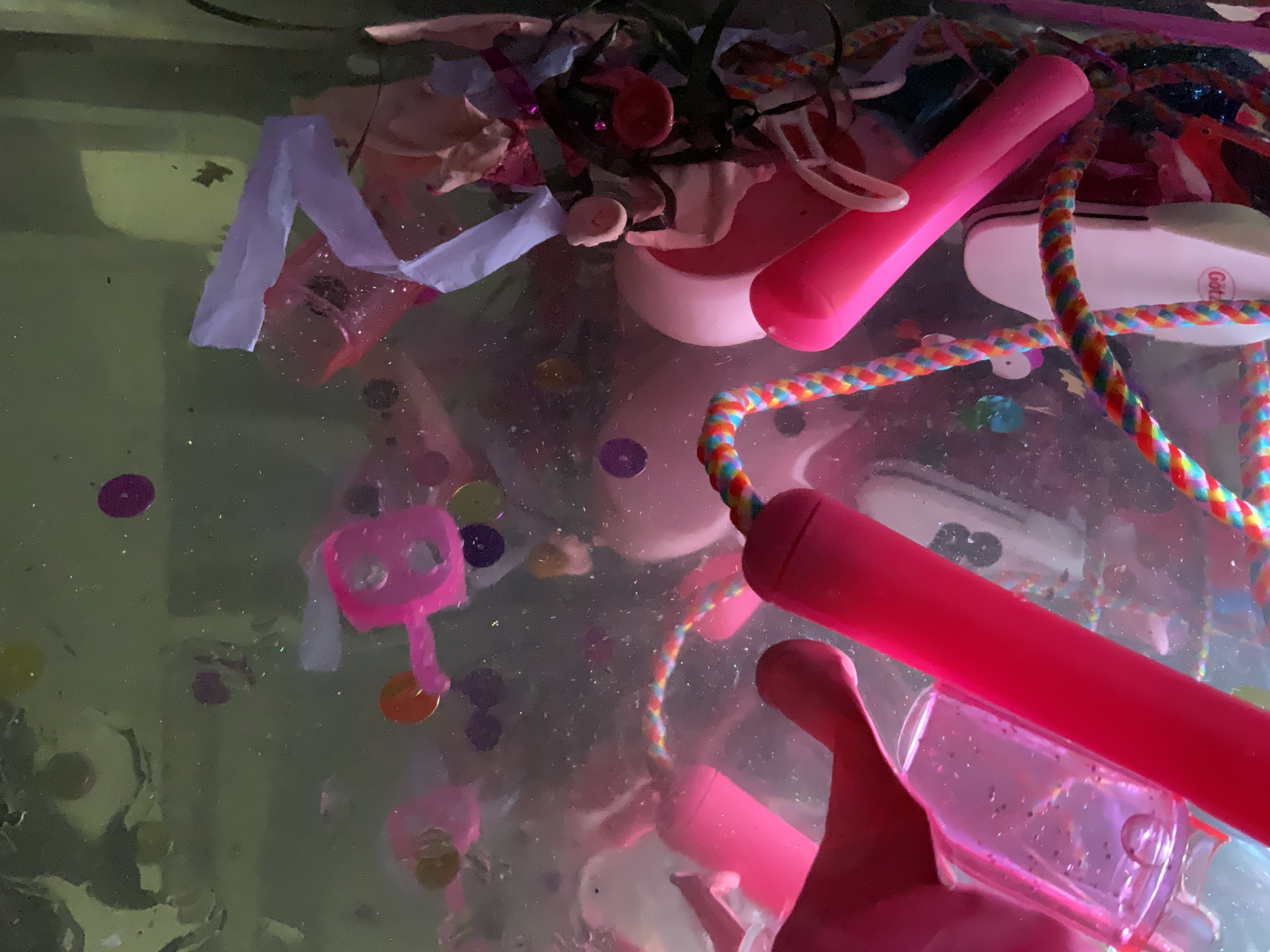
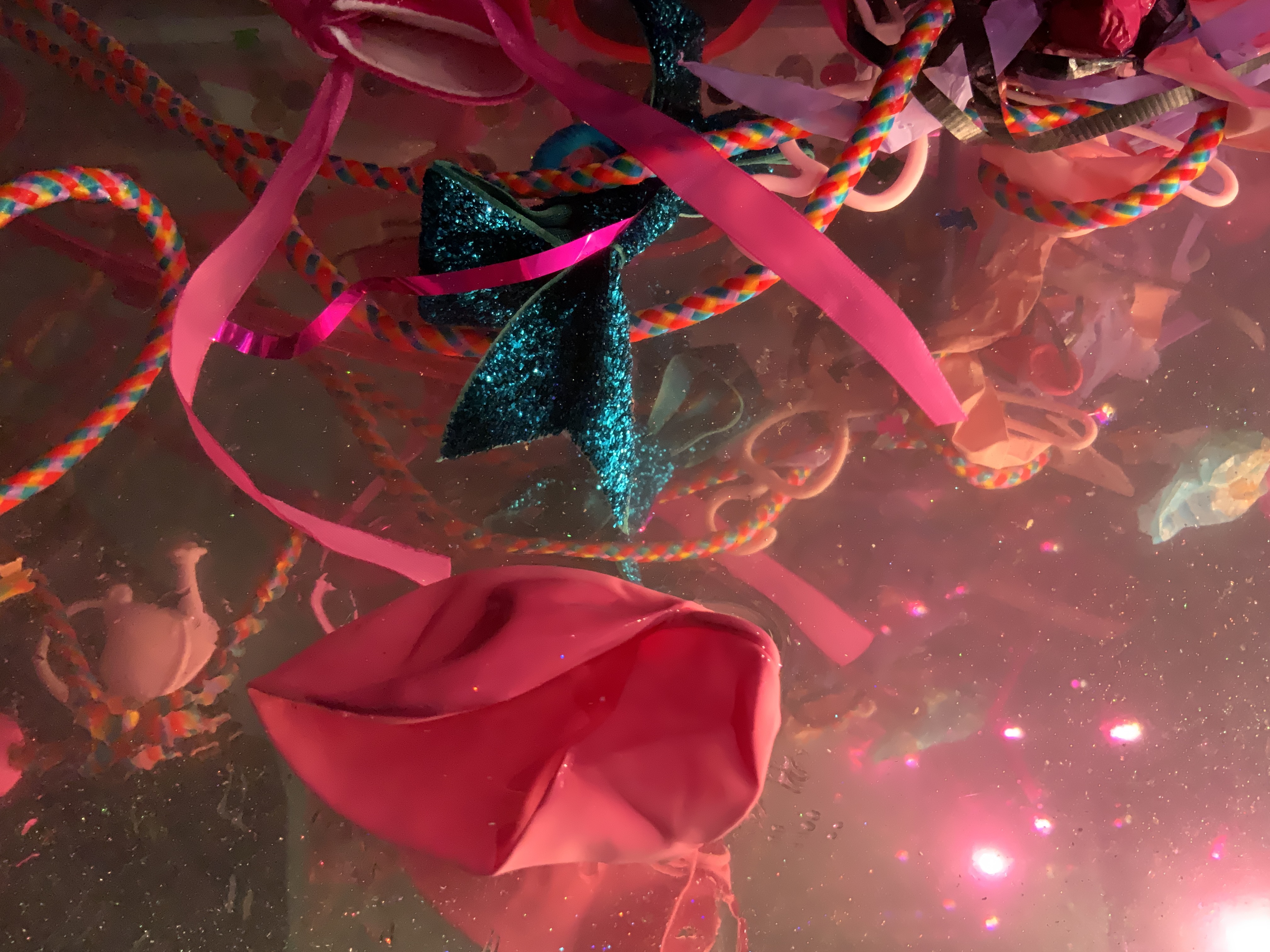
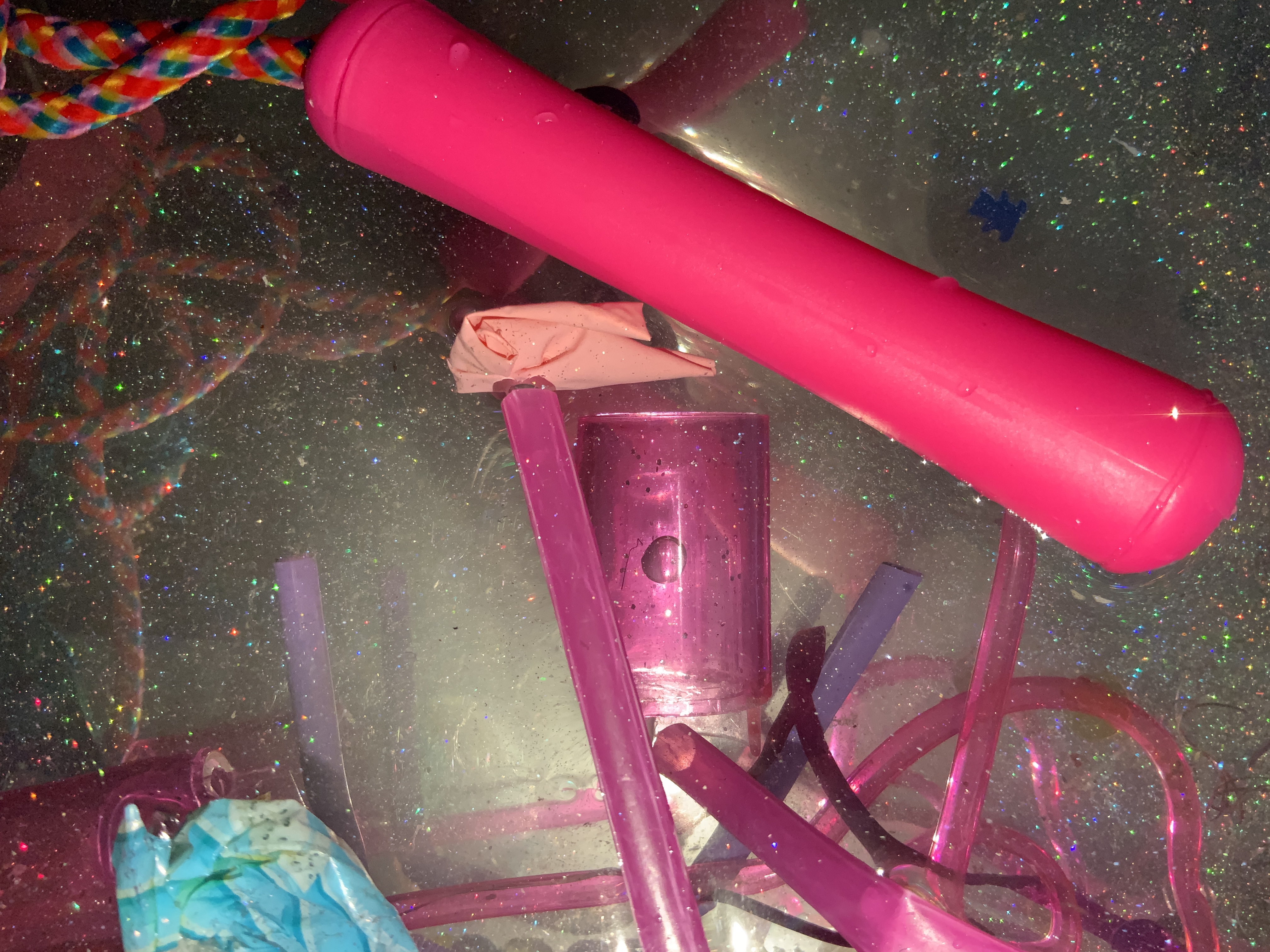
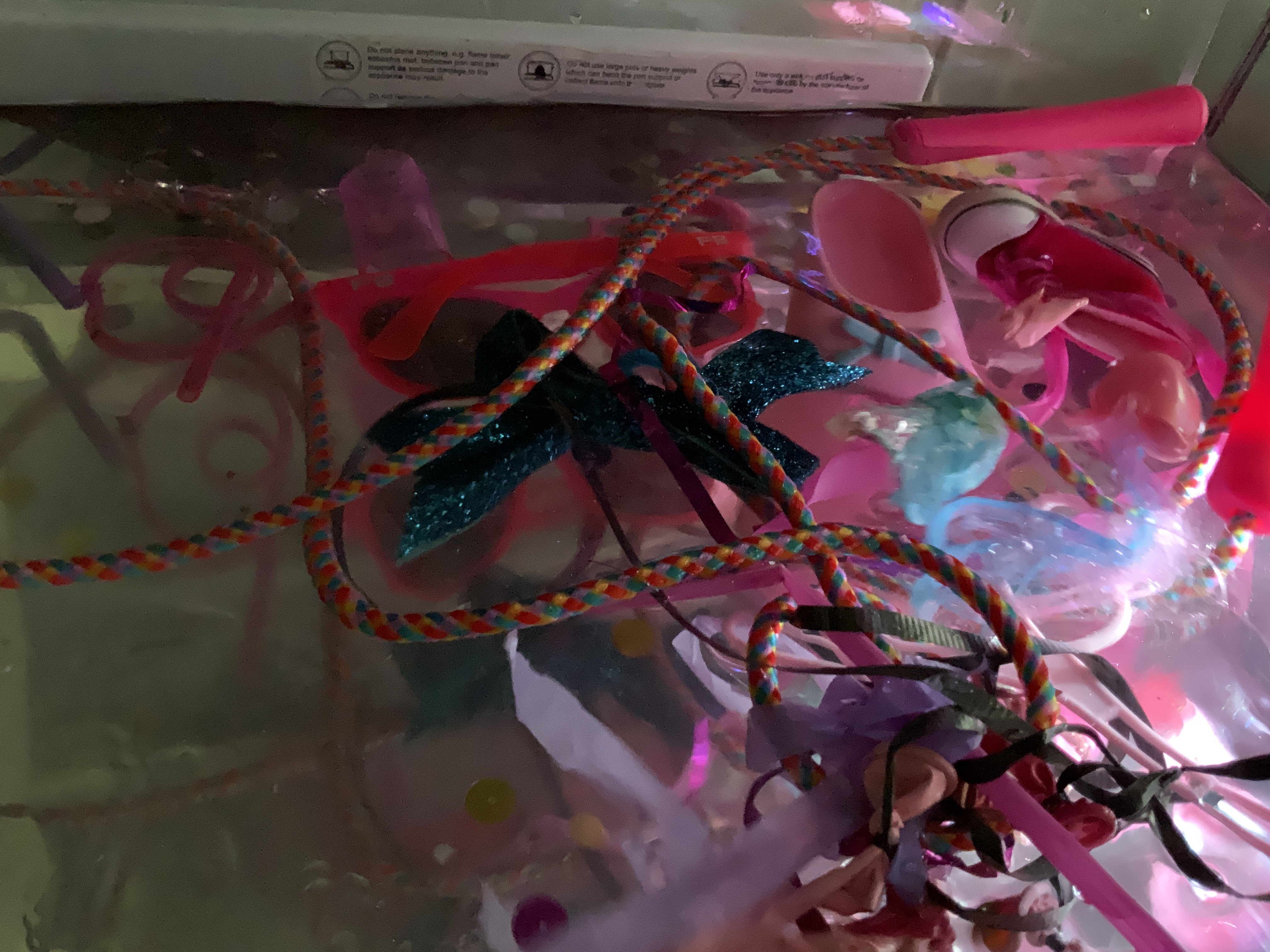
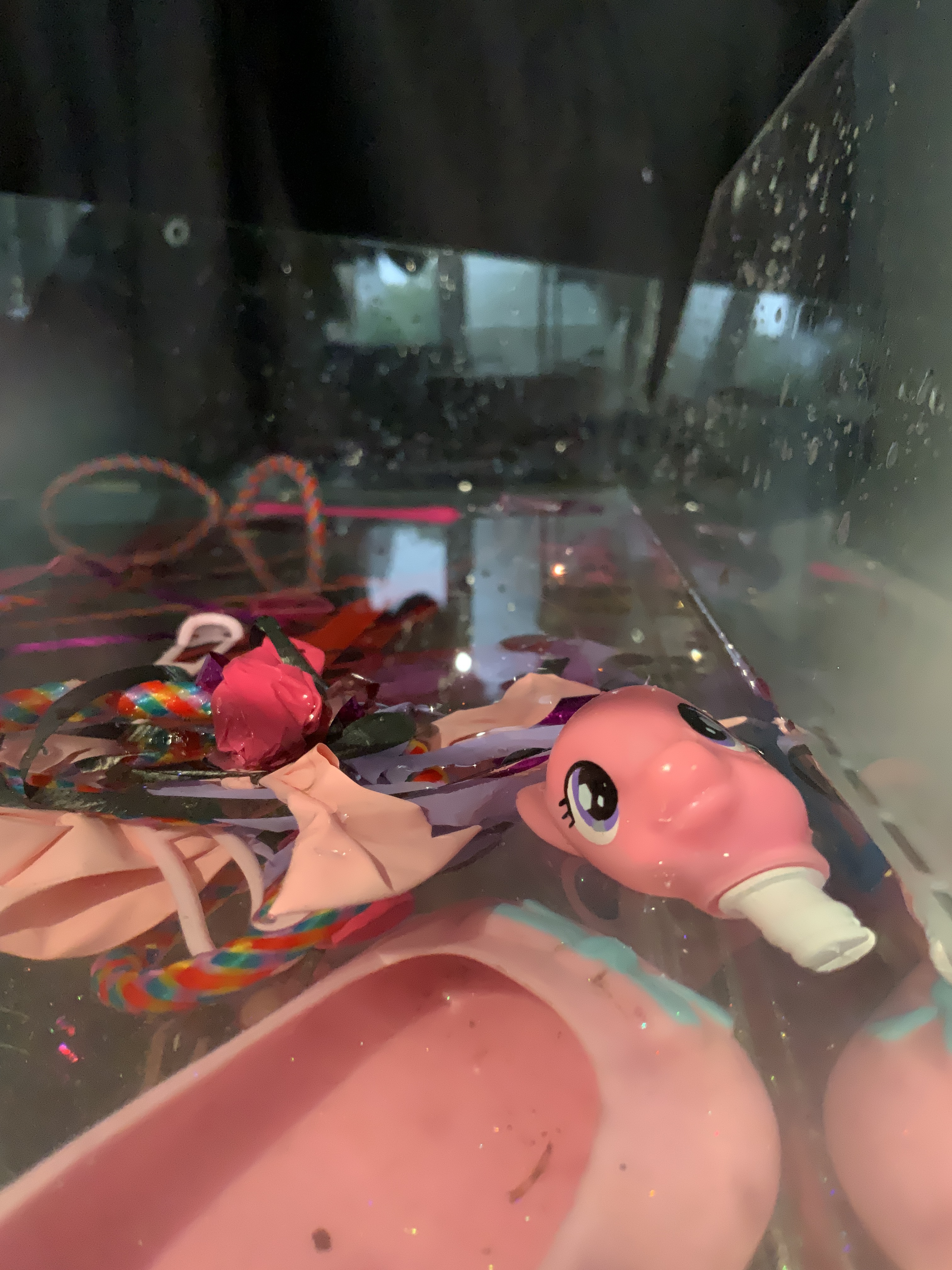
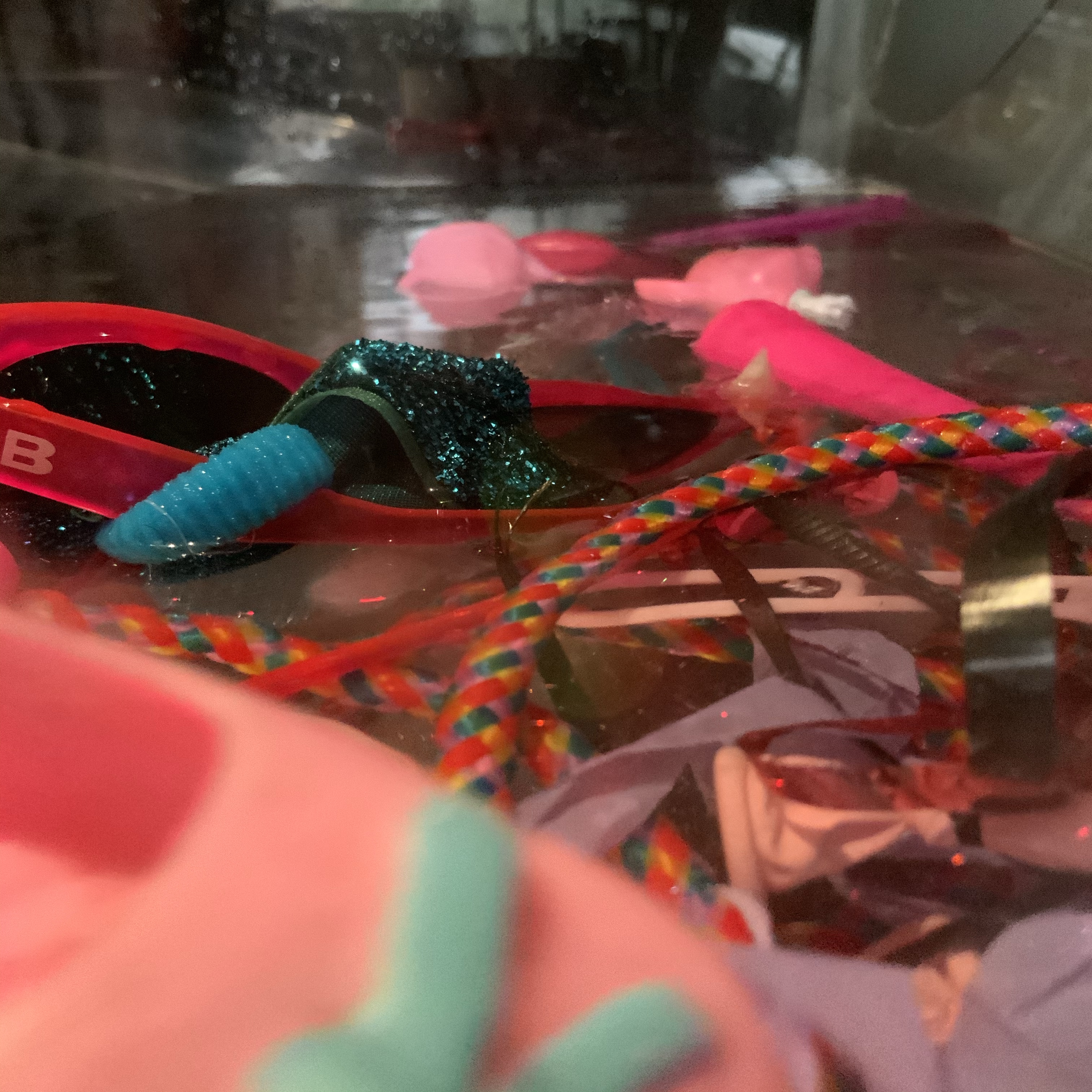
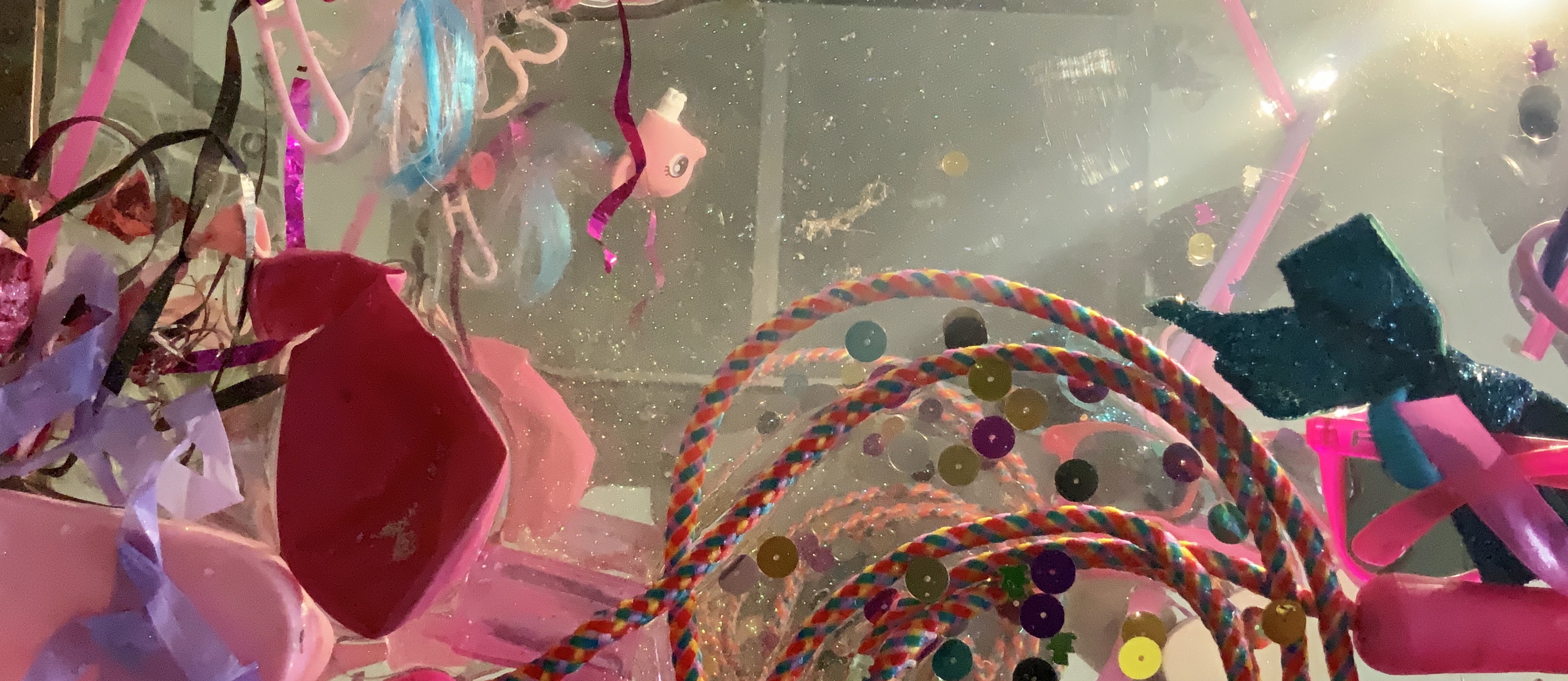
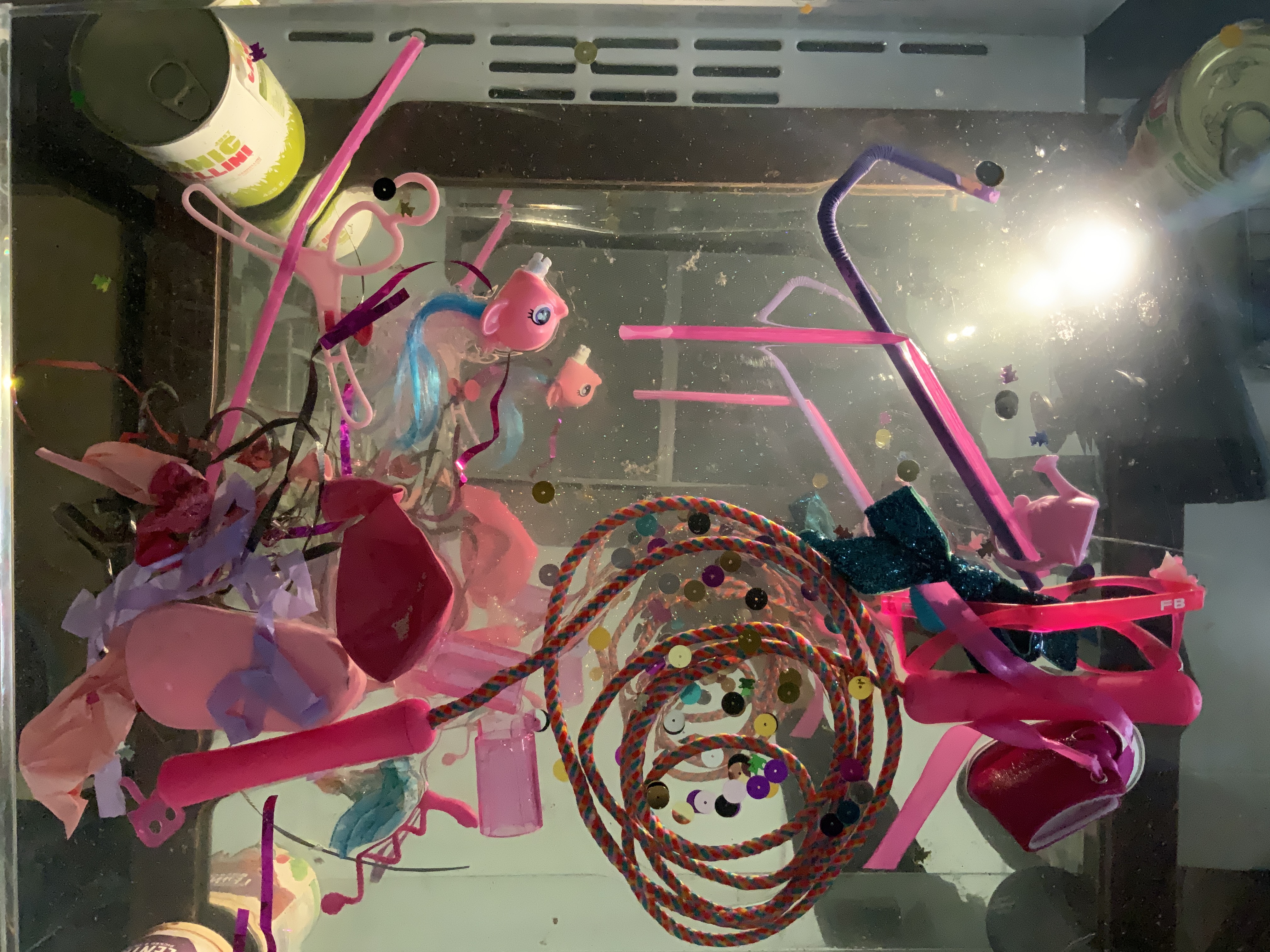
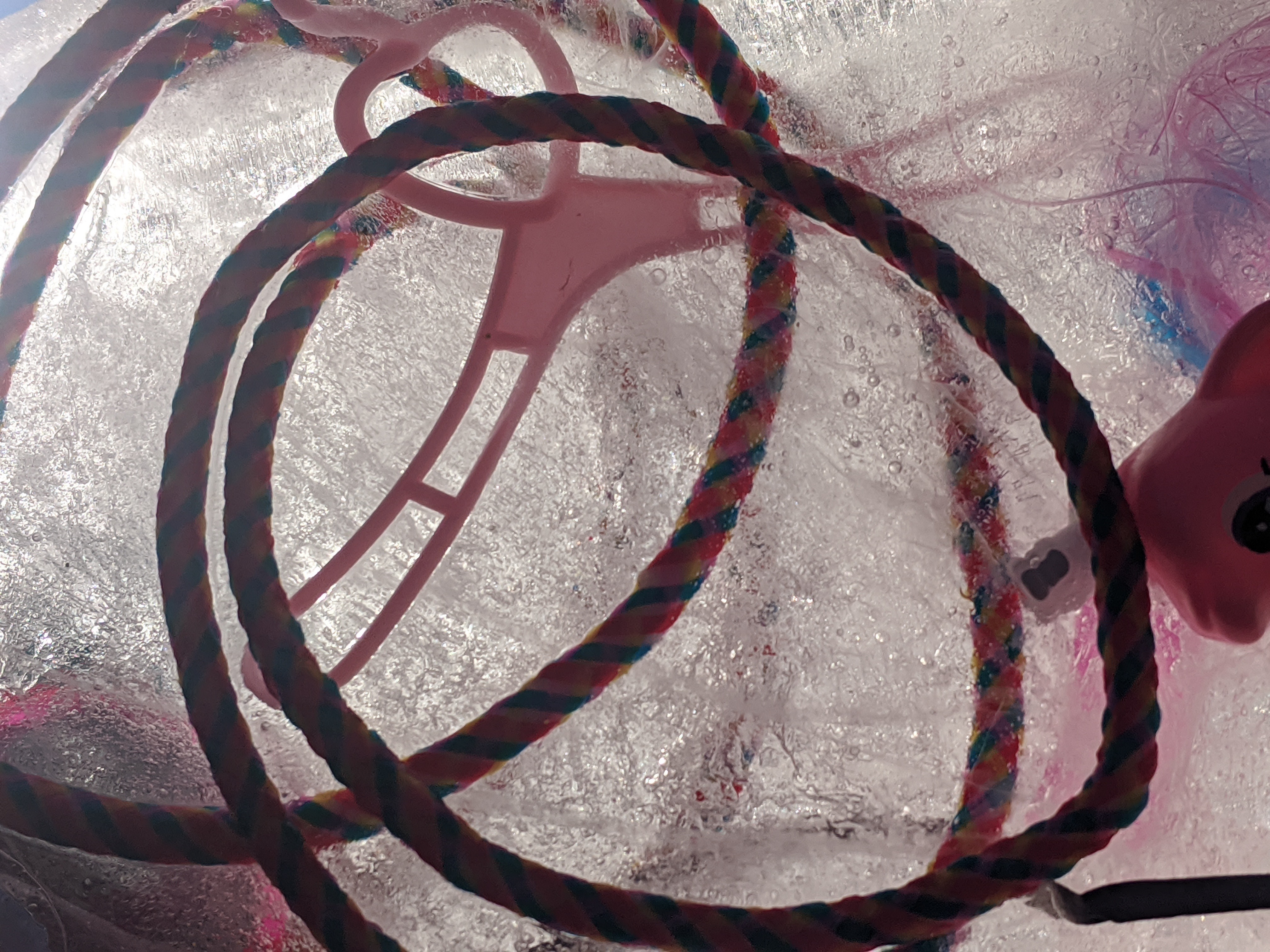
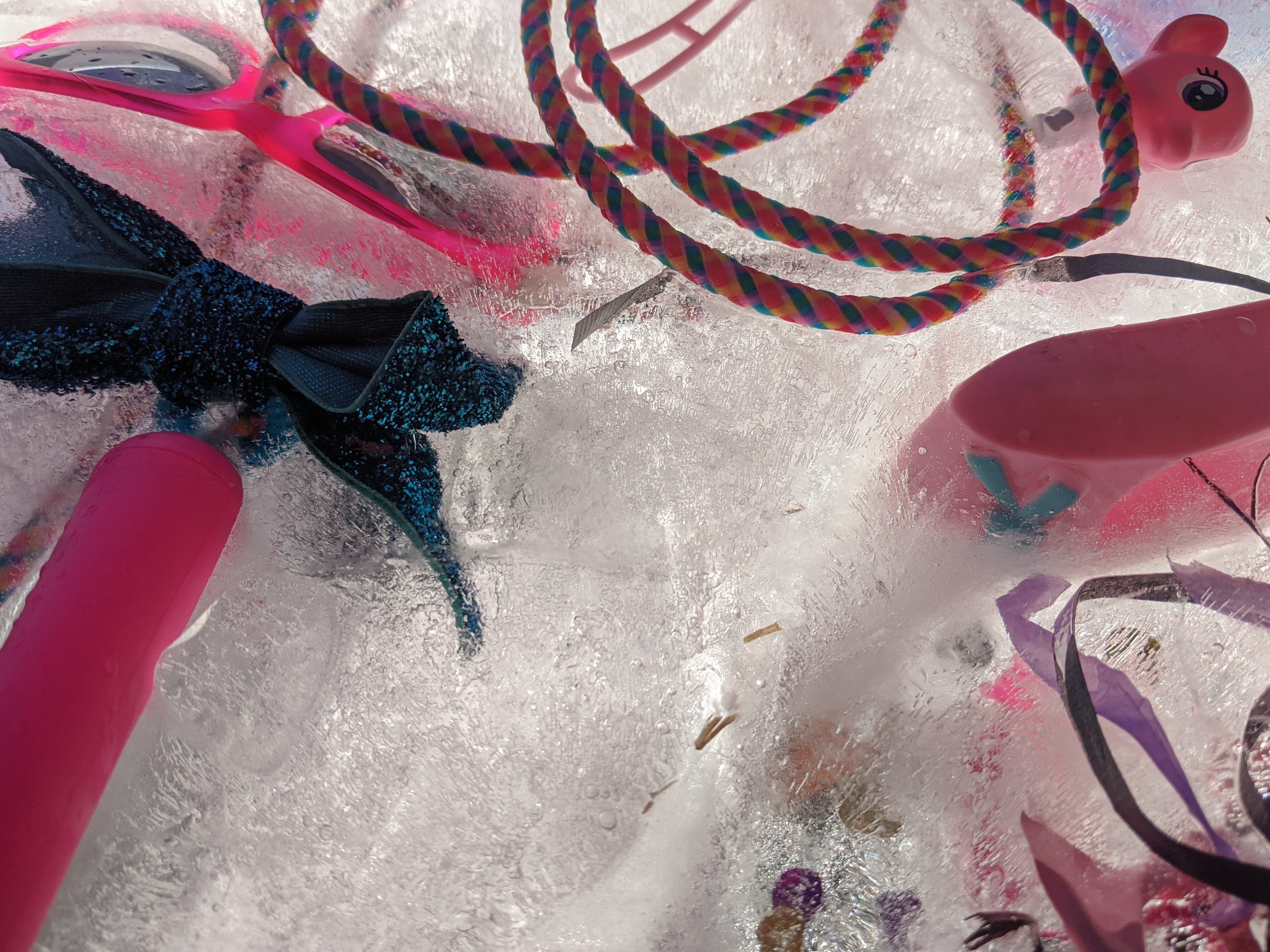
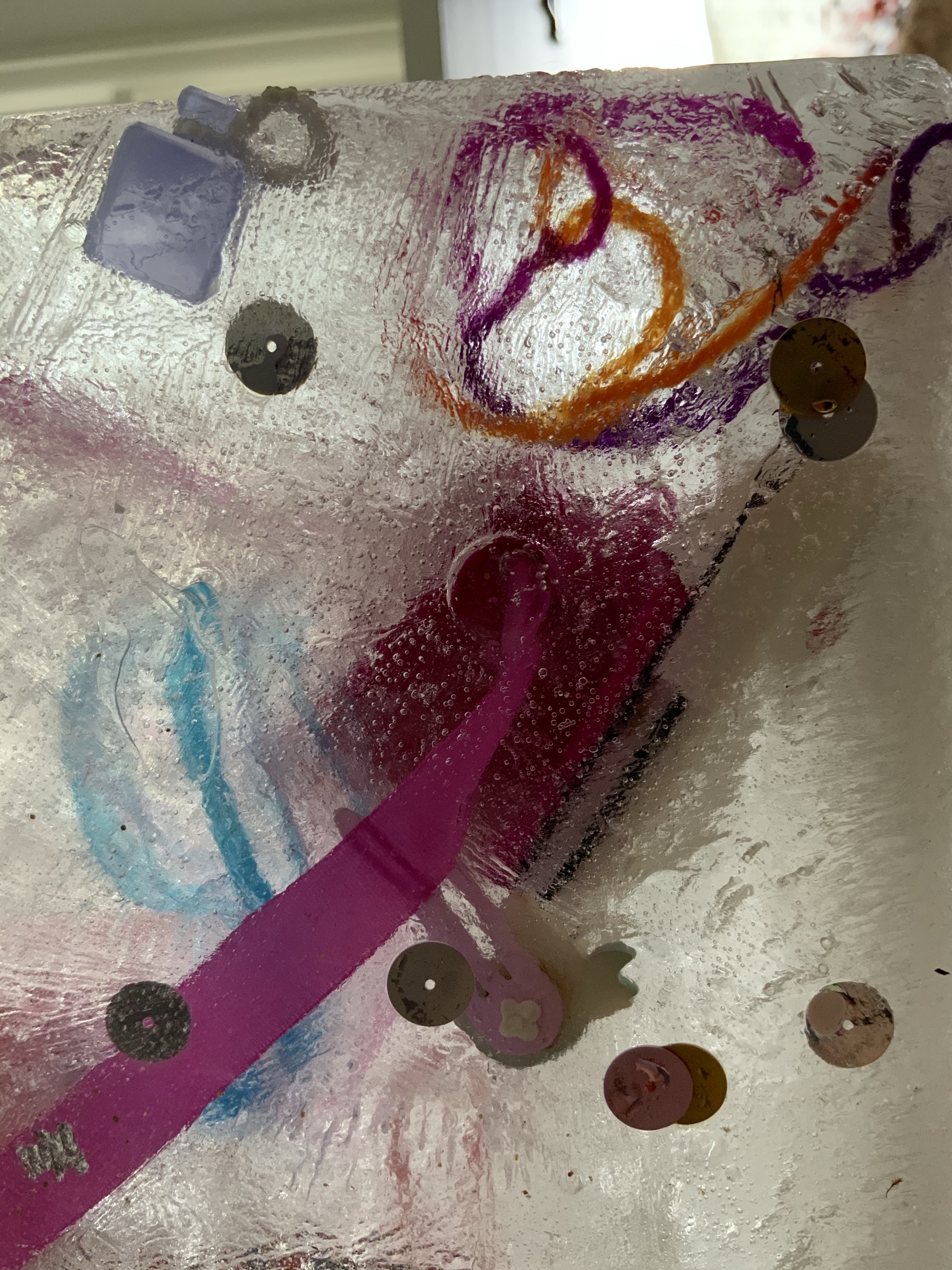
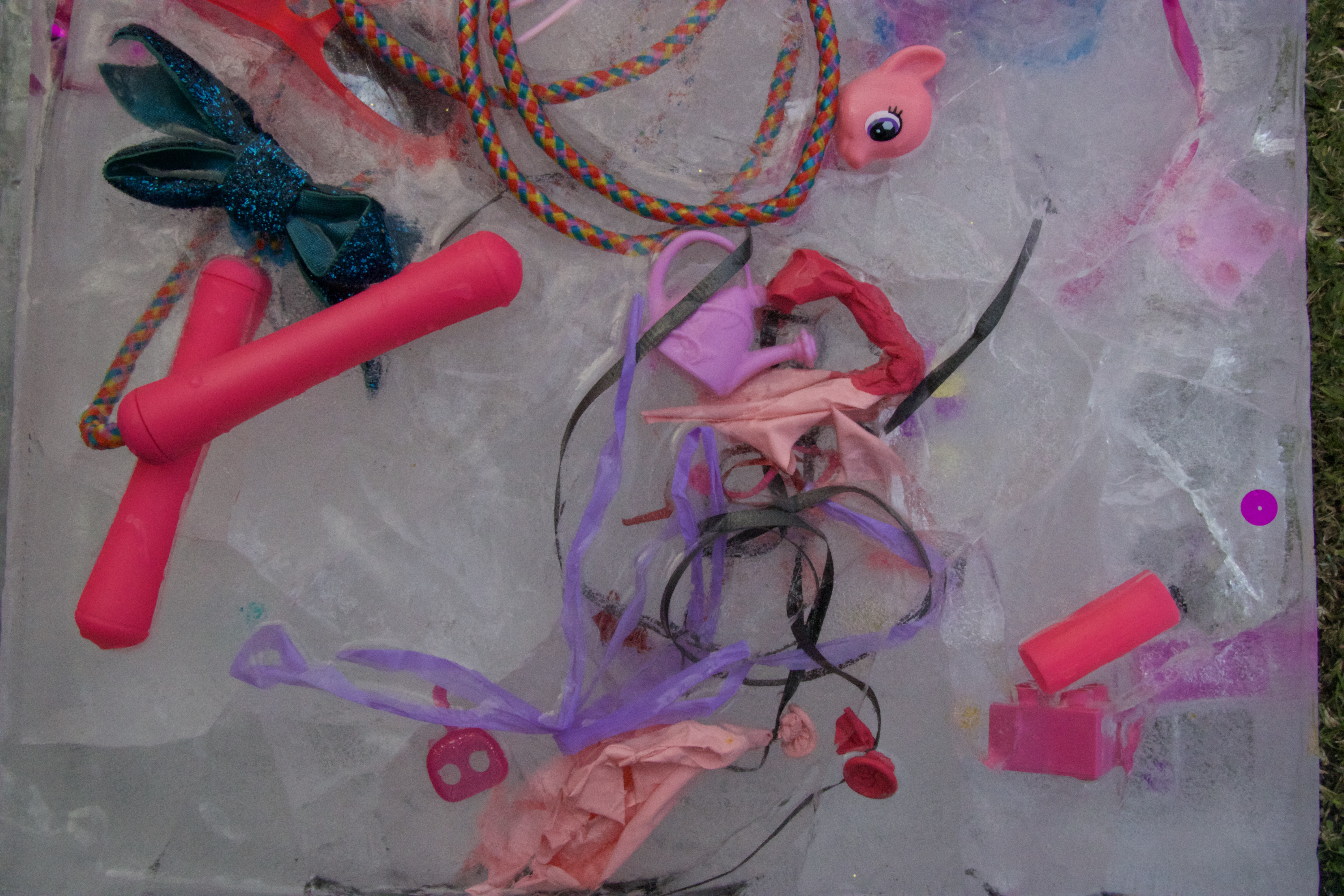
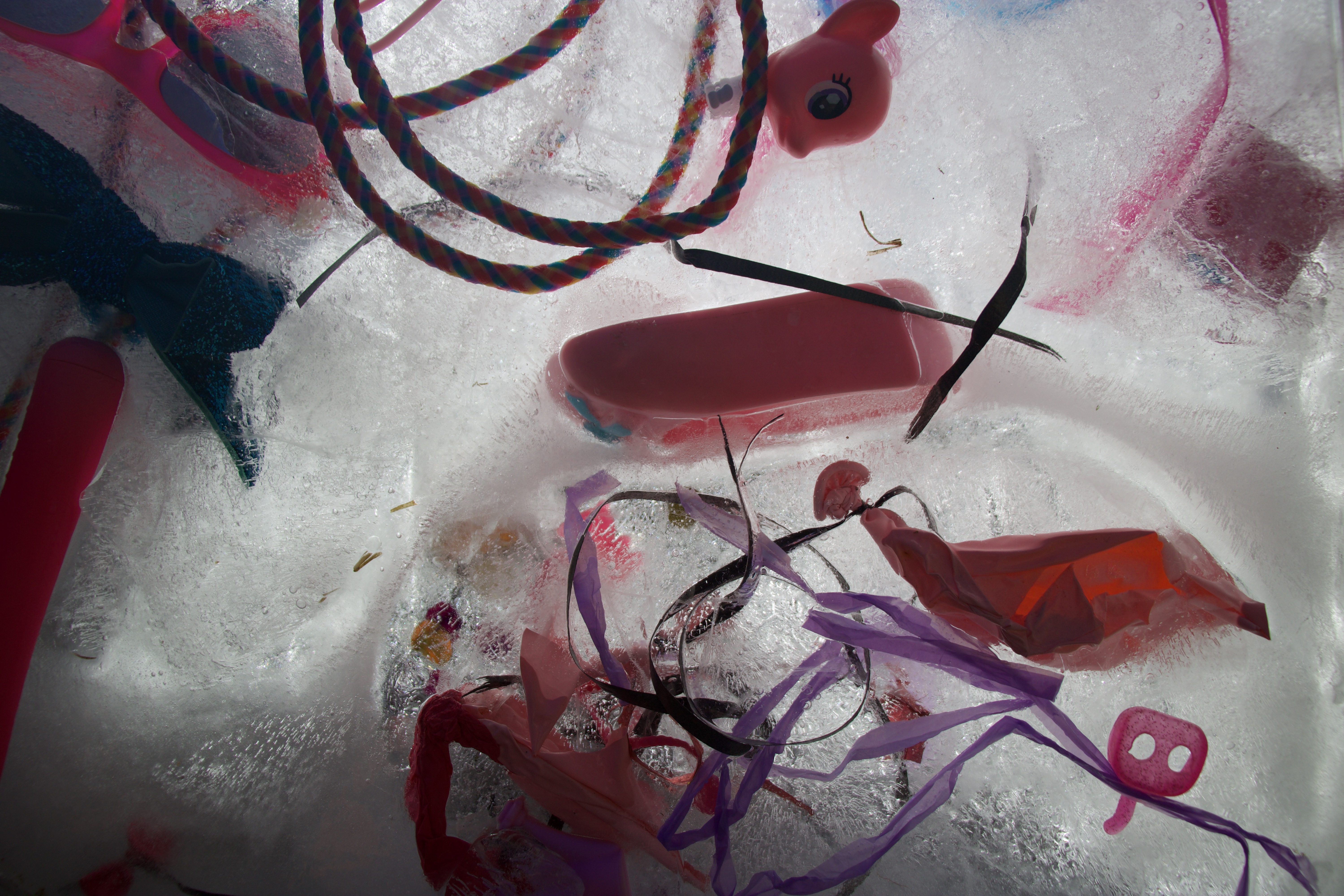
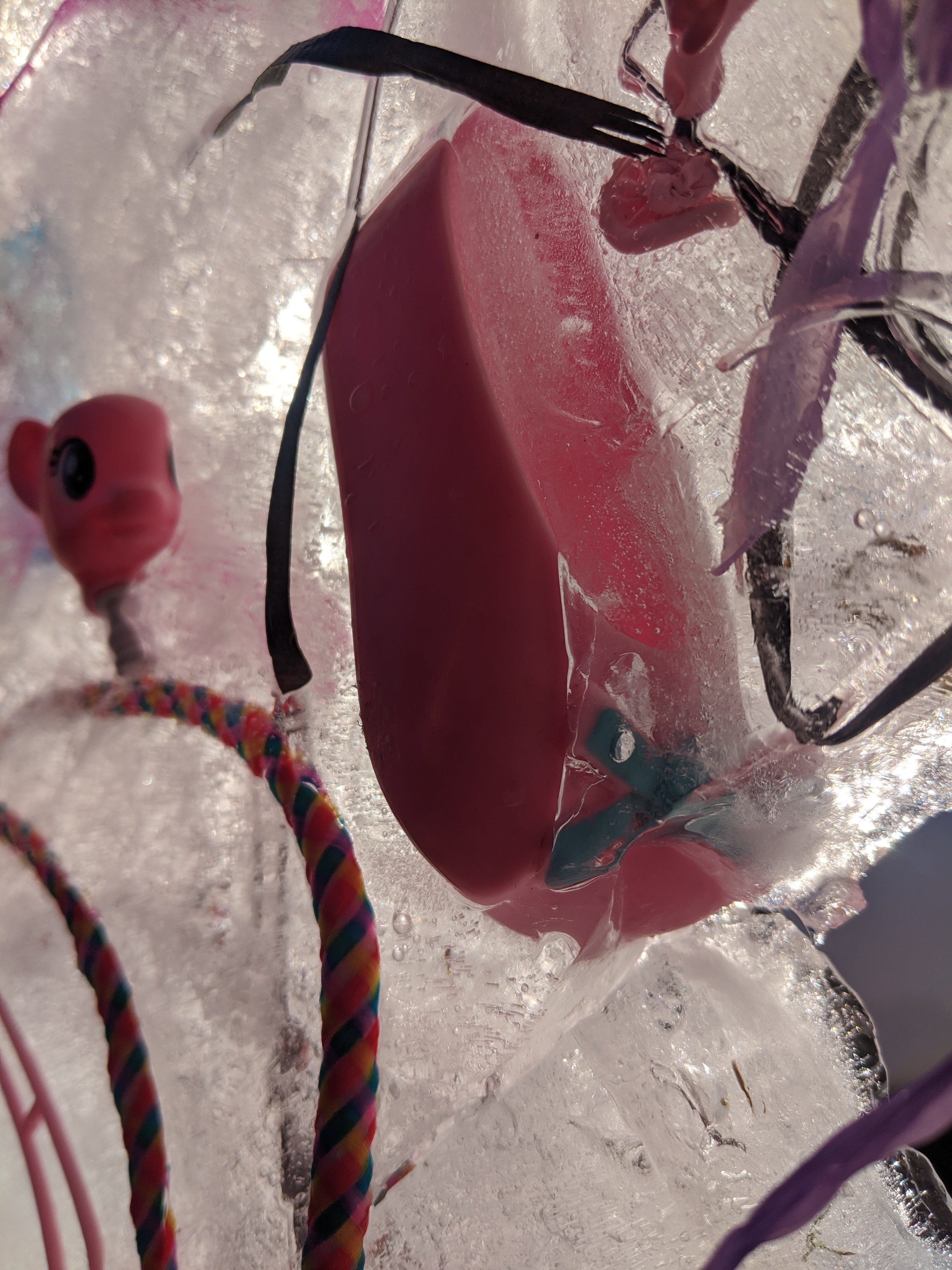
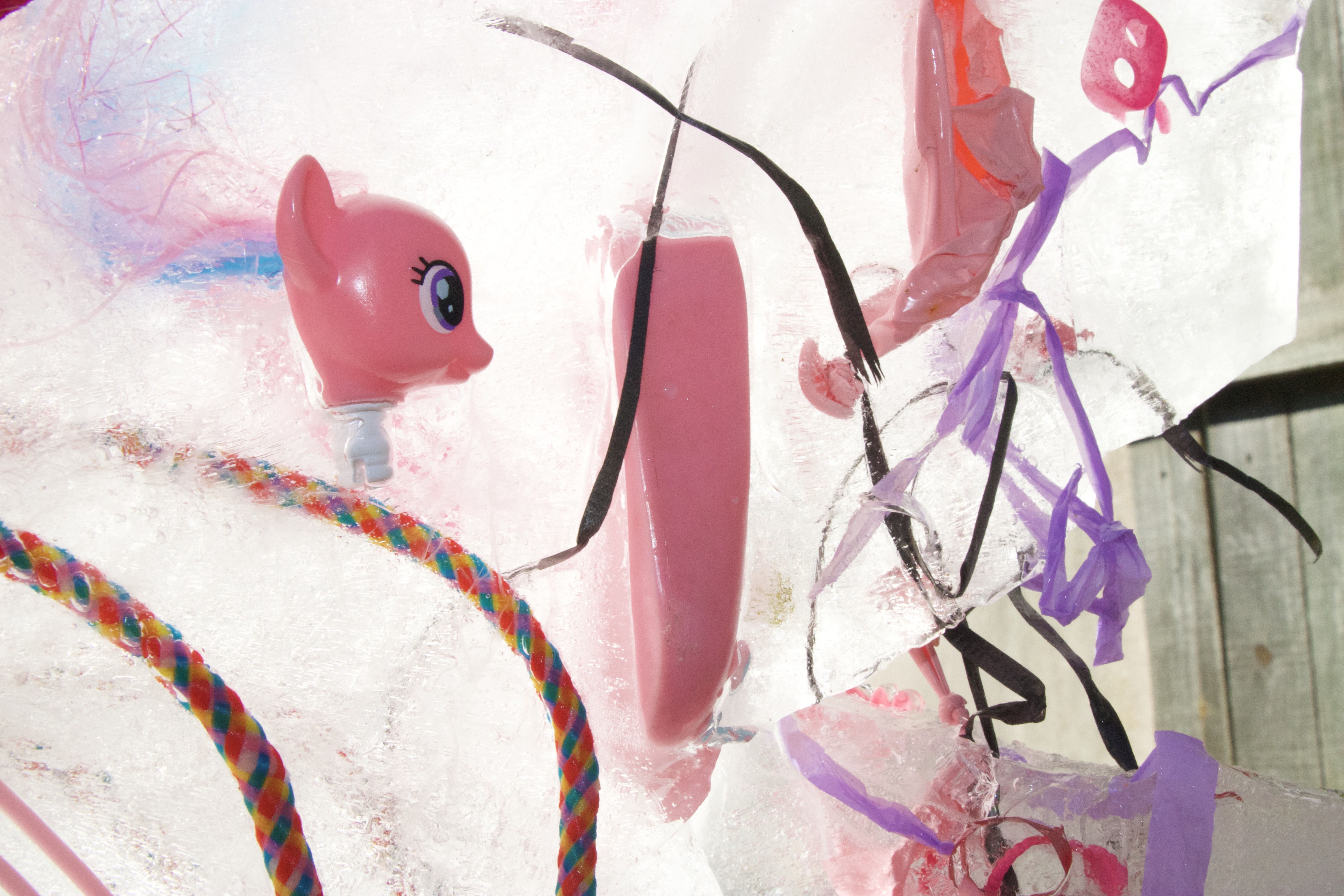
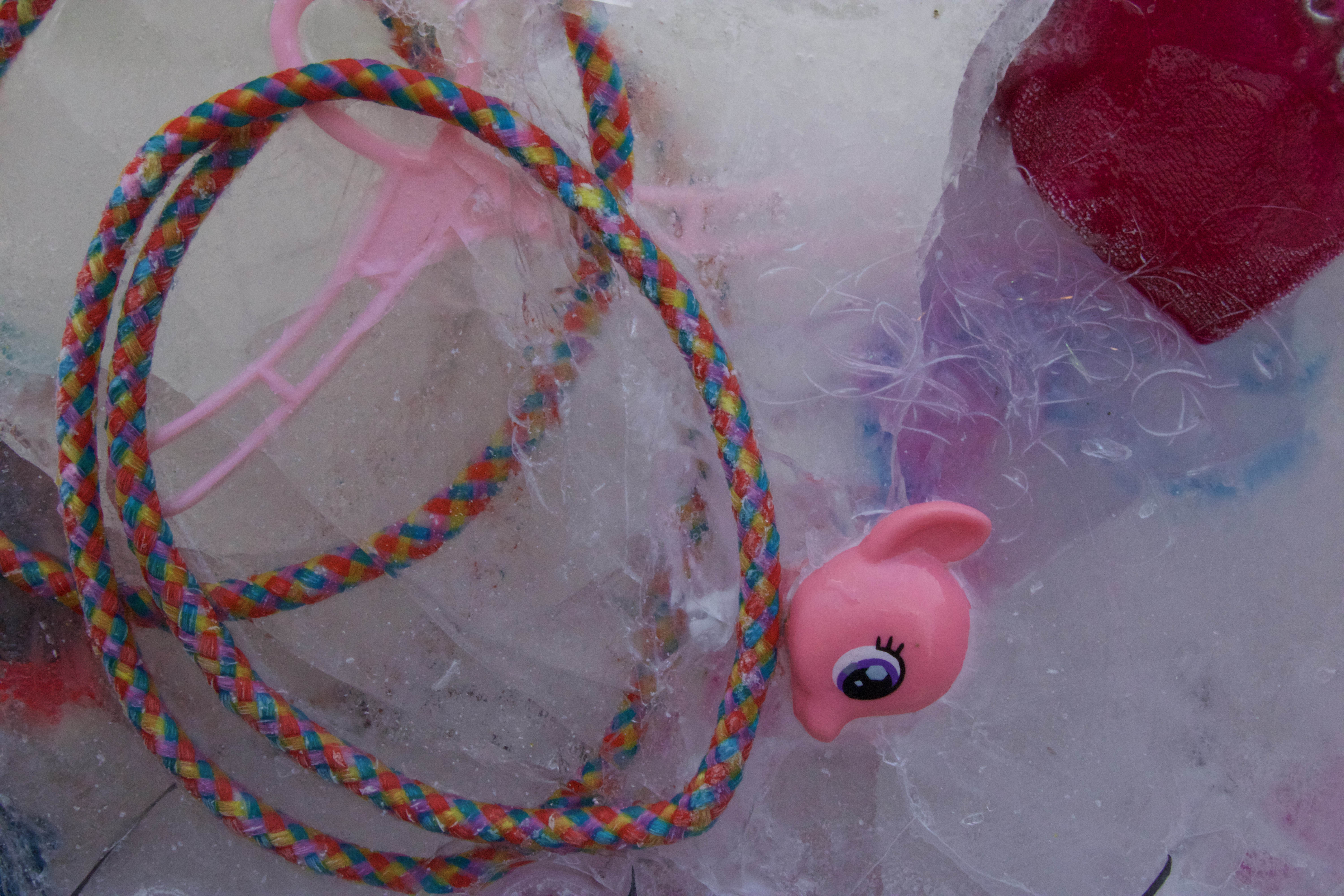
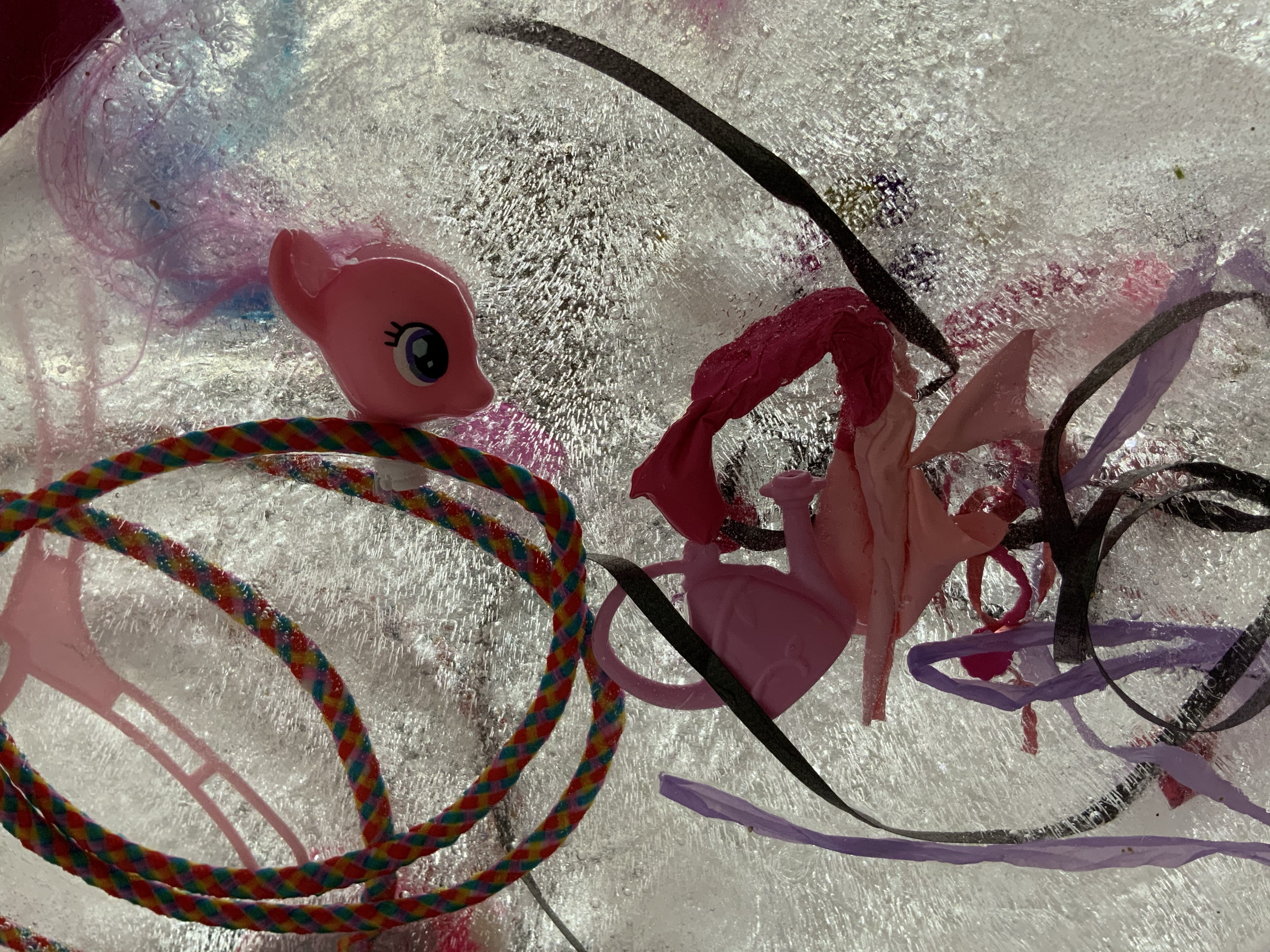
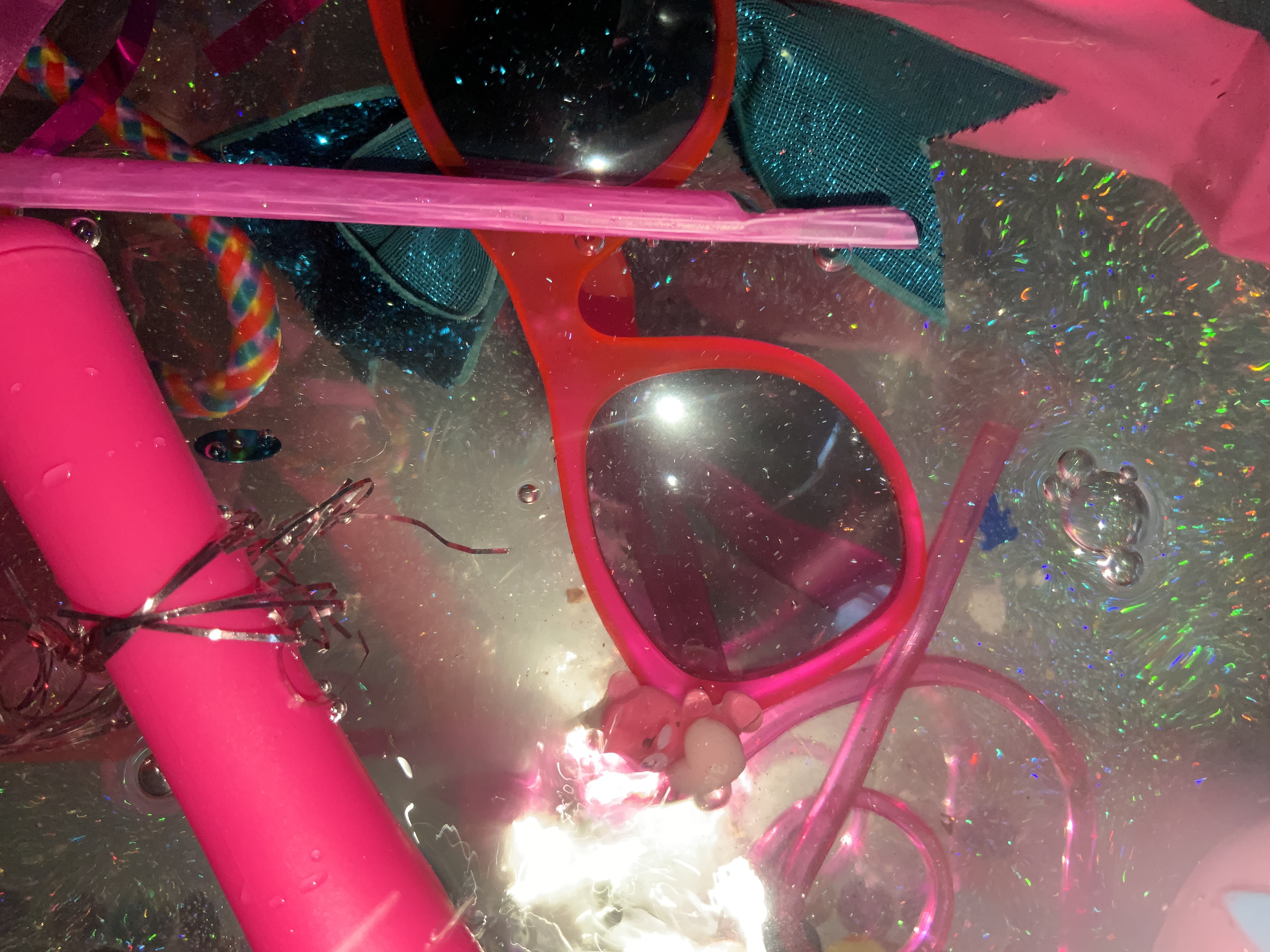
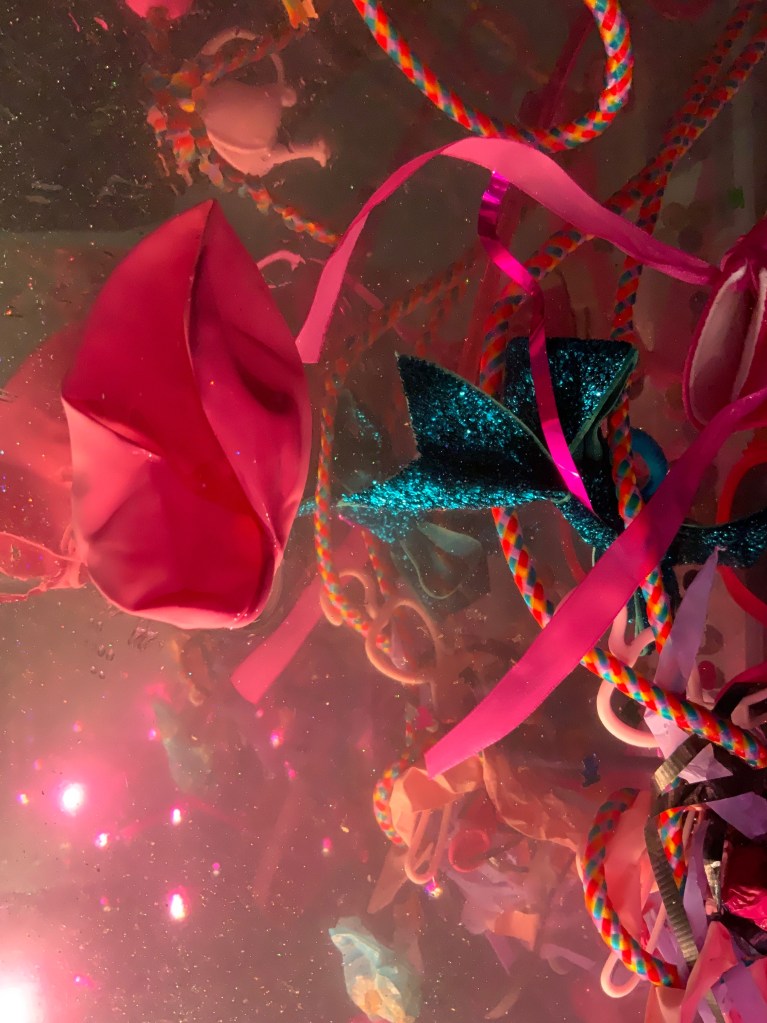
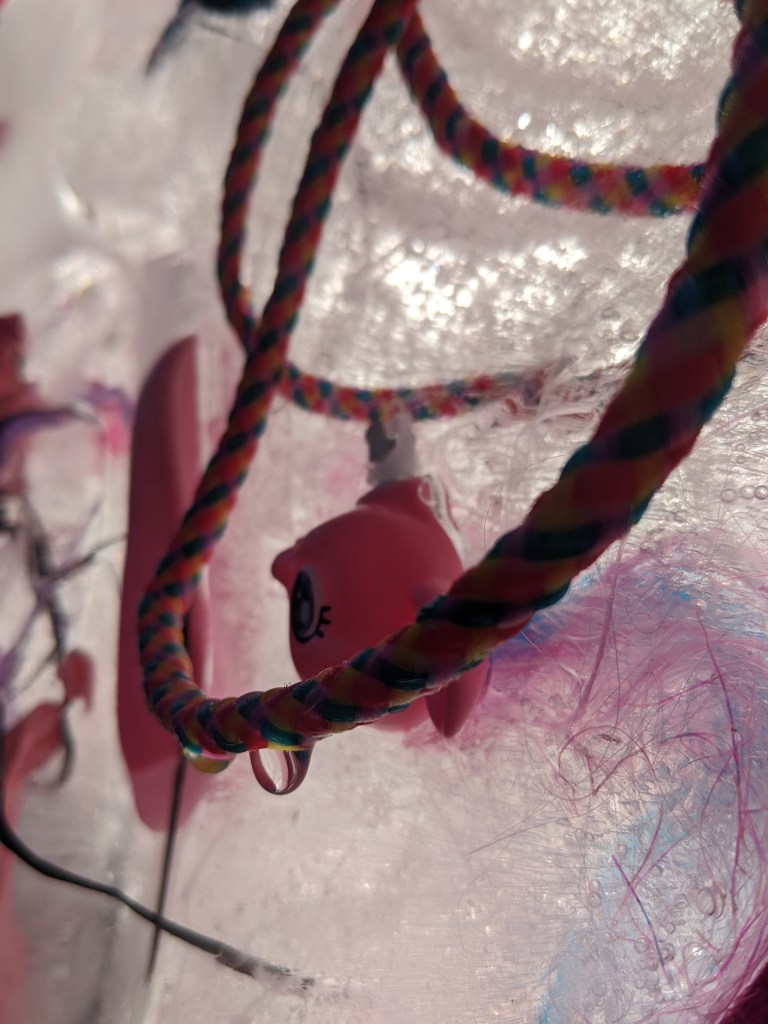
The little girl legacy series was experimented on extensively, the work was frozen several times, submerged, flattened and melted
Attempting to work a composition of pretty little girl items I found objects and the original concept was to make the shape of a snail with the skipping rope again having to surrender to the process and working from a more abstract perspective.
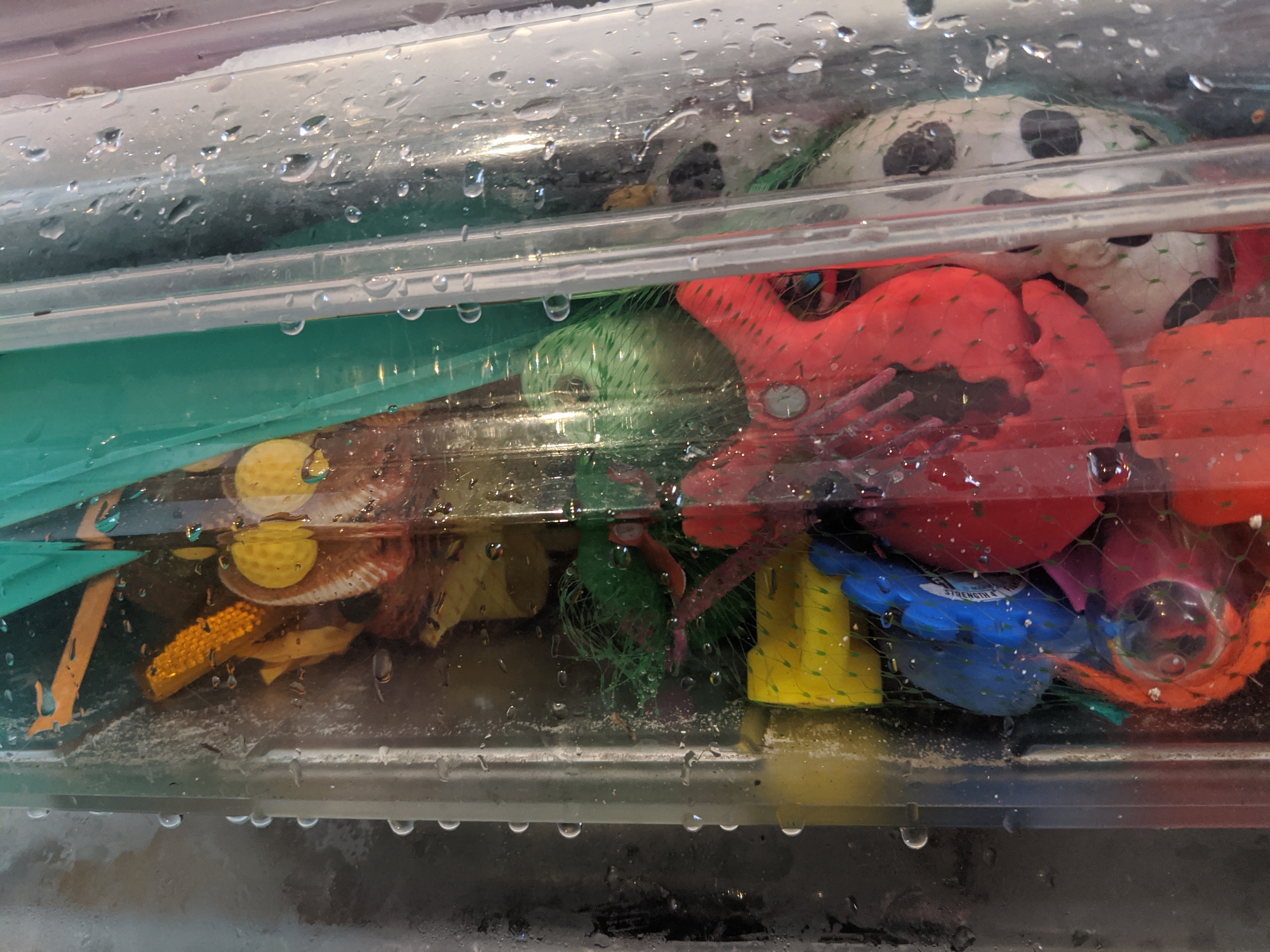
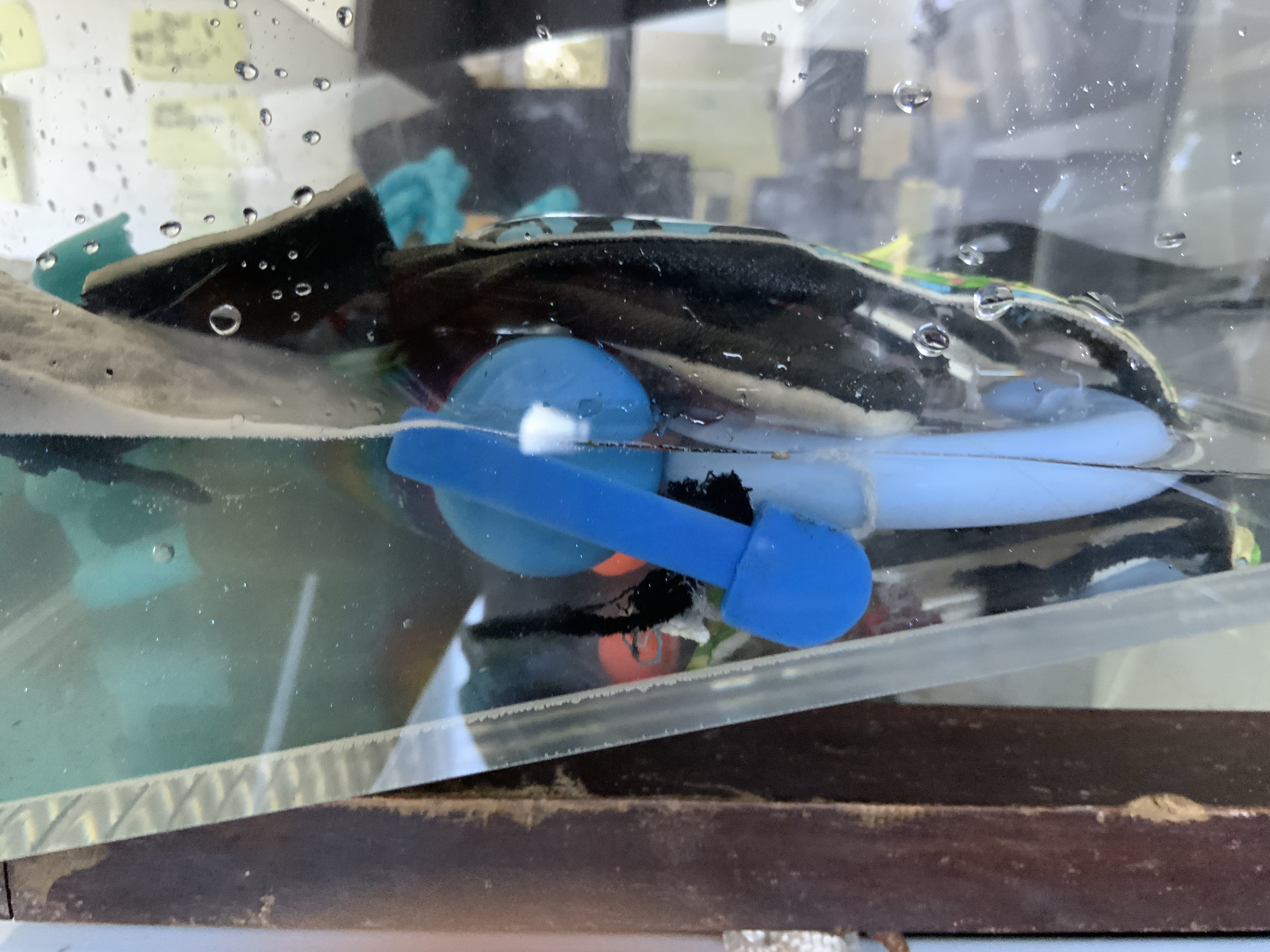
The found objects were rocked in the Perspex container with water trying to give the depiction of a wave or movement in the water
Light was used to attempt to mimic the sunlight going into the water so it looks like the items were taken from underneath the water not above.
Series a photo shoot’s looking at different ways of lighting and choosing found objects that would allow a narrative
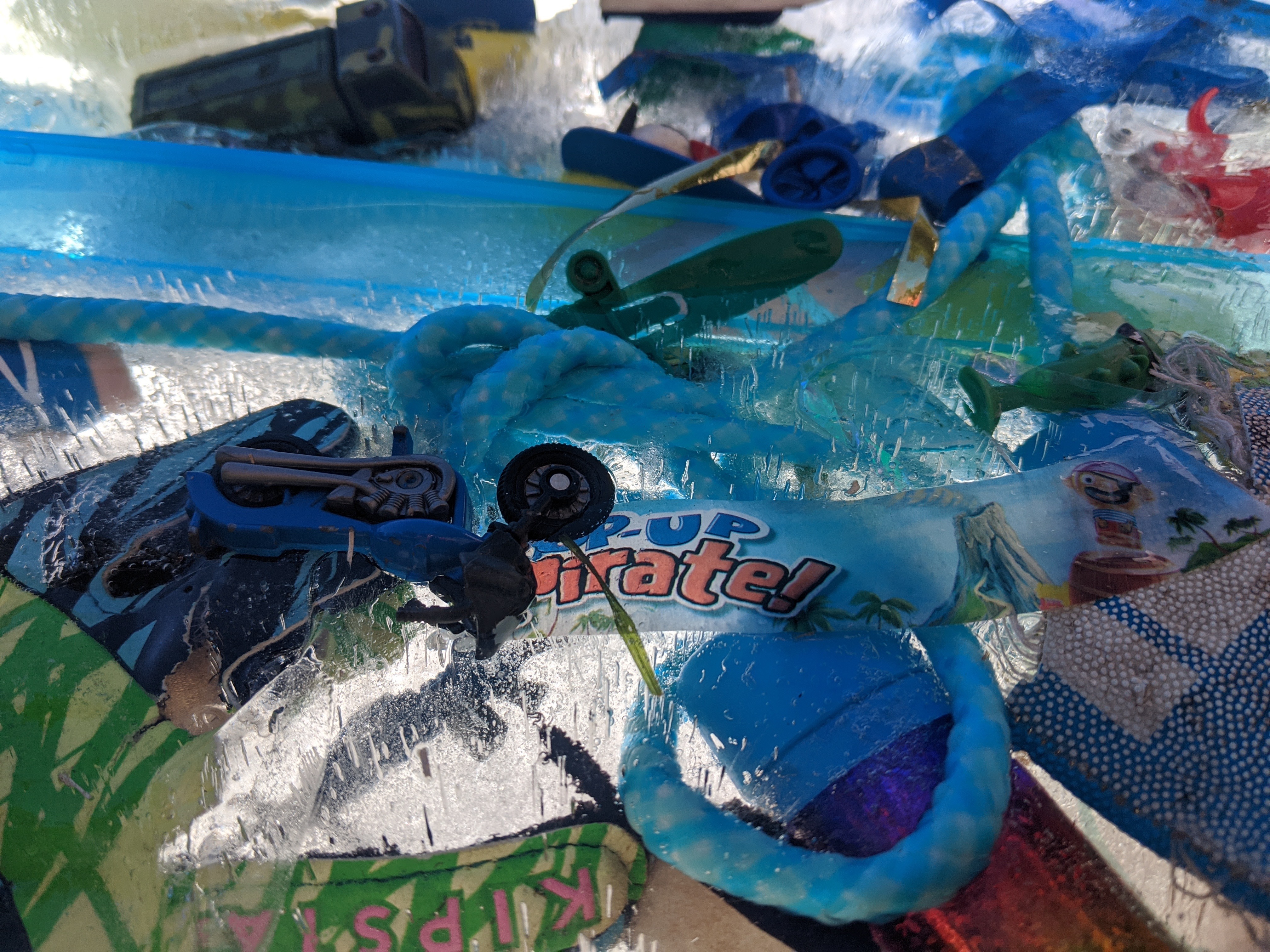
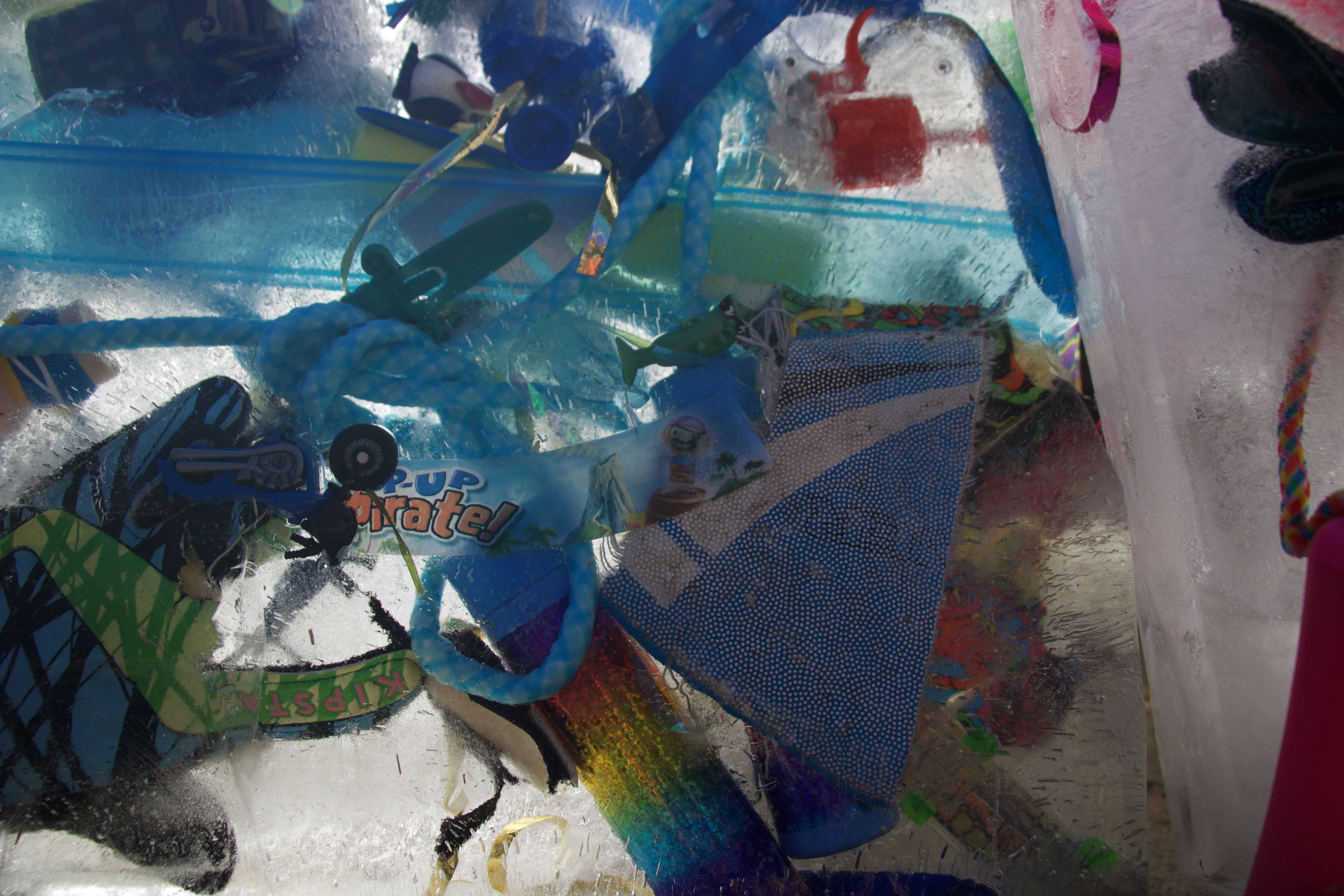
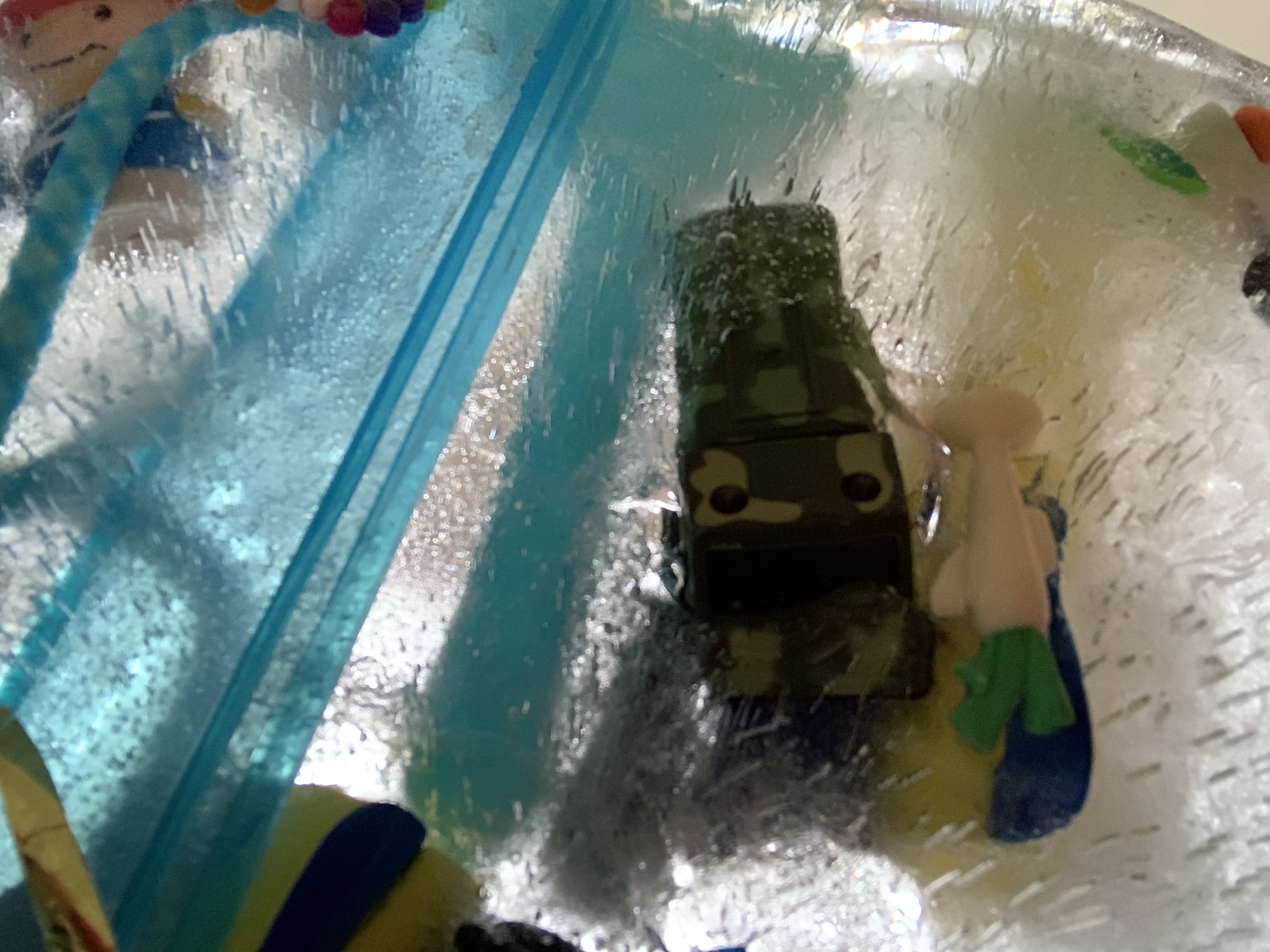
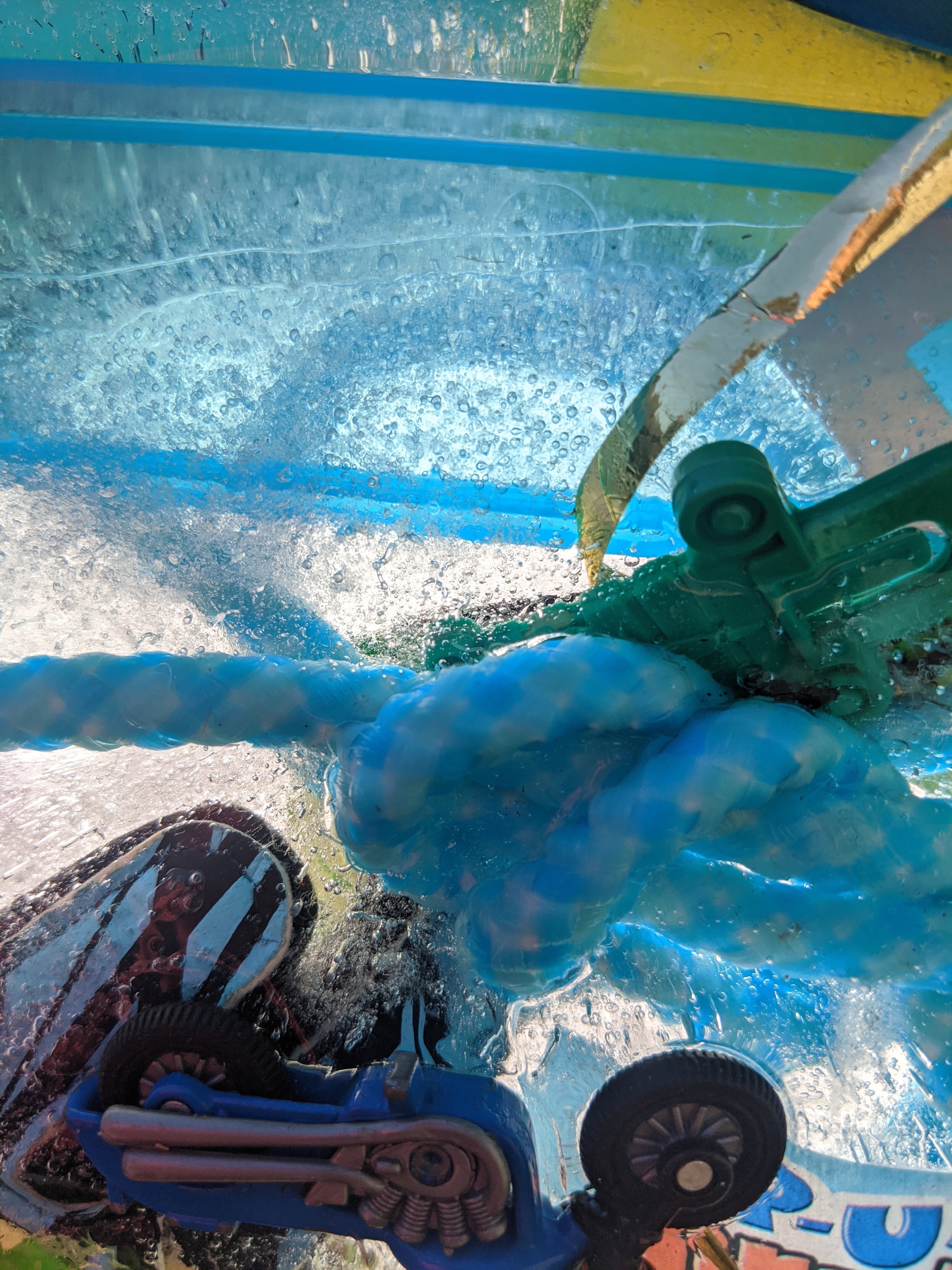
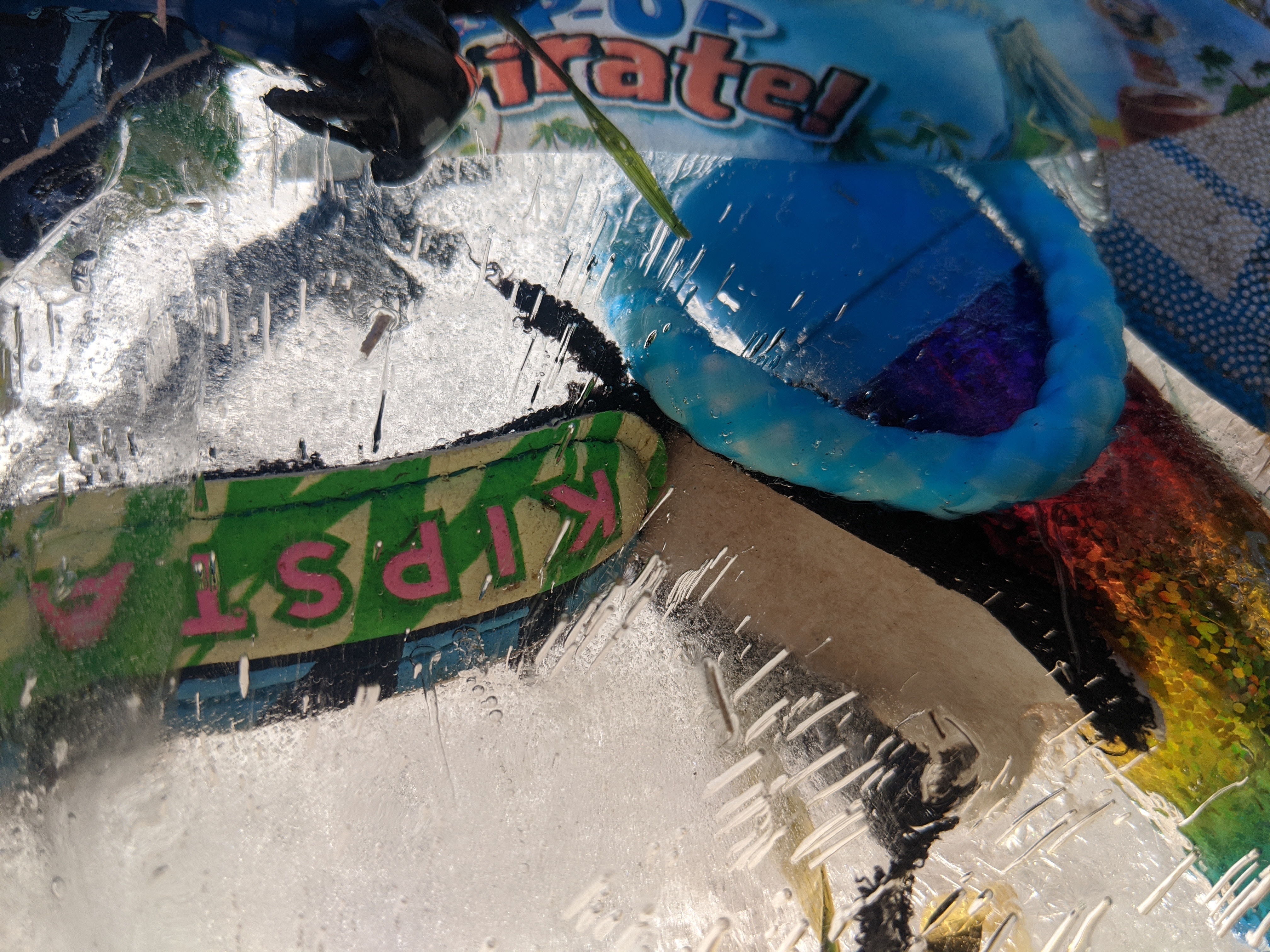
Kylie Naylor, Untitled #7, 2020, Image, found object, frozen water.Kylie Naylor, Untitled #9, 2020, Image, found object, frozen water.Kylie Naylor, Untitled #4, 2020, Image, found object, frozen water.Kylie Naylor, Untitled #1, 2020, Image, found object, frozen water.Kylie Naylor, Untitled #2, 2020, Image, found object, frozen water.Kylie Naylor, Untitled #3, 2020, Image, found object, frozen water.Kylie Naylor, Untitled #8, 2020, Image, found object, frozen water.Kylie Naylor, Untitled #5, 2020, Image, found object, frozen water.Kylie Naylor, Untitled #5, 2020, Image, found object, frozen water.
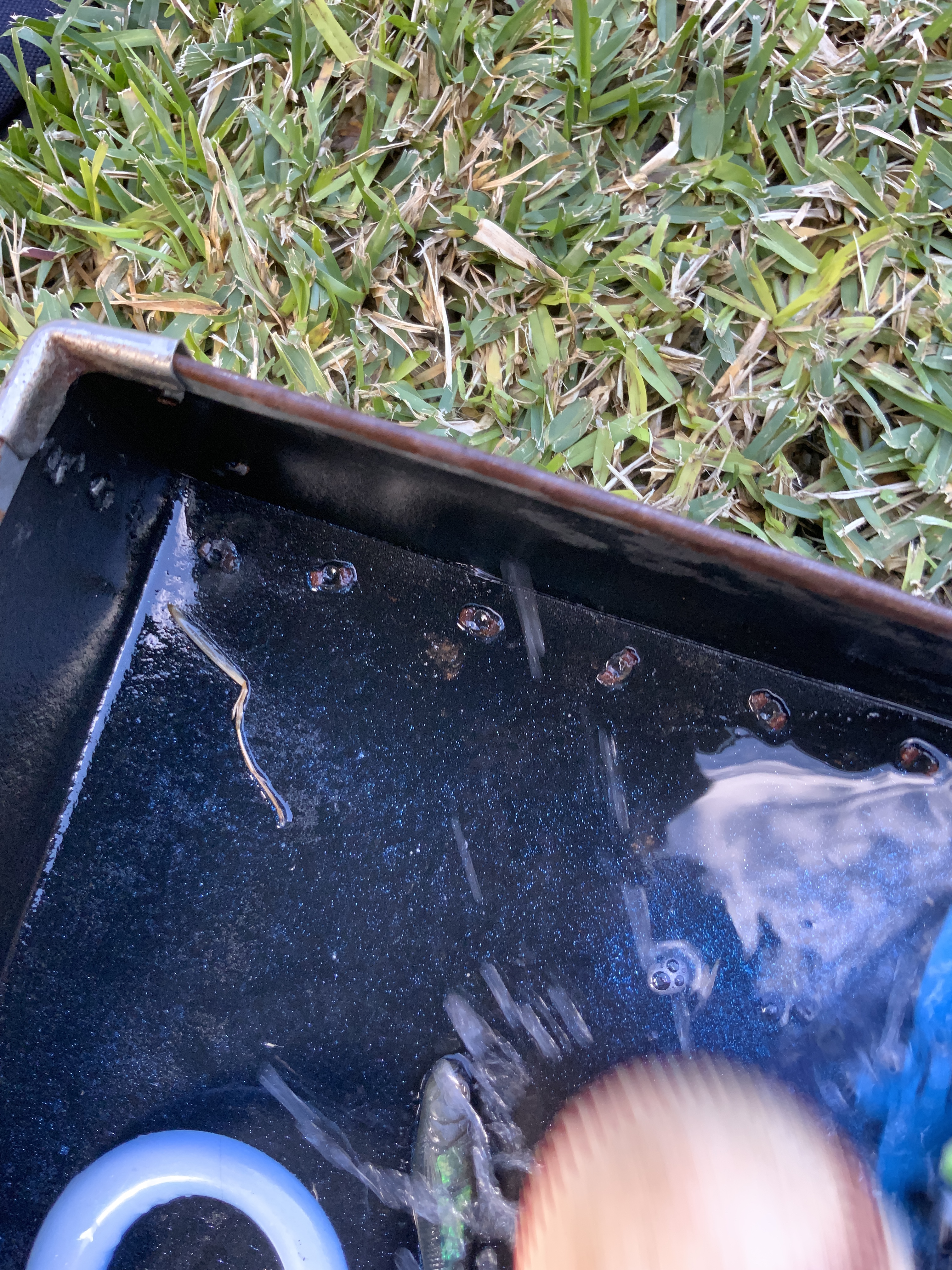
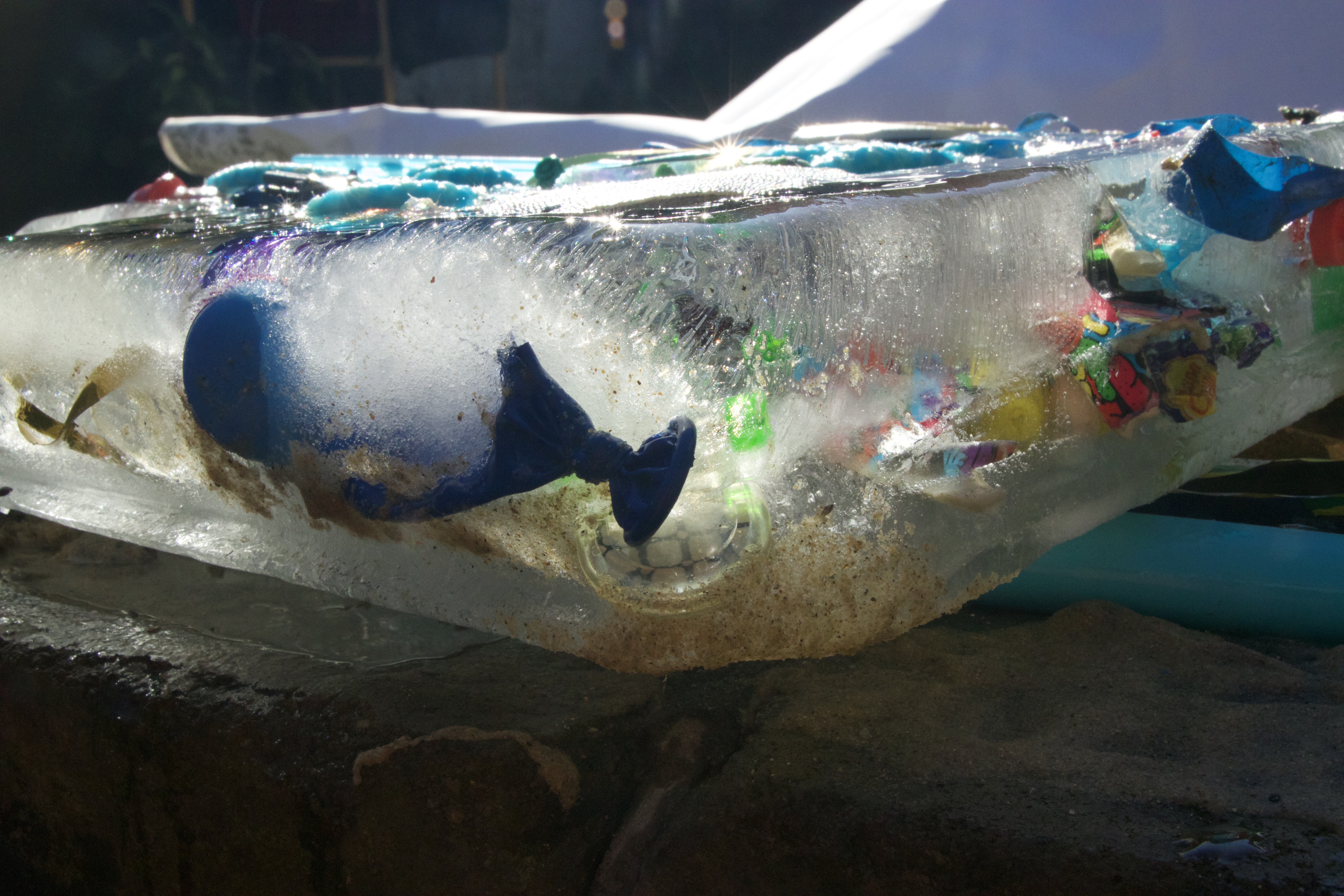
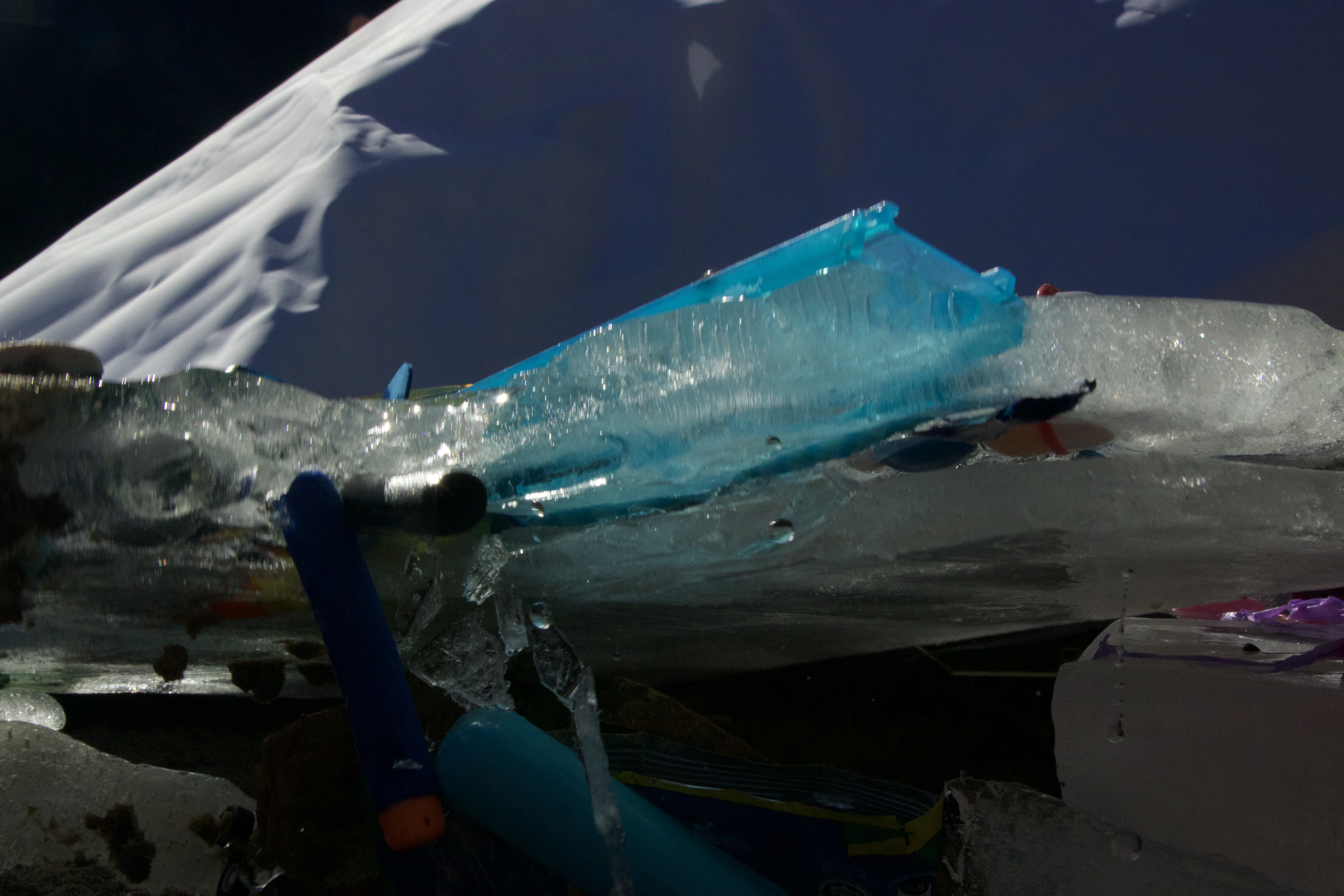
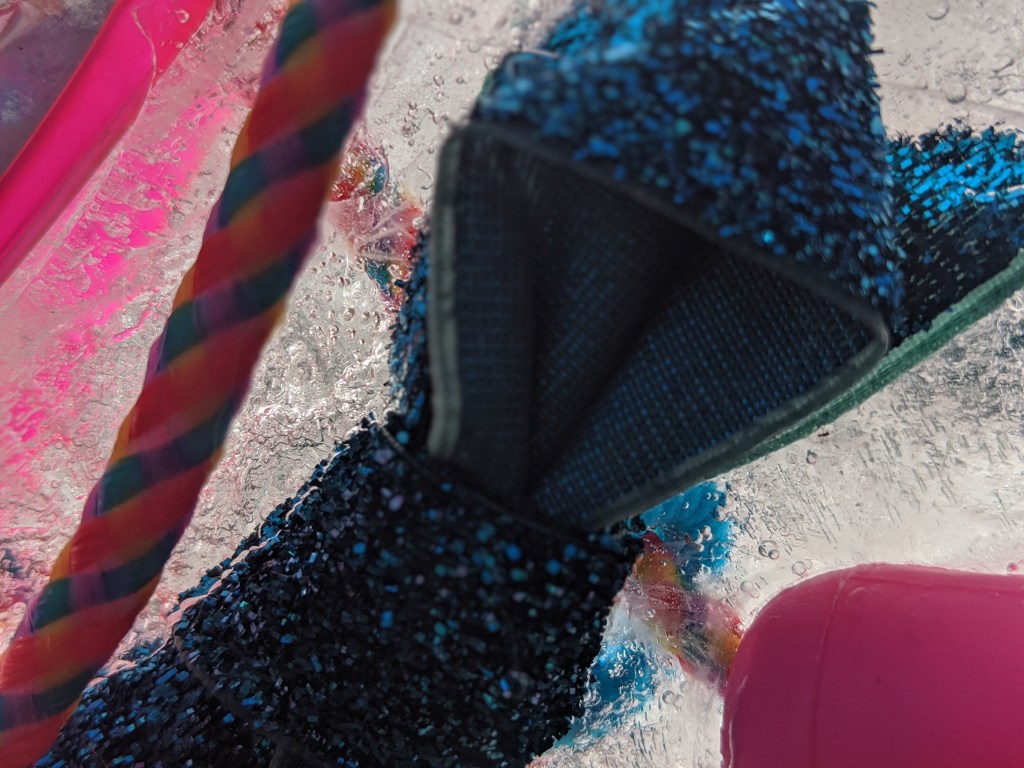
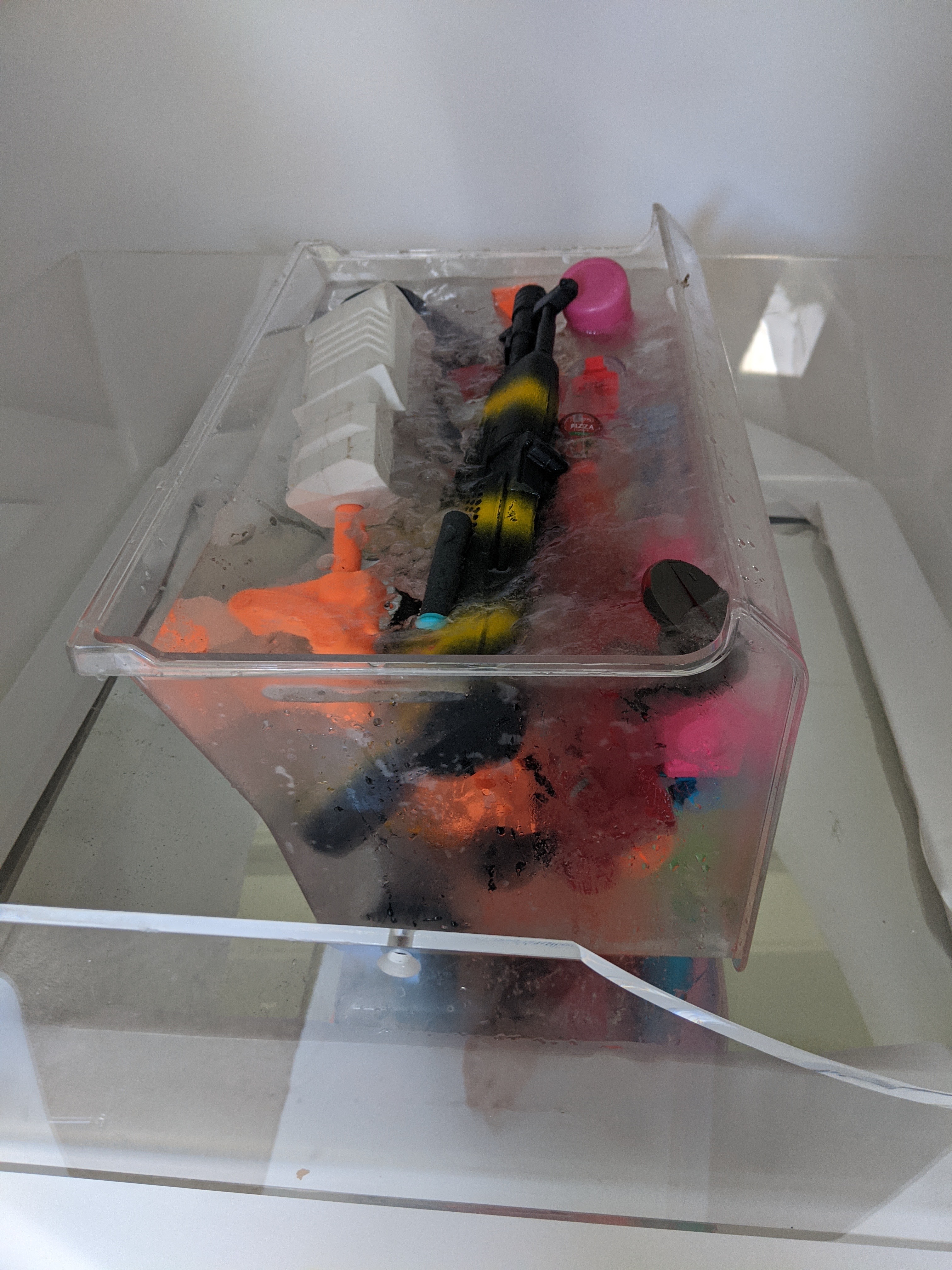
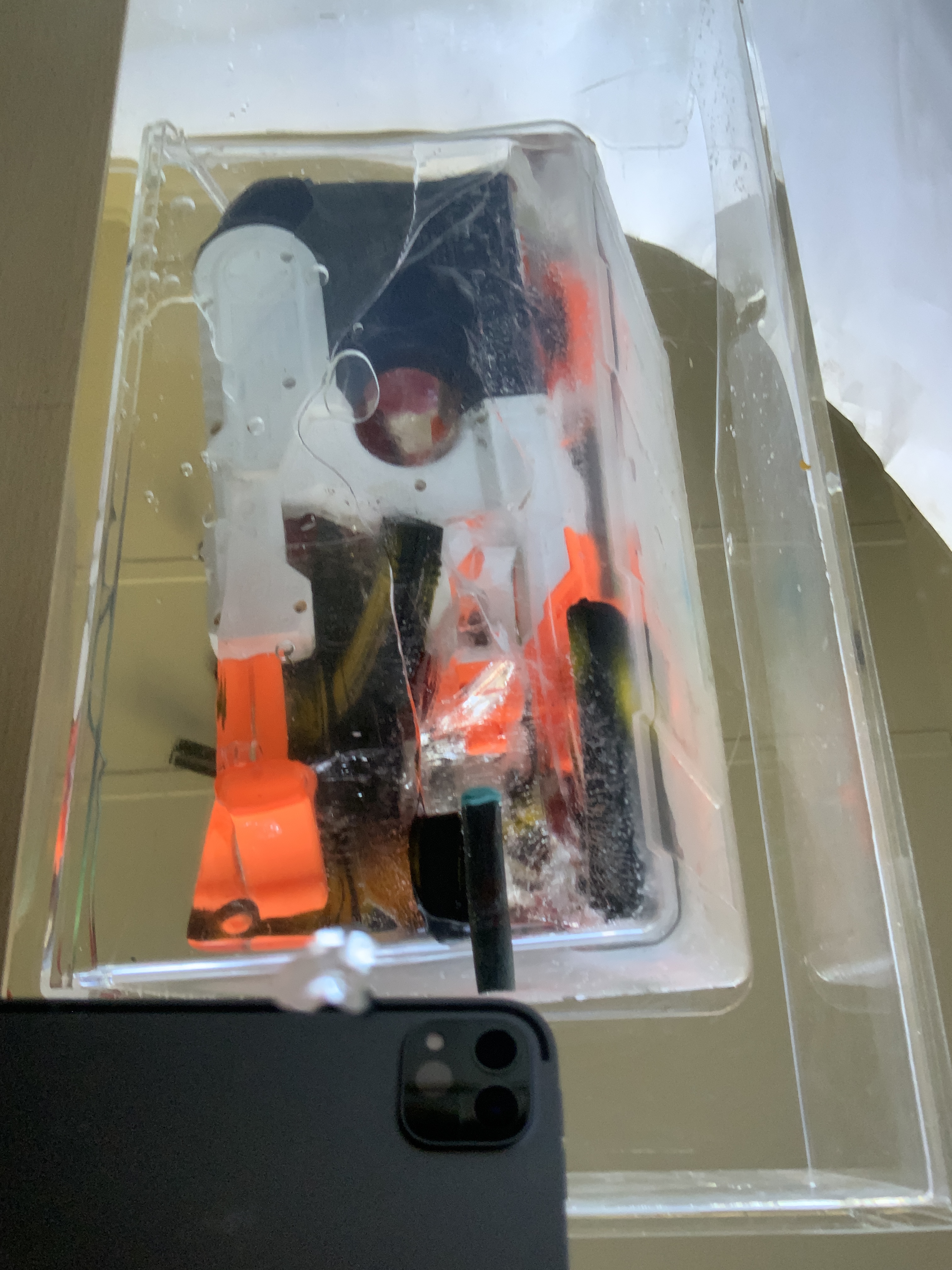
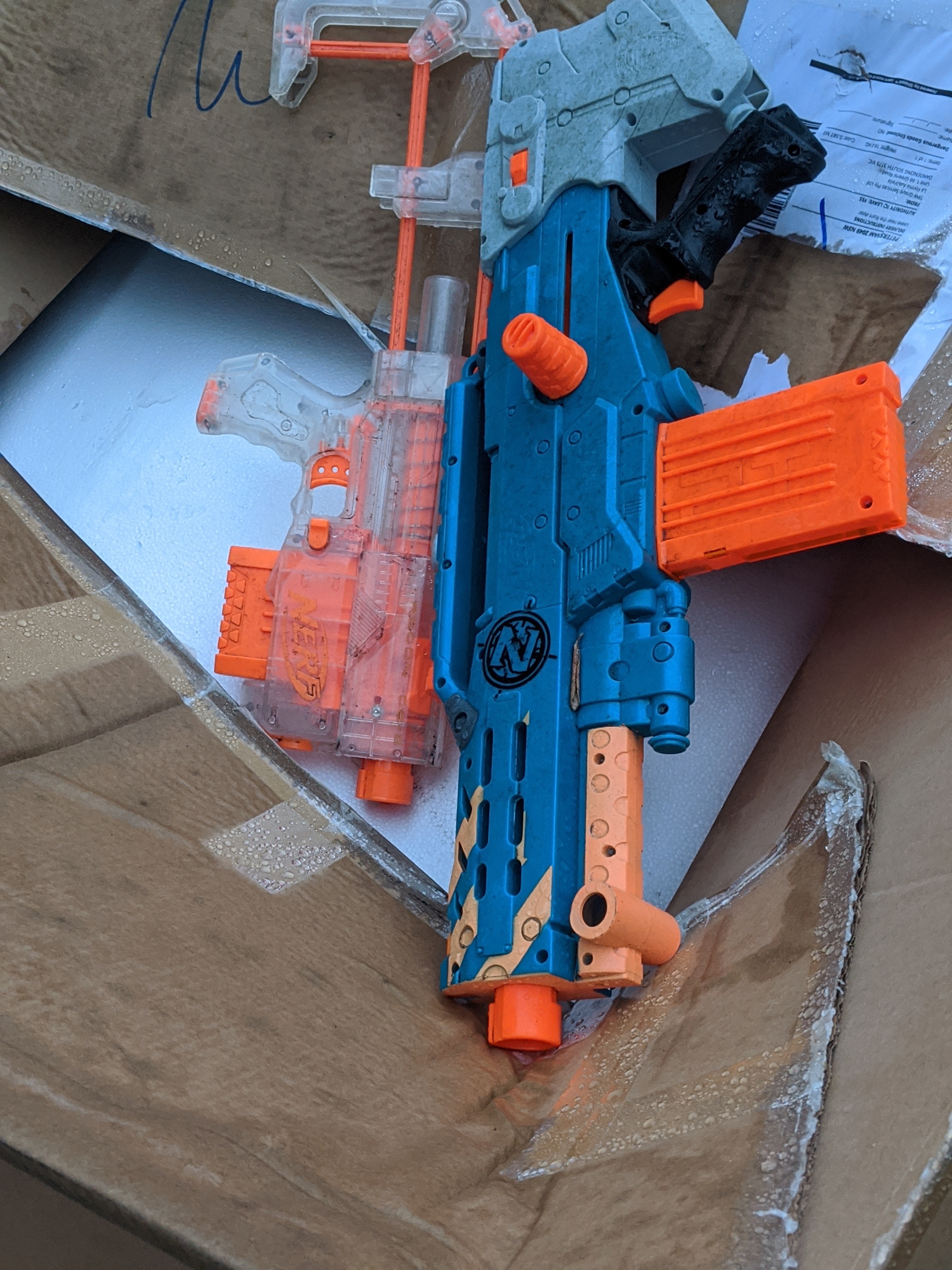
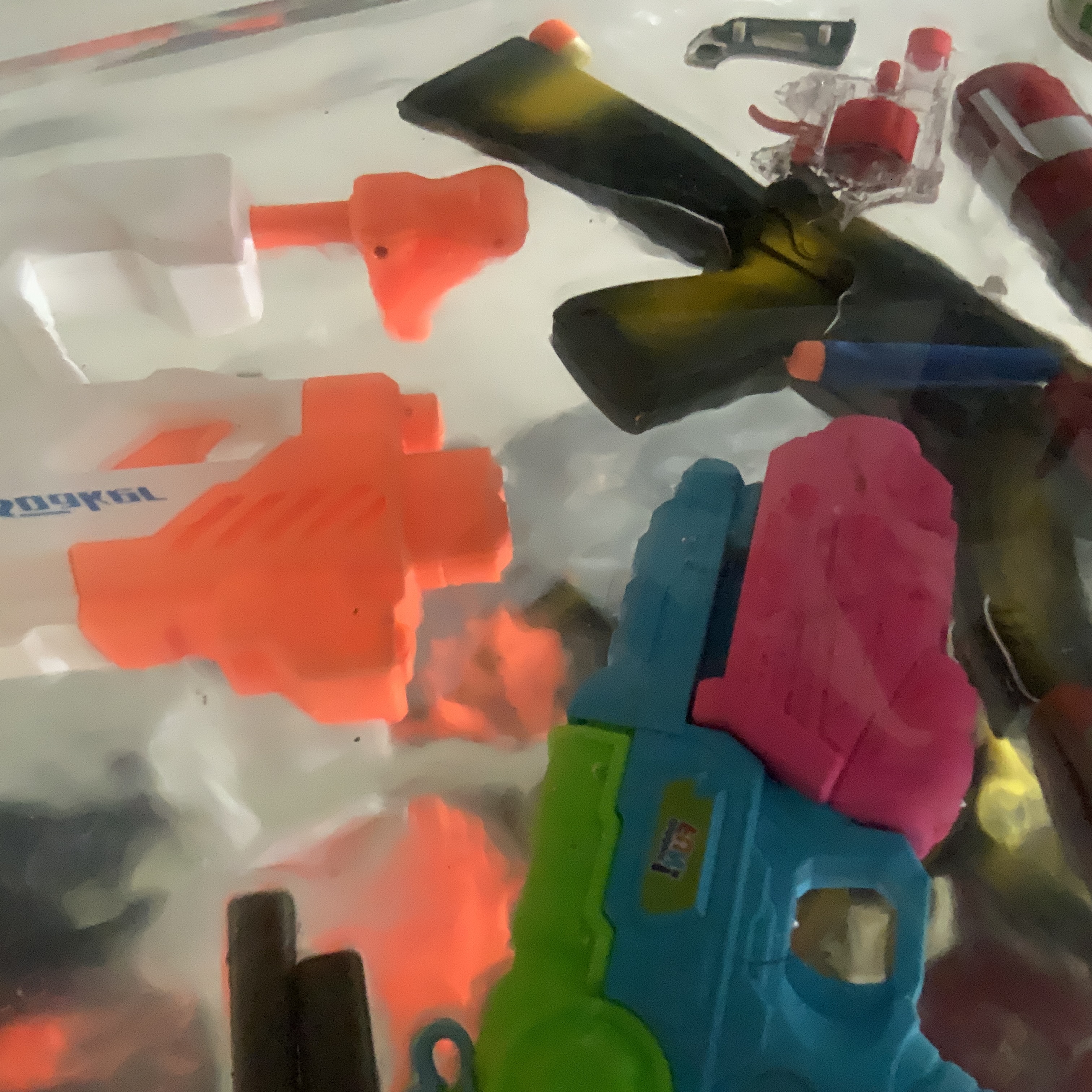
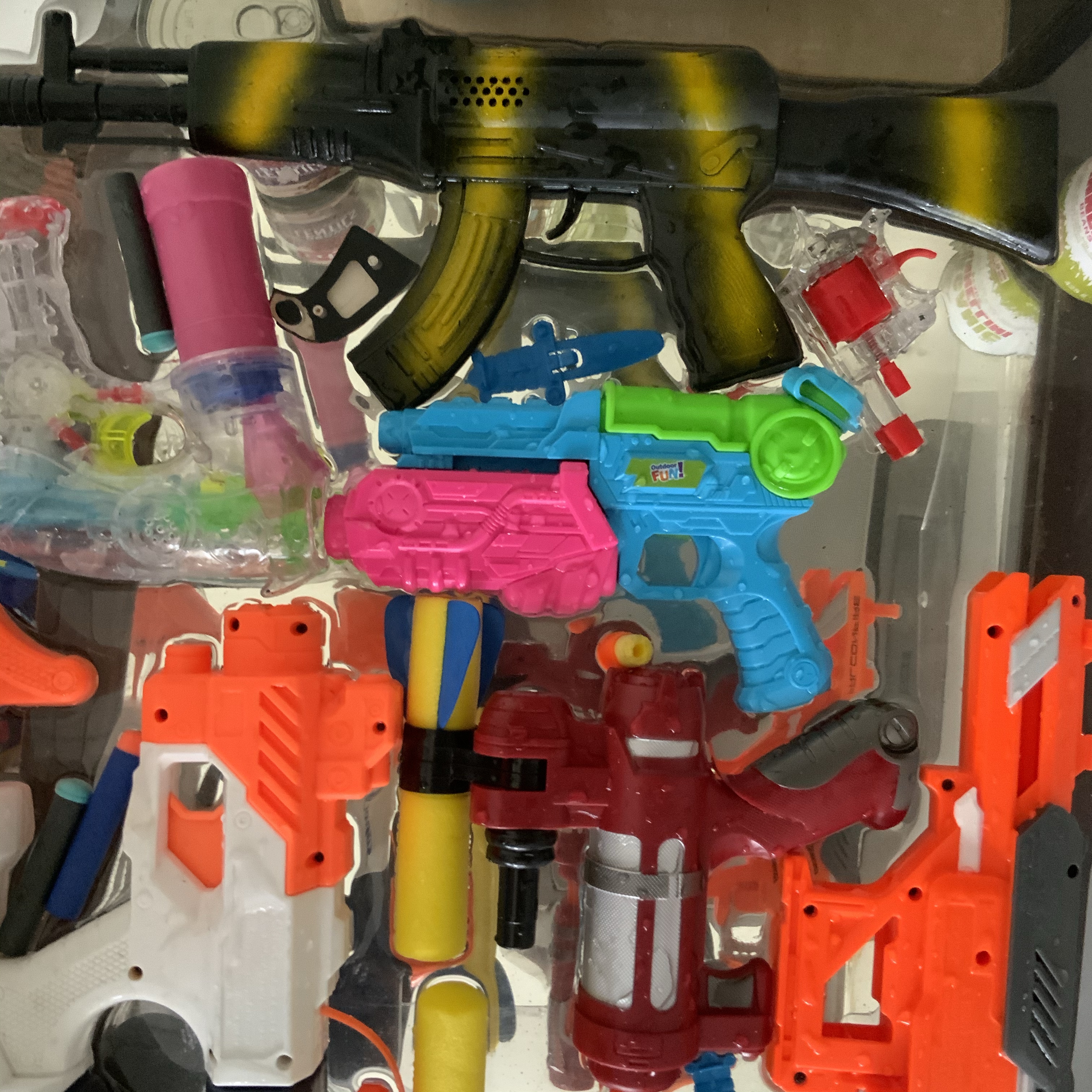
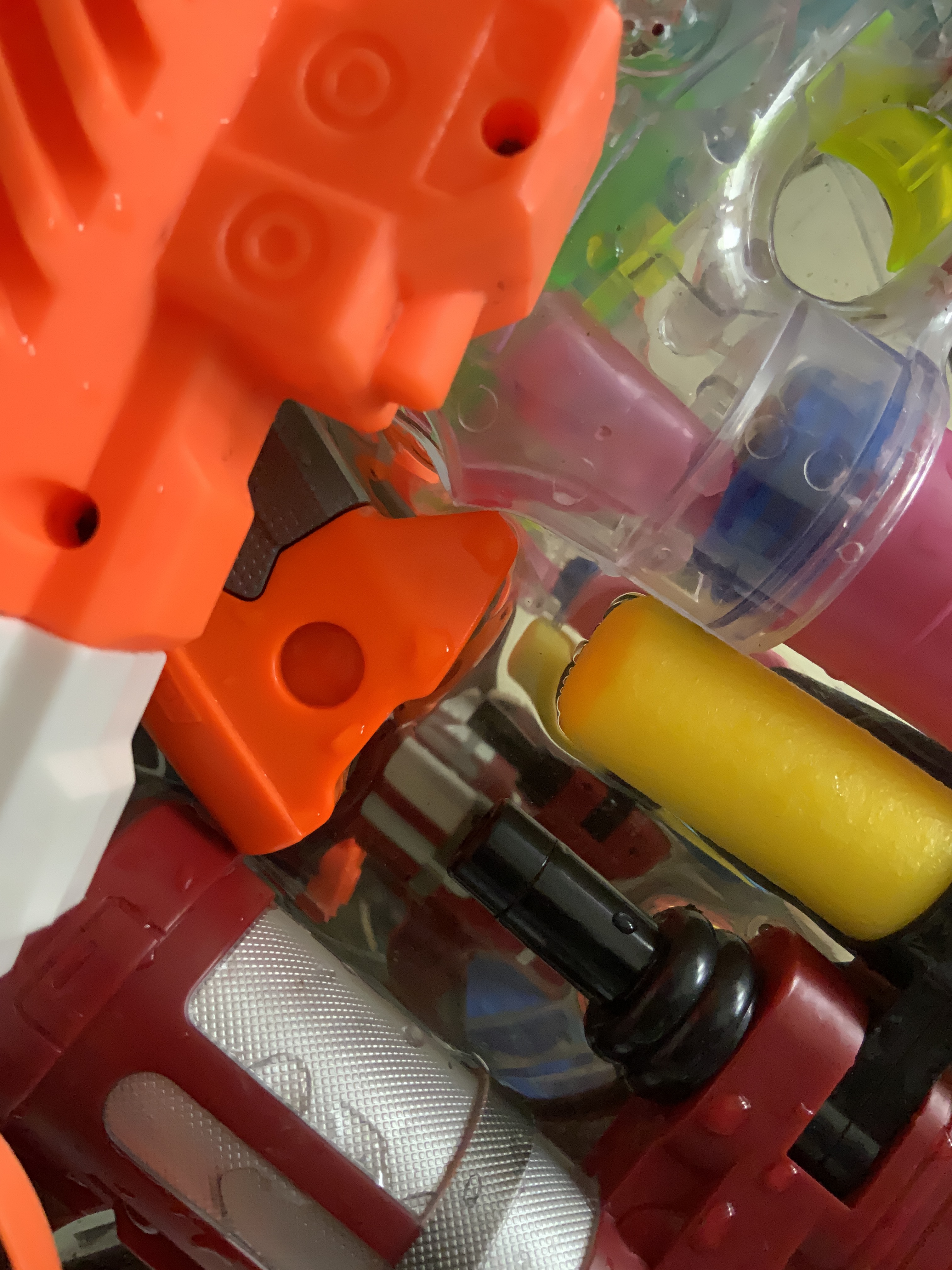
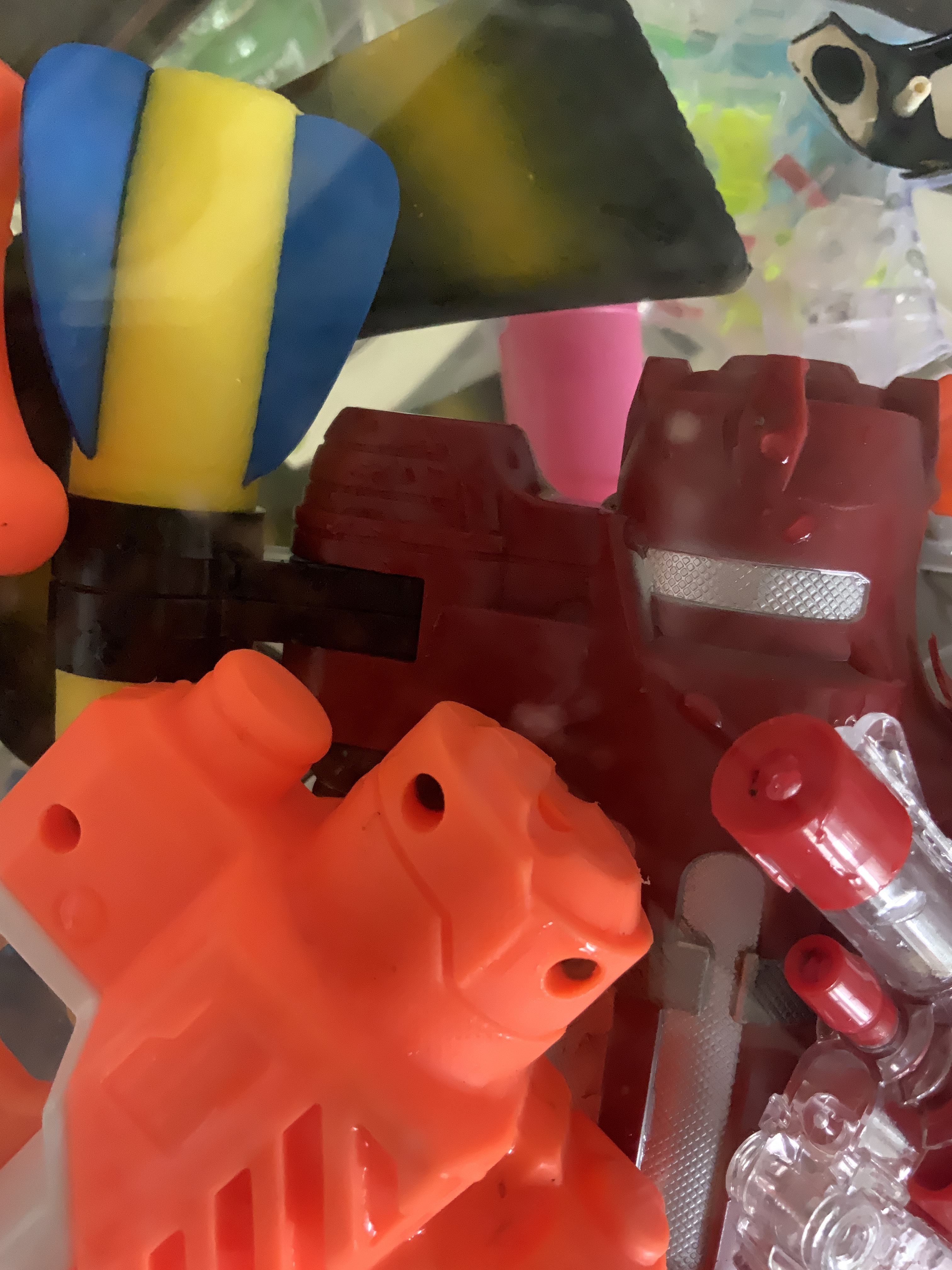
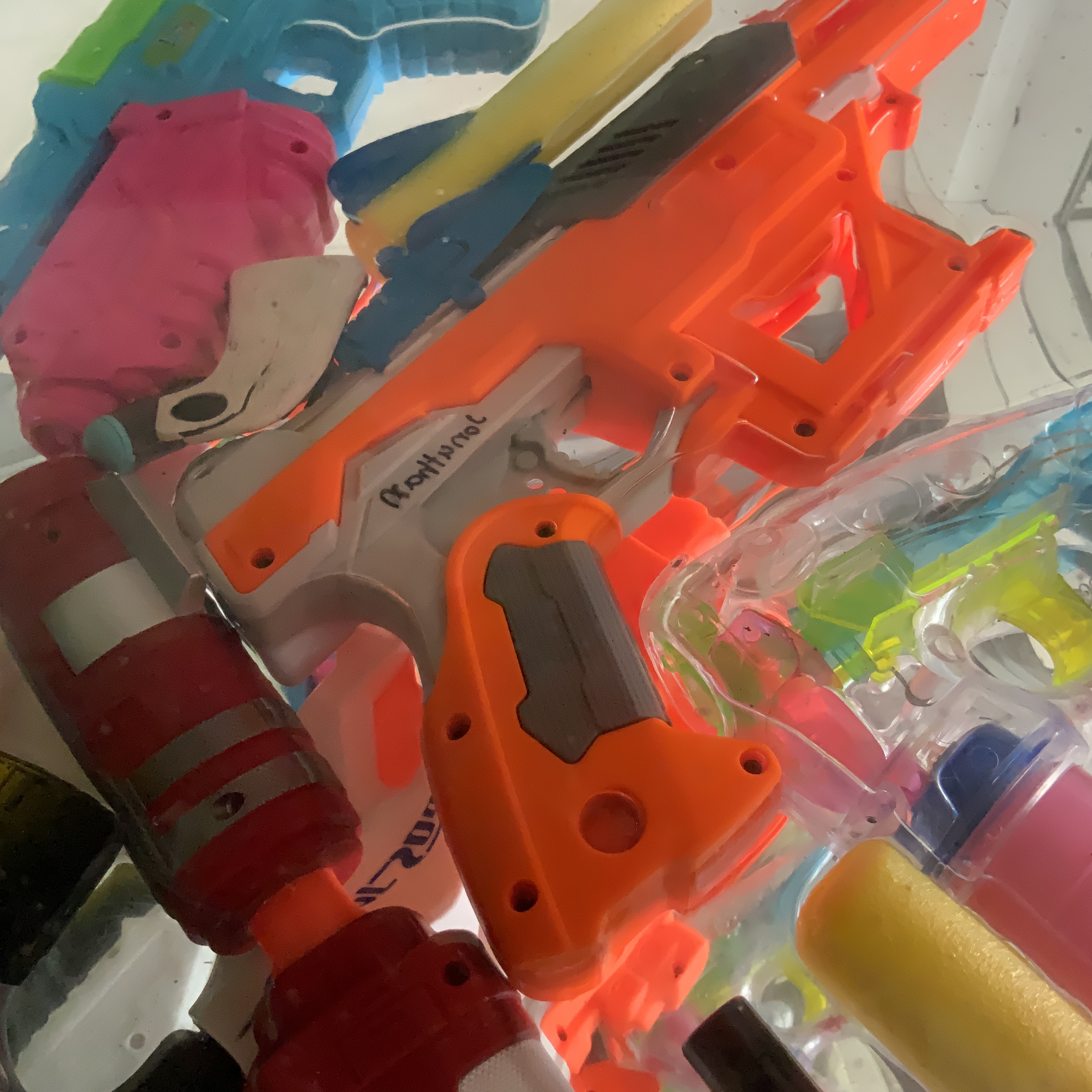
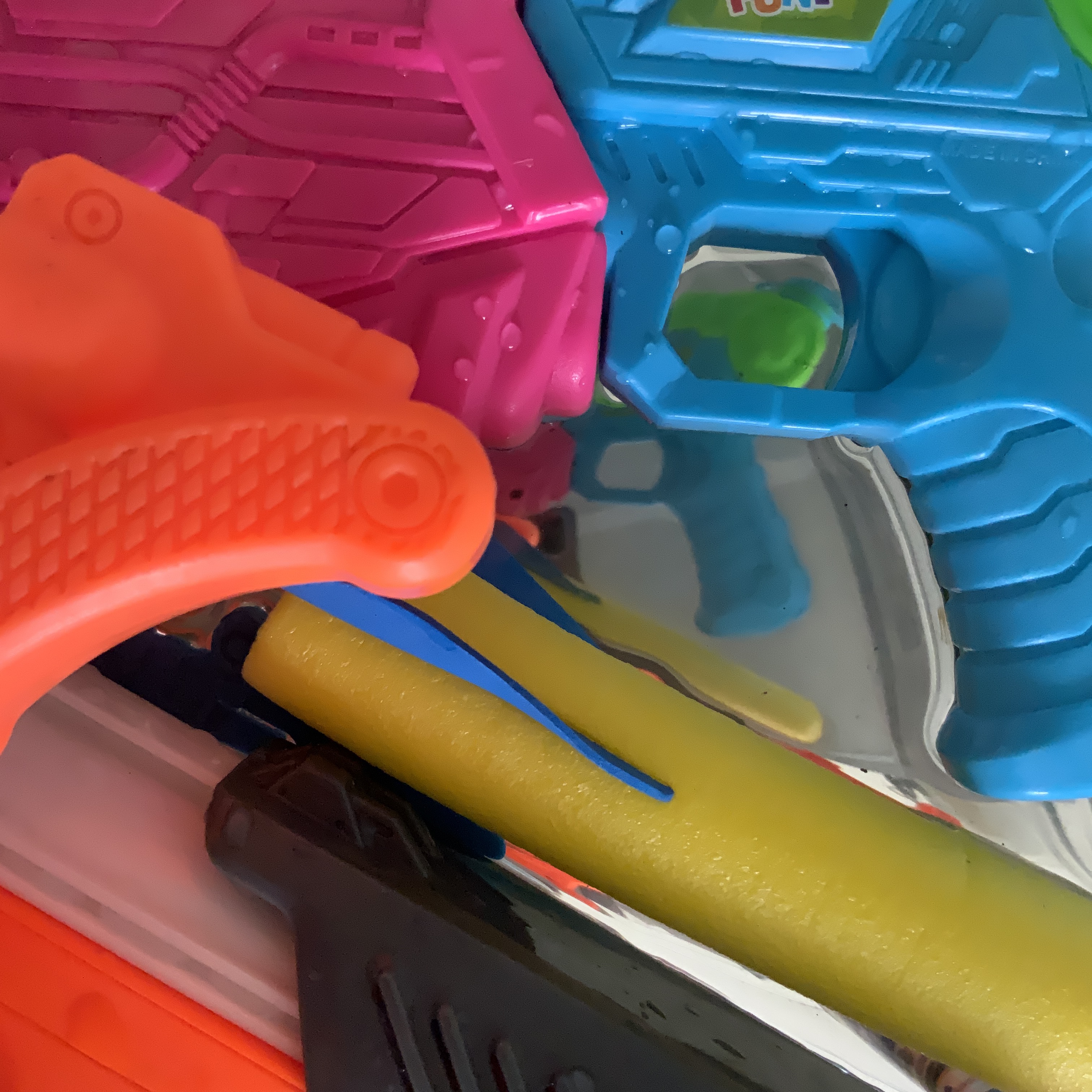
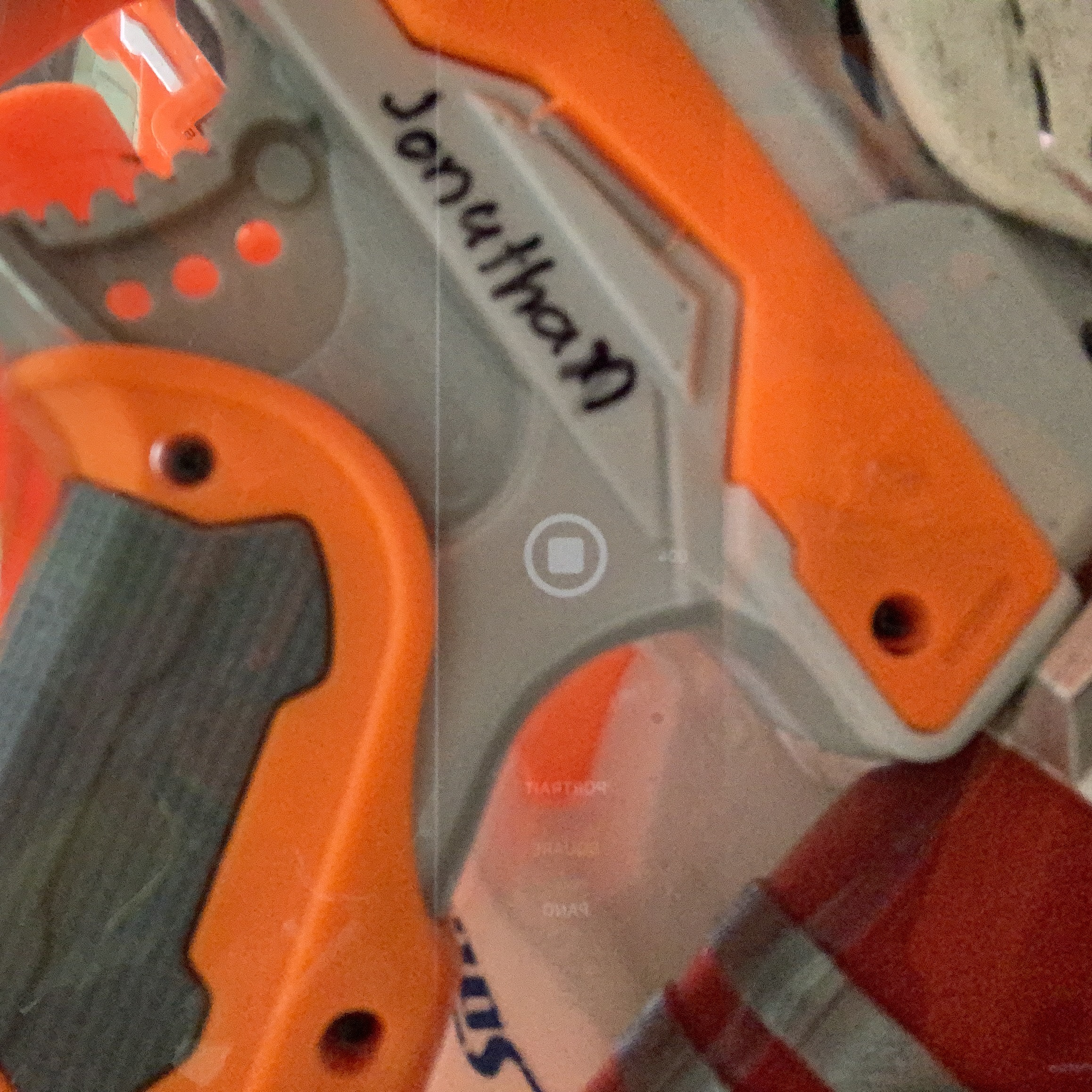
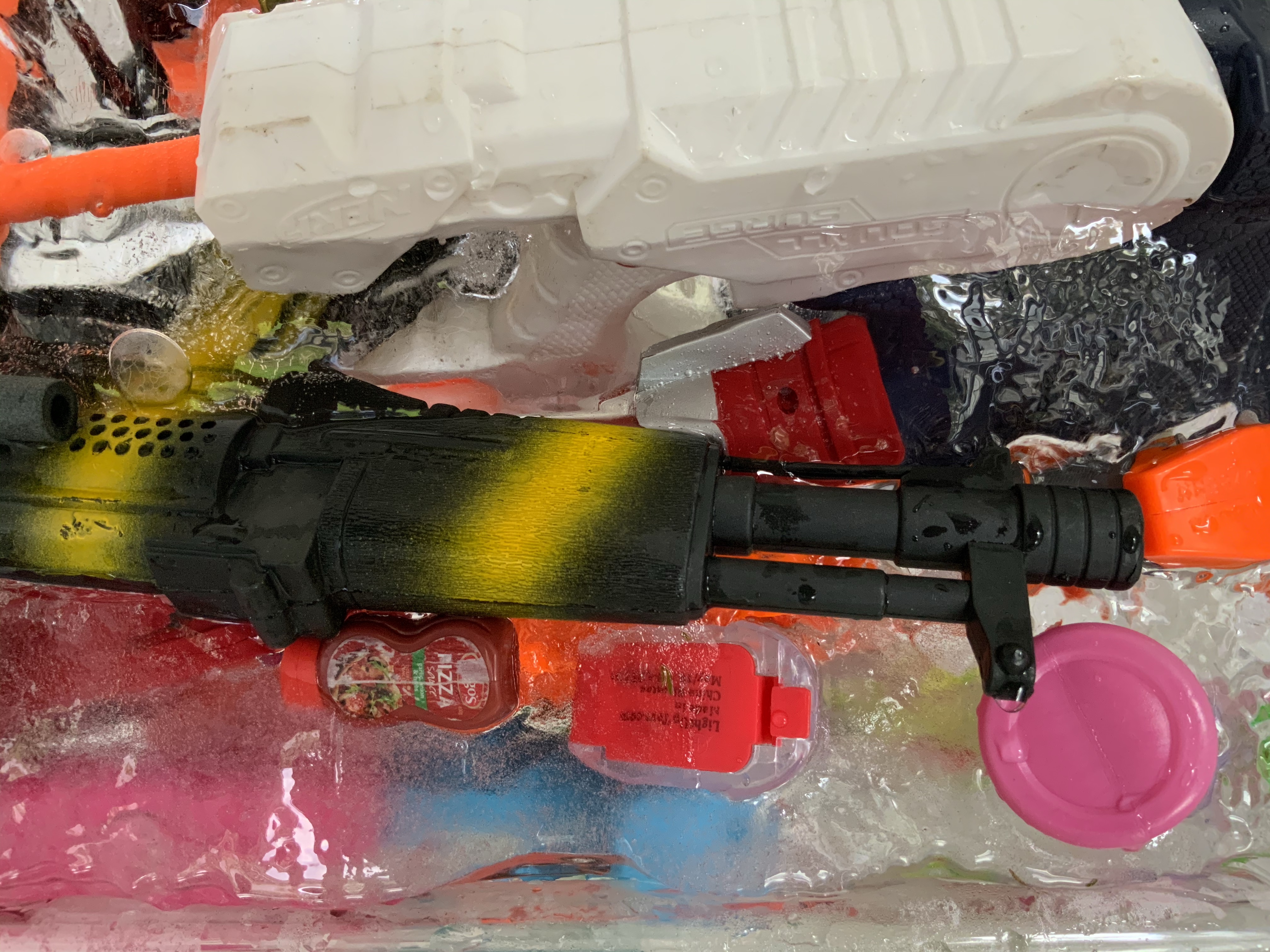
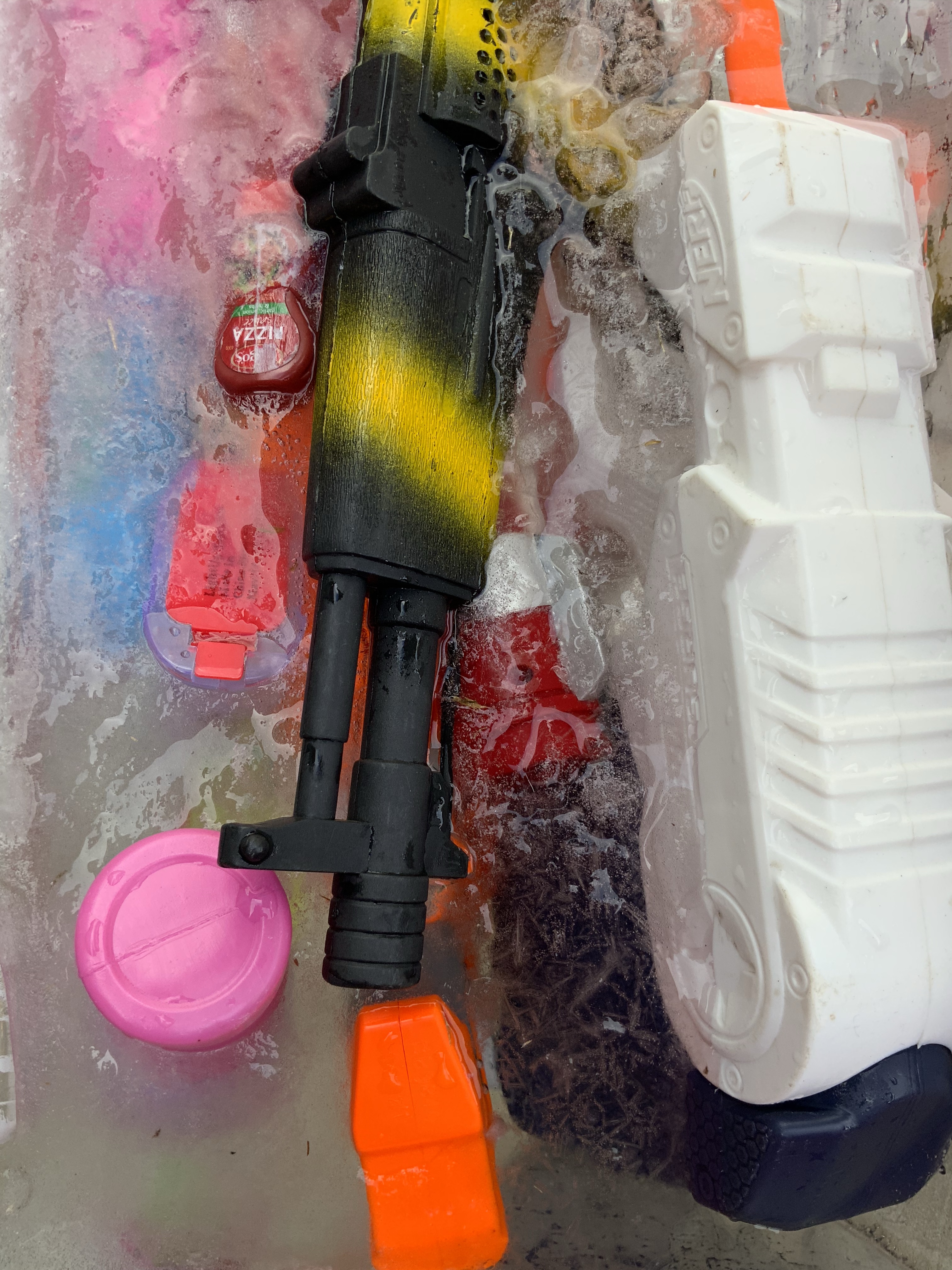
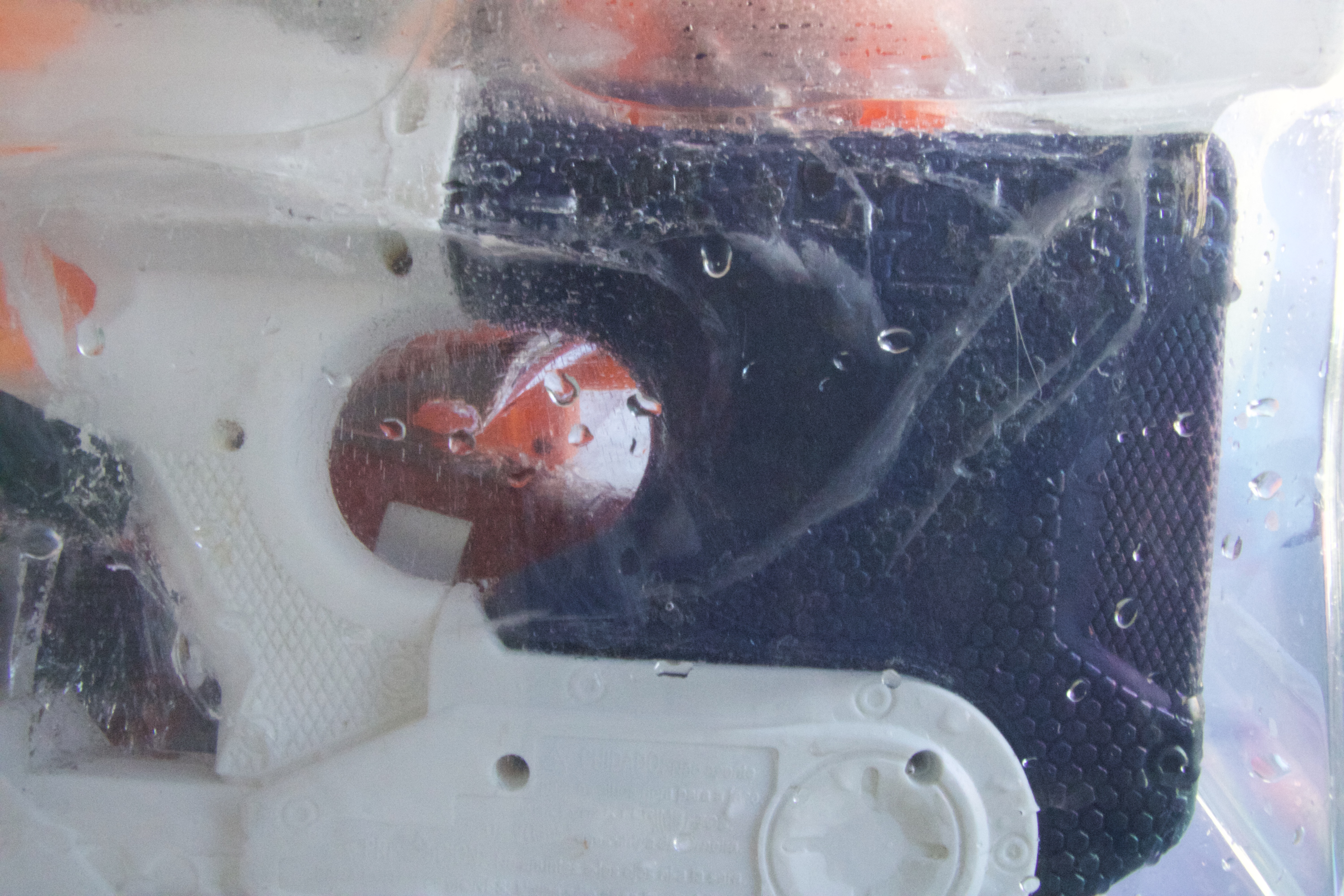
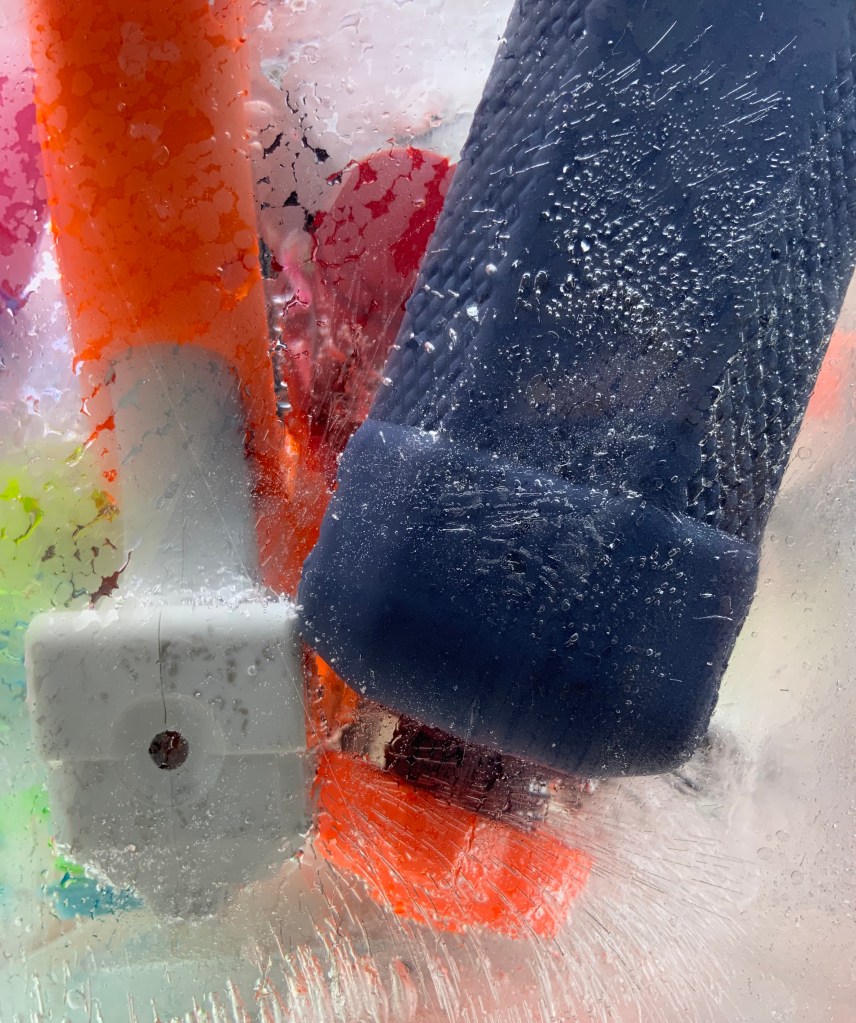
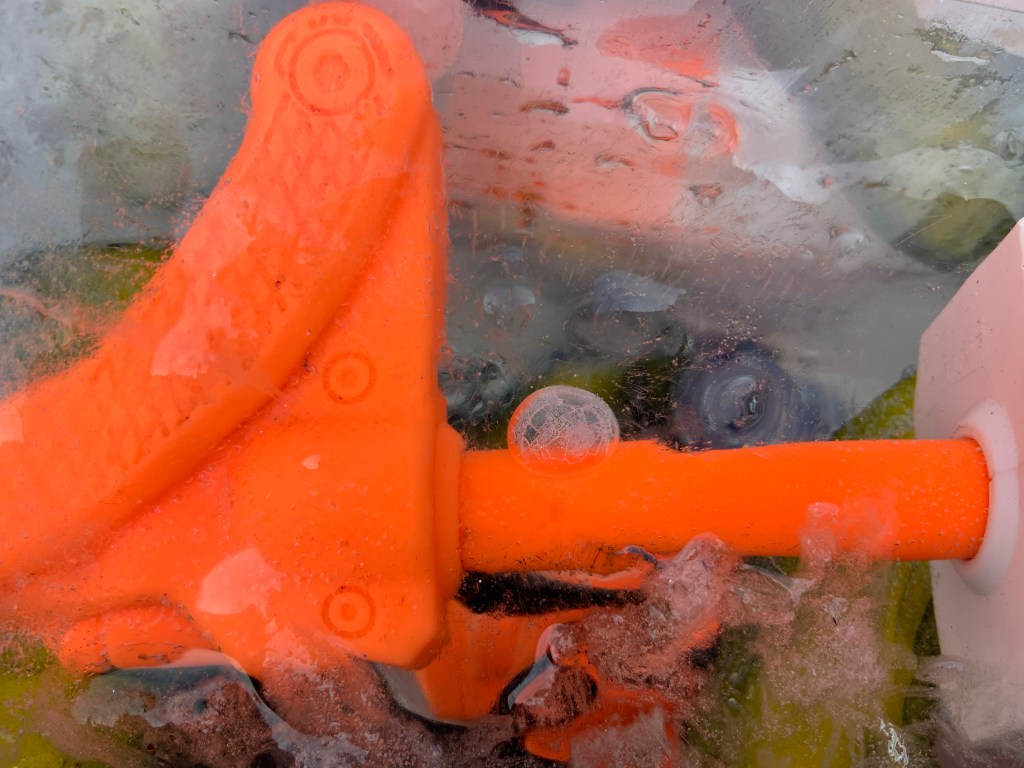
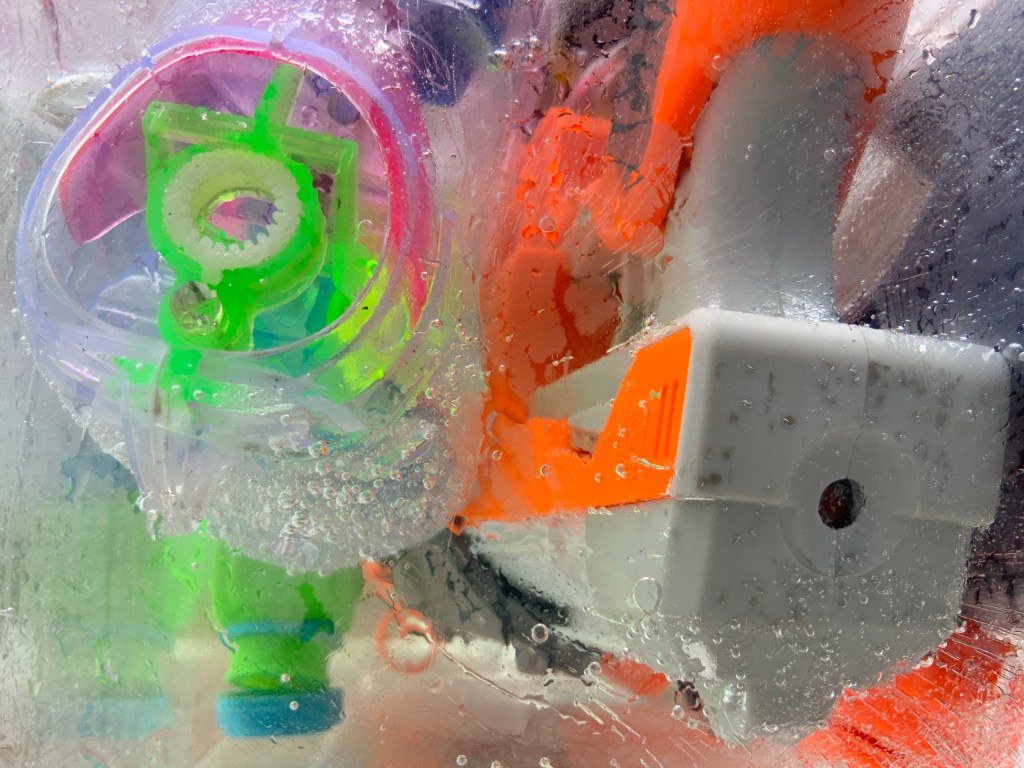
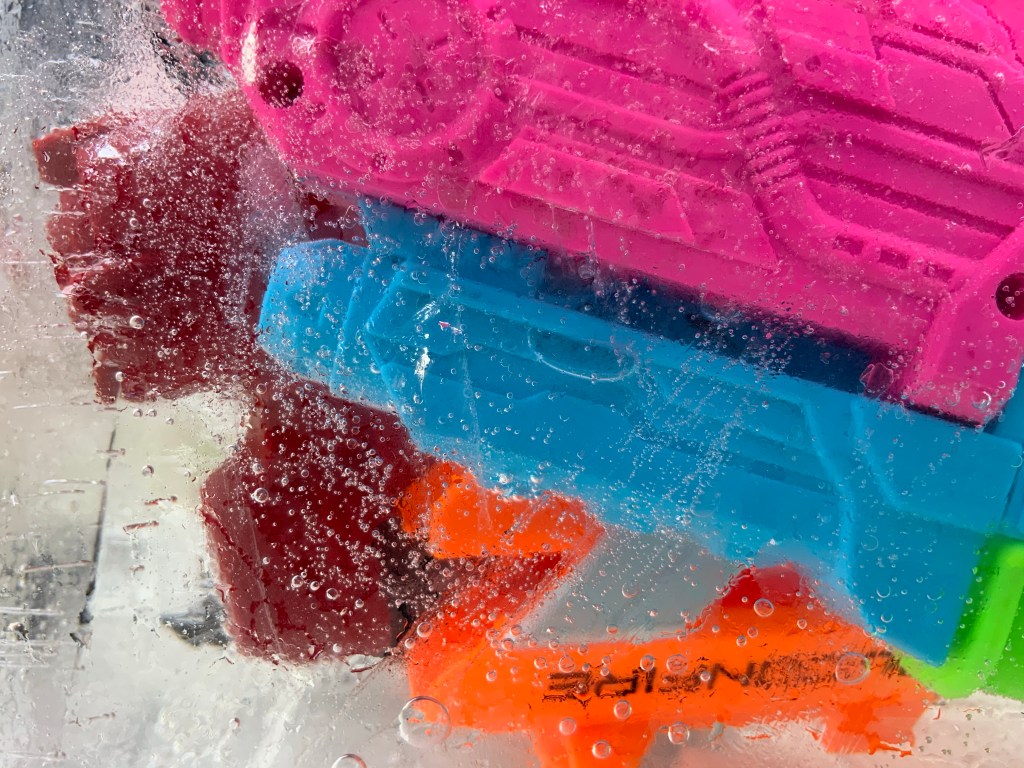
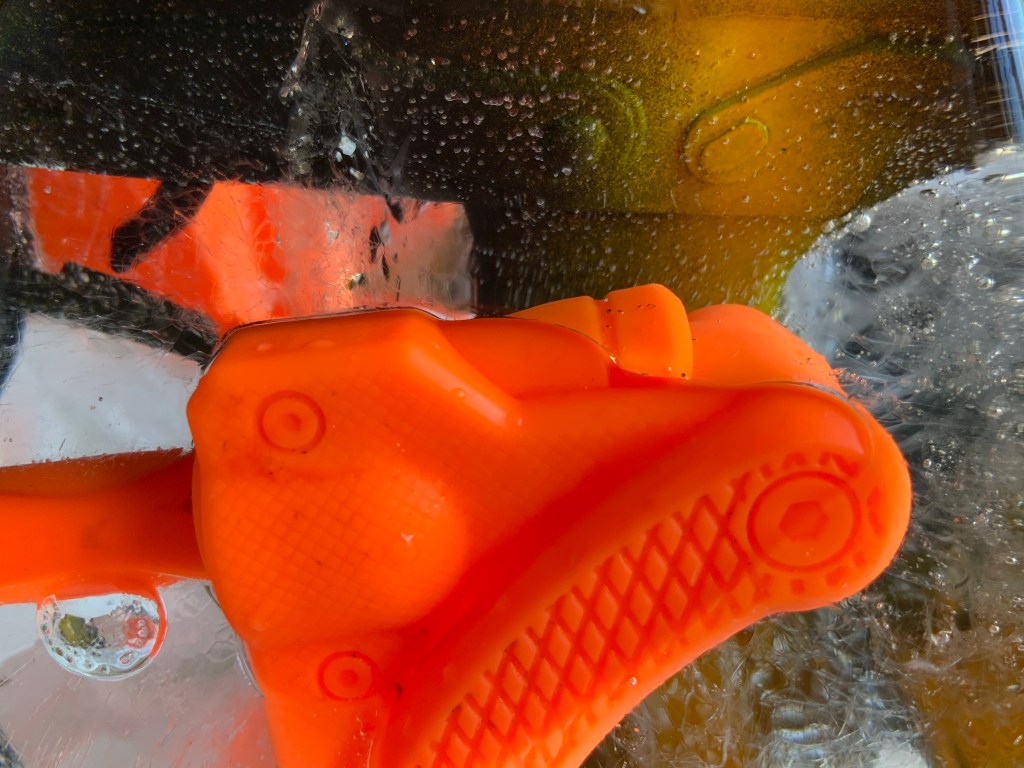
Toy guns was one of the most collected items I found on road side clean ups, all the toy guns were intact, bright and colourful. Plastic bullets were also a plenty on shorelines…
Floating photo shoot
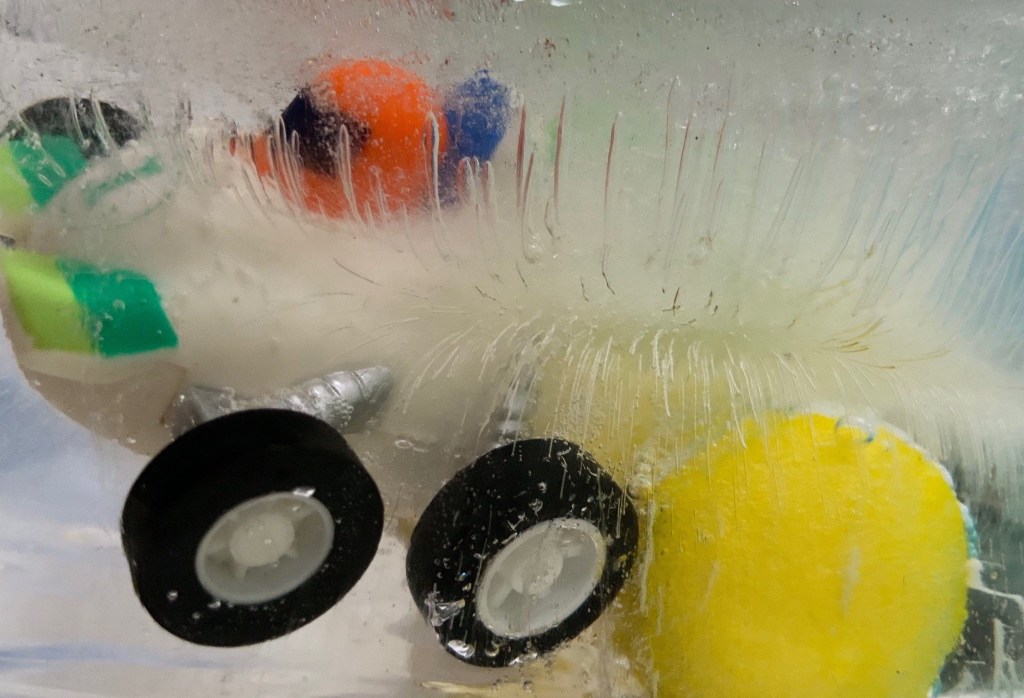
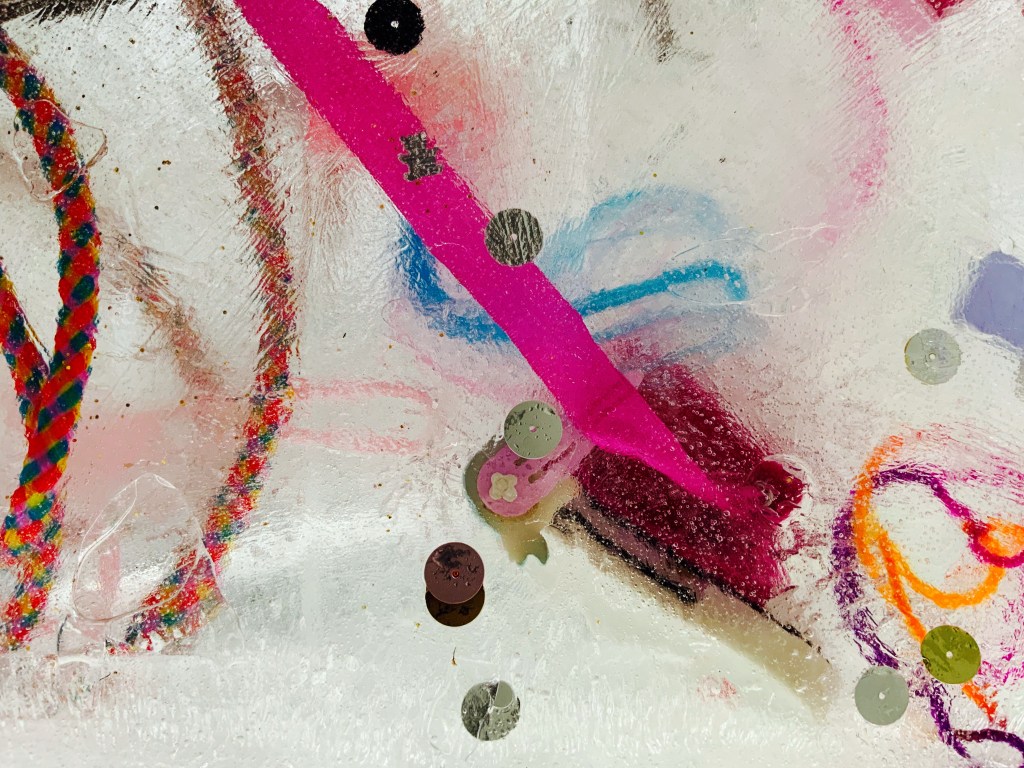
From a series of two photo shoots, frozen Kylie Naylor, Untitled #1, 2020, image, found object, frozen water. Kylie Naylor, Untitled #5, 2020, image, found object, frozen water.Kylie Naylor, Untitled #2, 2020, image, found object, frozen water.Kylie Naylor, Untitled #3, 2020, image, found object, frozen water.Kylie Naylor, Untitled #4, 2020, image, found object, frozen water.

























 CAVA 390